Find the Best Grease Trap Cleaning Companies for Your Business
No obligation • Fast responses • Nationwide coverage

Why you can trust Restaurant Waste Disposal
Restaurant Waste Disposal is a leading U.S. resource for comparing restaurant composting, food-waste recycling, grease trap cleaning, and used cooking oil collection services. Our editorial team researches providers, checks credentials, and organizes unbiased information so operators can make informed decisions. Companies cannot pay to change ratings or placement.
Search providers near you
Find Grease Trap Cleaning Companies near you
For any restaurant, commercial kitchen, or food service establishment in the United States, managing fats, oils, and grease (FOG) is a critical operational and legal responsibility. Proper grease trap maintenance and cleaning are not just about preventing unpleasant odors or slow drains; they are mandated by local municipal codes to protect public sewer systems from costly blockages and environmental damage. Neglecting this essential service can lead to severe fines, legal action, and even forced operational shutdowns. A proactive, scheduled cleaning program, supported by daily best practices, is the most effective strategy to ensure compliance, avoid emergency repairs, and maintain a smooth-running kitchen.
Search providers near you
Understanding Grease Trap Regulations and Compliance
Local municipalities across the US enforce strict FOG control programs to prevent sewer overflows. Compliance is not optional. Regulations typically require that grease interceptors be cleaned by a licensed professional when the accumulated grease and solids reach 25% of the trap's volume 1 2. Many jurisdictions also specify a maximum time between cleanings, often every 60 to 90 days, though this can vary based on your kitchen's volume and local ordinances 3.
A key part of compliance is maintaining detailed records. You must keep logs of every pumping service, inspection, and any maintenance performed. These records prove to health inspectors and sewer authorities that you are managing your FOG responsibly. Non-compliance can result in significant fines that far exceed the cost of regular maintenance, along with the potential for legal action and the reputational damage of a forced closure.
The Professional Cleaning Process: What to Expect
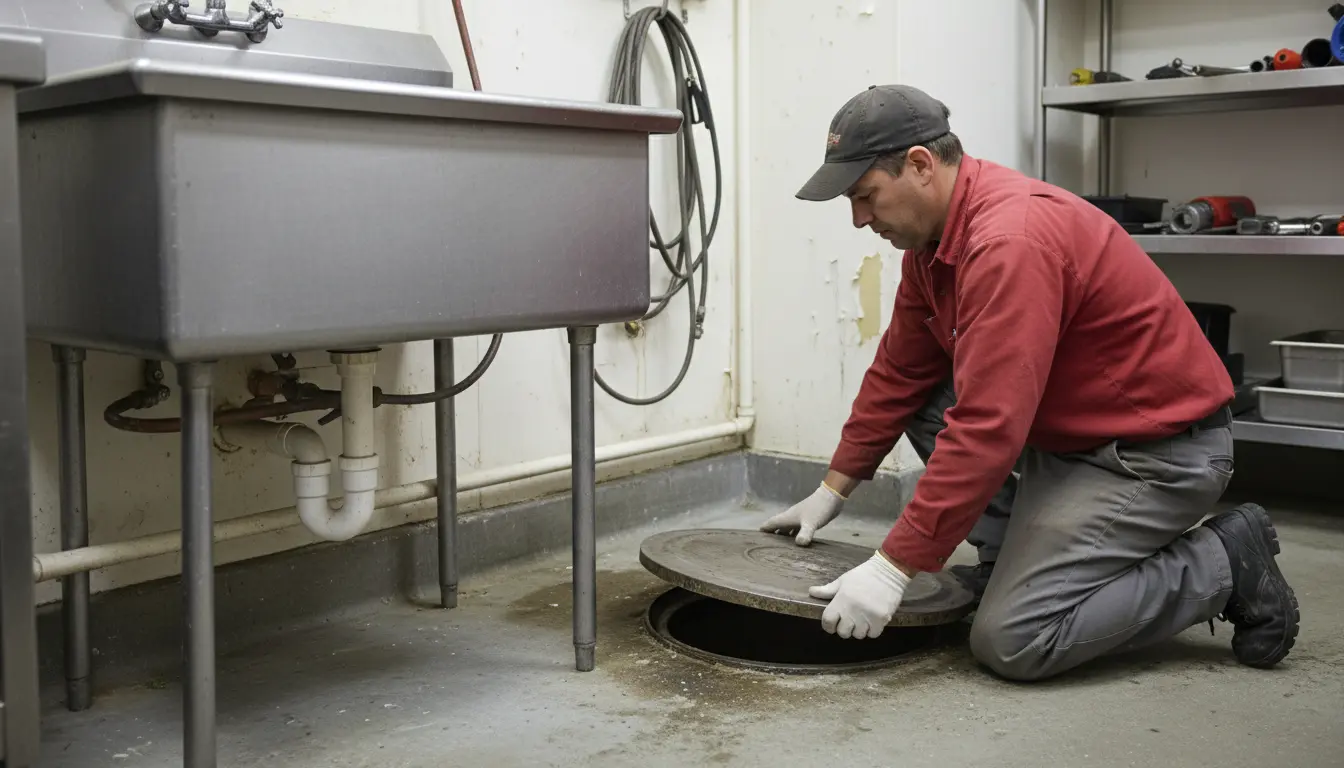
Hiring a licensed professional service is crucial for effective and compliant grease trap maintenance. A proper service involves more than just removing liquid; it requires a thorough cleaning of the entire interceptor. The standard process includes:
- Complete Pumping: Removing all contents-water, grease, and solid food waste-from the trap.
- Scraping and Cleaning: Manually scraping grease and solids from the walls, baffles, and interior surfaces of the trap. High-pressure washing may also be used.
- Inspection: Checking for cracks, leaks, damaged baffles, or other issues that could compromise the trap's function.
- Proper Disposal: Hauling the collected FOG to an approved facility for rendering or disposal, never into the sewer or dumpster.
Attempting to clean a grease trap without professional equipment and expertise is ineffective, potentially hazardous, and unlikely to meet regulatory standards for thoroughness.
Daily Best Practices for Kitchen Staff
Professional cleaning is the foundation, but daily habits in the kitchen dramatically impact how quickly your grease trap fills and how well it functions. Implementing simple staff training and procedures can extend time between services and improve overall performance.
- Scrape, Don't Rinse: Train staff to scrape all food scraps from plates, pots, and pans into the trash or compost bin before rinsing.
- Use Sink Screens: Install and consistently use screens in all prep and dish sink drains to catch solid particles.
- Mind the Mop Sink: Ensure cleaning staff never pour mop water or chemical cleaners from floor cleaning into kitchen drains connected to the grease trap, as this can kill the beneficial bacteria and cause grease to harden.
- Avoid "Grease Dissolving" Chemicals: While tempting, these chemicals often simply emulsify grease, allowing it to pass through the trap only to re-solidify and cause blockages further down the sewer line, which can result in violations 4.
Determining Cleaning Frequency and Recognizing Problems
The required cleaning schedule depends primarily on your kitchen's volume. A high-volume restaurant or a facility that fries a lot of food may need service every 30 days or even weekly. A smaller café or bakery might manage with quarterly service. Your service provider can help establish the right frequency after an initial assessment.
Be vigilant for signs that your trap needs attention sooner than scheduled:
- Slow-draining sinks, especially in dishwashing areas.
- Foul odors emanating from drains.
- Gurgling sounds from drains.
- Visible grease backup in floor drains or sinks 5.
These are indicators that the trap is nearing or at capacity and requires immediate service to avoid a complete backup.
Find the perfect grease trap cleaning companies for your needs
Get personalized recommendations and expert advice
Cost Breakdown for Grease Trap Services
Understanding the costs involved helps in budgeting for this necessary expense. Prices vary widely based on the size and location of your trap (indoor vs. outdoor), your geographic region, and the frequency of service.
- Monthly Maintenance Contracts: For small, indoor grease traps, a regular monthly service contract can range from $120 to $300 6.
- Per-Service Pumping (Indoor): If you schedule service on a per-visit basis for a standard indoor trap, expect costs between $175 and $475 per cleaning.
- Per-Service Pumping (Outdoor Interceptors): Larger outdoor grease interceptors, common for high-volume establishments, cost more due to their size and the equipment required. A single service typically ranges from $325 to over $1,040. For very large systems (e.g., 3,000+ gallons), a cleaning can cost $2,500 or more 7 8 9.
It's important to view these maintenance costs as an investment. They are consistently lower than the expenses associated with non-compliance: emergency after-hours service calls, fines from municipal sewer authorities, and the lost revenue from an unexpected shutdown 10.
The High Cost of Non-Compliance and Neglect
Choosing to delay or skip grease trap cleaning is a significant financial risk. Municipal fines for FOG-related sewer violations can start in the hundreds of dollars and quickly escalate to thousands for repeat offenses. Beyond fines, a severely neglected trap can lead to:
- Sewer Backups: Into your own establishment or neighboring businesses, leading to massive cleanup costs and potential lawsuits.
- Emergency Repairs: The cost for an emergency pump-out or repair is always a premium compared to scheduled maintenance.
- Operational Disruption: A health inspector's red tag or a sewer blockage can force you to close your doors until the issue is resolved, costing you daily revenue and customer trust.
A proactive maintenance plan is the only reliable way to mitigate these risks and protect your business.
Building a Sustainable FOG Management Program
A comprehensive approach combines reliable professional service with internal accountability. Start by selecting a licensed, insured, and reputable service provider with knowledge of your local regulations. Then, integrate grease trap care into your standard operating procedures. Schedule regular staff training sessions on proper disposal practices and make sink screens and scrap bins readily available. Finally, maintain an organized log of all services and inspections. This diligent, two-pronged strategy ensures your kitchen operates efficiently, remains in full compliance with all regulations, and avoids the substantial hidden costs of FOG mismanagement 11.
Frequently asked questions
Sources
Footnotes
-
Grease Trap Cleaning & Pumping: Your Ultimate Commercial Guide - https://elvisservicecompany.com/news/the-ultimate-guide-to-grease-trap-cleaning-pumping-everything-your-business-needs-to-know/ ↩
-
A Guide to Grease Trap Maintenance - Shankster Bros - https://shanksterbros.net/a-guide-to-grease-trap-maintenance/ ↩
-
The Essential Guide to Grease Traps in Restaurants - https://therestaurantwarehouse.com/blogs/restaurant-equipment/grease-traps-in-restaurants ↩
-
Grease Trap Pumping San Francisco - North Bay Restaurant Services - https://northbayrestaurantservices.com/grease-trap-pumping-san-francisco/ ↩
-
Restaurant Grease Trap 101: Cost Savings & Maintenance Tips - https://fivestarmech.com/restaurant-grease-trap-maintenance-cleaning-101-cost-saving-tips/ ↩
-
Ultimate Guide for Cleaning & Maintaining a Grease Trap | AllSource Environmental - https://allsource-environmental.com/ultimate-guide-for-cleaning-maintaining-a-grease-trap/ ↩
-
Ultimate Grease Trap Pumping Cost Guide: Essential Money-Saving ... - https://www.texwaywastewater.com/grease-trap-pumping-cost/ ↩
-
The Cost To Clean A Grease Trap For Restaurants - https://thegreasecompany.com/blog/greasetrapcleaningcost/ ↩
-
Grease Trap Pumping Cost vs. Grease Trap Maintenance Cost - https://www.stateindustrial.com/video/cost-comparison-pumping-v-chemicals-to-maintain-a-grease-trap/ ↩
-
Importance of Regular Grease Interceptor Cleaning - https://silvercityprocessing.com/importance-of-regular-grease-interceptor-cleaning/ ↩
-
Grease Trap Regulations and Compliance: What You Need to Know - https://www.texwaywastewater.com/grease-trap-regulations-and-compliance/ ↩