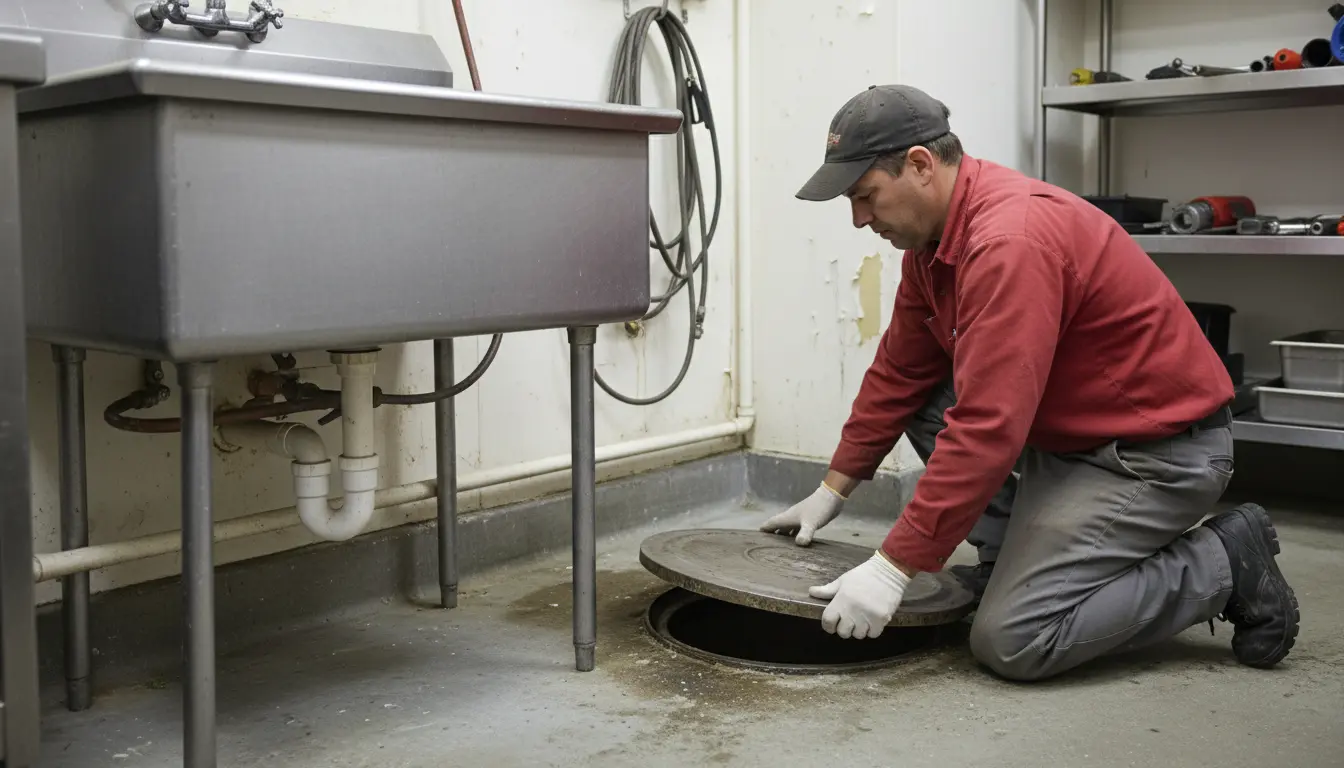
Find the Best Grease Trap Cleaning Companies for Your Business
No obligation • Fast responses • Nationwide coverage

Why you can trust Restaurant Waste Disposal
Restaurant Waste Disposal is a leading U.S. resource for comparing restaurant composting, food-waste recycling, grease trap cleaning, and used cooking oil collection services. Our editorial team researches providers, checks credentials, and organizes unbiased information so operators can make informed decisions. Companies cannot pay to change ratings or placement.
Search providers near you
Best Grease Trap Cleaning Companies in Tennessee Ranked
For restaurant owners and food service operators in Tennessee, maintaining a grease trap or interceptor is a critical operational and legal responsibility. Proper grease trap cleaning prevents costly sewer blockages, protects municipal infrastructure, and ensures compliance with state and local environmental regulations. Tennessee's rules are specific and strictly enforced, with requirements that vary by city and utility provider. This guide outlines the essential regulations, best practices, and practical considerations for managing grease trap maintenance across the Volunteer State.
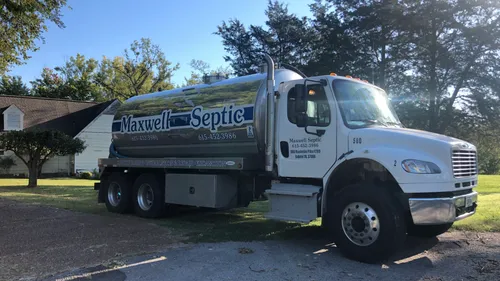
Maxwell Septic Pumping
1120 Dickerson Pike, Nashville, TN 37207
Maxwell Septic Pumping provides septic and grease trap cleaning services in Nashville, TN. They offer pumping, inspection, and repair services, including tank repairs and leeching field installations. Customers note their ability to handle challenging grease trap cleanings and appreciate their scheduling flexibility.
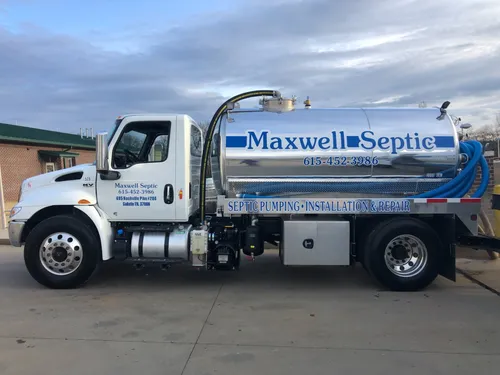
Maxwell Septic Pumping
744 Airport Rd, Gallatin, TN 37066
Maxwell Septic Pumping is a grease trap cleaning company serving Nashville, TN. They specialize in pumping and cleaning grease interceptors and traps, providing thorough and efficient service. Customers have noted their ability to complete cleaning tasks quickly, often within a few hours.

Wilson Brothers Plumbing Inc.
207 Pinedale St, Maryville, TN 37801
Wilson Brothers Plumbing Inc. provides a wide range of residential and commercial plumbing services in Knoxville, TN. Their offerings include drain cleaning, pipe repair and replacement, water heater installation and maintenance, toilet and faucet repairs, bathroom and kitchen remodeling, backflow prevention, sewer repair, and grease trap maintenance. The company serves multiple areas in East Tennessee and is led by a Licensed Master Plumber with extensive industry experience. Wilson Brothers Plumbing is equipped to handle both routine plumbing needs and emergency repairs.
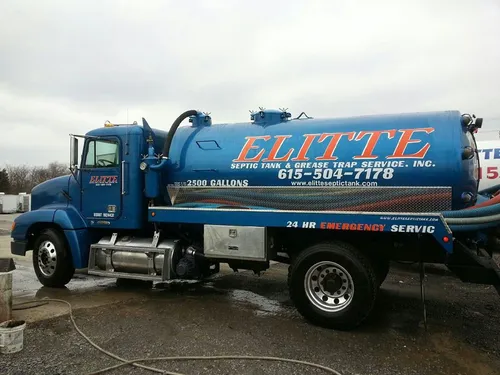
Elitte Septic Tank & Grease Trap Service, Inc.
1035 Bradley Dr, Springfield, TN 37172
Elitte Septic Tank & Grease Trap Service, Inc. provides septic tank pumping, grease trap cleaning, and line installation services in Nashville, TN. The company handles locating and repairing septic tanks, including excavation and line installation, and offers grease trap maintenance for commercial clients. Customers have noted their ability to manage emergency service calls and complex repairs such as broken lids and rerouting plumbing lines. The team is experienced in working under challenging conditions and maintaining clean work sites.
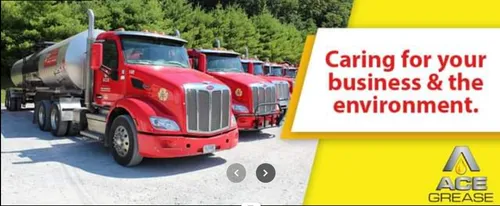
Ace Grease Service
Transfer Station, 1039 Slaters Creek Rd Nashville, 1039 Slaters Creek Rd, Goodlettsville, TN 37072
Ace Grease Service is a family-owned company based in Nashville, TN, with over 31 years of experience in used cooking oil collection and grease trap cleaning. They serve a wide range of clients including restaurants, hotels, hospitals, penal institutions, and food manufacturing plants. The company operates a fleet of state-of-the-art trucks and equipment across nine states in the Midwest. Ace Grease Service collects and recycles used cooking oil, turning it into products like plastics, soaps, livestock feed, and biodiesel fuel. They emphasize the importance of keeping fats, oils, and grease out of the sanitary sewer system to protect the environment and public health.
Understanding Tennessee's Grease Trap Regulations
Tennessee does not have a single, statewide cleaning schedule. Instead, regulations are enforced at the municipal level or by local water/wastewater utilities. The overarching goal is to prevent fats, oils, and grease (FOG) from entering and clogging the public sewer system, which can lead to sanitary sewer overflows (SSOs) and environmental damage. Compliance is not optional; failure to adhere can result in significant penalties, including fines and service disconnection.
Key regulatory bodies include city Public Works departments, the Nashville Metro Water Services (MWS), the Knoxville Utilities Board (KUB), and county authorities like the Hamilton County Water and Wastewater Treatment Authority (WWTA). It is the responsibility of each food service establishment to know and follow the specific rules for their location.
Required Cleaning Frequency and the "25% Rule"
Cleaning frequency is dictated by local ordinance and is typically based on either a fixed schedule or a performance standard known as the "25% Rule."
- Fixed Schedules: Many localities set mandatory cleaning intervals. These can range from weekly for small under-sink traps to quarterly for larger outdoor interceptors. For example, ordinances may specify monthly cleaning for high-volume establishments or every four months for others.
- The 25% Rule: This is a common standard in Tennessee, used by cities like Nashville and utilities like KUB 1 2. It requires that a grease interceptor be cleaned when the combined volume of floating grease, settled solids, and bottom sludge reaches 25% of the trap's liquid capacity. Establishments using this rule must perform regular inspections to measure accumulation.
The best practice is to check with your local water authority for your exact requirement. Proactive cleaning before the limit is reached is always recommended to ensure optimal performance and avoid violations.
Documentation and Record-Keeping Requirements
Meticulous record-keeping is a cornerstone of FOG compliance in Tennessee. Regulators can request these documents during inspections, and having them in order demonstrates due diligence.
- Maintenance Logs: You are required to maintain a detailed maintenance log on-site for a minimum of 24 months 3. This log should include:
- Date of each pumping/service.
- Volume of waste removed (in gallons).
- Company name and license number of the service provider.
- Disposal location (name of the approved facility).
- Waste Manifests: For every cleaning, your licensed hauler must provide a waste manifest or receipt. This document is a legal chain-of-custody record proving that the grease waste was transported and disposed of at a state-approved facility, such as a rendering plant or wastewater treatment plant. Never accept service from a provider who cannot supply a proper manifest.
Working with Licensed Haulers and Prohibited Practices
You cannot have just any service provider clean your trap. Tennessee regulations mandate the use of licensed liquid waste haulers who are registered with the Tennessee Department of Environment and Conservation (TDEC) and often approved by your local municipality 4.
- Verifying Licenses: Always ask for proof of a hauler's current TDEC license and any local certifications. Using an unlicensed hauler puts you at risk of violations and improper disposal.
- Banned Chemicals: It is generally prohibited to use chemical or biological "grease digester" additives that emulsify grease and allow it to pass through the trap into the sewer lines 5 6. Some cities may allow specific products with prior written approval, but the default assumption should be that they are not permitted.
- Accessibility: Grease interceptors must have accessible manholes and inspection ports to allow for proper cleaning and inspection. Obstructed or buried traps are a common violation 7.
Find the perfect grease trap cleaning companies for your needs
Get personalized recommendations and expert advice
Costs and Consequences of Non-Compliance
Understanding the potential costs, both for service and for violations, is crucial for budgeting and risk management.
- Service Costs: Pricing depends on the size and type of your trap, its location, and how often it needs service. As a general range:
- Indoor Grease Traps: A single cleaning service typically costs between approximately $115 and $475.
- Outdoor Grease Interceptors: Cleaning for larger in-ground interceptors is more involved, with costs generally ranging from about $325 to $1,040 per service 8.
- Penalties for Violations: The consequences of skipped cleanings or other violations are severe and can include:
- Substantial monetary fines.
- A mandatory order to enter into a cleaning contract with a licensed hauler.
- The city or utility performing the cleaning at your expense, often at 1.5 times the market rate.
- In extreme or repeat cases, termination of water and sewer service to your establishment 9.
Best Practices for Grease Trap Management
Beyond mere compliance, effective grease trap management protects your business's plumbing and reputation.
- Train Your Staff: Ensure kitchen staff understand what can and cannot go down the drain. Scrape plates into trash bins, use sink strainers, and avoid pouring any fats or oils down sinks.
- Schedule Regular Inspections: Don't wait for the cleaning day to check your trap. Visually inspect it between services to monitor grease and solids buildup.
- Establish a Reliable Service Relationship: Partner with a reputable, licensed hauler who understands your local regulations. A good provider will help you maintain compliance through timely service and proper documentation.
- Keep Records Organized: Store your maintenance logs and waste manifests in a dedicated, easily accessible binder or digital folder. Designate a manager to be responsible for this documentation.
- Know Your Local Contact: Identify and save the contact information for the FOG program coordinator at your local water authority. They are your resource for clarifying rules and scheduling inspections.
By implementing a proactive and documented approach to grease trap cleaning, Tennessee food service businesses can avoid disruptive and expensive problems, contribute to community environmental health, and focus on serving their customers.
Frequently asked questions
Sources
Footnotes
-
Nashville Grease Trap Cleaning: Essential Facilities ... - Shyft - https://www.myshyft.com/blog/grease-trap-cleaning-nashville-tennessee/ ↩
-
GREASE CONTROL PROGRAM - KUB - https://www.kub.org/uploads/KUB+Grease+Control+Program+Current_13.pdf ↩
-
FATS, OILS, AND GREASE ORDINANCE - Spring Hill, TN - https://www.springhilltn.org/DocumentCenter/View/56 ↩
-
Fats, Oils & Grease Management Policy (FOG Program) - https://wwta.hamiltontn.gov/DocumentCenter/View/66/FOG-Management-Policy-PDF ↩
-
§ 18-305 GREASE TRAP AND INTERCEPTOR MAINTENANCE. - https://codelibrary.amlegal.com/codes/crossville/latest/crossville_tn/0-0-0-6213 ↩
-
§ 18-406 GREASE TRAP MAINTENANCE. - https://codelibrary.amlegal.com/codes/springhill/latest/springhill_tn/0-0-0-9309 ↩
-
Regulating animal, vegetable fats, oils and grease, and soil/sand ... - https://www.ashlandcitytn.gov/media/5651 ↩
-
Grease Trap Pumping Cost vs. Grease Trap Maintenance Cost - https://www.stateindustrial.com/video/cost-comparison-pumping-v-chemicals-to-maintain-a-grease-trap/ ↩
-
FATS, OILS AND GREASE TRAPS AND INTERCEPTORS. - https://codelibrary.amlegal.com/codes/etowah/latest/etowah_tn/0-0-0-2028 ↩