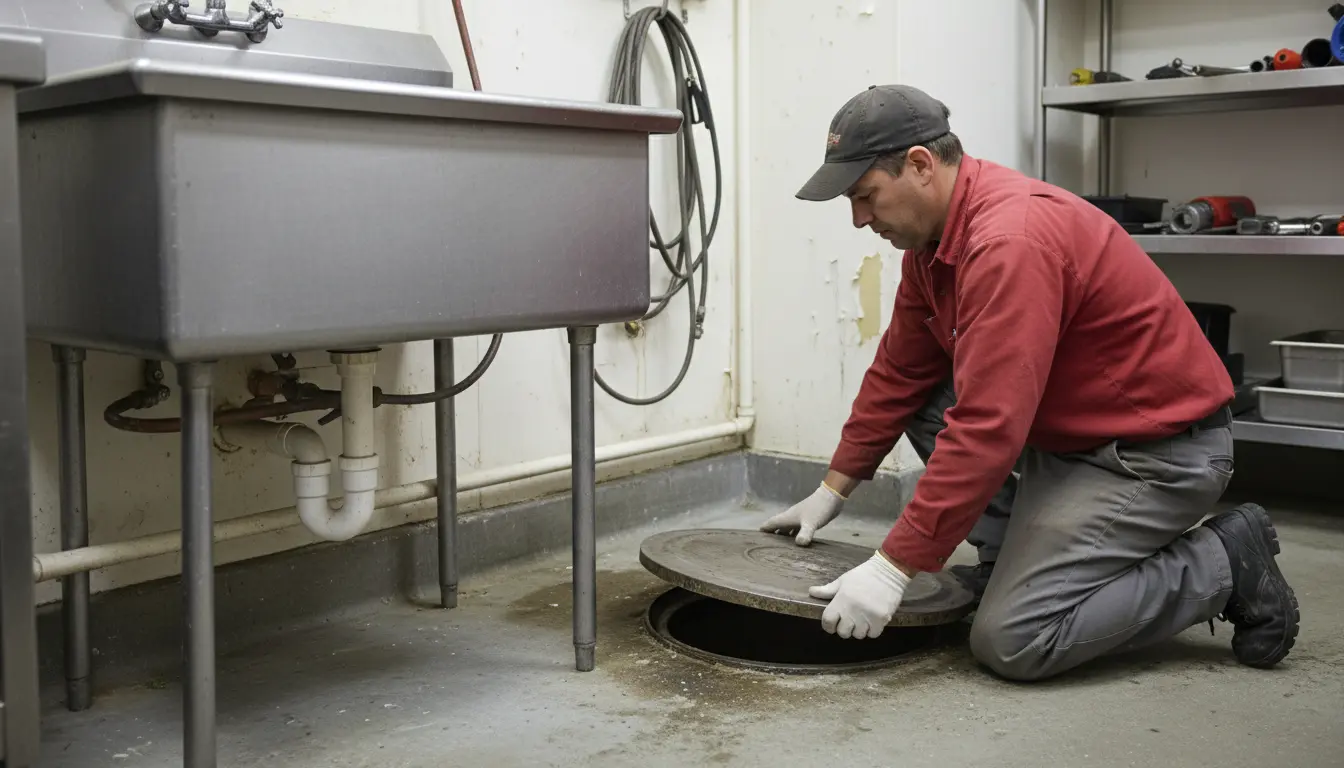
Find the Best Grease Trap Cleaning Companies for Your Business
No obligation • Fast responses • Nationwide coverage

Why you can trust Restaurant Waste Disposal
Restaurant Waste Disposal is a leading U.S. resource for comparing restaurant composting, food-waste recycling, grease trap cleaning, and used cooking oil collection services. Our editorial team researches providers, checks credentials, and organizes unbiased information so operators can make informed decisions. Companies cannot pay to change ratings or placement.
Search providers near you
Best Grease Trap Cleaning Companies in Oregon Ranked
For any restaurant, food truck, or commercial kitchen in Oregon, managing fats, oils, and grease (FOG) is not just a maintenance task-it's a legal and environmental necessity. Proper grease trap and interceptor cleaning is mandated by state and local regulations to protect public sewer systems from costly blockages and overflows. Failure to comply can lead to significant fines, operational shutdowns, and damage to local infrastructure. This guide outlines the essential requirements, best practices, and practical considerations for maintaining compliance and ensuring your food service establishment runs smoothly.
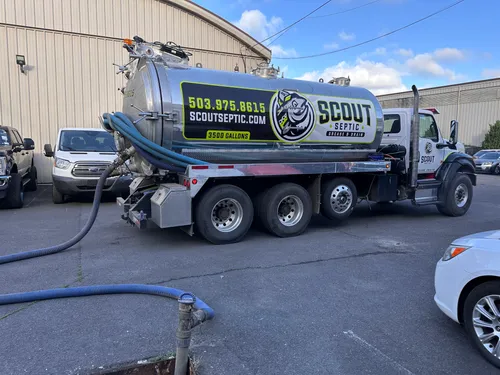
Scout Septic, Grease & Drain
15535 SE 287th Ave, Boring, OR 97009
Scout Septic, Grease & Drain provides septic tank pumping, installation, repair, grease trap cleaning, and drain services in Portland, OR. They serve both residential and commercial clients, offering pipe and drain cleaning including hydro jetting, as well as excavation and grading services. The company uses modern equipment and techniques to maintain and repair wastewater systems efficiently. Scout Septic, Grease & Drain is fully licensed and insured, offers 24/7 availability, and has a satisfaction guarantee.
Roto-Rooter Plumbing & Water Cleanup
519 SW Park Ave #303, Portland, OR 97205
Roto-Rooter Plumbing & Water Cleanup is a plumbing and water cleanup company serving Portland, OR. Established in 1935, it provides a wide range of residential and commercial plumbing services including drain cleaning, sewer line repair, water heater installation, and grease trap cleaning. The company uses advanced equipment such as hydro-jetting and video camera inspections to address plumbing issues efficiently. Roto-Rooter offers 24/7 emergency service throughout the year to handle urgent plumbing needs.
Roto-Rooter Plumbing & Water Cleanup
388 State St Ste 605, Salem, OR 97301
Roto-Rooter Plumbing & Water Cleanup provides comprehensive plumbing services in Salem, OR, serving both residential and commercial clients. Their offerings include floodwater cleanup, sewer and drain cleaning, water heater repairs and installations, grease trap maintenance, and mold remediation. The company is equipped with advanced tools such as hydro-jetting for drain cleaning and offers trenchless sewer line repair and replacement. Roto-Rooter has a 24/7 emergency plumbing service to address urgent issues like burst pipes and sewer backups, ensuring prompt assistance any time of day. They serve Salem and surrounding communities in Oregon and Washington, including Keizer, Silverton, and Stayton.
Northwest Biofuel
2223 N Randolph Ave, Portland, OR 97227
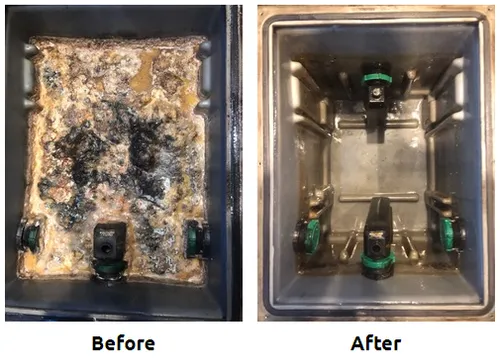
Northwest Biofuel is a locally owned company based in Portland, OR, specializing in grease trap cleaning and used cooking oil collection. They serve restaurants and commercial properties throughout Oregon and Washington, offering bundled services that include grease trap cleaning, cooking oil collection, drain cleaning, line jetting, and grease trap repair. The company ensures that 100% of the oil and grease collected is recycled locally into feedstock and clean-burning biodiesel. Northwest Biofuel provides 24/7 emergency service and works with clients to schedule service at convenient times.
NW Sewer & drain
1223 24th St NE, Salem, OR 97301
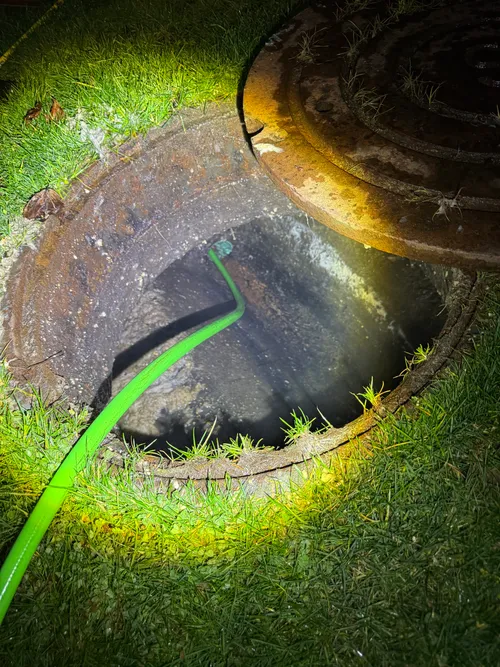
NW Sewer & Drain is a licensed, bonded, and insured company based in Salem, OR, specializing in grease trap cleaning and comprehensive drain services. They offer a range of solutions including cabling and rooter service for clogged drains, hydro jetting for sewer and grease traps, camera inspection with detailed video reports, and drain repair or replacement. Their capabilities include jetting drain lines up to 300 feet and locating sewer and rain drain lines with camera technology. NW Sewer & Drain provides detailed invoices with photos and video inspections to support their work.
Understanding Oregon's Grease Trap Requirements
In Oregon, the installation of a grease interceptor or trap is a fundamental requirement for virtually all food service establishments (FSEs). The specific type and size of the unit depend on your kitchen's volume, plumbing configuration, and local municipal codes. The primary goal is to prevent FOG from entering the public wastewater system, where it can solidify and cause severe blockages.
The state provides a framework, but local city or county wastewater programs enforce the specific rules. This means that while the core principles are consistent, the details-such as permitted interceptor types, inspection schedules, and reporting procedures-can vary. Always start by contacting your local Public Works or Wastewater Department to understand the exact ordinances that apply to your business location.
Mandatory Cleaning Frequency and Standards
Oregon regulations typically require cleaning your grease interceptor when the combined FOG and solids accumulate to 25% of the unit's liquid depth. 1 However, for most busy kitchens, waiting until this point is not practical or compliant with local enforcement. In practice, cleaning is required on a much more frequent schedule to prevent that level of buildup.
- High-Volume Kitchens: Often require monthly pump-out service.
- Standard Restaurants: Typically need service every 30 to 90 days for common hydromechanical grease interceptors (HGIs).
- Larger Gravity Grease Interceptors (GGIs): May have different schedules but still require regular maintenance and desludging.
The key is proactive maintenance. Regular, scheduled cleanings based on your actual FOG production are far more effective than reactive cleanings after a problem occurs. Keeping detailed service records is not just a good idea; it's a legal requirement that you must be able to present during inspections.
Local Code Variations: Portland, Eugene, and Beyond
Oregon's decentralized approach means local codes have the force of law. Here's a snapshot of requirements in major jurisdictions:
- Portland: The Bureau of Environmental Services (BES) has stringent FOG control programs. They require approved interceptor types, mandatory Best Management Practices (BMPs), and may require a detailed maintenance plan from facilities with a history of issues. All waste must be hauled by a licensed service to an authorized facility.
- Eugene: The city enforces general requirements for grease control, mandating that interceptors are easily accessible for service and inspection. They emphasize proper waste disposal methods and the prohibition of chemical additives that emulsify grease.
- Grants Pass: Their code explicitly outlines requirements for interceptor installation, maintenance, and record-keeping, prohibiting the use of emulsifying agents and requiring training for staff on proper FOG handling.
Other cities like Coos Bay, Salem, and Medford have their own specific ordinances. 2 Never assume compliance in one city transfers to another.
Prohibited Practices and Required Best Management Practices (BMPs)
To stay compliant, certain practices are universally prohibited or required across Oregon:
What You MUST Avoid:
- Chemical Additives: The use of enzymes, bacteria, or emulsifiers that dissolve grease and allow it to pass through the trap is generally banned. These chemicals simply move the problem downstream, violating sewer ordinances. 3 4
- Improper Disposal: Never pour grease down floor drains, sinks, or toilets. Grease trap waste must be handled by a licensed hauler.
What You MUST Implement (BMPs):
- Scrape Plates: Food solids should be scraped into compost or trash before warewashing.
- Use Sink Strainers: Catch food particles in prep and pot sinks.
- Dry Wipe: Use paper towels to wipe greasy pots and pans before washing.
- Staff Training: Educate all kitchen staff on proper FOG disposal practices. 5
Find the perfect grease trap cleaning companies for your needs
Get personalized recommendations and expert advice
Costs of Grease Trap Cleaning Services in Oregon
The cost for professional grease trap pumping services in Oregon varies based on several factors. Understanding these can help you budget effectively.
- Indoor Grease Traps: Smaller units located under sinks or in kitchens typically cost between $115 and $475 per pump-out. 6
- Outdoor Grease Interceptors: Larger in-ground units require more labor and equipment, with costs ranging from $325 to $1,040 per service. 7 8
Factors Influencing Cost:
- Size and Capacity: Larger units hold more waste and cost more to pump.
- Frequency: More frequent service may have a lower per-visit cost and prevents emergency premiums.
- Accessibility: Easy, clear access reduces service time. Buried or obstructed interceptors cost more.
- Location: Service rates can vary by region and local provider availability.
- Waste Disposal Fees: Hauling and disposal fees are typically included but can fluctuate.
While these costs are an operational expense, they are minimal compared to the fines for non-compliance or the repair costs for a sewer line backup caused by neglected FOG. 9
Permitting, Installation, and Waste Disposal
New Installations & Permits: Any new grease interceptor installation or major modification must be approved by your local building and wastewater authorities. This includes review of the interceptor type (HGI vs. GGI), capacity calculations, and location plans to ensure accessibility. 10
Waste Disposal Compliance: Oregon law requires that all collected FOG waste be transported by a licensed hauler to an authorized treatment or recycling facility, such as a wastewater treatment plant, landfill, or rendering facility. 11 12 Reputable service providers will handle this logistics chain and provide you with documentation (waste manifests) for your records, which prove compliant disposal.
Maintaining Compliance and Avoiding Fines
A consistent, documented program is your best defense against violations.
- Know Your Local Code: Start with your city's wastewater department.
- Establish a Service Contract: Partner with a licensed, reputable grease trap cleaning service for regular, scheduled maintenance.
- Keep Impeccable Records: Maintain a logbook or digital file of every service report, waste manifest, and any maintenance action.
- Train and Retrain Staff: Make BMPs part of your kitchen's standard operating procedures.
- Inspect Regularly: Perform quick visual checks of your interceptor between professional services to monitor buildup.
By prioritizing regular grease trap cleaning, you protect your business from regulatory action, contribute to your community's environmental health, and ensure the uninterrupted operation of your kitchen. 13
Frequently asked questions
Sources
Footnotes
-
Oregon Regulations on Grease Interceptors and Grease Traps - https://speedyseptic.com/septic-services/commercial/grease-interceptor/portland-fog-regulations/ ↩
-
Chapter 13.25 COOS BAY FATS, OILS, AND GREASE (FOG) ... - https://www.codepublishing.com/OR/CoosBay/html/CoosBay13/CoosBay1325.html ↩
-
Fats, Oils, and Grease - Grants Pass, OR - https://www.grantspassoregon.gov/DocumentCenter/View/12613 ↩
-
Restaurant Grease Trap Cleaning FAQs - Mahoney Environmental - https://www.mahoneyes.com/restaurant-grease-trap-cleaning-faqs/ ↩
-
Restaurant Grease Trap Cleaning Services - NW Biofuel - https://nwbiofuel.com/blog/restaurant-grease-trap-services-in-salem-oregon/ ↩
-
Oklahoma City Grease Trap Cleaning: Essential Facilities Maintenance - myshyft.com - https://www.myshyft.com/blog/grease-trap-cleaning-oklahoma-city-oklahoma/ ↩
-
Grease Trap Compliance: What Washington & Oregon Businesses Need to Know - Drain-Pro Inc. - https://drain-proinc.com/grease-trap-compliance-what-washington-oregon-businesses-need-to-know/ ↩
-
Grease Trap Pumping Cost vs. Grease Trap Maintenance Cost - https://www.stateindustrial.com/video/cost-comparison-pumping-v-chemicals-to-maintain-a-grease-trap/ ↩
-
A Guide to Restaurant Grease Management - https://apps.lhwmp.org/IRAC/eDoc.ashx?DocID=Xb9va1HRGBg%3D ↩
-
Code Amendment 12/20/12 2011 Oregon Plumbing Specialty ... - https://www.oregon.gov/bcd/codes-stand/Documents/pl-11opsc-amendments.pdf ↩
-
Grease Interceptors and How to Maintain Them | Portland.gov - https://www.portland.gov/bes/preventing-pollution/fats-oil-and-grease/grease-interceptors ↩
-
general requirement - City of Eugene - https://www.eugene-or.gov/DocumentCenter/View/5213/Food-Service-General-Requirements ↩
-
Eugene, Oregon Cooking Oil & Grease Trap Services - https://nwbiofuel.com/blog/eugene-oregon-cooking-oil-grease-trap-services/ ↩