
Find the Best Grease Trap Cleaning Companies for Your Business
No obligation • Fast responses • Nationwide coverage

Why you can trust Restaurant Waste Disposal
Restaurant Waste Disposal is a leading U.S. resource for comparing restaurant composting, food-waste recycling, grease trap cleaning, and used cooking oil collection services. Our editorial team researches providers, checks credentials, and organizes unbiased information so operators can make informed decisions. Companies cannot pay to change ratings or placement.
Search providers near you
Best Grease Trap Cleaning Companies in Minnesota Ranked
For restaurant owners and food service operators in Minnesota, maintaining a grease trap or interceptor is not just a matter of kitchen hygiene-it's a critical legal requirement. The state's plumbing code and local municipal ordinances establish strict standards to prevent fats, oils, and grease (FOG) from entering the public sewer system, where they can cause costly blockages and environmental damage. Compliance hinges on understanding the "25% Rule," adhering to mandated cleaning frequencies, and maintaining meticulous records. This guide outlines the key regulations, typical service schedules, and cost considerations for grease trap cleaning across Minnesota to help you operate compliantly and avoid potential fines.
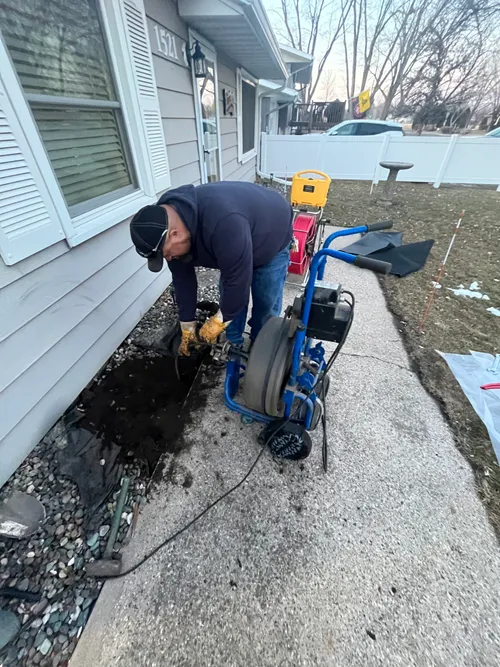
Warrior Drain Cleaning & Plumbing Services
5150 Marson Dr, Sauk Rapids, MN 56379
Warrior Drain Cleaning & Plumbing Services is a licensed plumbing and drain cleaning company serving St Cloud, MN, and nearby Central Minnesota communities. They provide a wide range of services including drain cleaning, sewer and septic system installation, trenchless pipe lining, and sewer camera inspections. The company uses advanced technology such as real-time drain camera inspections to accurately diagnose blockages caused by grease, roots, or other debris. They also offer hydro-jetting and mechanical snaking to clear stubborn clogs and pipe lining as a trenchless solution for damaged pipes. Warrior Drain Cleaning & Plumbing Services is available 24/7 for emergency plumbing needs.
Roto-Rooter Plumbing & Water Cleanup
1821 University Ave W #317, St Paul, MN 55104
Roto-Rooter Plumbing & Water Cleanup provides comprehensive plumbing services in Minneapolis, MN, specializing in both residential and commercial plumbing needs. Their offerings include drain cleaning, grease trap pumping, sewer line repair and replacement, water heater services, and water softener and filtration system installation. The company uses advanced techniques such as hydro-jetting and video camera sewer inspection to address plumbing issues efficiently. Serving the Minneapolis and St. Paul metro areas, Roto-Rooter is available 24/7 for emergency plumbing services, ensuring support whenever urgent problems arise.
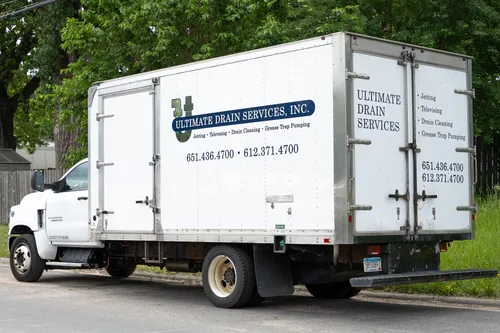
Ultimate Drain Services Inc
Minneapolis, MN
Ultimate Drain Services Inc is a family-owned business serving Minneapolis, MN, and the surrounding areas including St. Paul and Western Wisconsin. They provide a wide range of drain cleaning services for commercial, industrial, and residential clients. Their capabilities include hydrojetting and grease trap pumping. With nearly 30 years of experience, they offer 24/7 emergency services to address plumbing issues promptly.
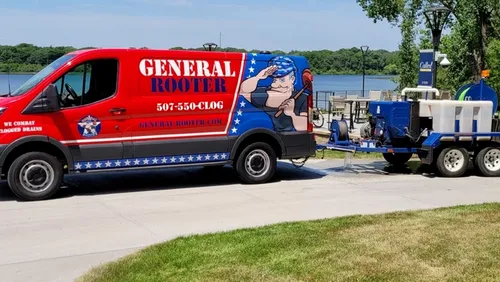
General Rooter of Southern MN - Sewer & Drain Cleaning
1415 1st Ave Suite 460, Mankato, MN 56001
General Rooter of Southern MN - Sewer & Drain Cleaning is based in Mankato, MN, serving residential and commercial clients throughout Southern Minnesota. They provide a wide range of services including drain and sewer cleaning, video camera pipe inspections, hydro jetting, cast iron pipe descaling, frozen pipe thawing, heat tape installation, pipe lining, pipe bursting, and grease trap and sand pit cleaning. Their service area covers multiple counties and cities across Southern Minnesota, with branch offices in Albert Lea, Austin, Le Sueur, Owatonna, Rochester, and St. James. The company is owned and operated by Jason Viebrock and is affiliated with several regional chambers of commerce.
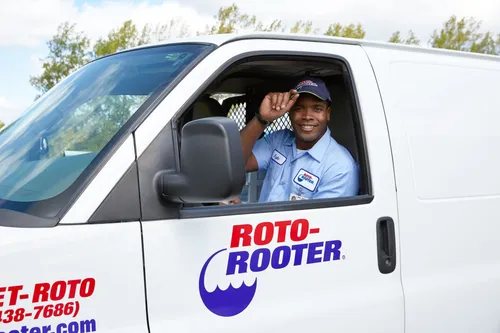
Roto-Rooter Plumbing & Water Cleanup
1629 Hennepin Ave #300G, Minneapolis, MN 55403
Roto-Rooter Plumbing & Water Cleanup is a licensed and insured plumbing company serving Minneapolis, MN. They provide 24/7 plumbing services including drain cleaning, grease trap pumping, sewer line repair, and water damage cleanup for both residential and commercial clients. Their capabilities include hydro-jetting and video camera inspections to diagnose and clear drain and sewer issues efficiently. Established with a long history in plumbing, Roto-Rooter is available around the clock to handle emergencies and routine maintenance throughout the Minneapolis metro area.
Understanding Minnesota's Grease Trap Regulations
At the state level, grease trap maintenance is governed by Minnesota Rules 4715.11051 2. This plumbing code mandates the proper installation and maintenance of grease interceptors. Crucially, it requires that interceptors be "maintained in efficient operating condition," with the specific maintenance frequency and standards often delegated to local authorities. This means your most important compliance steps are dictated by your city or municipality.
Most Minnesota cities have adopted their own Fats, Oils, and Grease (FOG) control programs that build upon the state code. Cities like Eagan, Blaine, Red Wing, and Minneapolis have detailed ordinances requiring food service establishments to register, obtain permits, and follow Best Management Practices (BMPs) 3 4 5. The cornerstone of these maintenance requirements is the "25% Rule." This universal standard dictates that a grease interceptor must be cleaned when the combined volume of floating FOG and settled solids reaches 25% of the unit's liquid capacity 3.
Required Cleaning Frequencies for Different Trap Types
The type of grease trap you have directly determines your minimum required service schedule. Adhering to this schedule is the best way to stay ahead of the 25% Rule and ensure compliance.
Hydromechanical Grease Interceptors (HGIs / Indoor Traps)
These are the smaller, compact units typically found under sinks or in kitchen prep areas.
- Frequency: They require the most frequent attention. Local ordinances commonly mandate that HGIs be inspected and cleaned at least every 30 days (monthly)6 7 8. Some jurisdictions may specify cleaning "as needed" but require inspection logs every 30 days to verify the 25% Rule hasn't been exceeded.
- Reasoning: Their smaller capacity makes them fill with FOG and solids much faster. Regular monthly service is essential to prevent clogs in your own plumbing and ensure the interceptor functions correctly.
Gravity Grease Interceptors (GGIs / Outdoor Traps)
These are the larger, in-ground tanks usually located outside the building.
- Frequency: These have a larger capacity and are cleaned less often. The standard requirement is inspection and cleaning at least every 90 days (quarterly).
- Important Note: The quarterly schedule is a minimum. If your establishment has high-volume cooking, your outdoor interceptor may reach the 25% capacity threshold before 90 days. Regular inspections are key to determining your site's ideal schedule.
Find the perfect grease trap cleaning companies for your needs
Get personalized recommendations and expert advice
Permitting, Documentation, and Compliance
Beyond the physical cleaning, regulatory compliance involves paperwork and record-keeping.
- Permits and Registration: Many Minnesota municipalities require food service establishments to register their grease traps and obtain an annual FOG permit from the local Public Works or Utilities department. There is often a fee associated with this permit. You should contact your city directly to confirm their specific requirements.
- Service Logs: You are legally required to maintain detailed grease trap service records on-site for a minimum of two to three years. These logs must be available for inspection by city officials at any time. A proper service ticket or log should include:
- Date of service
- Name of the servicing company/contractor
- Volume of grease, solids, and wastewater removed (in gallons)
- Disposal method or location (e.g., name of the rendering plant or landfill)
- Signature of the service provider
Cost of Grease Trap Cleaning in Minnesota
Service costs are not fixed and vary based on several factors, including the size and type of your trap, its location, and how frequently it is serviced.
- Indoor Hydromechanical Traps: Cleaning a typical under-sink or in-kitchen unit generally ranges from $100 to $400+ per service. The lower end often applies to simple, accessible units on a regular monthly plan.
- Outdoor Gravity Interceptors: Pumping and cleaning a large outdoor interceptor is more labor- and equipment-intensive, with costs typically ranging from $300 to $1,000+ per cleaning9 10.
- Saving on Service: Many service providers offer discounted rates for regular, scheduled maintenance. Committing to a monthly service contract for an indoor trap can often secure a 10-20% discount compared to one-off emergency cleanings11 12. Conversely, emergency calls for a clogged or overflowing trap will always cost significantly more.
- Chemical vs. Pumping: Be wary of services that offer cheap "chemical" or "enzyme" treatments as a substitute for physical pumping. While these can be part of a maintenance plan, they do not remove the accumulated FOG and solids. Regulatory compliance is achieved through physical removal and proper disposal, not chemical digestion alone.
Key Steps for Minnesota Restaurant Operators
- Identify Your Local Ordinance: Your first step is to contact your city's Public Works or Water Utilities department to get a copy of the local FOG ordinance and permit application.
- Know Your Equipment: Determine the type (HGI or GGI), size (in gallons), and location of all your grease interceptors.
- Establish a Proactive Schedule: Based on your trap type and local rules, set up a contract with a licensed grease hauler for monthly (indoor) and/or quarterly (outdoor) service. Do not wait for an overflow.
- Maintain Impeccable Records: File every service ticket immediately. Use a dedicated logbook or digital folder to store at least two years' worth of records.
- Train Your Staff: Ensure kitchen staff understand BMPs, such as scraping plates into the trash, using sink strainers, and never pouring grease down the drain.
Staying proactive with grease trap maintenance protects your business from sewer backups, costly emergency repairs, and non-compliance fines. By understanding the layered state and local requirements, you can implement a reliable and cost-effective service plan.
Frequently asked questions
Sources
Footnotes
-
4715.1105 grease interceptors. - MN Revisor's Office - https://www.revisor.mn.gov/rules/4715.1105/version/2014-01-18T05:44:36-06:00 ↩
-
4715.1105 GREASE INTERCEPTORS. Subpart 1. Uniform Plumbing ... - https://www.revisor.mn.gov/rules/pdf/4715.1105/2014-01-18%2005:44:36+00:00 ↩
-
FOG - Best Management Practices - Blaine, MN - https://www.blainemn.gov/2854/FOG---Best-Management-Practices ↩ ↩2
-
FATS OILS AND GREASE PROGRAM - Red Wing, MN - https://www.redwingmn.gov/DocumentCenter/View/3946/Red-Wings-FOG-Program-PDF ↩
-
Disposal of Fats, Oil, and Grease Ordinance - https://lims.minneapolismn.gov/Download/FileV2/19883/11-Disposal-of-Fats-Oil-and-Grease-Ordinance-Final.pdf ↩
-
Fats, Oils and Grease Control Program - City of Eagan - https://cityofeagan.com/images/PublicWorks/Eng/FOGBMPpacket.pdf ↩
-
HYDROMECHANICAL GREASE INTERCEPTOR (HGI ... - https://www.spokanecounty.gov/DocumentCenter/View/51138/Hydromechanical-Grease-Interceptor-HGI-Maintenance---English?bidId= ↩
-
Grease Traps require frequent cleaning, from every day to once a ... - https://wspmn.gov/DocumentCenter/View/3984 ↩
-
Ultimate Grease Trap Pumping Cost Guide: Essential Money-Saving ... - https://www.texwaywastewater.com/grease-trap-pumping-cost/ ↩
-
Grease Trap Pumping Cost vs. Grease Trap Maintenance Cost - https://www.stateindustrial.com/video/cost-comparison-pumping-v-chemicals-to-maintain-a-grease-trap/ ↩
-
Grease Trap Pumping in Shakopee, MN - Hennes Septic Pumping - https://www.hennessepticpumping.com/grease-trap-pumping ↩
-
Grease Trap Cleaning - https://northbayrestaurantservices.com/grease-trap-cleaning-bay-area/ ↩