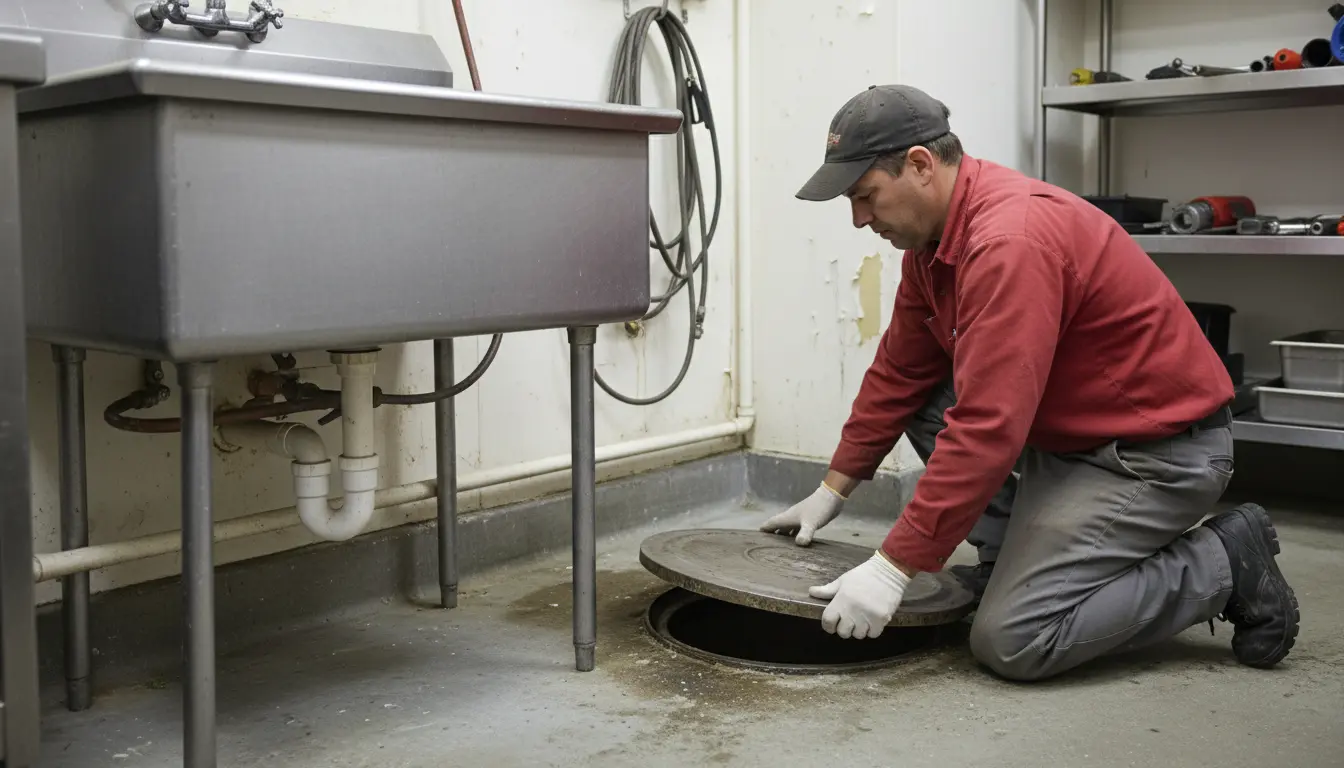
Find the Best Grease Trap Cleaning Companies for Your Business
No obligation • Fast responses • Nationwide coverage

Why you can trust Restaurant Waste Disposal
Restaurant Waste Disposal is a leading U.S. resource for comparing restaurant composting, food-waste recycling, grease trap cleaning, and used cooking oil collection services. Our editorial team researches providers, checks credentials, and organizes unbiased information so operators can make informed decisions. Companies cannot pay to change ratings or placement.
Search providers near you
Best Grease Trap Cleaning Companies in Delaware Ranked
For any restaurant, food service establishment, or commercial kitchen in Delaware, effective grease trap cleaning is not just a maintenance task-it's a critical regulatory requirement. Proper management of fats, oils, and grease (FOG) protects your plumbing, prevents costly sewer backups, and safeguards the state's water infrastructure. Delaware enforces specific rules for grease interceptor maintenance, which include mandatory service by licensed haulers, detailed record-keeping, and adherence to cleaning frequency based on your kitchen's volume. Understanding these local and state mandates is essential for smooth operations and avoiding significant penalties.
Understanding Delaware's Grease Trap Regulations
Delaware's approach to FOG management involves a combination of state guidelines and local county or municipal ordinances. The overarching goal is to prevent grease from entering the public sewer system, where it can solidify, cause blockages, and lead to sanitary sewer overflows (SSOs) that are harmful to the environment and public health.
At the state level, regulations often reference standards like the Plumbing and Drainage Institute (PDI) G101 for proper grease interceptor sizing and installation 1. This ensures that any new installation or replacement is capable of handling the grease load from your specific kitchen fixtures, including prep sinks, ware washers, and wok stations. However, much of the direct oversight and permitting falls to local authorities. For instance, Kent County and cities like Harrington have their own detailed FOG control ordinances that restaurants must follow.
A cornerstone of compliance is the requirement to use a state-licensed hauler for all grease trap pumping and cleaning services 2. These licensed professionals are trained in proper disposal methods, ensuring that FOG is taken to approved rendering or waste processing facilities rather than being dumped illegally.
How Often Should You Clean a Grease Trap in Delaware?
Determining the right cleaning schedule is one of the most common questions for kitchen managers. Delaware regulations typically mandate cleaning at least quarterly (every three months). However, this is a minimum standard. The actual frequency required for your establishment is based on the "1/4th full" rule 3.
This rule states that a grease interceptor should be cleaned as soon as the floating FOG layer and settled solids combined reach one-quarter of the trap's liquid depth. For many high-volume kitchens-such as those with heavy frying, woks, or automatic dishwashers-this can mean service is needed monthly or even more frequently 4.
Relying solely on a calendar schedule can lead to problems. An overfull trap loses its efficiency, allowing grease to pass through into the sewer lines. The most reliable method is to have your trap inspected regularly, often during routine service visits, to measure the FOG and solids accumulation. Your licensed hauler can then recommend a customized pumping schedule that keeps you compliant and your system functioning optimally.
Proper Servicing and Maintenance Logs
Simply having a trap pumped is not enough; it must be serviced correctly. Proper servicing involves the complete removal of all contents: wastewater, floating FOG, and settled solids 5. Methods like skimming just the grease off the top, dewatering, or using steam cleaners before pumping are generally prohibited, as they leave contaminants behind that defeat the trap's purpose 6.
Documentation is a critical component of compliance in Delaware. Counties like Kent require businesses to maintain a detailed maintenance log7. This log must be kept on-site for at least two years and be readily available for inspectors. It should record every service event with specific information:
- Date and time of service
- Name of the licensed hauler company
- Volume of grease, solids, and wastewater removed
- Signature of the hauler's representative
Additionally, you should retain all service receipts and manifests from your hauler as part of your records 8. This paperwork provides proof of proper disposal and is your first line of defense during a compliance inspection.
Find the perfect grease trap cleaning companies for your needs
Get personalized recommendations and expert advice
Costs and Consequences of Non-Compliance
Investing in regular grease trap maintenance is a predictable operational cost that pales in comparison to the expenses of non-compliance.
Service Costs: Pricing for grease trap pumping in Delaware varies based on the size, type (indoor vs. outdoor), and volume of waste. As a general range:
- Indoor grease traps may cost between $115 and $475 per service.
- Larger outdoor grease interceptors typically range from $325 to $1,040 per pumping 9.
These costs reflect the service of a licensed professional who handles the waste from collection to proper disposal.
Penalties for Violations: Failing to adhere to regulations can result in severe consequences. Municipalities can issue significant fines, which can start at $1,000 or more for a first offense10. Repeated violations or actions that lead to a sewer blockage or environmental damage can lead to:
- Escalating daily fines
- Suspension of sewer service
- Legal action and criminal charges
- In extreme cases, business closure 11
Proactive maintenance is always more cost-effective than reacting to a violation or a catastrophic sewer backup on your property.
Best Practices for Delaware Restaurant Owners
Beyond scheduling regular service, you can take several steps to improve your grease trap's efficiency and longevity.
- Train Your Staff: Educate kitchen staff on best practices for minimizing FOG going down the drain. This includes scraping plates and cookware into the trash before washing and using sink strainers.
- Pre-Screen Fixtures: Install metal mesh screens or baskets in all sink drains to catch food solids before they enter the trap.
- Know Your System: Understand the location and capacity of your grease trap. Ensure it is easily accessible for service technicians.
- Inspect Regularly: Don't wait for the scheduled pump-out. Visually check the trap's inlet and outlet baffles between services for signs of blockage or excessive grease.
- Partner with a Reputable Hauler: Establish a relationship with a licensed, reliable service provider. They can become a partner in your compliance, offering insights and alerts based on what they see during service.
By integrating these practices, you transform grease trap management from a reactive chore into a streamlined part of your kitchen's operational excellence.
Frequently asked questions
Sources
Footnotes
-
Department of Health and Social Services - Delaware Regulations - https://regulations.delaware.gov/register/february2011/final/14%20DE%20Reg%20813%2002-01-11.htm ↩
-
department of health and social services - Delaware Regulations - https://regulations.delaware.gov/register/september2019/proposed/23%20DE%20Reg%20200%2009-01-19.htm ↩
-
How Often Should Grease Traps Be Cleaned? - FCS, Inc - https://www.fcs-inc.org/how-often-should-grease-traps-be-cleaned/ ↩
-
How Often to Clean a Grease Trap - Wind River Environmental - https://www.wrenvironmental.com/blog/2019/february/how-often-to-clean-a-grease-trap/ ↩
-
Restaurant Grease Trap Cleaning FAQs - Mahoney Environmental - https://www.mahoneyes.com/restaurant-grease-trap-cleaning-faqs/ ↩
-
Ordinance 12-13 - Harrington - https://harrington.delaware.gov/files/2014/08/12-13-Ch-330-Sewers-FOG.pdf ↩
-
Fat, Oil and Grease Interceptors and Traps - eCode360 - https://ecode360.com/26991547 ↩
-
Grease Trap Cleaning How-To Guide for Commercial Kitchens (Free Posters) - https://www.fooddocs.com/food-safety-templates/grease-trap-cleaning ↩
-
Grease Trap Pumping Cost vs. Grease Trap Maintenance Cost - https://www.stateindustrial.com/video/cost-comparison-pumping-v-chemicals-to-maintain-a-grease-trap/ ↩
-
How to Clean a Grease Trap (and How Often You Should) - https://greaseconnections.com/how-to-clean-a-grease-trap-and-how-often-you-should/ ↩
-
Grease Trap Regulations and Compliance: What You Need to Know - https://www.texwaywastewater.com/grease-trap-regulations-and-compliance/ ↩