Find the Best Grease Trap Cleaning Companies for Your Business
No obligation • Fast responses • Nationwide coverage

Why you can trust Restaurant Waste Disposal
Restaurant Waste Disposal is a leading U.S. resource for comparing restaurant composting, food-waste recycling, grease trap cleaning, and used cooking oil collection services. Our editorial team researches providers, checks credentials, and organizes unbiased information so operators can make informed decisions. Companies cannot pay to change ratings or placement.
Search providers near you
Best Grease Trap Cleaning Companies in Nebraska Ranked
For any Nebraska restaurant, food truck, or commercial kitchen, managing fats, oils, and grease (FOG) is a critical operational and environmental responsibility. Proper grease trap and interceptor maintenance is not just a best practice-it's a legal requirement enforced by local municipalities to protect the state's sewer systems from costly blockages and overflows. This guide outlines the essential regulations, cleaning schedules, and cost considerations for maintaining compliance and avoiding fines in Nebraska.
Effective grease management starts with understanding your specific local ordinances. In Nebraska, regulations are primarily enforced at the city level by Public Works or Wastewater departments. Cities like Lincoln and Scottsbluff have detailed codes that mandate how and when grease traps must be serviced. 1 2 The core rule across jurisdictions is the "25% rule": traps must be cleaned when the combined volume of FOG and solids reaches 25% of the trap's liquid capacity. However, even if this level isn't reached, cleaning is required no less than every 30 days. 1 This minimum frequency is a baseline; establishments with high-volume operations or menus heavy in fried foods may require weekly or bi-weekly service to stay compliant and functional. 3 4
Crown Pumping
Omaha, NE
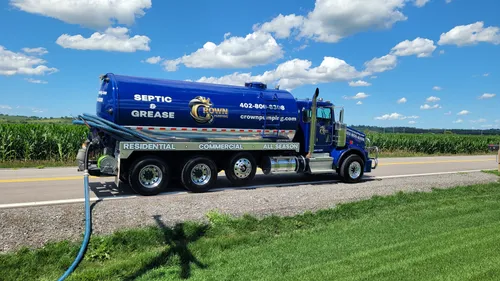
Crown Pumping provides septic tank pumping and grease trap cleaning services in Omaha, NE, and surrounding areas including Iowa. They serve both residential and commercial customers, offering services designed to maintain septic and plumbing systems effectively. Their capabilities include hydro jetting and pressure washing, supported by equipment such as hoses over 200 feet long to reach difficult locations. Crown Pumping is known for covering a broad service area and delivering reliable service tailored to local needs.
Roto-Rooter Plumbing & Water Cleanup
532 1st Ave #69, Council Bluffs, IA 51503
Roto-Rooter Plumbing & Water Cleanup offers comprehensive plumbing and water cleanup services in Omaha, NE, and the greater Omaha-Council Bluffs metropolitan area. They serve both residential and commercial clients with a wide range of solutions including drain cleaning, sewer line repair, grease trap maintenance, water heater services, and floodwater cleanup. The company is equipped with capabilities such as hydro-jetting and trenchless sewer repair technology. Established in 1935, Roto-Rooter provides 24/7 emergency plumbing services to address urgent issues like sewer backups, burst pipes, and water damage.
Roto-Rooter Plumbing & Water Cleanup
11515 S 39th St #103, Bellevue, NE 68123
Roto-Rooter Plumbing & Water Cleanup provides comprehensive plumbing and water remediation services in Omaha, NE, and the surrounding Bellevue area. They offer solutions for both residential and commercial properties, including drain and sewer cleaning, grease trap maintenance, water heater repair and installation, and emergency floodwater cleanup. Their commercial services also include high-pressure water jetting and gas line installation. The company is available 24/7, 365 days a year, to address urgent plumbing issues and minimize property damage. Serving multiple counties in Nebraska and Iowa, Roto-Rooter uses advanced equipment and techniques such as trenchless sewer repair to handle complex plumbing challenges.
Norm's Pumping Service Inc
20418 Husker Ln, Council Bluffs, IA 51503
Norm's Pumping Service Inc offers grease trap cleaning and septic system services in Omaha, NE. Serving the Council Bluffs area since 1954, they provide septic pumping, pump repairs, system inspections, full septic installations, and grease trap maintenance to prevent sewer line clogs and ensure regulatory compliance. Their services include certified septic tank inspections for real estate and maintenance needs. With over 70 years of experience, Norm's is a longstanding provider of septic and grease trap solutions.
Midland Pumping Service
Omaha, NE
Midland Pumping Service is a grease trap cleaning company based in Omaha, NE. They provide grease trap maintenance and cleaning services to local businesses, helping to manage waste and prevent plumbing issues.
Understanding Nebraska's Grease Trap Regulations
Nebraska does not have a single, statewide grease trap law. Instead, authority is delegated to local governments, each with its own sewer use ordinance. This means requirements can vary between Omaha, Lincoln, Grand Island, and smaller communities. The common thread is a strict prohibition against allowing FOG to enter the public sewer system, where it can solidify and cause major blockages, sanitary sewer overflows, and expensive damage to infrastructure.
Key regulatory components you will encounter include:
- Local Permits: Many cities require food service establishments to obtain a FOG permit or be listed on a registry. This permit often outlines your specific maintenance obligations.
- Certified Haulers: Some municipalities, including Lincoln, require that grease trap waste only be pumped and hauled by licensed or certified waste collectors. These professionals are trained to handle and dispose of the material properly.
- Record Keeping: You are typically required to maintain a detailed maintenance log on-site. This log should include the date of each service, the name of the servicing company, the volume of waste removed, and the disposal method. Inspectors can request these records at any time. 5
- Prohibited Practices: It is universally prohibited to use hot water, enzymes, solvents, or chemicals to emulsify or "melt" grease in an attempt to flush it down the drain. These methods simply move the problem downstream, leading to worse blockages in the public sewer and potential violations. 6 7
Determining Your Cleaning Frequency
While the 30-day minimum is a clear rule, the optimal cleaning schedule for your business depends on several factors. Relying solely on the calendar can lead to an overfull trap, while cleaning too infrequently risks a violation.
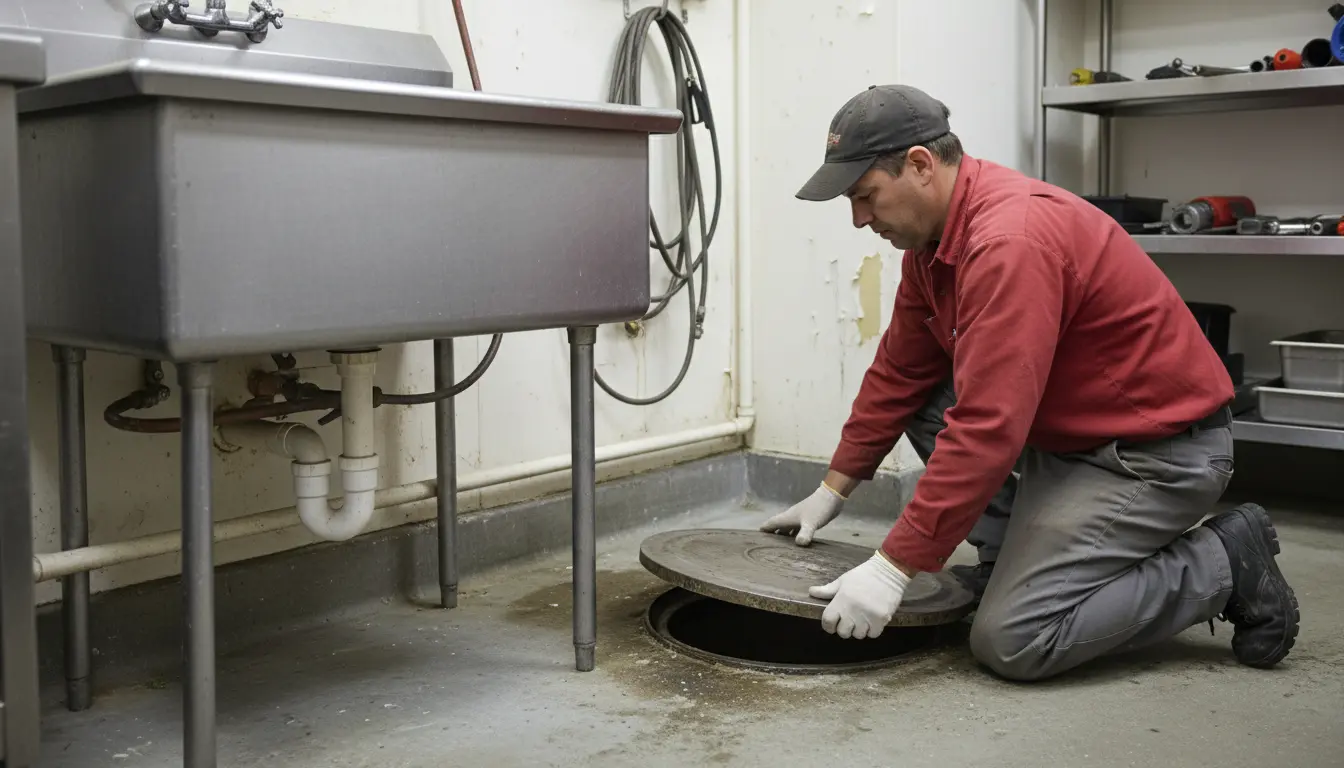
The 25% Rule in Practice: The 25% threshold is the maximum allowable accumulation. To monitor this, you or your staff should perform regular visual inspections, often weekly, by lifting the trap cover (using proper safety procedures) to check the depth of the FOG and sediment layers. When these layers combined fill one-quarter of the trap's depth, it's time to schedule a pumping. 8 9
Factors Influencing Your Schedule:
- Menu and Volume: A high-turnover steakhouse or a donut shop will generate FOG much faster than a low-volume sandwich cafe. Fried foods, meats, and dairy products significantly increase grease load.
- Trap Size and Type: Smaller under-sink grease traps (often 20-50 gallons) fill much faster than large, exterior grease interceptors (which can hold hundreds or thousands of gallons). An undersized trap for your kitchen's output is a common cause of frequent overflows.
- Best Practice: The most cost-effective and compliant approach is to work with a certified hauler to establish a preventative maintenance schedule based on your actual usage. This proactive plan is far cheaper than reacting to emergencies.
Costs of Grease Trap Service in Nebraska
Budgeting for grease trap maintenance is a predictable operational cost. Prices vary based on trap size, location, accessibility, and the service provider.
- Scheduled, Preventative Pumping: For a standard commercial kitchen with a routinely serviced trap, you can expect costs in the range of $250 to $400 per service. This is for a complete pump-out, cleaning, and proper disposal as part of a regular maintenance contract.
- Emergency Service: If a trap overflows, causes a backup, or is discovered to be in violation during an inspection, emergency service calls are significantly more expensive. These can range from $800 to over $1,200 due to after-hours fees, the urgency of the work, and the potential for more complex cleanup. 10
Find the perfect grease trap cleaning companies for your needs
Get personalized recommendations and expert advice
Consequences of Non-Compliance
Failing to adhere to local grease ordinances carries serious repercussions for Nebraska businesses. Enforcement actions are designed to incentivize proper maintenance and cover the public cost of sewer problems.
- Fines and Surcharges: Municipalities can levy substantial fines for violations. These can be one-time penalties or recurring surcharges on your water or sewer bill until compliance is demonstrated.
- Operational Disruption: In severe cases, a city can require immediate closure of your kitchen until the grease trap is serviced and brought into compliance, leading to lost revenue.
- Permit Revocation: Repeated violations can jeopardize your business license or food establishment permit.
- Civil Liability: If your negligence causes a sewer backup that damages public property or neighboring businesses, you could be held financially responsible for the cleanup and repairs.
Creating a Compliant Maintenance Plan
A systematic approach is the best defense against problems and penalties. Your plan should include:
- Know Your Local Ordinance: Contact your city's Public Works or Wastewater Department to obtain a copy of the FOG control ordinance and understand all requirements.
- Hire a Certified Professional: Partner with a licensed grease hauler who is familiar with your city's rules. They can help you determine the right schedule and ensure proper documentation.
- Maintain Impeccable Records: Keep a dedicated logbook or digital file for all service reports. Note inspection dates and any internal cleaning of baskets or filters.
- Train Your Staff: Educate kitchen staff on best practices for minimizing FOG discharge, such as scraping plates into trash bins before washing and using drain screens.
The Role of Grease Interceptors
For larger facilities or those with significant grease waste, an exterior grease interceptor may be required. These are large, underground tanks that provide more separation time for FOG. While they require less frequent pumping than indoor traps (often quarterly or semi-annually), they are subject to the same 25% rule and local permitting requirements. Their maintenance is more complex and should always be handled by professional waste haulers.
Proper grease trap maintenance is a non-negotiable aspect of responsible restaurant ownership in Nebraska. By understanding the local 25%/30-day rule, partnering with certified professionals, and keeping thorough records, you can protect your business from unexpected costs, operational shutdowns, and regulatory fines, while doing your part to keep Nebraska's waterways and infrastructure clean.
Frequently asked questions
Sources
Footnotes
-
§ 18-6-5 REQUIREMENTS FOR TRAPS. - https://codelibrary.amlegal.com/codes/scottsbluffne/latest/scottsbluff_ne/0-0-0-7214 ↩ ↩2
-
Guide to Food Establishment Design - Lincoln.ne.gov - https://www.lincoln.ne.gov/files/sharedassets/public/v/2/health-dept/environmental/food-safety/management/guide2foodestdesign.pdf ↩
-
How Often to Clean a Grease Trap - Wind River Environmental - https://www.wrenvironmental.com/blog/2019/february/how-often-to-clean-a-grease-trap/ ↩
-
Restaurant Grease Trap Cleaning FAQs - Mahoney Environmental - https://www.mahoneyes.com/restaurant-grease-trap-cleaning-faqs/ ↩
-
101.08 OPERATION, MAINTENANCE AND CLEANING OF GREASE ... - https://codelibrary.amlegal.com/codes/ankeny/latest/ankeny_ia/0-0-0-3530 ↩
-
fog_ordinance_2024_revision_a... - Senoia - https://www.senoia.com/media/8341 ↩
-
How to Clean a Grease Trap (and How Often You Should) - https://greaseconnections.com/how-to-clean-a-grease-trap-and-how-often-you-should/ ↩
-
Tips on Grease Trap/Interceptor Cleaning Frequency - https://www.villageofpennyan.com/uploads/1/2/3/8/123892065/grease-trap-cleaning-maintenance.pdf ↩
-
The Ultimate Guide to Restaurant Grease Trap Cleaning - https://mokherplumbing.com/ultimate-guide-restaurant-grease-trap-cleaning/ ↩
-
Ultimate Grease Trap Pumping Cost Guide: Essential Money-Saving ... - https://www.texwaywastewater.com/grease-trap-pumping-cost/ ↩