
Find the Best Grease Trap Cleaning Companies for Your Business
No obligation • Fast responses • Nationwide coverage

Why you can trust Restaurant Waste Disposal
Restaurant Waste Disposal is a leading U.S. resource for comparing restaurant composting, food-waste recycling, grease trap cleaning, and used cooking oil collection services. Our editorial team researches providers, checks credentials, and organizes unbiased information so operators can make informed decisions. Companies cannot pay to change ratings or placement.
Search providers near you
Top Grease Trap Cleaning Companies in Hanford, California Ranked
For restaurant owners and food service operators in Hanford, managing fats, oils, and grease (FOG) is a critical operational and legal responsibility. Proper grease trap and interceptor maintenance is not just about preventing kitchen clogs; it's a mandated requirement to protect the city's sewer infrastructure from costly blockages and environmental damage. California state law and local Hanford ordinances set clear standards for the frequency, type, and documentation of grease trap service, with enforcement handled by local public works authorities. Staying compliant helps you avoid significant fines, ensures uninterrupted business operations, and contributes to a healthier community wastewater system.
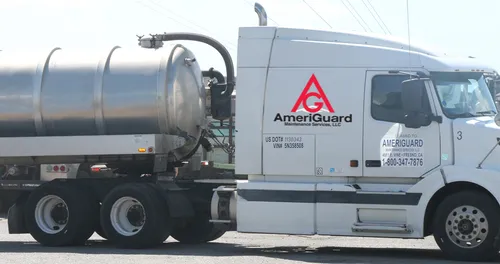
Ameriguard Maintenance Services LLC
4681 E Vine Ave, Fresno, CA 93725
Ameriguard Maintenance Services LLC is a family-run company based in Fresno, CA, specializing in used cooking oil collection, grease trap cleaning, and commercial septic services. Founded in 2003, the company serves a wide range of clients including restaurants, supermarkets, schools, government facilities, and casinos across 39 counties in California. Ameriguard focuses on preventative maintenance to help minimize emergency shutdowns and offers scheduled services for grease trap and drain line systems. Their operations include handling liquid waste management with updated equipment and environmentally conscious practices.
Simon & Son Pumping
Hanford, CA
Simon & Son Pumping provides septic and grease trap cleaning services in Hanford, CA, serving residential, commercial, and industrial clients. Their offerings include septic tank pumping, leach field pipe installation, new septic installations, emergency septic services, and grease trap cleaning. They also provide portable toilet rentals for events and job sites in Kings and Tulare counties. The company supports a range of industries including hospitality, agriculture, construction, and industrial sectors.
Understanding Hanford's Grease Control Regulations
In Hanford, grease trap maintenance is governed by a combination of California state health codes and local sewer use ordinances. The primary goal is to prevent FOG from entering the public sewer lines, where it can solidify, cause blockages, and lead to sanitary sewer overflows (SSOs).
The cornerstone of the regulation is the mandated service frequency. Establishments are required to have their grease interceptors pumped and cleaned at a minimum of every six months1. However, this is a baseline. If an inspection reveals that FOG and solids accumulation exceeds 25% of the liquid depth, the required service frequency increases-potentially to quarterly or even monthly-until the situation is under control1 2. This performance-based rule means high-volume kitchens must be especially vigilant.
Key Compliance Requirements for Your Establishment
Beyond frequency, several other specifications are strictly enforced:
- Trap Type and Sizing: Gravity grease interceptors are the standard requirement. Mechanical or water-jacketed grease traps are often disallowed for commercial kitchens3 4. Your interceptor must be correctly sized for your kitchen's flow rate and grease production (e.g., a minimum 40-pound grease capacity or a 20-gallon-per-minute flow rate)5 6.
- Accessibility: The trap must be easily accessible for service technicians and inspectors. It should be located in an approved area, typically not within food preparation zones, and clear of any obstructions.
- Documentation: You are legally required to maintain detailed service records. Every pump-out should be documented with a manifest from the licensed service provider. These records must be kept on-site and available for review during any compliance inspection.
Enforcement and Inspections in Hanford
Compliance is monitored by the City of Hanford Public Works or Sewer Department (or the relevant local agency overseeing wastewater). Inspectors conduct routine checks of food service establishments to verify several key points.
During an inspection, officials will typically:
- Request and review your grease trap service manifests to confirm adherence to the pumping schedule.
- Physically inspect the grease interceptor to check its condition, accessibility, and the current level of FOG accumulation.
- Verify that the trap is of an approved type and properly installed.
Failure to comply can result in a progression of enforcement actions. Inspectors may start with a verbal or written warning, but can escalate to issuing formal citations and imposing fines 7. In cases of repeated or severe non-compliance, the city may adjust your sewer service charges or take other legal action to compel proper maintenance8.
Find the perfect grease trap cleaning companies for your needs
Get personalized recommendations and expert advice
The Cost of Grease Trap Service in Hanford
Investing in regular maintenance is far more economical than dealing with the consequences of neglect. For a standard scheduled pump-out and cleaning in the Hanford area, restaurant owners can expect costs to typically range from $100 to over $400 per service9. Several factors influence the final price:
- Trap Size and Capacity: Larger interceptors that hold more waste naturally cost more to service.
- Level of Accumulation: A heavily neglected trap with hardened grease and solids requires more labor and time to clean, increasing the price.
- Accessibility: Traps that are difficult to reach may incur additional charges.
- Service Frequency: Contracts for regular, preventative service often have a lower per-visit cost compared to one-time emergency calls.
The real cost savings of preventative maintenance become clear when considering emergency services. A routine scheduled cleaning might cost between $250 and $400, while an emergency call for a severely clogged interceptor or a sewer backup can easily exceed $800, not including potential fines or repair costs for damaged plumbing10 11.
A Practical Guide for Hanford Restaurant Managers
Staying ahead of grease trap requirements is straightforward with a proactive approach.
- Verify Your Local Rules: Your first step should be to contact the City of Hanford Public Works Department directly. Confirm the specific local ordinances that apply to your business address and request any available compliance guidelines.
- Schedule Regular Service: Partner with a licensed, reputable grease trap cleaning service that operates in the Hanford and Tulare County area. Establish a regular pumping schedule-at least every six months-or more frequently if your kitchen produces high volumes of FOG12 13.
- Maintain Impeccable Records: File every service manifest in a dedicated, easily accessible location. Digital copies are also a wise backup. This paperwork is your primary proof of compliance.
- Prepare for Inspections: Ensure your grease interceptor is always accessible, with the manhole clear and the area around it free of storage or debris. Having your file of manifests ready for review makes the inspection process smooth and demonstrates your commitment to compliance.
Proper grease management is a cornerstone of responsible restaurant operation. By understanding the rules, partnering with a qualified service provider, and maintaining diligent records, you can protect your business from unnecessary expenses and contribute to the proper functioning of Hanford's essential services.
Frequently asked questions
Sources
Footnotes
-
Grease Trap Cleaning For California Restaurants - https://cacciaplumbing.com/blog/grease-trap-cleaning-california-restaurants/ ↩ ↩2
-
12.20.220. Grease trap requirements. - https://codelibrary.amlegal.com/codes/fullerton/latest/fullerton_ca/0-0-0-18563 ↩
-
- GREASE REDUCTION PROGRAM - https://www.northstarcsd.org/media/Ordinances/Sewer/SewerOrdinance_S8.pdf
-
SECTION 9 SOURCE CONTROL 9-01 GREASE, OIL AND/OR ... - https://www.centralsan.org/sites/main/files/file-attachments/section_9_source_control_0.pdf ↩
-
California Health and Safety Code § 114201 (2024) - Justia Law - https://law.justia.com/codes/california/code-hsc/division-104/part-7/chapter-7/article-2/section-114201/ ↩
-
Chapter 18.08 GREASE TRAPS - General Code - https://www.codepublishing.com/CA/PacificGrove/html/PacificGrove18/PacificGrove1808.html ↩
-
Grease Trap Inspection - InterNACHI® - https://www.nachi.org/grease-trap-inspection.htm ↩
-
Grease Trap Cleaning | Cooking Oil Collection | Plumbing Services - https://thegreasecompany.com/services.html ↩
-
Ultimate Grease Trap Pumping Cost Guide: Essential Money-Saving ... - https://www.texwaywastewater.com/grease-trap-pumping-cost/ ↩
-
Grease Trap Cleaning in Hanford, CA - Costs 10 / 2025 - Homeyou - https://www.homeyou.com/ca/grease-trap-cleaning-hanford-costs ↩
-
Restaurant Grease Trap & Interceptor Cleaning Cost - https://greasemanagement.org/pricing.html ↩
-
Grease Trap Cleaning in Hanford CA - https://greasetrapcleaningtulare.com/hanford-ca.html ↩
-
The Essential Guide to Grease Traps in Restaurants - https://therestaurantwarehouse.com/blogs/restaurant-equipment/grease-traps-in-restaurants ↩