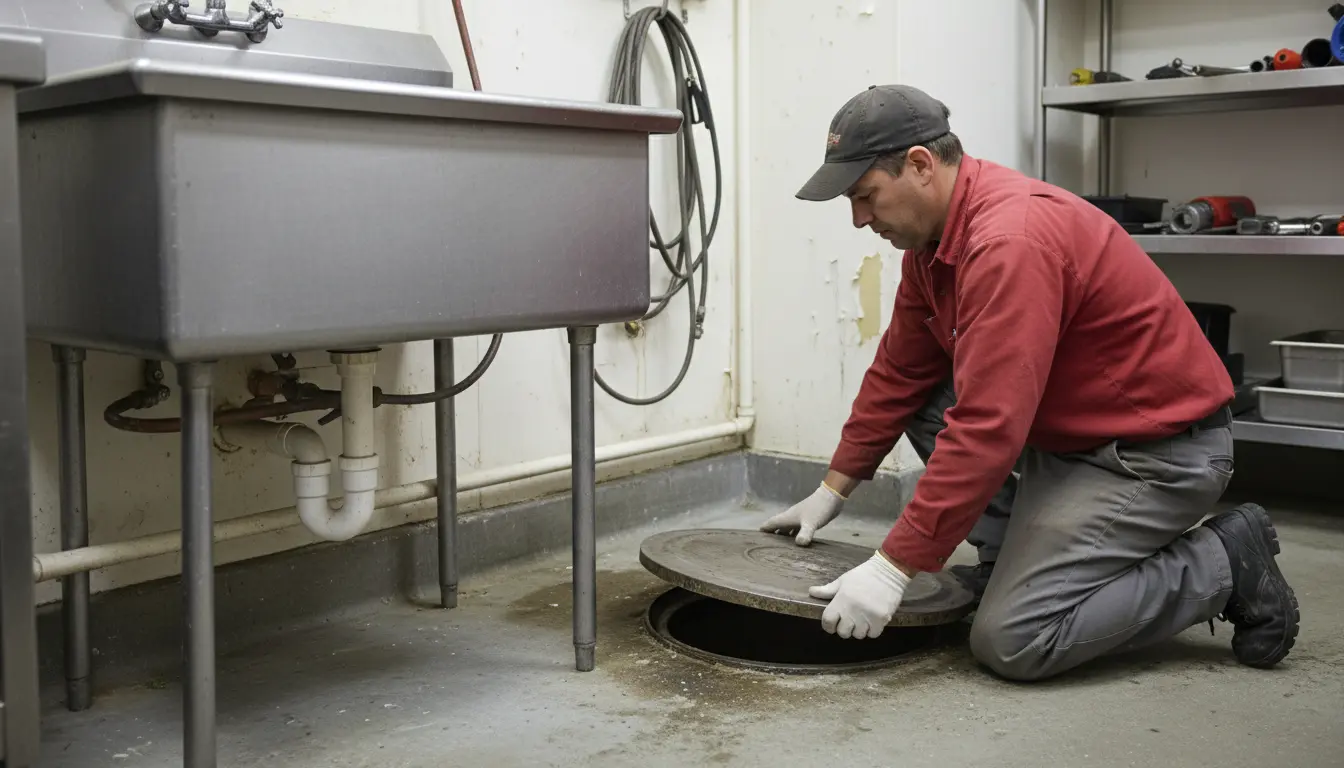
Find the Best Grease Trap Cleaning Companies for Your Business
No obligation • Fast responses • Nationwide coverage

Why you can trust Restaurant Waste Disposal
Restaurant Waste Disposal is a leading U.S. resource for comparing restaurant composting, food-waste recycling, grease trap cleaning, and used cooking oil collection services. Our editorial team researches providers, checks credentials, and organizes unbiased information so operators can make informed decisions. Companies cannot pay to change ratings or placement.
Search providers near you
Top Grease Trap Cleaning Companies in Santa Cruz, California Ranked
For any restaurant, café, or food service facility in Santa Cruz, proper grease trap and interceptor maintenance is not just a best practice-it's a strict legal requirement enforced by the Santa Cruz County Sanitation District. Effective grease management protects the local sewer infrastructure, prevents costly blockages and sanitary sewer overflows, and ensures your business remains in compliance with local ordinances. Failing to adhere to the mandated cleaning schedules and record-keeping can result in significant fines, enforcement actions, and much higher emergency service costs. This guide outlines the essential regulations, practical maintenance steps, and cost considerations for keeping your grease control systems functioning properly in Santa Cruz.
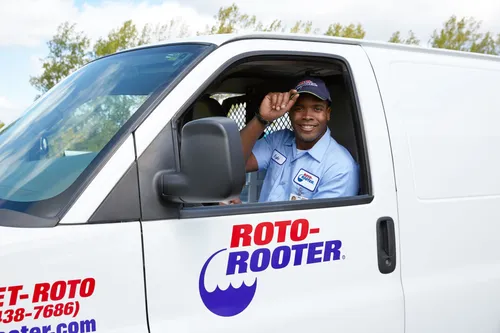
Roto-Rooter Plumbing & Water Cleanup
1500 41st Ave Ste 260, Capitola, CA 95010
Roto-Rooter Plumbing & Water Cleanup provides comprehensive plumbing services in San Jose, CA, specializing in both residential and commercial systems. Their offerings include drain cleaning, sewer line repair and replacement, water heater installation and repair, grease trap maintenance, and floodwater cleanup. The company uses advanced equipment such as hydro-jetting for effective drain cleaning and offers 24/7 emergency plumbing services to address urgent issues promptly. Serving Capitola and surrounding communities, Roto-Rooter has extensive experience managing plumbing challenges unique to the area, including compliance with local regulations and environmental concerns.
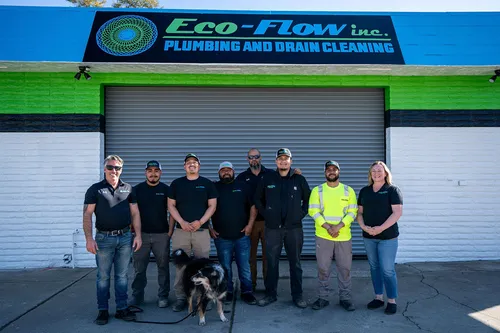
Eco-Flow Plumbing Inc.
122 Hubbard St, Santa Cruz, CA 95060
Eco-Flow Plumbing Inc. is a licensed and insured plumbing company serving San Jose, CA, and the surrounding Santa Cruz area. Since 2008, they have provided plumbing services for both residential and commercial clients, including sewer repairs, water heater services, and restaurant grease trap cleaning. Their team is equipped to perform high-pressure water jetting for pipe cleaning and emergency situations.
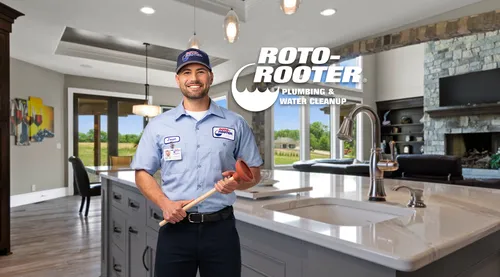
Roto-Rooter Plumbing & Water Cleanup
2078 Walsh Ave c1, Santa Clara, CA 95050
Roto-Rooter Plumbing & Water Cleanup offers a broad range of plumbing services in San Jose, CA, including commercial plumbing, emergency plumbing, grease trap cleaning, drain cleaning, sewer line services, and water heater repairs. They provide specialized capabilities such as hydro-jetting and video camera sewer inspections to address complex plumbing issues. Serving the Santa Clara metro area, they support both residential and commercial clients with expertise in water softener and filtration system installations. Roto-Rooter is available 24/7, 365 days a year for emergency plumbing needs.
Roto-Rooter Plumbing & Water Cleanup
310 Locust St Suite F, Santa Cruz, CA 95060
Roto-Rooter Plumbing & Water Cleanup provides comprehensive plumbing services in Santa Cruz, CA, catering to both residential and commercial clients. Their offerings include drain cleaning, sewer line repairs, water heater installation and repair, mold remediation, grease trap cleaning, and floodwater cleanup. The company uses advanced equipment such as hydro-jetting for drain maintenance and offers 24/7 emergency plumbing services to address urgent issues like burst pipes and sewer backups. Serving Santa Cruz and surrounding counties, Roto-Rooter has extensive experience managing plumbing needs for a variety of sectors including education, healthcare, and retail.
Roto-Rooter Plumbing & Water Cleanup
1780 Clear Lake Ave Suite 230, Milpitas, CA 95035
Roto-Rooter Plumbing & Water Cleanup provides comprehensive plumbing services for residential and commercial clients in San Jose, CA. Their offerings include sewer and drain cleaning, grease trap maintenance, water heater repairs, floodwater cleanup, mold remediation, and sewer line excavation and replacement. The company uses advanced technology such as hydro-jetting and video camera inspections to deliver effective solutions. With a focus on both preventive maintenance and emergency repairs, Roto-Rooter serves a wide range of plumbing needs. They offer 24/7 emergency plumbing services to address urgent issues at any time.
Understanding Santa Cruz County's Grease Control Regulations
Santa Cruz County has specific codes designed to prevent fats, oils, and grease (FOG) from entering the public sewer system. The primary rule is that all food service facilities must have a properly sized and functioning grease trap or grease interceptor for all kitchen wastewater. It is illegal to discharge grease-laden water without this primary form of containment. Furthermore, the use of chemicals, enzymes, or emulsifying agents to break down grease in traps is generally prohibited without written approval from the District, as these substances can simply pass the problem further down the line.
New facilities or those undergoing significant changes must submit a completed Food Facility Questionnaire to the Sanitation District for review and approval before commencing operations. This process ensures the proper grease control equipment is planned from the start. All traps and interceptors must also be easily accessible for servicing and inspection by both your maintenance provider and county officials.
Mandatory Cleaning Frequencies and the "25% Rule"
The cornerstone of compliance is adhering to mandated pumping schedules. For typical indoor grease traps, Santa Cruz County requires cleaning at least monthly. For larger outdoor grease interceptors, a quarterly (every three months) schedule is often the baseline. However, the official requirement states cleaning must occur as frequently as necessary, which is typically defined by the "25% rule": traps and interceptors must be cleaned before the combined FOG and solids accumulate to exceed 25% of the unit's liquid depth 1 2.
The District Engineer has the authority to require more frequent cleaning if inspections or history indicate it's necessary 3. Many facilities with high-volume cooking find that monthly, or even bi-weekly, service is needed to stay within this 25% threshold and avoid violations.
Inspection and Enforcement: What to Expect
The Santa Cruz County Sanitation District's Environmental Compliance Unit conducts regular inspections of food service facilities 4. Annual inspections are common, during which an inspector will review your maintenance records and physically check the condition of your grease control equipment.
The most critical item you must provide during an inspection is your proof of service records. You are required to keep detailed logs of every pumping and cleaning service, including the date, volume of waste removed, and the name of the servicing company. Failure to produce these records is itself a violation. Enforcement actions for non-compliance can escalate from warnings and mandatory corrective action plans to financial penalties. The Environmental Compliance Unit can issue field citations for chronic issues, leading to fines and additional fees 5. Proactive, scheduled maintenance is the most effective way to pass inspections seamlessly.
Cost of Grease Trap Service in Santa Cruz
Understanding the cost structure for grease interceptor maintenance helps in budgeting and underscores the value of regular service. Prices vary based on the size of your trap, its location, and the frequency of service.
- Scheduled Pumping & Cleaning: For routine maintenance of a standard-sized grease interceptor, businesses can expect costs in the range of $250 to $400 per service visit. This is the most cost-effective approach.
- Small Indoor Trap Maintenance: Smaller under-sink grease traps that require more frequent cleaning (e.g., every 2-4 weeks) may have a lower per-service cost, potentially starting around $115 or more, but this adds up due to the high frequency.
- Emergency Service: If a trap overflows, causes a backup, or is found to be in violation during an inspection requiring immediate action, emergency service calls are significantly more expensive. These can easily range from $800 to over $1,200 due to after-hours rates and the urgency of the work 6 7.
Find the perfect grease trap cleaning companies for your needs
Get personalized recommendations and expert advice
Choosing a Service Provider and Best Practices
Selecting a reliable, licensed grease trap cleaning service is vital. Look for providers familiar with Santa Cruz County's specific codes and reporting requirements. They should offer complete service, including hauling the collected grease to an approved disposal or recycling facility, and provide you with detailed documentation for your records.
Beyond pumping, facility operators should implement daily best management practices (BMPs). This includes scraping plates and cookware into the trash before washing, using sink strainers, and avoiding the use of garbage disposals, which are prohibited in commercial food facilities as they contribute to grease and solid buildup 8. Training staff on these simple steps can dramatically reduce the grease load entering your trap, extending time between services and reducing risk.
Consequences of Non-Compliance
Ignoring grease trap maintenance leads to predictable and serious problems. For your business, the first signs are often slow-draining sinks and unpleasant odors. This can escalate to complete blockages, kitchen backups, and costly plumbing emergencies. For the public and the environment, grease discharged into sewers cools and solidifies, creating massive blockages in city lines that can cause raw sewage to back up into streets, businesses, and homes-a public health hazard known as a sanitary sewer overflow (SSO).
The financial risks are twofold: exorbitant emergency repair bills and penalties from the county. The sanitation district may levy fines and require immediate, costly remediation. In severe cases, a business could face an enforcement order that mandates cleaning as often as weekly until compliance is demonstrated, a much more expensive outcome than consistent monthly service 9.
Planning for New Construction or Remodels
If you are planning a new food service facility or a major remodel in Santa Cruz, grease control must be integrated into your plumbing design from the beginning. You will need to work with a plumbing engineer to size the appropriate grease interceptor based on your anticipated flow and grease waste. The previously mentioned Food Facility Questionnaire is a mandatory step in this process and must be approved by the Sanitation District 10. Consulting with a local plumbing service experienced in commercial kitchen installations can ensure your system is designed for both efficiency and compliance from day one 11.
Frequently asked questions
Sources
Footnotes
-
Santa Cruz County Sanitation District Annual Pretreatment Report ↩
-
Grease Trap Cleaning Prices | Guide on the Industry Average ↩
-
Environmental Compliance Unit Requirements Food Service Facility ↩
-
Fresno Grease Trap Maintenance: Essential Facility Management Guide ↩
-
Santa Cruz County Sanitation District Food Facility Questionnaire ↩
-
Grease Trap Service In Santa Cruz | Poes Plumbing & Backflow ↩