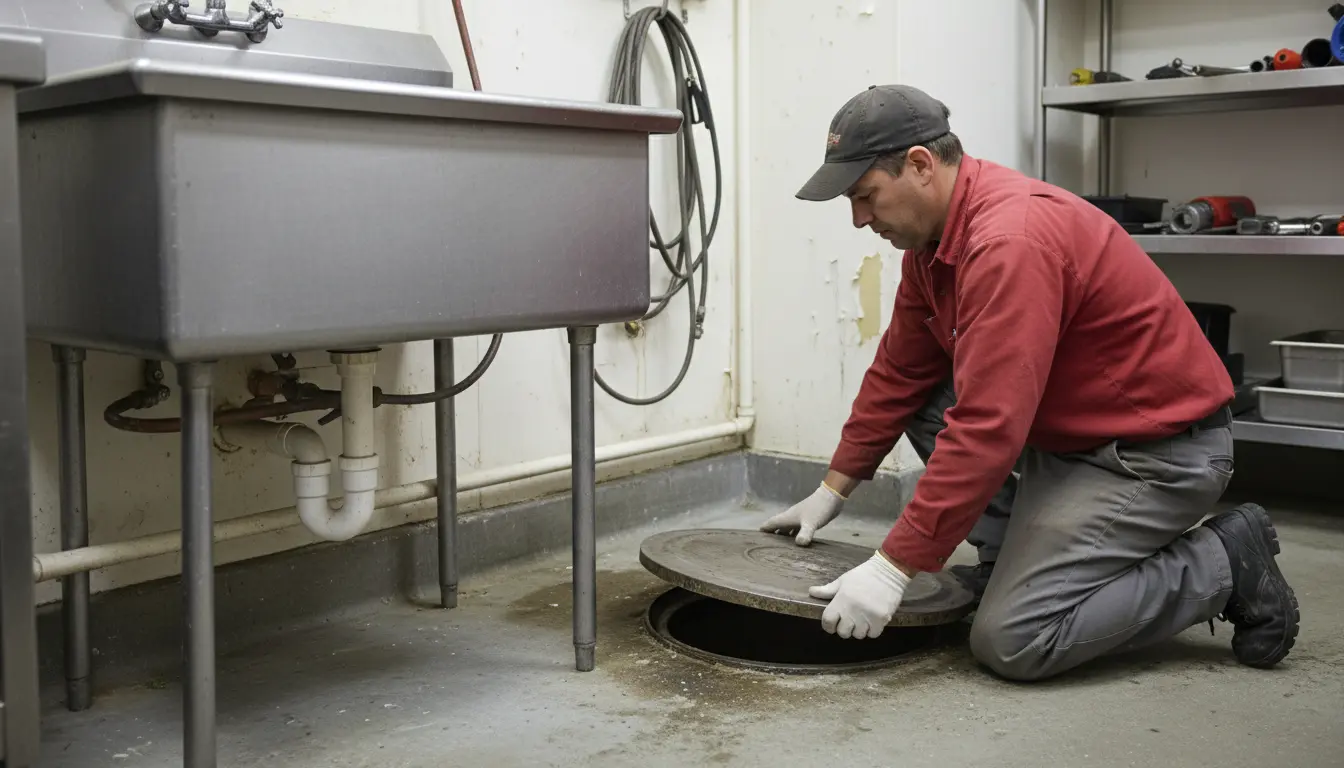
Find the Best Grease Trap Cleaning Companies for Your Business
No obligation • Fast responses • Nationwide coverage

Why you can trust Restaurant Waste Disposal
Restaurant Waste Disposal is a leading U.S. resource for comparing restaurant composting, food-waste recycling, grease trap cleaning, and used cooking oil collection services. Our editorial team researches providers, checks credentials, and organizes unbiased information so operators can make informed decisions. Companies cannot pay to change ratings or placement.
Search providers near you
Top Grease Trap Cleaning Companies in Murrieta, California Ranked
For restaurant owners and managers in Murrieta, maintaining a clean and compliant grease trap or interceptor is a critical operational and legal responsibility. These devices are the first line of defense in preventing fats, oils, and grease (FOG) from entering the city's sewer system, where they can cause costly blockages and environmental damage. Riverside County, which includes Murrieta, enforces strict regulations on grease trap maintenance for all food service establishments (FSEs). Proactive, scheduled cleaning by a licensed professional is not just a best practice-it's a requirement to avoid significant fines, citations, and potential business interruptions during county health inspections. This guide outlines the local rules, typical service expectations, and key steps to ensure your establishment remains in good standing.
Roto-Rooter Plumbing & Water Cleanup
3579 Arlington Ave #800, Riverside, CA 92506
Roto-Rooter Plumbing & Water Cleanup provides a wide range of plumbing and water cleanup services in Riverside, CA. They handle everything from routine maintenance and repairs to complex commercial plumbing needs, including grease trap cleaning, sewer line repair, and water damage cleanup. Their team is experienced with local plumbing challenges and building codes, serving both residential and commercial clients. Roto-Rooter offers 24/7 emergency plumbing services to address urgent issues such as burst pipes, sewer backups, and clogged drains. They also specialize in hydro-jetting and use advanced technology for sewer inspections and pipe replacement. With a history dating back to the invention of the electric drain snake in 1935, Roto-Rooter continues to apply innovative solutions to plumbing problems.
Drainman Cleaning
Perris, CA
Drainman Cleaning is a grease trap cleaning company based in Perris, CA. They specialize in maintaining and cleaning grease traps to help businesses manage waste effectively and comply with local regulations.

Roto-Rooter Plumbing & Water Cleanup
25014 Las Brisas Rd, Murrieta, CA 92562
Roto-Rooter Plumbing & Water Cleanup has been serving Murrieta, CA, and surrounding areas since 1935. They provide a full range of plumbing services including residential and commercial plumbing, drain cleaning, grease trap pumping, septic tank maintenance, and water cleanup. The company offers same-day and emergency services 24/7, including holidays, with no weekend fees and clear pricing policies. Their team is experienced in handling local plumbing systems and regulations, ensuring compliant and effective solutions.
Roto-Rooter Plumbing & Water Cleanup
2141 Industrial Ct, Vista, CA 92081
Roto-Rooter Plumbing & Water Cleanup in San Diego, CA, offers comprehensive plumbing services including drain cleaning, grease trap maintenance, and water cleanup. Serving Vista and surrounding areas, they provide solutions tailored to local plumbing challenges such as hard water and mineral buildup. The company has been operating since 1935, delivering a range of services like hydro-jetting and trenchless pipe repair to minimize property disruption. They offer same-day and emergency service 24/7, including holidays, with no weekend fees and limited after-hours charges.
J N Grease Services
25685 Sherman Rd, Romoland, CA 92585
J N Grease Services is based in Menifee, CA, and has been providing waste handling solutions and maintenance services for over 20 years. They serve a wide range of clients including small restaurants, large restaurant chains, food manufacturers, and supermarkets throughout Southern California. Their services include used cooking oil collection and grease trap cleaning, supporting businesses in maintaining operational efficiency. J N Grease Services emphasizes competitive pricing and attentive customer care to build long-term relationships.
Understanding Murrieta and Riverside County Grease Trap Regulations
Local codes are designed to protect municipal wastewater infrastructure. In Murrieta, these regulations are administered by the Riverside County Department of Environmental Health. Compliance is non-negotiable for any business that produces grease-laden wastewater, from full-service restaurants to cafes and bakeries.
Mandatory Installation and Approval: All FSEs must have an approved, properly sized, and easily accessible grease interceptor or trap. For new constructions or significant tenant improvements, the trap's size and design must be reviewed and approved by the county before opening. Sizing is based on factors like the number and type of plumbing fixtures, the style of food service, and projected water usage 1.
The 25% Rule: The core operational regulation in Riverside County is often referred to as the "25% rule." It mandates that grease traps must be pumped and cleaned when the combined depth of FOG and settled solids reaches 25% of the liquid depth of the tank 2. Allowing accumulation to exceed this level is a direct violation.
Accessibility and Condition: Your grease interceptor must be kept in good working order and must be readily accessible for service and inspection at all times. Traps that are buried, blocked, or otherwise inaccessible can themselves lead to penalties, as they prevent proper maintenance and verification 3.
Inspection Schedules, Record Keeping, and Enforcement
Riverside County Environmental Health inspectors conduct regular and unannounced inspections of food service facilities. Being prepared with proper documentation is essential for a smooth inspection process.
Proof of Service is Required: During an inspection, you will be asked to provide proof of recent grease trap maintenance. This is not a casual request-it is a standard part of the compliance check.
Maintain Detailed Cleaning Logs: Every restaurant should maintain a permanent, on-site log of all grease interceptor service. Each entry should include:
- The date of service.
- The name of the servicing company.
- The volume of grease and solids removed (in gallons).
- The disposal method or destination (e.g., landfill, rendering plant).
- The signature of the service provider.
Enforcement Actions for Non-Compliance: Failing to maintain records or allowing FOG levels to exceed the 25% threshold can trigger enforcement actions. Consequences escalate from written warnings and citations to substantial fines. In severe cases of repeated non-compliance, the county has the authority to suspend operations or even revoke a facility's health permit, effectively forcing a closure until the issue is resolved.
Service Frequency and Cost Considerations in Murrieta
How often you need grease trap pumping depends entirely on your volume of business and menu. A high-volume barbecue restaurant will require far more frequent service than a low-volume coffee shop.
Determining Your Pumping Schedule: While the legal maximum is the 25% fill level, many proactive businesses schedule service on a fixed interval. Common frequencies range from every 1 to 3 months for busy kitchens to every 4 to 6 months for lighter-use establishments. The only way to know for sure is to work with your service provider to establish a schedule and then monitor the trap's accumulation rate.
Understanding Service Costs: The cost for grease interceptor pumping in Murrieta varies based on the size of the tank, its location, and how much material needs to be removed.
- Standard Pumping: For a standard-sized, accessible grease trap, a routine pump-out typically ranges from $100 to $400+ per service 4 5.
- Large or Complex Jobs: Pumping a large in-ground interceptor, handling an emergency blockage, or dealing with a hard-to-access unit can cost significantly more, sometimes ranging from $800 to $1,200 or higher 6 7.
- The Cost of Non-Compliance: It's important to view regular service as an investment. The cost of a routine pump-out is almost always far less than the fines levied for a violation or the lost revenue from an emergency closure due to a sewer backup.
Find the perfect grease trap cleaning companies for your needs
Get personalized recommendations and expert advice
Choosing a Licensed Service Provider in Murrieta
Not all pumping companies are equal. For compliance and peace of mind, selecting the right partner is crucial.
Verify Licensing and Insurance: Always hire a licensed, insured, and experienced local grease trap cleaning company. They should be familiar with Riverside County's specific reporting requirements and inspection protocols. Using an unlicensed provider may result in improper service that fails to meet county standards, leaving you liable 8.
Look for Full-Service Documentation: A reputable provider will not only perform the physical cleaning but will also supply you with detailed documentation, including a service ticket stating the gallons removed and a waste manifest showing proper disposal. This paperwork is what you will present to the health inspector 9.
Establish a Proactive Relationship: The best service is preventive. Partner with a company that offers scheduled maintenance plans and is responsive to questions. They can help you track your accumulation rate and recommend the optimal service frequency to keep you safely below the 25% threshold, avoiding last-minute emergencies 10 11.
Key Action Steps for Murrieta Restaurant Operators
- Verify Compliance: If you are a new owner or have never checked, confirm that your existing grease trap is the correct size and has been approved by the county.
- Schedule an Assessment: Contact a licensed local service provider (like those servicing the Wildomar and Murrieta area) for an initial assessment of your current trap condition and accumulation level.
- Implement a Logging System: Immediately set up a dedicated binder or digital log to record every grease trap service. Keep all receipts and manifests on file.
- Adhere to the 25% Rule: Never wait until your trap is overflowing or completely full. Schedule pumping well before FOG and solids reach the quarter-full mark.
- Prepare for Inspections: Train your management team on where maintenance records are kept and what to expect during a Riverside County Environmental Health inspection.
By understanding these regulations and partnering with a qualified professional, you can transform grease trap maintenance from a source of stress into a routine, manageable part of your restaurant's operations, ensuring you stay focused on serving your customers.
Frequently asked questions
Sources
Footnotes
-
California Health and Safety Code § 114201 (2024) - Justia Law - https://law.justia.com/codes/california/code-hsc/division-104/part-7/chapter-7/article-2/section-114201/ ↩
-
Grease Trap Cleaning For California Restaurants - https://cacciaplumbing.com/blog/grease-trap-cleaning-california-restaurants/ ↩
-
12.20.220. Grease trap requirements. - https://codelibrary.amlegal.com/codes/fullerton/latest/fullerton_ca/0-0-0-18563 ↩
-
Trap pumping - https://phoenixpumping.com/grease-trap-maintenance/ ↩
-
The Cost To Clean A Grease Trap For Restaurants - https://thegreasecompany.com/blog/greasetrapcleaningcost/ ↩
-
Ultimate Grease Trap Pumping Cost Guide: Essential Money ... - https://www.texwaywastewater.com/grease-trap-pumping-cost/ ↩
-
Grease Trap Cleaning Prices | Guide on the Industry Average - https://grease-cycle.com/grease-trap-pumping-cost/ ↩
-
How to Clean a Grease Trap (and How Often You Should) - https://greaseconnections.com/how-to-clean-a-grease-trap-and-how-often-you-should/ ↩
-
Grease Trap Regulations and Compliance: What You Need to Know - https://www.texwaywastewater.com/grease-trap-regulations-and-compliance/ ↩
-
Debris Removal - Murrieta, CA - https://www.murrietaca.gov/954/Debris-Removal ↩
-
Grease Trap Cleaning in Murrieta CA | Grease Interceptor Pumping - https://greasetrapcleaningwildomar.com/murrieta-ca.html ↩