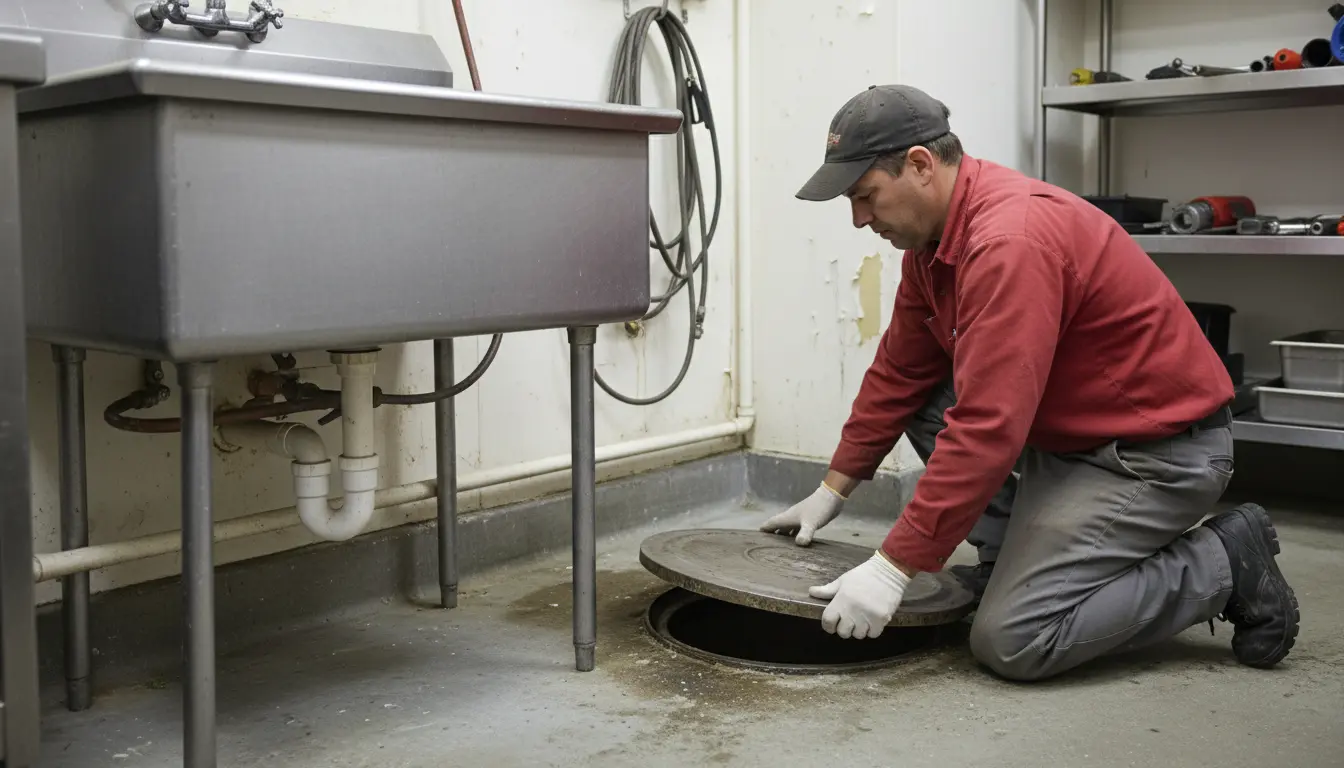
Find the Best Grease Trap Cleaning Companies for Your Business
No obligation • Fast responses • Nationwide coverage

Why you can trust Restaurant Waste Disposal
Restaurant Waste Disposal is a leading U.S. resource for comparing restaurant composting, food-waste recycling, grease trap cleaning, and used cooking oil collection services. Our editorial team researches providers, checks credentials, and organizes unbiased information so operators can make informed decisions. Companies cannot pay to change ratings or placement.
Search providers near you
Top Grease Trap Cleaning Companies in Long Beach, California Ranked
For restaurant owners and food service operators in Long Beach, managing fats, oils, and grease (FOG) is a critical operational and legal responsibility. The city's sewer system is protected by a robust Grease Management Program, which mandates that all food establishments install, maintain, and regularly service grease interceptors. Proper grease trap maintenance is not just about avoiding clogs in your own kitchen; it's about preventing costly blockages in the public sewer lines, which can lead to significant fines and environmental harm. Compliance requires partnering with a licensed hauler for regular pump-outs and adhering to strict local codes enforced by Long Beach Utilities and the Environmental Health Bureau. This guide outlines everything you need to know about FOG control, from local regulations to service best practices, to keep your business running smoothly and in full compliance.
Zoom Drain
15540 Rockfield Blvd C100, Irvine, CA 92618
Zoom Drain is a grease trap cleaning and drain service company based in Los Angeles, CA. They provide residential and commercial drain and sewer cleaning, inspection, repairs, and preventive maintenance. Their services cover clogged drains, sewer pump repair, sump pump replacement, and landscape drain maintenance. Zoom Drain uses advanced technology like hydro jetting to clear blockages, including tree roots, and offers 24/7 emergency services. They serve areas including Anaheim, Irvine, Santa Ana, and throughout Orange County. The company is known for its specialized services in food and hospitality sectors, contractor support, and tailored maintenance plans.
Roto-Rooter Plumbing & Water Cleanup
241 E Colorado Blvd #202, Pasadena, CA 91101
Roto-Rooter Plumbing & Water Cleanup provides comprehensive residential and commercial plumbing services in Los Angeles, CA. They specialize in a wide range of plumbing solutions including grease trap cleaning, sewer line repairs, water heater installation and repair, and emergency floodwater cleanup. The company is equipped with advanced tools such as hydro-jetting equipment to handle complex plumbing issues efficiently. Serving the Pasadena area and surrounding communities, Roto-Rooter offers 24/7 emergency plumbing services throughout the year to address urgent plumbing needs. They are fully licensed and insured, focusing on both routine maintenance and emergency repairs.
Roto-Rooter Plumbing & Water Cleanup
3848 Campus Dr STE 220, Newport Beach, CA 92660
Roto-Rooter Plumbing & Water Cleanup provides comprehensive plumbing and water cleanup services in Long Beach, CA. They handle a wide range of issues including floodwater cleanup, sewer and drain cleaning, faucet and toilet repairs, water heater services, and grease trap maintenance. The company serves both residential and commercial clients, offering advanced capabilities such as high-pressure water jetting (hydro-jetting) and trenchless sewer line replacement. With decades of experience dating back to 1935, Roto-Rooter offers 24/7 emergency plumbing services to address urgent problems at any time.
Roto-Rooter Plumbing & Water Cleanup
2050 W Chapman Ave #202, Orange, CA 92868
Roto-Rooter Plumbing & Water Cleanup offers a wide range of plumbing services in Los Angeles, CA, including grease trap cleaning, sewer and drain cleaning, water heater repair, and emergency flood cleanup. The company serves both residential and commercial clients, addressing issues from routine maintenance to urgent repairs. They utilize advanced tools such as HD inspection cameras and hydro-jetting to clear blockages and perform no-dig pipe replacements. Established with a legacy dating back to the invention of the original electric drain snake in 1935, Roto-Rooter provides 24/7 emergency plumbing services to handle urgent situations any time of day or night.
White Glove Plumbing Orange County
1430 E Borchard Ave, Santa Ana, CA 92705
White Glove Plumbing Orange County is a full-service plumbing and restoration company based in Santa Ana, serving residential and commercial clients throughout Los Angeles, CA. They provide a wide range of services including emergency plumbing, leak detection, hydro-jetting, water heater installation, grease trap pumping, sewage cleanup, mold remediation, and water damage restoration. The company offers 24/7 emergency services to quickly address urgent plumbing and restoration needs. Their expertise includes advanced capabilities such as slab leak reroutes, sewer camera inspections, and certified mold remediation. White Glove Plumbing combines plumbing and restoration services to manage repairs and rebuilds efficiently, reducing the need for multiple contractors.
Understanding Long Beach's Grease Management Program
Long Beach Utilities operates a Healthy Sewers Program specifically designed to mitigate the impact of FOG on the city's wastewater infrastructure. This program is the cornerstone of local enforcement, with inspections carried out by the Environmental Health Bureau to ensure facilities are properly maintaining and monitoring their grease control equipment 1. The fundamental rule for any grease interceptor or trap in the city is that the accumulated FOG and solids must not exceed 25% of the liquid depth. This measurable limit is a key checkpoint during inspections. Facilities are required to obtain and maintain permits for their grease interceptors, and violations-such as failure to install required equipment, poor maintenance, or denying access for inspection-can lead to permit revocation and substantial penalties 1.
Key Regulatory Bodies and Rules
- Long Beach Utilities & Environmental Health: These are the primary agencies overseeing plan checks, permitting, and inspections.
- 25% Rule: The universal standard for maximum allowable accumulation in your trap 2 3.
- Mandatory Full Pump-Outs: Interceptors must be completely pumped out and cleaned on a scheduled basis, not just skimmed.
- Accessibility: Grease traps must be easily accessible at all times for service and inspection.
Compliance Requirements for New and Existing Restaurants
Whether you're opening a new establishment or modifying an existing kitchen, understanding the plan check process is essential. Any new installation or significant modification to a grease interceptor requires a formal Grease Interceptor Plan Check submitted to Long Beach Utilities Development Services 4 5. This review ensures the proposed interceptor is correctly sized and plumbed according to code. A critical plumbing detail enforced in Long Beach is that pre-rinse sinks must drain directly into the interceptor, while commercial dishwashers generally should not, due to their high-temperature discharge which can melt and re-liquefy grease, defeating the trap's purpose 4 6.
For existing restaurants, compliance hinges on consistent maintenance and record-keeping. You must keep detailed logs of all grease trap cleaning and pumping services, including dates and the name of the licensed hauler used. These records should be available for review during any Health Department inspection.
Determining Your Grease Trap Service Frequency
There is no one-size-fits-all schedule for cleaning your grease interceptor. The required frequency depends on several factors unique to your operation:
- Trap Size and Capacity: Smaller, under-sink grease traps fill much faster than large, in-ground interceptors.
- Menu and Food Type: Establishments serving fried foods, meats, and dairy products generate more FOG than those with lighter fare.
- Volume of Business: High-volume kitchens naturally produce more waste, requiring more frequent service.
- Kitchen Practices: Training staff to scrape plates and use sink strainers can significantly reduce the load on your trap.
As a general guideline, many Long Beach restaurants find that service is needed every 1 to 6 months 7. High-volume kitchens, particularly those with smaller traps, may require monthly pump-outs to stay under the 25% accumulation limit and avoid emergencies 7 8. The best practice is to have your licensed service provider assess your specific situation and recommend a preventive maintenance schedule.
Find the perfect grease trap cleaning companies for your needs
Get personalized recommendations and expert advice
The Cost of Grease Trap Service in Long Beach
Investing in regular maintenance is far less expensive than dealing with the consequences of a clog or a code violation. Service costs in the Long Beach area vary based on the size of your interceptor, its location (indoor vs. outdoor), and how often it needs servicing.
For a standard pump-out and cleaning of an indoor grease trap, restaurants can typically expect costs to range from approximately $200 to over $500 per service 9 10. This covers the labor, equipment, and proper disposal of the waste by a licensed hauler. Larger, in-ground interceptors will naturally cost more. It's crucial to understand that emergency service calls, which are often needed when a trap overflows or causes a backup, can be significantly more expensive, potentially starting at $800 or more due to after-hours premiums and the complexity of the cleanup 10 11. Establishing a regular, preventive service contract is the most cost-effective strategy.
Choosing a Licensed Service Provider
Selecting the right partner for your grease trap cleaning is a critical business decision. In Long Beach, you must use a licensed liquid waste hauler. A reputable provider will not only perform the physical cleaning but will also help you navigate compliance. Look for a service that:
- Provides detailed service reports documenting the pump-out volume and condition of the trap.
- Offers guidance on optimal service frequency for your business.
- Can assist with record-keeping for inspections.
- Has familiarity with Long Beach Utilities' specific reporting and permitting requirements.
A proper cleaning involves removing all contents-water, FOG, and solids-leaving the trap empty and ready to function efficiently. Simply skimming the top layer of grease is insufficient and will not keep you in compliance with the "full pump-out" requirement.
Consequences of Non-Compliance
Failing to adhere to Long Beach's grease management regulations carries serious risks. Beyond the immediate hassle and cost of a kitchen drain backup, violations can lead to:
- Fines and Penalties: The city can levy significant fines for code violations.
- Permit Actions: Your food facility permit or grease interceptor permit can be suspended or revoked.
- Sewer Blockages: If FOG from your establishment contributes to a public sewer line blockage (a "sanitary sewer overflow" or SSO), you can be held liable for the very costly cleanup and environmental remediation.
- Business Disruption: An order to cease operations until compliance is achieved can be devastating.
Proactive management of your grease interceptor is a straightforward way to protect your business from these costly and disruptive outcomes.
Frequently asked questions
Sources
Footnotes
-
article 17.5. grease interceptors, installation and disposal of waste - https://www.codepublishing.com/CA/Ukiah/html/Ukiah04/Ukiah0402-1705.html ↩ ↩2
-
Grease Management Program - https://www.longbeach.gov/health/inspections-and-reporting/inspections/water-quality/grease-management-program/ ↩
-
12.20.220. Grease trap requirements. - https://codelibrary.amlegal.com/codes/fullerton/latest/fullerton_ca/0-0-0-18563 ↩
-
Grease Interceptor Plan Check Information Form - Long Beach Forms - https://forms.longbeach.gov/Forms/GIPlanCheck ↩ ↩2
-
Grease Trap & Grease Interceptor Plan Check - Long Beach Utilities - https://www.lbutilities.org/Development-Services/Sewer-Development-Services/grease-trap-grease-interceptor-plan-check ↩
-
California Health and Safety Code § 114201 (2024) - Justia Law - https://law.justia.com/codes/california/code-hsc/division-104/part-7/chapter-7/article-2/section-114201/ ↩
-
How Often to Clean Restaurant Grease Traps in Los Angeles, CA - https://bakercommodities.com/blog/2025/01/23/la-laws-for-grease-recycling/ ↩ ↩2
-
Grease Trap Cleaning For California Restaurants - https://cacciaplumbing.com/blog/grease-trap-cleaning-california-restaurants/ ↩
-
Ultimate Grease Trap Pumping Cost Guide: Essential Money-Saving ... - https://www.texwaywastewater.com/grease-trap-pumping-cost/ ↩
-
How Much Does a Proper Grease Trap Cleaning Cost? - https://hulseyenvironmental.com/how-much-does-a-proper-grease-trap-cleaning-partner-cost/ ↩ ↩2
-
Grease Trap Regulations and Compliance: What You Need to Know - https://www.texwaywastewater.com/grease-trap-regulations-and-compliance/ ↩