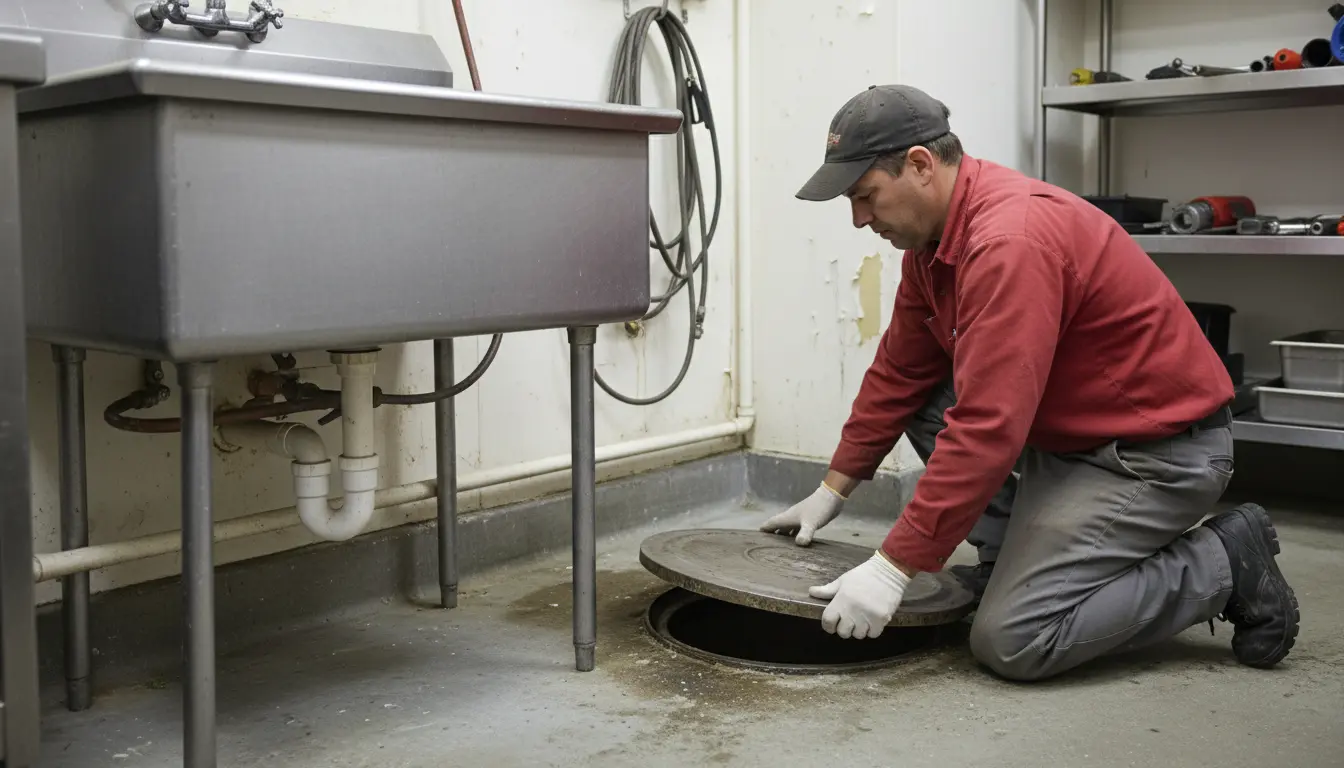
Find the Best Grease Trap Cleaning Companies for Your Business
No obligation • Fast responses • Nationwide coverage

Why you can trust Restaurant Waste Disposal
Restaurant Waste Disposal is a leading U.S. resource for comparing restaurant composting, food-waste recycling, grease trap cleaning, and used cooking oil collection services. Our editorial team researches providers, checks credentials, and organizes unbiased information so operators can make informed decisions. Companies cannot pay to change ratings or placement.
Search providers near you
Top Grease Trap Cleaning Companies in Walnut Creek, California Ranked
For any restaurant, café, or food service establishment in Walnut Creek, effective grease trap and interceptor maintenance is a critical operational and legal necessity. Operating under the strict oversight of the Central Contra Costa Sanitary District (CCCSD), local businesses must adhere to specific pumping schedules and record-keeping protocols to prevent costly sewer blockages and environmental issues. This guide details the local requirements, typical service costs, and best practices for managing your grease control system to ensure compliance and smooth kitchen operations.
Proper grease interceptor service is not just about avoiding clogs; it's a mandated part of your facility's wastewater pretreatment program. The CCCSD enforces rules designed to keep fats, oils, and grease (FOG) out of the public sewer system, which can lead to backups and significant repair costs. By understanding and proactively managing your grease trap cleaning schedule, you protect your business from violations and contribute to the community's infrastructure health.
Roto-Rooter Plumbing & Water Cleanup
1780 Whipple Rd Ste 203G, Union City, CA 94587
Roto-Rooter Plumbing & Water Cleanup provides comprehensive plumbing and water cleanup services in San Jose, CA. They serve both residential and commercial clients, offering a wide range of solutions including grease trap cleaning, sewer and drain cleaning, water heater repair and installation, and emergency flood services. The company uses advanced plumbing technology and equipment to handle complex plumbing systems and offers 24/7 emergency plumbing support to address urgent issues such as burst pipes and sewer backups. Roto-Rooter is licensed and insured, serving the local community with expertise and a commitment to compliance with local codes.
Caccia Home Services
1660 Gilbreth Rd, Burlingame, CA 94010
Caccia Home Services is a plumbing and home services provider based in San Mateo, CA. They offer a wide range of services including grease trap cleaning, hydro jetting, sewer line repair, water treatment, and emergency plumbing. Their capabilities include trenchless sewer services and installation and maintenance of water heaters, including tankless and heat pump models. The company also provides electrical services such as EV charger installation and lighting upgrades. Caccia Home Services is known to respond to emergency plumbing needs.
Roto-Rooter Plumbing & Water Cleanup
1210 Central Blvd Ste 123, Brentwood, CA 94513
Roto-Rooter Plumbing & Water Cleanup provides comprehensive plumbing and water cleanup services in Antioch, CA. Their offerings cover residential and commercial plumbing needs, including grease trap cleaning, sewer line repairs, water heater installation and repair, floodwater cleanup, and mold remediation. The company is equipped with advanced tools like hydro-jetting for drain cleaning and offers 24/7 emergency plumbing services to address urgent issues such as burst pipes and sewer backups. Serving Antioch and surrounding areas, Roto-Rooter is experienced in handling complex plumbing systems and environmental factors affecting local infrastructure.
Roto-Rooter Plumbing & Water Cleanup
1130 N Broadway Ste 200C, Walnut Creek, CA 94596
Roto-Rooter Plumbing & Water Cleanup provides comprehensive plumbing services in Oakland, CA, covering residential and commercial needs. Their offerings include drain cleaning, sewer line repair and replacement, grease trap cleaning, water heater installation and repair, floodwater cleanup, and mold remediation. The company is equipped to handle complex commercial plumbing systems and offers specialized services such as hydro-jetting and trenchless sewer line repairs. Roto-Rooter serves the Oakland area and surrounding counties with 24/7 emergency plumbing availability to address urgent issues any time of day or night.
Roto-Rooter Plumbing & Water Cleanup
41111 Mission Blvd Ste 202, Fremont, CA 94539
Roto-Rooter Plumbing & Water Cleanup is a plumbing company serving San Jose, CA, and nearby communities including Fremont, Sunol, Pleasanton, Milpitas, and Warm Springs. They provide a wide range of plumbing services for residential and commercial clients, including drain cleaning, water heater repair, emergency plumbing, and grease trap cleaning. The company offers 24/7 emergency plumbing services and uses advanced equipment such as high-pressure water jetting (hydro-jetting) for effective drain maintenance. Established in 1935, Roto-Rooter has a long history of serving customers with professional plumbing solutions.
Understanding Local Grease Trap Regulations
In Walnut Creek, grease interceptor maintenance is governed by the Central Contra Costa Sanitary District. The core rule mandates that traps must be pumped out before the combined FOG and settled solids exceed 25% of the unit's liquid depth 1 2. This is a performance-based standard, meaning the required service frequency isn't a fixed date but depends entirely on your establishment's volume of wastewater and cooking activity.
- Compliance is Key: The District conducts inspections, potentially on a bi-annual basis, to verify that traps are being serviced on time and that proper documentation is kept.
- Accessibility Requirement: Your grease interceptor must be easily accessible for servicing and inspection. Obstructions can lead to compliance issues 3.
- Documentation Mandate: You are required to maintain detailed maintenance records, typically service manifests from your pumping provider, for at least three years. These must be available for review during any inspection 4.
Failure to comply can result in enforcement actions, starting with a Warning Notice (WN) and escalating to a formal Notice of Violation (NOV), which may carry financial penalties 5.
Determining Your Service Frequency
How often you need grease trap pumping in Walnut Creek varies significantly. While the 25% rule is the legal benchmark, common practice provides a reliable guideline:
- High-Volume Restaurants: Establishments with extensive frying or high meal output may require service as often as weekly or bi-weekly.
- Typical Full-Service Restaurants: Most sit-down restaurants find a monthly or bi-monthly schedule necessary to stay within compliance limits.
- Lower-Volume Cafés & Bakeries: Smaller operations like coffee shops or delis might manage with quarterly service, but must still monitor levels closely.
The only way to establish your correct schedule is through regular measurement of FOG and solids accumulation by a qualified service technician. They can help you create a predictive maintenance plan that prevents last-minute emergencies.
Cost of Grease Trap Cleaning Services
Investing in regular grease interceptor maintenance is a predictable operational cost that far outweighs the expense of violations or sewer backups. Pricing in the Walnut Creek and greater East Bay area depends on several factors:
- Interceptor Size and Type: A small, indoor grease trap (1-30 gallons) typically costs between $120 and $180 for a service on a contract, while a one-time service can run $190 to $240. Larger, in-ground interceptors for high-volume kitchens generally range from $120 to $385 or more per pumping 6 7 8.
- Service Frequency: Contracting for regular service (e.g., monthly) often results in a lower per-service rate compared to emergency or one-time calls.
- Service Scope: Some providers offer bundled services, which may include used cooking oil collection, which can affect the total price.
Find the perfect grease trap cleaning companies for your needs
Get personalized recommendations and expert advice
Choosing a Service Provider in the East Bay
Selecting a reliable grease trap cleaning company is a crucial partnership. Look for providers with proven experience serving Contra Costa County businesses and a deep understanding of CCCSD regulations. A quality provider will do more than just pump out waste; they will be a compliance partner.
Essential services to look for include:
- Detailed Reporting: Provision of formal service manifests that you can file for inspections.
- Consistent Scheduling: Proactive communication to keep you on track.
- Local Knowledge: Familiarity with local inspectors and common compliance pitfalls in the area.
- Additional Services: Many companies also handle used cooking oil recycling, offering a convenient bundled solution for kitchen waste 9.
Best Practices for Grease Management
Beyond scheduled pumping, your daily kitchen practices significantly impact your grease trap's performance and longevity.
- Scrape Plates Thoroughly: Remove food solids into the trash before washing.
- Use Strainers in Sinks: Catch solids before they enter the drain.
- Never Pour Grease Down the Drain: Collect all fryer oil, pan drippings, and greasy liquids in sealed containers for proper disposal or recycling.
- Educate Staff: Ensure all kitchen employees understand these practices to prevent accidental misuse of the drains.
Proper grease management is an ongoing commitment that ensures your kitchen runs smoothly, keeps you in good standing with local authorities, and protects Walnut Creek's sewer system.
Frequently asked questions
Sources
Footnotes
-
Installing a Grease Removal Device - https://www.centralsan.org/sites/main/files/file-attachments/install_grease_removal_device_0.pdf?1588804472 ↩
-
Grease Trap Cleaning For California Restaurants - https://cacciaplumbing.com/blog/grease-trap-cleaning-california-restaurants/ ↩
-
12.20.220. Grease trap requirements. - https://codelibrary.amlegal.com/codes/fullerton/latest/fullerton_ca/0-0-0-18563 ↩
-
California Health and Safety Code § 114201 (2024) - Justia Law - https://law.justia.com/codes/california/code-hsc/division-104/part-7/chapter-7/article-2/section-114201/ ↩
-
Chapter 18.08 GREASE TRAPS - https://www.codepublishing.com/CA/PacificGrove/html/PacificGrove18/PacificGrove1808.html ↩
-
Grease Trap Pumping San Francisco - North Bay Restaurant Services - https://northbayrestaurantservices.com/grease-trap-pumping-san-francisco/ ↩
-
Commercial Grease Trap Cleaning Services in Bay Area - https://powerplumbingusa.com/commercial/grease-trap-cleaning/ ↩
-
Grease Trap Cleaning Prices | Guide on the Industry Average - https://grease-cycle.com/grease-trap-pumping-cost/ ↩
-
Grease Interceptor Pumping - Grease Trap Cleaning in Walnut CA - https://greasetrapcleaningazusa.com/walnut-ca.html ↩