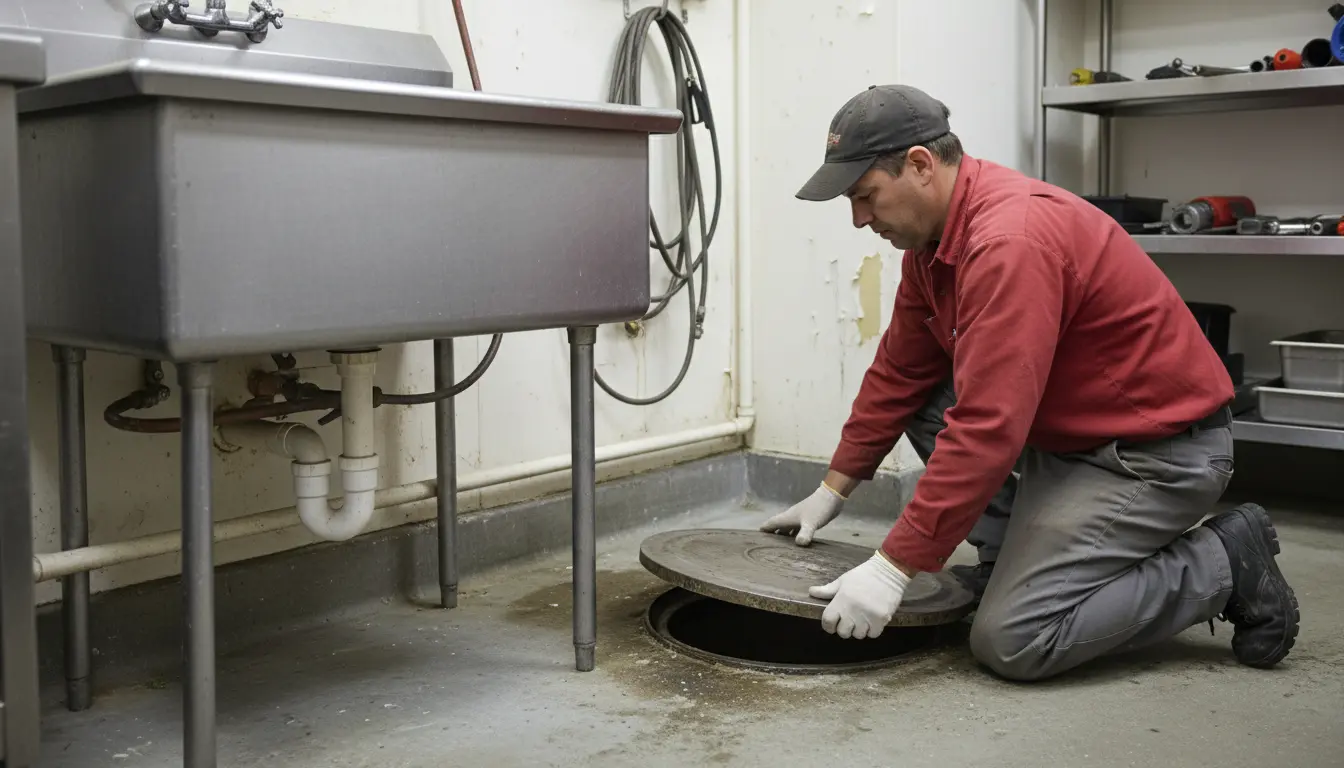
Find the Best Grease Trap Cleaning Companies for Your Business
No obligation • Fast responses • Nationwide coverage

Why you can trust Restaurant Waste Disposal
Restaurant Waste Disposal is a leading U.S. resource for comparing restaurant composting, food-waste recycling, grease trap cleaning, and used cooking oil collection services. Our editorial team researches providers, checks credentials, and organizes unbiased information so operators can make informed decisions. Companies cannot pay to change ratings or placement.
Search providers near you
Top Grease Trap Cleaning Companies in Santa Ana, California Ranked
For any restaurant, cafeteria, or food service establishment in Santa Ana, managing fats, oils, and grease (FOG) is not just a maintenance task-it's a critical regulatory requirement. The city's FOG Control Program, overseen by the Orange County Sanitation District (OCSD), mandates strict protocols for grease interceptor and trap maintenance to protect the public sewer system from costly and hazardous blockages. Effective grease management involves a combination of regular professional pumping, diligent kitchen best practices, and meticulous record-keeping. Non-compliance can lead to severe enforcement actions, including fines, making it essential for business owners to understand and adhere to the local rules. This guide outlines everything you need to know about maintaining your grease control equipment in Santa Ana.
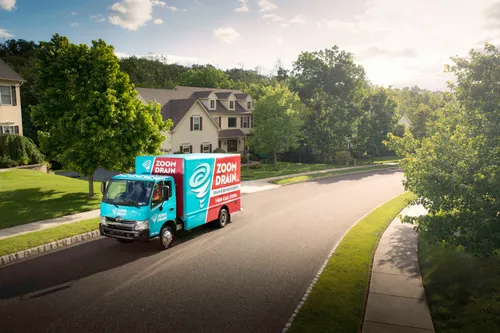
Zoom Drain
15540 Rockfield Blvd C100, Irvine, CA 92618
Zoom Drain is a grease trap cleaning and drain service company based in Los Angeles, CA. They provide residential and commercial drain and sewer cleaning, inspection, repairs, and preventive maintenance. Their services cover clogged drains, sewer pump repair, sump pump replacement, and landscape drain maintenance. Zoom Drain uses advanced technology like hydro jetting to clear blockages, including tree roots, and offers 24/7 emergency services. They serve areas including Anaheim, Irvine, Santa Ana, and throughout Orange County. The company is known for its specialized services in food and hospitality sectors, contractor support, and tailored maintenance plans.
Roto-Rooter Plumbing & Water Cleanup
3848 Campus Dr STE 220, Newport Beach, CA 92660
Roto-Rooter Plumbing & Water Cleanup provides comprehensive plumbing and water cleanup services in Long Beach, CA. They handle a wide range of issues including floodwater cleanup, sewer and drain cleaning, faucet and toilet repairs, water heater services, and grease trap maintenance. The company serves both residential and commercial clients, offering advanced capabilities such as high-pressure water jetting (hydro-jetting) and trenchless sewer line replacement. With decades of experience dating back to 1935, Roto-Rooter offers 24/7 emergency plumbing services to address urgent problems at any time.
Roto-Rooter Plumbing & Water Cleanup
2050 W Chapman Ave #202, Orange, CA 92868
Roto-Rooter Plumbing & Water Cleanup offers a wide range of plumbing services in Los Angeles, CA, including grease trap cleaning, sewer and drain cleaning, water heater repair, and emergency flood cleanup. The company serves both residential and commercial clients, addressing issues from routine maintenance to urgent repairs. They utilize advanced tools such as HD inspection cameras and hydro-jetting to clear blockages and perform no-dig pipe replacements. Established with a legacy dating back to the invention of the original electric drain snake in 1935, Roto-Rooter provides 24/7 emergency plumbing services to handle urgent situations any time of day or night.
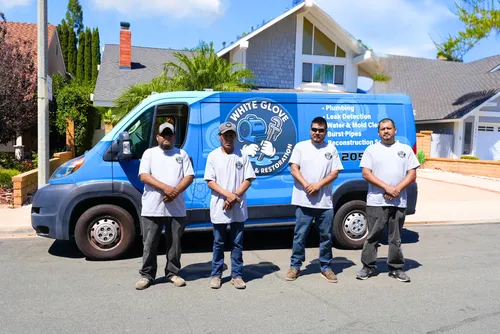
White Glove Plumbing Orange County
1430 E Borchard Ave, Santa Ana, CA 92705
White Glove Plumbing Orange County is a full-service plumbing and restoration company based in Santa Ana, serving residential and commercial clients throughout Los Angeles, CA. They provide a wide range of services including emergency plumbing, leak detection, hydro-jetting, water heater installation, grease trap pumping, sewage cleanup, mold remediation, and water damage restoration. The company offers 24/7 emergency services to quickly address urgent plumbing and restoration needs. Their expertise includes advanced capabilities such as slab leak reroutes, sewer camera inspections, and certified mold remediation. White Glove Plumbing combines plumbing and restoration services to manage repairs and rebuilds efficiently, reducing the need for multiple contractors.
Roto-Rooter Plumbing & Water Cleanup
20422 Beach Blvd #225, Huntington Beach, CA 92648
Roto-Rooter Plumbing & Water Cleanup offers comprehensive plumbing and water cleanup services in Long Beach, CA. They handle a wide range of issues including drain cleaning, sewer line repairs, water heater services, grease trap maintenance, and emergency flood cleanup. The company uses advanced technology such as high-definition inspection cameras and hydro-jetting to address plumbing challenges efficiently. With expertise tailored to local conditions and building codes, Roto-Rooter serves both residential and commercial clients. They provide 24/7 emergency plumbing services to quickly resolve urgent problems and minimize damage.
Understanding Santa Ana's Grease Trap Regulations
Santa Ana's regulations are designed to prevent FOG from entering the municipal wastewater system, where it can cool, solidify, and cause major sewer line blockages and sanitary sewer overflows (SSOs). The core rule requires that all grease interceptors and traps be pumped and cleaned when the combined FOG and solids accumulation reaches 25% of the liquid depth 1 2. Many establishments find they need service more frequently to maintain efficiency and compliance. You are required to use a licensed hauler for all pumping and cleaning services, and you must keep detailed records, including service receipts and manifests, for at least three years for inspection by city or OCSD officials 1 3.
The program applies to all Food Service Establishments (FSEs), which are broadly defined as any facility that prepares, serves, or otherwise handles food. This includes restaurants, bakeries, cafeterias, and even commercial kitchens in non-traditional settings. The goal of initial inspections is often educational, helping new business owners understand their responsibilities under the FOG control program 4. However, enforcement is taken seriously to ensure fair cost-sharing across the system and to protect public health and the environment from the consequences of sewer backups 5.
Best Management Practices (BMPs) for Your Kitchen
Professional grease trap cleaning is only one part of an effective FOG control strategy. Implementing kitchen-level Best Management Practices is mandatory and significantly reduces the volume of grease entering your traps, extending service intervals and reducing costs.
Key BMPs required and recommended in Santa Ana include:
- Install Drain Screens: Place screens or baskets in all sink drains to catch solid food waste.
- Dry Wiping: Scrape plates, pots, and pans into the trash with a rubber spatula or paper towel before washing. Never rinse grease down the sink.
- Proper Disposal: Collect cooled cooking oil and grease in sealed containers for pickup by your licensed hauler. Do not pour it down any drain.
- Employee Training: Ensure all kitchen staff are trained on these practices to maintain consistency.
These simple steps are your first line of defense. A well-trained staff practicing effective dry wiping can reduce the grease load in your interceptor by a substantial margin, leading to fewer emergency clogs and more predictable maintenance schedules.
The Cost of Grease Trap Cleaning in Santa Ana
The price for grease interceptor service varies widely based on several factors, including the size and type of your trap, its location (indoor vs. outdoor), how quickly it fills, and whether you have a scheduled service contract.
- Small Indoor Grease Traps: Common under-sink units typically cost between $75 and $150 per cleaning. High-volume kitchens may require monthly service 6.
- Large Outdoor Grease Interceptors: For larger in-ground interceptors (500 gallons and up), a single pumping visit often starts around $475 and can go higher. The final cost depends on the tank's capacity and the amount of waste removed.
- Service Contracts: Many providers offer discounted rates for regular, scheduled service on a contract basis. For example, maintaining a 1000-1500 gallon interceptor on a contract might range from $225 to $315 per service visit, providing cost predictability and ensuring compliance 7 8.
Find the perfect grease trap cleaning companies for your needs
Get personalized recommendations and expert advice
Choosing a Licensed Hauler and Service Provider
Selecting the right service provider is a crucial compliance step. You must use a hauler that is licensed and approved by the local authority for proper collection and disposal 9. When evaluating providers, look for companies with a strong reputation for reliability and thorough documentation. They should provide you with a detailed manifest or service report after each cleaning, which is the official record you must keep on file.
A quality provider will do more than just pump out the grease. They should offer a full cleaning service that removes all FOG and solids from the trap, inspect the unit for damage or potential issues, and advise you on your specific maintenance schedule based on their observations. Establishing a relationship with a trusted, licensed hauler simplifies compliance and helps protect your business from preventable plumbing disasters.
What to Expect During an Inspection
The City of Santa Ana or OCSD conducts inspections of Food Service Establishments to verify compliance with the FOG control program. During an inspection, an official will typically:
- Review your maintenance records, asking to see manifests and receipts from your licensed hauler for the past three years.
- Inspect your grease interceptor or trap to check its physical condition and the level of accumulated grease and solids.
- Evaluate your kitchen's BMPs, looking for proper drain screens, evidence of dry wiping, and staff knowledge of procedures.
Failing an inspection can result in warnings, mandatory corrective actions, and significant fines. The most common reasons for violations are missing service records and inadequate kitchen practices. Proactive management in these two areas is the best way to ensure a smooth and successful inspection.
Consequences of Non-Compliance
Ignoring grease trap maintenance is a risky proposition for Santa Ana restaurant owners. Beyond the immediate nuisance of slow drains and kitchen backups, the consequences escalate quickly. FOG that escapes into the public sewer can solidify and create massive blockages, leading to SSOs that contaminate local waterways and create public health hazards.
When such overflows are traced back to a specific establishment, that business can be held liable for the entire cost of cleanup and remediation, which can amount to tens of thousands of dollars. Additionally, the city can levy daily fines for ongoing violations until the issue is corrected. These financial penalties, combined with potential operational shutdowns and damage to your business's reputation, make proactive grease management a sound investment.
Getting Started with Compliance
If you're opening a new food service business or need to bring an existing one into full compliance, follow these steps:
- Get the Guidebook: Request or download the official FOG Control Program Guidebook from the City of Santa Ana or OCSD to understand all requirements in detail.
- Sign a Service Contract: Contact and sign up with a licensed grease hauler to establish a regular pumping schedule. Ensure they provide proper documentation every time.
- Implement BMPs Immediately: Equip your sinks with screens, train your staff on dry wiping and proper grease disposal, and post reminders in the kitchen.
- Organize Your Records: Create a dedicated file, either physical or digital, to store every service manifest and receipt. This will be your most important asset during an inspection.
Taking these steps systematically will integrate grease management into your daily operations, turning a complex regulation into a routine part of running a clean, efficient, and responsible food service business in Santa Ana.
Frequently asked questions
Sources
Footnotes
-
FATS OILS AND GREASE (FOG) CONTROL PROGRAM GUIDEBOOK - https://storage.googleapis.com/proudcity/santaanaca/uploads/2022/02/FOG-Control-Program-Guidebook.pdf ↩ ↩2
-
Santa Ana Grease Trap & Interceptor Pumping / Cleaning - https://www.greaseservices.com/santa%20ana.html ↩
-
12.20.220. Grease trap requirements. - https://codelibrary.amlegal.com/codes/fullerton/latest/fullerton_ca/0-0-0-18563 ↩
-
Chapter 14.30 FATS, OILS AND GREASE (FOG) CONTROL* - http://www.codepublishing.com/CA/NewportBeach/html/NewportBeach14/NewportBeach1430.html ↩
-
§ 110-174. Grease traps and interceptors., Division 3. FOOD SERVICE FACILITY FATS, OIL AND GREASE MANAGEMENT, Article IV. COUNTY SEWER SYSTEM, Chapter 110. UTILITIES, Code of Ordinances - http://pascocounty.elaws.us/code/coor_ch110_artiv_div3_sec110-174 ↩
-
How Much Does It Cost To Clean A Grease Trap? - https://www.greasecollection.com/blog/how-much-does-it-cost-to-clean-a-grease-trap/ ↩
-
The Cost To Clean A Grease Trap For Restaurants - https://thegreasecompany.com/blog/greasetrapcleaningcost/ ↩
-
Grease Trap Cleaning Prices | Guide on the Industry Average - https://grease-cycle.com/grease-trap-pumping-cost/ ↩
-
Food Service Establishments (FSE) - Clean Water SoCal - https://cleanwatersocal.org/media/acfupload/reference/FSE_Program_Placentia.pdf ↩