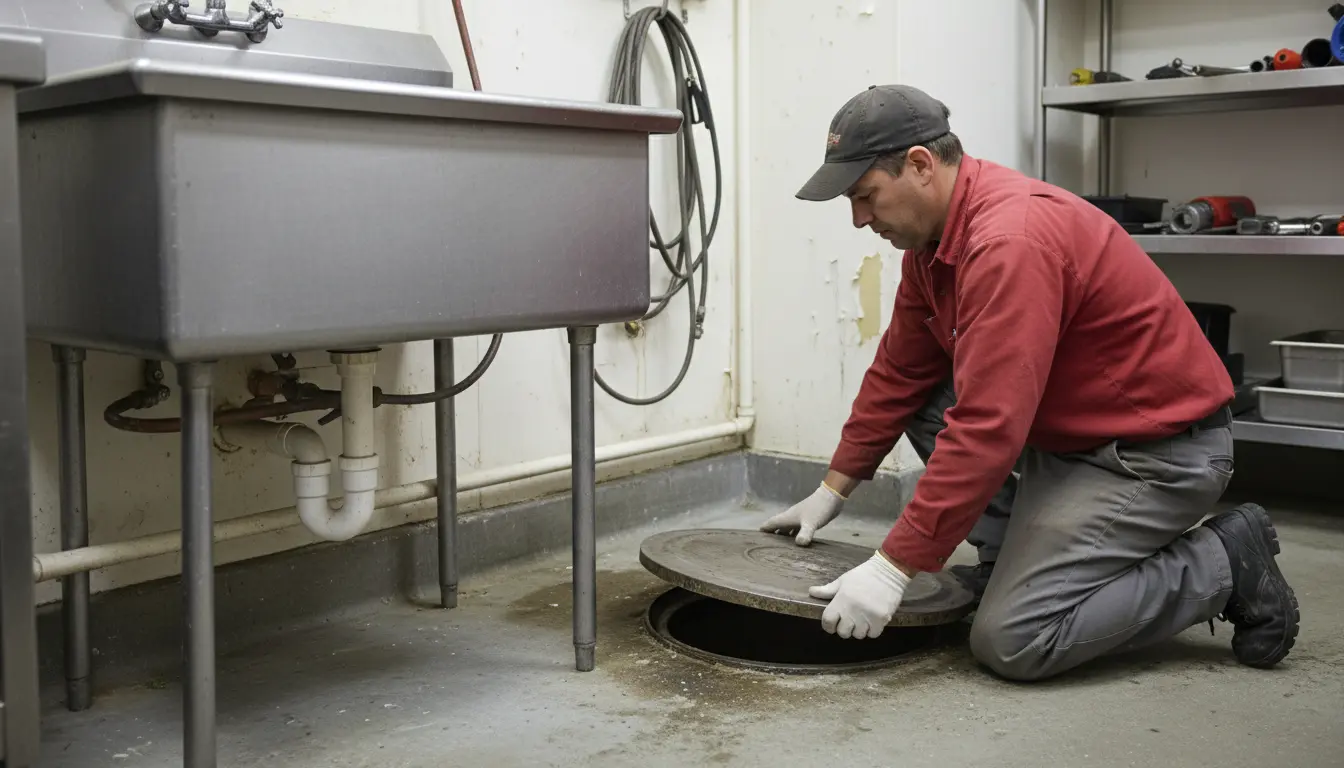
Find the Best Grease Trap Cleaning Companies for Your Business
No obligation • Fast responses • Nationwide coverage

Why you can trust Restaurant Waste Disposal
Restaurant Waste Disposal is a leading U.S. resource for comparing restaurant composting, food-waste recycling, grease trap cleaning, and used cooking oil collection services. Our editorial team researches providers, checks credentials, and organizes unbiased information so operators can make informed decisions. Companies cannot pay to change ratings or placement.
Search providers near you
Top Grease Trap Cleaning Companies in San Luis Obispo, California Ranked
For any food service establishment in San Luis Obispo, effective grease interceptor maintenance is not just a best practice-it's a legal requirement. The city, along with the South San Luis Obispo County Sanitation District (SSLOCSD), enforces a strict Fats, Oils, and Grease (FOG) Control Program designed to protect the local sewer infrastructure from blockages and overflows. Compliance hinges on understanding specific local rules for pumping frequency, record-keeping, and approved maintenance procedures. This guide outlines the essential regulations and practical considerations for managing your grease control device in SLO, helping you avoid costly citations and contribute to a healthier community wastewater system.
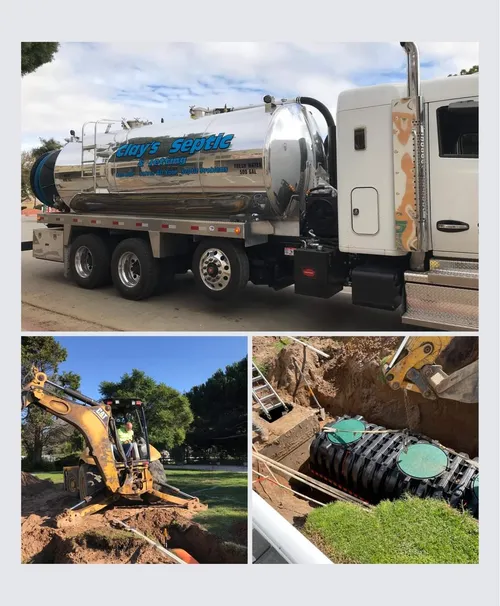
Clay's Septic & Jetting Inc
867 Guadalupe St, Guadalupe, CA 93434
Clay's Septic & Jetting Inc is a licensed service provider based in Santa Maria, CA, specializing in septic tank service, grease interceptor pumping, winery waste management, and residential and commercial sewer line maintenance. Serving the counties of San Luis Obispo and Santa Barbara, the company employs nationally certified inspectors equipped with modern tools to address various wastewater needs. Established in 1987, Clay's Septic & Jetting has extensive experience and maintains detailed electronic maps of serviced systems for efficient service.
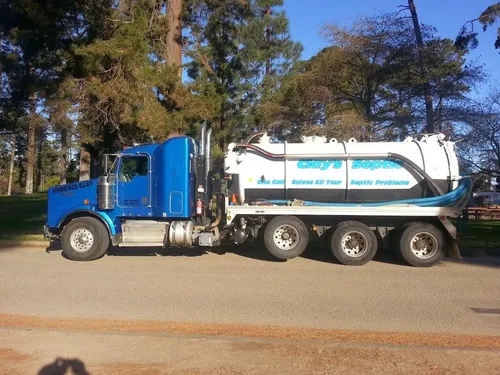
Clay's Septic & Jetting Inc
Santa Maria, CA
Clay's Septic & Jetting Inc is a licensed service provider based in Santa Maria, CA, serving the counties of San Luis Obispo and Santa Barbara. The company specializes in septic tank service, grease interceptor pumping, winery waste management, and residential and commercial sewer line maintenance. Their technicians are nationally certified inspectors equipped with modern tools and extensive knowledge to address various non-hazardous liquid waste needs. Established in 1987, Clay's Septic & Jetting has a comprehensive electronic database of service locations, allowing efficient access to past service records.
Understanding Local FOG Program Requirements
San Luis Obispo's FOG regulations are codified in the city's municipal code and enforced through a dedicated pretreatment program. The primary goal is to prevent grease-related sanitary sewer overflows (SSOs), which can cause environmental damage and incur significant public remediation costs. All food service facilities, including restaurants, cafeterias, bakeries, and any establishment that prepares or serves food, are subject to these rules. The regulations apply to both new and existing establishments, and compliance is verified through routine inspections and record audits.
Key governing bodies include the City of San Luis Obispo Utilities Department and the SSLOCSD, depending on your location within the service area. These agencies mandate that establishments obtain the necessary permits, properly install certified grease interceptors, and adhere to all operational standards. Non-compliance can trigger enforcement actions, starting with notices of violation and potentially escalating to fines and mandatory corrective actions, such as installing new or additional grease control equipment within a set timeframe.
Mandatory Pumping Frequency and the 25% Rule
The cornerstone of SLO's maintenance regulation is the "25% rule." You are required to pump out your grease trap or interceptor when the combined depth of FOG and settled solids reaches 25% of the total liquid depth of the device 1. Simply waiting for a scheduled date is not sufficient; you must monitor the accumulation levels to determine the necessary service interval.
While the 25% rule dictates the maximum allowable accumulation, the city also sets a minimum pumping frequency of every six months for most devices 2. This means even if your trap has not reached the 25% threshold within half a year, it must still be serviced. For high-volume kitchens, pumping may be required monthly or quarterly. It is the establishment's responsibility to ensure service occurs before the limit is exceeded, and you must maintain documentation proving this compliance 2 3.
Essential Record-Keeping and Documentation
Proper documentation is a critical part of compliance and is routinely checked during inspections. You are required to keep a detailed, written maintenance log on-site for a minimum of three years. This log must be readily available for review by city or district inspectors.
Your records should include for each service event:
- The date of pumping or cleaning.
- The volume of grease and solids removed (in gallons).
- The name and contact information of the service provider or hauler.
- The disposal method or location for the collected waste.
Maintaining meticulous records is your first line of defense during an inspection, demonstrating a proactive approach to FOG management.
Approved Best Management Practices (BMPs)
In addition to mechanical cleaning, SLO's FOG Program requires establishments to implement daily Best Management Practices (BMPs) to minimize grease entering the drains. These source-control measures are simple but highly effective:
- Dry Wiping: Scrape food scraps and grease from pots, pans, dishes, and utensils into the trash before rinsing or washing.
- Proper Drain Screens: Install and use fine mesh or basket strainers in all sink drains. Dome-shaped strainers are not acceptable. The maximum hole size for these screens is 3/16 of an inch.
- Grease Barrel Management: If you collect grease in barrels, they must have tight-fitting lids, be stored on an impermeable surface (like concrete), and be kept in a clean, designated area to prevent spills and odors.
Find the perfect grease trap cleaning companies for your needs
Get personalized recommendations and expert advice
What Inspectors Look For During a FOG Inspection
Inspections by the City or SSLOCSD are comprehensive 4. Being prepared means understanding what they will examine:
- Permits & Posting: Verification that your establishment has a valid FOG permit posted if required.
- Maintenance Records: A thorough review of your three-year service log to confirm pumping frequency complies with the 25% rule and six-month minimum.
- Grease Interceptor Condition: Physical inspection of the trap to measure FOG/solids accumulation and ensure it is easily accessible for service and inspection.
- Drain Screens: Checking that all sinks have compliant, clean strainers with the correct hole size.
- BMP Compliance: Observing kitchen practices and checking for proper grease storage.
- Cleanliness: Assessing the general cleanliness of the kitchen and grease handling areas.
Failure in any of these areas can result in a citation and a mandated corrective action plan 5.
Understanding Service Costs and Variables
The cost for grease trap pumping in San Luis Obispo is not a flat fee; it varies based on several factors. Understanding these can help you budget and evaluate service quotes.
- Trap Size and Type: A small indoor grease trap (often under 50 gallons) may cost between $75 and $150 for a monthly cleaning service. Larger, in-ground interceptors (e.g., 1,000 to 1,500 gallons) typically range from $225 to $315 or more per pump-out 6 7.
- Accumulation Volume: Heavily impacted traps requiring more labor and disposal capacity will cost more.
- Service Frequency: Establishments on a regular contract (e.g., monthly or quarterly) often receive a lower per-service rate compared to one-time emergency calls.
- Accessibility: Traps that are difficult to access (e.g., located inside a cramped kitchen or under equipment) may incur additional labor charges.
- Service Provider: Always ensure your provider uses PDI/ASME certified equipment and is licensed to haul and dispose of grease waste properly.
Prohibited Practices and Common Violations
To stay compliant, you must also know what not to do. The following are explicitly prohibited by SLO's regulations:
- Using Additives: Do not use chemical, enzymatic, or bacterial "grease digester" products in an attempt to clean or extend the time between pumpings. These products can emulsify grease, allowing it to pass through the trap and solidify further down the sewer line, causing blockages 8.
- Pouring Grease Down Drains: Never pour liquid grease, oils, or food scraps down any drain, including floor sinks or mop basins.
- Inadequate Screens: Using incorrect, damaged, or missing drain screens is a common and easily avoidable violation.
- Poor Record-Keeping: Failing to keep logs or having incomplete information is a frequent finding during inspections.
Adhering to these rules protects your business from enforcement actions and helps maintain the city's sewer system for everyone.
Frequently asked questions
Sources
Footnotes
-
12.20.220. Grease trap requirements. - https://codelibrary.amlegal.com/codes/fullerton/latest/fullerton_ca/0-0-0-18563 ↩
-
13.08.091 Food service establishment requirements - https://sanluisobispo.municipal.codes/Code/13.08.091 ↩ ↩2
-
F.O.G. Program | City of San Luis Obispo, CA - https://www.slocity.org/government/department-directory/utilities-department/environmental-programs/pretreatment-program/fog ↩
-
FOG Control Program - South San Luis Obispo County Sanitation ... - https://sslocsd.org/environmental-programs/fog-control-program/ ↩
-
13.08.092 Grease control device requirements - https://sanluisobispo.municipal.codes/Code/13.08.092 ↩
-
Grease Trap Cleaning Prices | Guide on the Industry Average - https://grease-cycle.com/grease-trap-pumping-cost/ ↩
-
How Much Does It Cost To Clean A Grease Trap? - https://www.greasecollection.com/blog/how-much-does-it-cost-to-clean-a-grease-trap/ ↩
-
Chapter 18.08 GREASE TRAPS - General Code - https://www.codepublishing.com/CA/PacificGrove/html/PacificGrove18/PacificGrove1808.html ↩