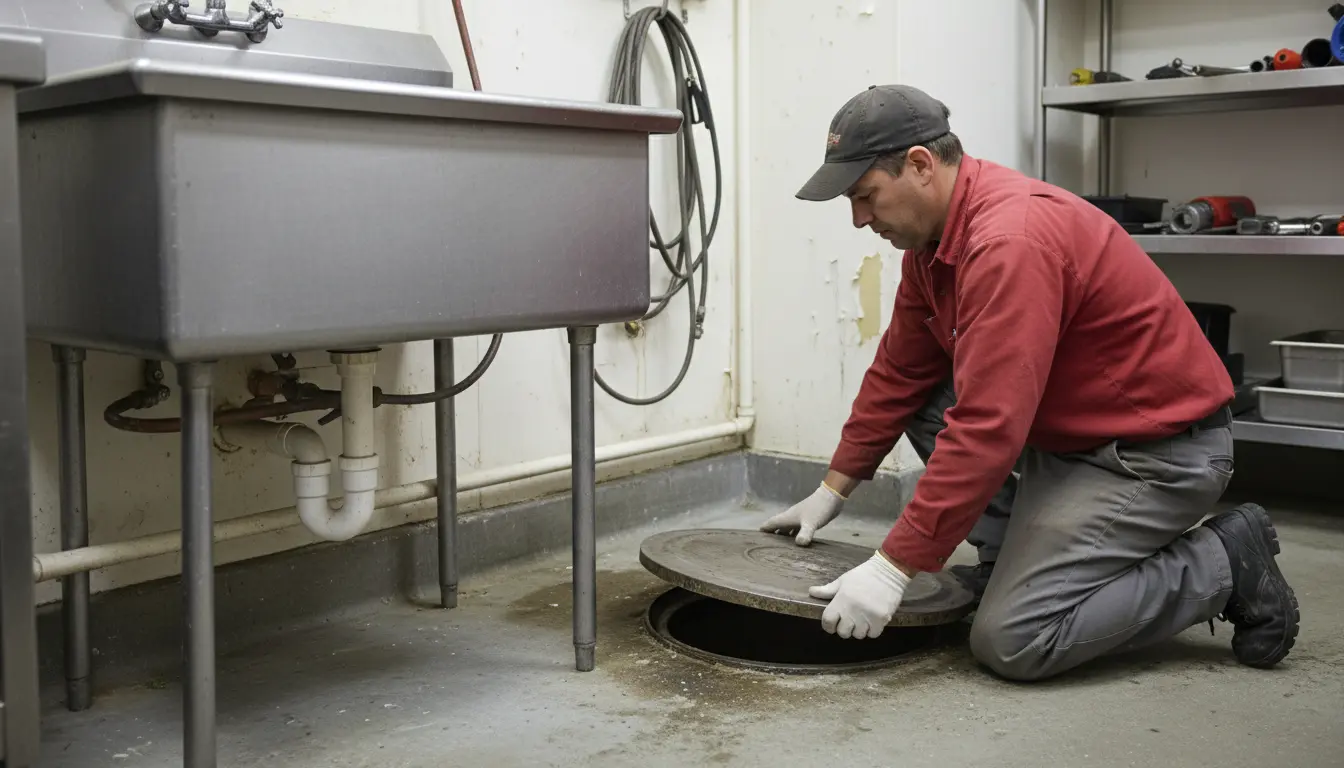
Find the Best Grease Trap Cleaning Companies for Your Business
No obligation • Fast responses • Nationwide coverage

Why you can trust Restaurant Waste Disposal
Restaurant Waste Disposal is a leading U.S. resource for comparing restaurant composting, food-waste recycling, grease trap cleaning, and used cooking oil collection services. Our editorial team researches providers, checks credentials, and organizes unbiased information so operators can make informed decisions. Companies cannot pay to change ratings or placement.
Search providers near you
Top Grease Trap Cleaning Companies in Palo Alto, California Ranked
For restaurant owners and food service facility managers in Palo Alto, maintaining your grease interceptor is a critical operational and legal responsibility. Proper grease trap cleaning and maintenance are mandated by the City of Palo Alto's Fats, Oils, and Grease (FOG) Program, which enforces the California Plumbing Code and local ordinances to protect the municipal sewer system from blockages and overflows. Neglecting this duty can lead to severe enforcement actions, including mandated equipment upgrades and costly emergency repairs, while a consistent service schedule ensures compliance and smooth business operations. Understanding the specific local requirements for installation, materials, and maintenance frequency is the first step in developing a cost-effective and compliant FOG management plan.
Roto-Rooter Plumbing & Water Cleanup
1780 Whipple Rd Ste 203G, Union City, CA 94587
Roto-Rooter Plumbing & Water Cleanup provides comprehensive plumbing and water cleanup services in San Jose, CA. They serve both residential and commercial clients, offering a wide range of solutions including grease trap cleaning, sewer and drain cleaning, water heater repair and installation, and emergency flood services. The company uses advanced plumbing technology and equipment to handle complex plumbing systems and offers 24/7 emergency plumbing support to address urgent issues such as burst pipes and sewer backups. Roto-Rooter is licensed and insured, serving the local community with expertise and a commitment to compliance with local codes.
Caccia Home Services
1660 Gilbreth Rd, Burlingame, CA 94010
Caccia Home Services is a plumbing and home services provider based in San Mateo, CA. They offer a wide range of services including grease trap cleaning, hydro jetting, sewer line repair, water treatment, and emergency plumbing. Their capabilities include trenchless sewer services and installation and maintenance of water heaters, including tankless and heat pump models. The company also provides electrical services such as EV charger installation and lighting upgrades. Caccia Home Services is known to respond to emergency plumbing needs.
Roto-Rooter Plumbing & Water Cleanup
41111 Mission Blvd Ste 202, Fremont, CA 94539
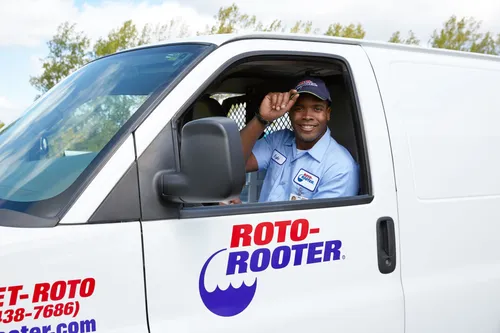
Roto-Rooter Plumbing & Water Cleanup is a plumbing company serving San Jose, CA, and nearby communities including Fremont, Sunol, Pleasanton, Milpitas, and Warm Springs. They provide a wide range of plumbing services for residential and commercial clients, including drain cleaning, water heater repair, emergency plumbing, and grease trap cleaning. The company offers 24/7 emergency plumbing services and uses advanced equipment such as high-pressure water jetting (hydro-jetting) for effective drain maintenance. Established in 1935, Roto-Rooter has a long history of serving customers with professional plumbing solutions.
Roto-Rooter Plumbing & Water Cleanup
1070 Marina Village Pkwy UNIT 202, Alameda, CA 94501
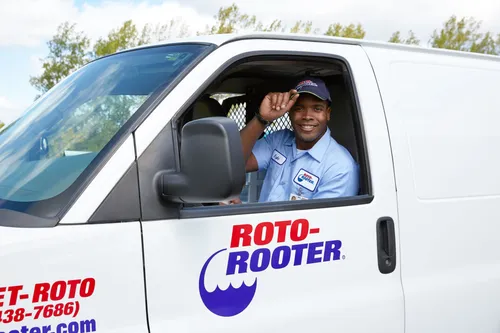
Roto-Rooter Plumbing & Water Cleanup provides comprehensive plumbing and water cleanup services in Oakland, CA. They serve both residential and commercial clients with a wide range of solutions including sewer and drain cleaning, water heater repair and installation, grease trap maintenance, and floodwater cleanup. The company uses specialized equipment such as hydro-jetting for effective drain cleaning and sewer line maintenance. Roto-Rooter offers 24/7 emergency plumbing services to address urgent issues like burst pipes and sewer backups. They serve Alameda and surrounding counties, bringing extensive experience to local plumbing challenges.
Roto-Rooter Plumbing & Water Cleanup
300 Frank H. Ogawa Plaza STE 249, Oakland, CA 94612
Roto-Rooter Plumbing & Water Cleanup provides comprehensive plumbing and water damage cleanup services in San Francisco, CA. They serve both residential and commercial clients with a wide range of offerings including sewer and drain cleaning, water heater repair and installation, grease trap maintenance, and mold remediation. The company is equipped with advanced tools such as high-pressure water jetting (hydro-jetting) and offers 24/7 emergency plumbing services to address urgent issues like burst pipes, sewer backups, and clogged drains. Serving the Oakland area and surrounding communities, Roto-Rooter has extensive experience with local plumbing infrastructure and regulations.
Understanding Palo Alto's FOG Program and Local Codes
The City of Palo Alto's Public Works department, specifically the FOG Program Manager, oversees all compliance related to grease control devices. The local municipal code incorporates and expands upon the California Plumbing Code (CPC), setting strict standards that every food service establishment must follow.
Key installation and material rules include:
- Mandatory Installation: Any facility that prepares food must have a properly sized grease collection device (grease trap or interceptor) for sinks and equipment that produce FOG.
- Prohibited Connections: Food waste disposers (garbage disposals) are generally prohibited from connecting to grease interceptors 1.
- Approved Materials: The City strongly prefers non-corrosive materials. Thermoplastic (polyethylene) interceptors are commonly specified, while concrete, metal, or standard epoxy-coated units are generally not allowed due to corrosion and leakage risks 2.
- Accessibility: Devices must be easily accessible for cleaning, pumping, and inspection by both your service provider and city inspectors.
These rules are designed to ensure that only effective, durable, and serviceable equipment is installed, forming the foundation for reliable long-term compliance.
The Critical Importance of Regular Maintenance
Simply having a grease interceptor installed is not enough. The City requires that all devices be maintained in "efficient operating condition," which means the regular removal of accumulated fats, oils, grease, and solid food waste 3. The primary goal is to prevent FOG from entering the public sewer lines, where it can cool, solidify, and cause major blockages leading to sanitary sewer overflows (SSOs).
Failure to maintain your interceptor can trigger enforcement actions from the FOG Program Manager. The Authority Having Jurisdiction (the City) has the power to mandate specific maintenance programs and even require the installation of additional pretreatment equipment if a facility is found to be non-compliant. This makes proactive maintenance not just an operational best practice, but a financial safeguard against unexpected capital expenditures.
Determining Your Grease Trap Cleaning Schedule
One of the most common questions is, "How often should my grease trap be pumped?" The answer varies significantly based on your operation's volume and menu. The general rule is to schedule cleaning before FOG accumulation exceeds 25% of the trap's liquid capacity to prevent clogs and ensure proper function 4.
Here is a typical frequency guide based on establishment type:
- High-Volume Restaurants & Diners: Establishments with extensive frying, sautéing, or meat preparation, such as many Asian cuisine restaurants or busy diners, often require monthly service.
- Moderate-Volume & Frying-Focused Spots: Pubs, burger joints, and fried chicken establishments may need service every 3 to 6 weeks, depending on daily output 5.
- Lower-Volume Operations: Cafés, bakeries, and pizzerias with minimal grease production might manage with quarterly cleaning (every 90 days).
- Extremely High-Output Kitchens: Facilities with constant, heavy frying operations could necessitate service as often as weekly or bi-weekly.
The City conducts inspections at key moments: during initial build-out, upon a change of use for the space, and periodically thereafter. You may be required to provide a copy of your maintenance agreement during these inspections 6. When in doubt, starting with a monthly or quarterly schedule and adjusting based on your service provider's recommendations is a prudent approach to ensure compliance.
Find the perfect grease trap cleaning companies for your needs
Get personalized recommendations and expert advice
Cost Considerations for Service in Palo Alto
The cost of grease interceptor maintenance is an investment in compliance and operational continuity. Prices are influenced primarily by the size of your trap (e.g., 500-gallon, 1000-gallon, 1500-gallon) and the frequency of service.
- Scheduled Pumping: For routine, contract-based cleaning services, Palo Alto restaurants can expect costs in the range of $250 to $400+ per service visit 7. For example, a contract for a 1000-1500 gallon interceptor might average between $225 and $315 per scheduled pump-out 8.
- Emergency Service: Reacting to a clogged line or a city violation notice requires immediate, emergency service. These urgent calls are substantially more expensive, often ranging from $800 to $1,200 or more due to after-hours premiums and the complexity of resolving a blockage 9.
- Long-Term Savings: Consistent preventive care through a scheduled service contract is the most cost-effective strategy. It helps avoid the thousands of dollars in potential costs from emergency repairs, city fines, and mandated equipment upgrades.
Best Practices for Ongoing Compliance
Beyond scheduling regular pump-outs, facility managers should adopt daily practices to extend the life of their interceptor and improve its efficiency.
- Scrape Plates Thoroughly: Ensure all staff scrape food scraps into compost or trash bins before washing dishes. Food solids fill up the trap quickly and reduce its effectiveness for separating grease.
- Use Sink Strainers: Install and maintain strainers in all prep and dish sinks to catch solids.
- Avoid Hot Water and Degreasers: Do not flush the interceptor with hot water or chemical degreasers. These can re-liquefy hardened grease, allowing it to pass through the trap and solidify further down the sewer line, causing blockages elsewhere in the system.
- Keep Detailed Records: Maintain a log of every service visit, including the date, volume of waste removed, and the service provider's name. This documentation is invaluable during city inspections.
For the most accurate and up-to-date information on inspection frequencies and local enforcement protocols, the best course of action is to contact Palo Alto's Public Works Department or the FOG Program Manager directly 10 11.
Frequently asked questions
Sources
Footnotes
-
California Health and Safety Code § 114201 (2024) - Justia Law - https://law.justia.com/codes/california/code-hsc/division-104/part-7/chapter-7/article-2/section-114201/ ↩
-
Chapter 18.08 GREASE TRAPS - General Code - https://www.codepublishing.com/CA/PacificGrove/html/PacificGrove18/PacificGrove1808.html ↩
-
GREASE, SAND AND OIL INTERCEPTORS | City of Palo Alto - https://www.cityofpaloalto.org/files/assets/public/development-services/building-division/commercial-guidelines/inspections/grease-sand-oil-interceptors1.10.13-[27283].pdf ↩
-
How to Clean a Grease Trap (and How Often You Should) - https://greaseconnections.com/how-to-clean-a-grease-trap-and-how-often-you-should/ ↩
-
Grease Trap Cleaning For California Restaurants - https://cacciaplumbing.com/blog/grease-trap-cleaning-california-restaurants/ ↩
-
RESTAURANT FINAL CHECK LIST - City of Palo Alto - https://www.cityofpaloalto.org/files/assets/public/development-services/building-division/commercial-guidelines/inspections/restaurant-final-check-list-7.15.15-[27284].pdf ↩
-
Grease Trap Pumping San Francisco - North Bay Restaurant Services - https://northbayrestaurantservices.com/grease-trap-pumping-san-francisco/ ↩
-
Grease Trap Cleaning Prices | Guide on the Industry Average - https://grease-cycle.com/grease-trap-pumping-cost/ ↩
-
Ultimate Grease Trap Pumping Cost Guide: Essential Money-Saving ... - https://www.texwaywastewater.com/grease-trap-pumping-cost/ ↩
-
16.08.110 Section 1014.1 Grease interceptors - general. - https://codelibrary.amlegal.com/codes/paloalto/latest/paloalto_ca/0-0-0-71218 ↩
-
12.20.220. Grease trap requirements. - https://codelibrary.amlegal.com/codes/fullerton/latest/fullerton_ca/0-0-0-18563 ↩