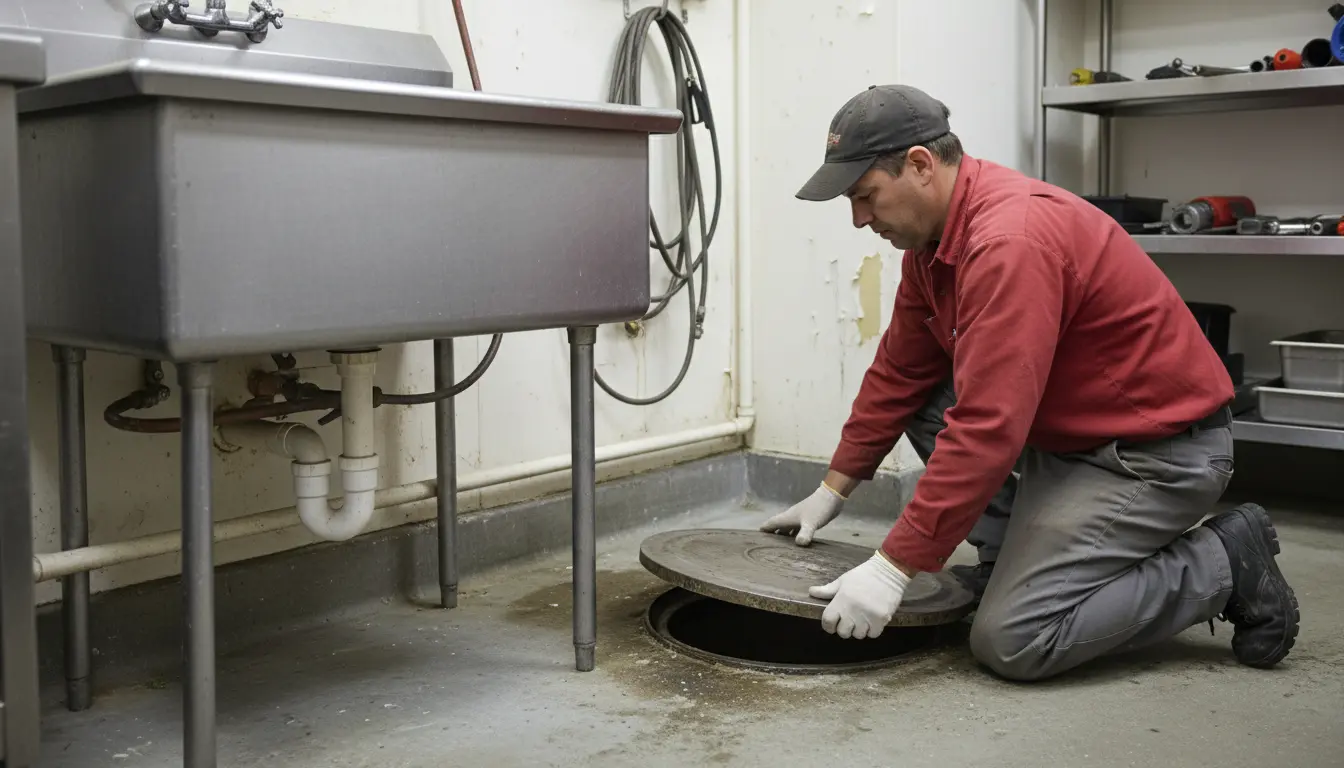
Find the Best Grease Trap Cleaning Companies for Your Business
No obligation • Fast responses • Nationwide coverage

Why you can trust Restaurant Waste Disposal
Restaurant Waste Disposal is a leading U.S. resource for comparing restaurant composting, food-waste recycling, grease trap cleaning, and used cooking oil collection services. Our editorial team researches providers, checks credentials, and organizes unbiased information so operators can make informed decisions. Companies cannot pay to change ratings or placement.
Search providers near you
Top Grease Trap Cleaning Companies in Mountain View, California Ranked
For restaurant owners and kitchen managers in Mountain View, maintaining your grease interceptor isn't just a maintenance task-it's a critical regulatory requirement. The city enforces strict rules on fats, oils, and grease (FOG) management to protect the local sewer infrastructure from costly blockages and environmental damage. Compliance involves regular pumping, meticulous record-keeping, and ensuring your system is sized and accessible according to state and local codes. Understanding these requirements is essential to avoid fines and keep your business running smoothly.
Roto-Rooter Plumbing & Water Cleanup
1780 Whipple Rd Ste 203G, Union City, CA 94587
Roto-Rooter Plumbing & Water Cleanup provides comprehensive plumbing and water cleanup services in San Jose, CA. They serve both residential and commercial clients, offering a wide range of solutions including grease trap cleaning, sewer and drain cleaning, water heater repair and installation, and emergency flood services. The company uses advanced plumbing technology and equipment to handle complex plumbing systems and offers 24/7 emergency plumbing support to address urgent issues such as burst pipes and sewer backups. Roto-Rooter is licensed and insured, serving the local community with expertise and a commitment to compliance with local codes.
Caccia Home Services
1660 Gilbreth Rd, Burlingame, CA 94010
Caccia Home Services is a plumbing and home services provider based in San Mateo, CA. They offer a wide range of services including grease trap cleaning, hydro jetting, sewer line repair, water treatment, and emergency plumbing. Their capabilities include trenchless sewer services and installation and maintenance of water heaters, including tankless and heat pump models. The company also provides electrical services such as EV charger installation and lighting upgrades. Caccia Home Services is known to respond to emergency plumbing needs.
Roto-Rooter Plumbing & Water Cleanup
41111 Mission Blvd Ste 202, Fremont, CA 94539
Roto-Rooter Plumbing & Water Cleanup is a plumbing company serving San Jose, CA, and nearby communities including Fremont, Sunol, Pleasanton, Milpitas, and Warm Springs. They provide a wide range of plumbing services for residential and commercial clients, including drain cleaning, water heater repair, emergency plumbing, and grease trap cleaning. The company offers 24/7 emergency plumbing services and uses advanced equipment such as high-pressure water jetting (hydro-jetting) for effective drain maintenance. Established in 1935, Roto-Rooter has a long history of serving customers with professional plumbing solutions.
Roto-Rooter Plumbing & Water Cleanup
1500 41st Ave Ste 260, Capitola, CA 95010
Roto-Rooter Plumbing & Water Cleanup provides comprehensive plumbing services in San Jose, CA, specializing in both residential and commercial systems. Their offerings include drain cleaning, sewer line repair and replacement, water heater installation and repair, grease trap maintenance, and floodwater cleanup. The company uses advanced equipment such as hydro-jetting for effective drain cleaning and offers 24/7 emergency plumbing services to address urgent issues promptly. Serving Capitola and surrounding communities, Roto-Rooter has extensive experience managing plumbing challenges unique to the area, including compliance with local regulations and environmental concerns.
Roto-Rooter Plumbing & Water Cleanup
1070 Marina Village Pkwy UNIT 202, Alameda, CA 94501
Roto-Rooter Plumbing & Water Cleanup provides comprehensive plumbing and water cleanup services in Oakland, CA. They serve both residential and commercial clients with a wide range of solutions including sewer and drain cleaning, water heater repair and installation, grease trap maintenance, and floodwater cleanup. The company uses specialized equipment such as hydro-jetting for effective drain cleaning and sewer line maintenance. Roto-Rooter offers 24/7 emergency plumbing services to address urgent issues like burst pipes and sewer backups. They serve Alameda and surrounding counties, bringing extensive experience to local plumbing challenges.
Understanding Mountain View's Grease Trap Regulations
Mountain View's regulations are designed to prevent FOG from entering the municipal wastewater system. These rules are based on California state plumbing and health codes but are enforced locally, often with specific inspection schedules. The cornerstone of compliance is ensuring that the accumulated FOG and solids in your trap do not exceed 25% of the liquid depth of the unit 1. Once this threshold is reached, pumping is mandatory. While a common minimum frequency is every six months, many establishments, especially high-volume kitchens, require service monthly or even bi-weekly to stay within this limit.
Local enforcement typically involves routine inspections, which can occur bi-annually 2. During these inspections, city officials from the Public Works or Environmental Services department will verify that your grease interceptor is functioning correctly and that you have maintained proper service records. Failure to comply can result in significant fines, mandatory emergency cleaning, and even business interruption orders. Therefore, proactive management is far more cost-effective than reacting to a violation.
Key Compliance Requirements for Your Business
Staying compliant involves more than just scheduling a pump-out. Here are the critical elements you must manage:
- Maintenance Frequency: You must clean your grease trap before FOG and solids exceed 25% of its capacity. For most restaurants, this translates to a service interval of 1 to 6 months. Establishments with high-volume cooking, like fried food venues or large cafeterias, often need monthly or bi-weekly service 3.
- Detailed Record-Keeping: You are required to maintain detailed service and maintenance records. These logs should include the date of service, the company that performed the work, the volume of waste removed, and the disposal method. These records must be available for review during any city inspection.
- Proper Accessibility: Your grease interceptor must be easily accessible for servicing. It should not be located in a food preparation area and must have clear access for pumping equipment. Obstructions can lead to incomplete cleaning and potential violations 4.
- Correct Sizing: Your interceptor must be sized according to the California Plumbing Code, which is based on the number and type of fixtures draining into it and the estimated flow rate. An undersized unit will require impractically frequent cleaning, while an oversized one may not function efficiently 5.
The Cost of Grease Interceptor Service in Mountain View
The cost for professional grease trap pumping and cleaning in Mountain View varies based on several factors. The primary determinants are the size (capacity in gallons) of your interceptor and the volume of FOG waste that needs to be hauled away.
A typical service call for a standard commercial establishment can range from $120 to over $400 6 7 8. This price usually includes pumping out the contents, a high-pressure wash of the interior, and proper disposal of the FOG waste at a licensed facility. Many service providers offer contract pricing for regular maintenance schedules (e.g., quarterly or monthly), which can provide cost predictability and ensure you never miss a service date. High-frequency services for very busy kitchens will naturally incur higher annual costs but are non-negotiable for compliance.
Find the perfect grease trap cleaning companies for your needs
Get personalized recommendations and expert advice
Creating a Proactive FOG Management Plan
A reactive approach to grease trap maintenance is a recipe for violations and emergency fees. Implementing a proactive plan is the best way to protect your business.
- Know Your System: Start by identifying the size and location of your grease interceptor. Review past service records to understand your establishment's typical accumulation rate.
- Establish a Preventative Schedule: Based on your volume and past data, work with a licensed service provider to set a preventative pumping schedule. It's better to service slightly early than to risk exceeding the 25% rule.
- Centralize Documentation: Keep all service records, invoices, and inspection reports in a single, easily accessible folder-both physically and digitally. Designate a manager to be responsible for this log.
- Communicate with the City: For definitive guidance on Mountain View-specific rules and inspection cycles, contact the City of Mountain View Public Works Department. They can provide the most current local ordinances and answer specific questions about your property 9.
Consequences of Non-Compliance
Ignoring grease trap maintenance has serious repercussions beyond a single fine. Chronic non-compliance can lead to:
- Sewer Backups: FOG can solidify in pipes, causing backups that can damage your property and neighboring businesses.
- Substantial Fines: Municipal fines for violations can be hefty and recur until the issue is resolved.
- Emergency Service Costs: If the city mandates an emergency clean-out, you will pay a premium for the service.
- Business Interruption: In severe cases, the city can issue orders that disrupt your operations until compliance is verified.
- Environmental Impact: FOG releases can harm local waterways, leading to broader environmental violations.
Regular maintenance is a straightforward operational cost that prevents these far more expensive and disruptive outcomes.
Frequently asked questions
Sources
Footnotes
-
California Health and Safety Code § 114201 (2024) - Justia Law - https://law.justia.com/codes/california/code-hsc/division-104/part-7/chapter-7/article-2/section-114201/ ↩
-
Chapter 18.08 GREASE TRAPS - https://www.codepublishing.com/CA/PacificGrove/html/PacificGrove18/PacificGrove1808.html ↩
-
Grease Trap Cleaning For California Restaurants - https://cacciaplumbing.com/blog/grease-trap-cleaning-california-restaurants/ ↩
-
12.20.220. Grease trap requirements. - https://codelibrary.amlegal.com/codes/fullerton/latest/fullerton_ca/0-0-0-18563 ↩
-
Purpose of Fats, Oils and Grease (FOG) Program: DEFINITIONS - http://pw.lacounty.gov/epd/industrial_waste/pdf/misc/restaurantpretreatmentguidelines.pdf ↩
-
Commercial Grease Trap Cleaning Services in Bay Area - https://powerplumbingusa.com/commercial/grease-trap-cleaning/ ↩
-
Grease Trap Pumping San Francisco - North Bay Restaurant Services - https://northbayrestaurantservices.com/grease-trap-pumping-san-francisco/ ↩
-
Grease Trap Cleaning in Mountain View, CA - Costs 10 / 2025 - https://www.homeyou.com/ca/grease-trap-cleaning-mountain-view-costs ↩
-
Grease Traps for Restaurants: The Essential Guide - https://therestaurantwarehouse.com/blogs/restaurant-equipment/grease-trap-for-restaurant-guide ↩