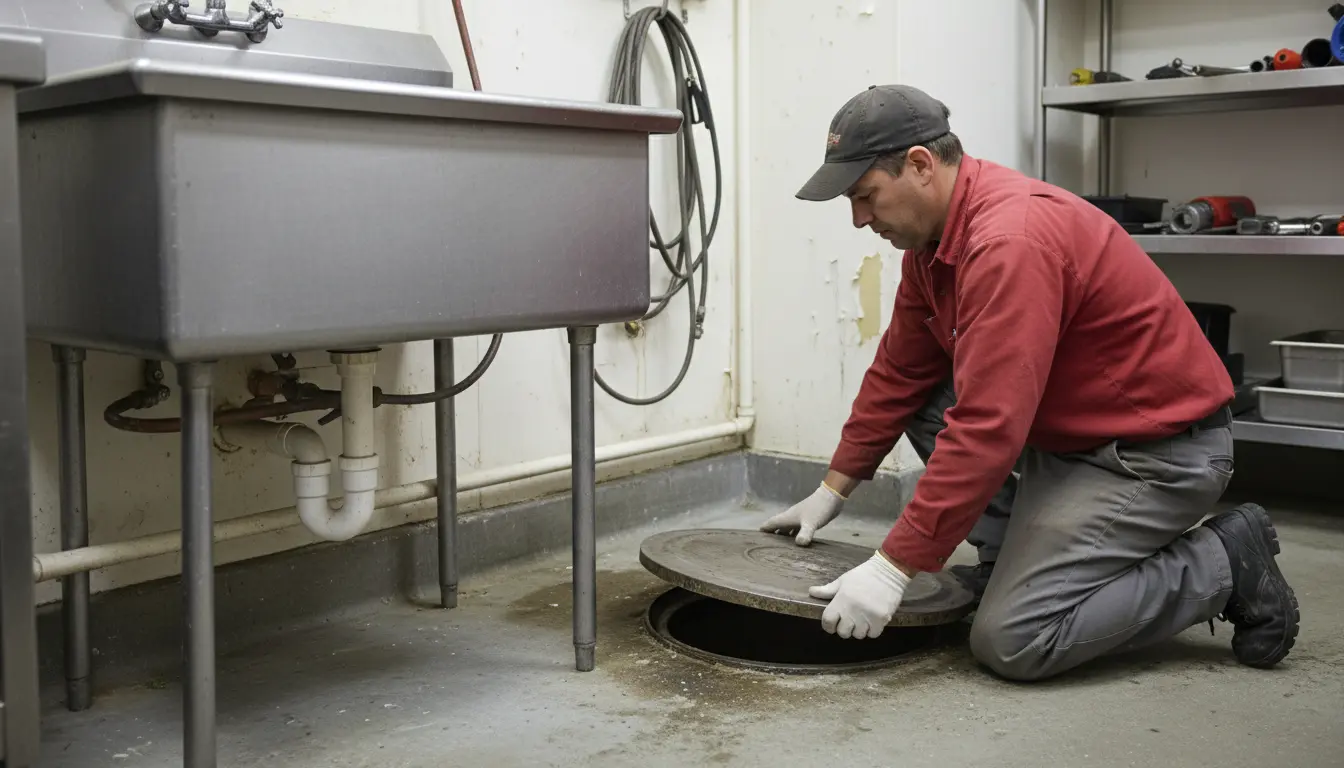
Find the Best Grease Trap Cleaning Companies for Your Business
No obligation • Fast responses • Nationwide coverage

Why you can trust Restaurant Waste Disposal
Restaurant Waste Disposal is a leading U.S. resource for comparing restaurant composting, food-waste recycling, grease trap cleaning, and used cooking oil collection services. Our editorial team researches providers, checks credentials, and organizes unbiased information so operators can make informed decisions. Companies cannot pay to change ratings or placement.
Search providers near you
Top Grease Trap Cleaning Companies in Lompoc, California Ranked
For restaurant owners and food service operators in Lompoc, managing Fats, Oils, and Grease (FOG) is a critical operational and regulatory responsibility. Proper grease trap and interceptor maintenance is not just about preventing clogs in your own plumbing; it's a key component of protecting the city's sewer infrastructure and complying with strict state and local codes. Failure to adhere to these regulations can lead to significant fines, operational disruptions, and environmental harm. This guide outlines the essential requirements, best practices, and local considerations for effective FOG management in Lompoc, helping you maintain compliance and keep your kitchen running smoothly.
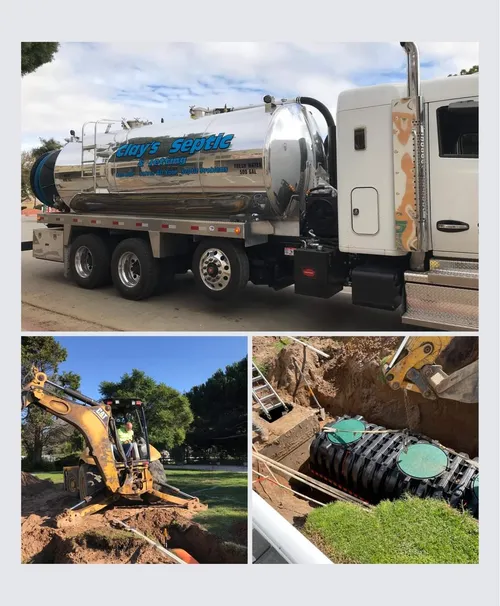
Clay's Septic & Jetting Inc
867 Guadalupe St, Guadalupe, CA 93434
Clay's Septic & Jetting Inc is a licensed service provider based in Santa Maria, CA, specializing in septic tank service, grease interceptor pumping, winery waste management, and residential and commercial sewer line maintenance. Serving the counties of San Luis Obispo and Santa Barbara, the company employs nationally certified inspectors equipped with modern tools to address various wastewater needs. Established in 1987, Clay's Septic & Jetting has extensive experience and maintains detailed electronic maps of serviced systems for efficient service.
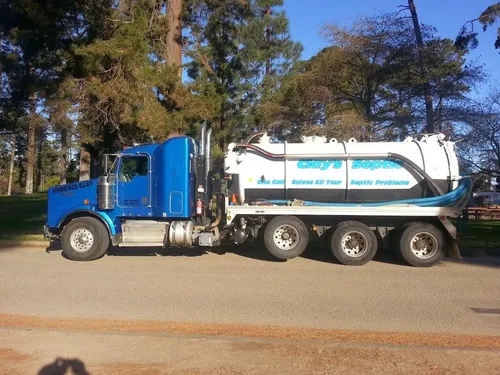
Clay's Septic & Jetting Inc
Santa Maria, CA
Clay's Septic & Jetting Inc is a licensed service provider based in Santa Maria, CA, serving the counties of San Luis Obispo and Santa Barbara. The company specializes in septic tank service, grease interceptor pumping, winery waste management, and residential and commercial sewer line maintenance. Their technicians are nationally certified inspectors equipped with modern tools and extensive knowledge to address various non-hazardous liquid waste needs. Established in 1987, Clay's Septic & Jetting has a comprehensive electronic database of service locations, allowing efficient access to past service records.
Understanding FOG Regulations in Lompoc
Compliance begins with understanding the rules. In Lompoc, grease trap requirements are governed by a combination of the California Plumbing Code (CPC) and local municipal ordinances. These regulations mandate that any food service establishment must install and maintain approved grease interceptors or traps on kitchen wastewater lines. The specific local requirements for facilities are detailed in the City of Lompoc's municipal code, which covers design, installation, and accessibility standards. Enforcement typically falls under the jurisdiction of local public works or wastewater departments, which have the authority to conduct inspections and issue penalties for non-compliance.
The core purpose of these rules is to prevent FOG from entering the public sewer system. When grease cools and solidifies in pipes, it creates blockages that can lead to costly and unsanitary sewer overflows (SSOs). By ensuring your grease control device is properly sized, installed, and maintained, you play a direct role in safeguarding Lompoc's wastewater system and avoiding violations that could impact your business.
Key Components of a Compliant Grease Trap System
Not all grease traps are created equal, and meeting code involves several specific design and installation criteria.
- Proper Sizing: Your grease interceptor must be sized correctly based on your kitchen's flow rate, the number and type of plumbing fixtures (measured in fixture units), and the nature of your food service (e.g., fast food versus full-service) 1. An undersized trap will fail to capture grease effectively and require impractically frequent cleaning.
- Approved Design: Compliant devices must include essential features like baffles to slow water flow and separate FOG, adequate service access points for cleaning and inspection, and must be constructed to be watertight. Some local ordinances may also require a sampling box for inspectors.
- Accessibility: A critical and often overlooked requirement is that the trap must be easily accessible for service technicians and inspectors. It should not be located in food preparation or storage areas unless specifically approved, and there must be sufficient clearance around the unit for maintenance equipment.
How Often Should You Clean Your Grease Trap in Lompoc?
The frequency of grease interceptor maintenance is not a one-size-fits-all schedule but is determined by your specific operation and local enforcement guidelines. The universal rule is to clean the trap before FOG and solids accumulate to 25% of the unit's capacity 2 3.
For most Lompoc restaurants, this translates to a cleaning cycle of every 1 to 3 months 4. However, establishments with high-volume cooking, such as those deep-frying frequently, may require monthly service to stay within compliance limits. The best practice is to partner with a licensed grease trap service provider who can assess your trap's fill rate and help you establish a documented maintenance schedule that satisfies local inspectors. Keeping detailed service records (manifests) is not just good practice-it's your primary proof of compliance during an inspection.
Find the perfect grease trap cleaning companies for your needs
Get personalized recommendations and expert advice
What to Expect During a Grease Trap Inspection
Local wastewater authorities conduct periodic inspections to ensure compliance. Knowing what an inspector examines can help you prepare and avoid common pitfalls.
An inspector will typically check 5 6:
- Capacity and Accumulation: Measuring the level of FOG and solids in the trap.
- Structural Integrity: Ensuring baffles are intact, flow controls are functioning, and the unit is watertight.
- Access and Clearance: Verifying the trap is readily accessible and not obstructed.
- Proper Disposal: Confirming that collected grease is being hauled away by a licensed service and not improperly discharged.
- Documentation: Reviewing your maintenance logs and pump-out manifests from your service provider.
Violations can result in written warnings, mandatory corrective actions, and potentially significant fines. Proactive, documented maintenance is the most effective strategy for a smooth inspection.
Cost of Grease Trap Cleaning Services in Lompoc
The cost for professional grease trap pumping and cleaning in the Lompoc area varies primarily based on the size and type of your interceptor. Here is a general pricing guide based on industry standards for Southern California 7 8:
- Small Hydromechanical Grease Traps (under 50 gallons): $150 - $300 per service.
- Medium Grease Traps (50-100 gallons): $250 - $450 per service.
- Large Gravity Grease Interceptors (1000+ gallons): $400 - $700 or more per service.
These are base rates, and final costs can be higher for traps with particularly difficult access, exceptionally heavy sludge buildup, or those requiring additional labor. Many service providers offer contract plans for regular maintenance, which can provide cost predictability and ensure you never miss a required service.
Choosing a Service Provider and Best Practices
Selecting a reliable, licensed local grease trap service is crucial. A good provider will do more than just pump out grease; they will be knowledgeable about Lompoc's specific FOG program requirements, help you understand your maintenance schedule, and provide the proper documentation you need 9.
Beyond hiring a professional, you can improve your FOG management by implementing kitchen best practices:
- Scrape, Don't Rinse: Scrape all food scraps from dishes into the trash before washing.
- Use Strainers: Place strainers in all sink drains to catch solids.
- Collect Cooking Oil: Store used fryer oil in dedicated containers for collection by a rendering service-never pour it down the drain.
- Educate Staff: Train all kitchen employees on proper waste disposal procedures to minimize FOG entering the drains.
By combining professional service with diligent in-house practices, you can effectively manage grease, protect your plumbing, and maintain full compliance with Lompoc's regulations.
Frequently asked questions
Sources
Footnotes
-
Grease Trap Cleaning For California Restaurants - https://cacciaplumbing.com/blog/grease-trap-cleaning-california-restaurants/ ↩
-
How to Clean a Grease Trap (and How Often You Should) - https://greaseconnections.com/how-to-clean-a-grease-trap-and-how-often-you-should/ ↩
-
Restaurant Grease Trap Cleaning FAQs - Mahoney Environmental - https://www.mahoneyes.com/restaurant-grease-trap-cleaning-faqs/ ↩
-
HYDROMECHANICAL GREASE INTERCEPTOR (HGI ... - https://www.spokanecounty.gov/DocumentCenter/View/51138/Hydromechanical-Grease-Interceptor-HGI-Maintenance---English?bidId= ↩
-
Chapter 18.08 GREASE TRAPS - General Code - https://www.codepublishing.com/CA/PacificGrove/html/PacificGrove18/PacificGrove1808.html ↩
-
Grease Trap Inspection - InterNACHI® - https://www.nachi.org/grease-trap-inspection.htm ↩
-
Fats, Oils and Grease (FOG) Management & Control Program - https://www.waterboards.ca.gov/rwqcb7/water_issues/programs/pretreatment/docs/intro_fog_inspections.pdf ↩
-
SoCal Grease Pumping Service - Grease Trap Cleaning & Pumping - https://thegreasecompany.com/blog/socal-grease-pumping-service/ ↩
-
Facilities Requirements - City of Lompoc, CA - eCode360 - https://ecode360.com/43247163 ↩