Find the Best Grease Trap Cleaning Companies for Your Business
No obligation • Fast responses • Nationwide coverage

Why you can trust Restaurant Waste Disposal
Restaurant Waste Disposal is a leading U.S. resource for comparing restaurant composting, food-waste recycling, grease trap cleaning, and used cooking oil collection services. Our editorial team researches providers, checks credentials, and organizes unbiased information so operators can make informed decisions. Companies cannot pay to change ratings or placement.
Search providers near you
Top Grease Trap Cleaning Companies in Lake Forest, California Ranked
For restaurant owners and managers in Lake Forest, maintaining a clean and compliant grease trap isn't just a chore-it's a critical component of your business's operational health and legal standing. Local and state regulations mandate strict adherence to maintenance schedules to prevent fats, oils, and grease (FOG) from entering the municipal sewer system, where they can cause costly blockages and environmental damage. Proactive grease interceptor service is your first line of defense against violations, fines, and emergency plumbing disasters, ensuring your kitchen runs smoothly and remains in good standing with health inspectors.
Understanding the specific requirements for your establishment is key. The core rule, often called the "25% rule," requires cleaning before FOG and solids accumulate to 25% of the trap's liquid depth. However, the actual frequency-whether monthly, quarterly, or semi-annually-depends heavily on your menu's grease output and your kitchen's volume 1. Staying ahead of this schedule with a licensed hauler is far more cost-effective than reacting to a clog or an inspector's citation.
Zoom Drain
15540 Rockfield Blvd C100, Irvine, CA 92618
Zoom Drain is a grease trap cleaning and drain service company based in Los Angeles, CA. They provide residential and commercial drain and sewer cleaning, inspection, repairs, and preventive maintenance. Their services cover clogged drains, sewer pump repair, sump pump replacement, and landscape drain maintenance. Zoom Drain uses advanced technology like hydro jetting to clear blockages, including tree roots, and offers 24/7 emergency services. They serve areas including Anaheim, Irvine, Santa Ana, and throughout Orange County. The company is known for its specialized services in food and hospitality sectors, contractor support, and tailored maintenance plans.
Roto-Rooter Plumbing & Water Cleanup
3848 Campus Dr STE 220, Newport Beach, CA 92660
Roto-Rooter Plumbing & Water Cleanup provides comprehensive plumbing and water cleanup services in Long Beach, CA. They handle a wide range of issues including floodwater cleanup, sewer and drain cleaning, faucet and toilet repairs, water heater services, and grease trap maintenance. The company serves both residential and commercial clients, offering advanced capabilities such as high-pressure water jetting (hydro-jetting) and trenchless sewer line replacement. With decades of experience dating back to 1935, Roto-Rooter offers 24/7 emergency plumbing services to address urgent problems at any time.
Roto-Rooter Plumbing & Water Cleanup
2050 W Chapman Ave #202, Orange, CA 92868
Roto-Rooter Plumbing & Water Cleanup offers a wide range of plumbing services in Los Angeles, CA, including grease trap cleaning, sewer and drain cleaning, water heater repair, and emergency flood cleanup. The company serves both residential and commercial clients, addressing issues from routine maintenance to urgent repairs. They utilize advanced tools such as HD inspection cameras and hydro-jetting to clear blockages and perform no-dig pipe replacements. Established with a legacy dating back to the invention of the original electric drain snake in 1935, Roto-Rooter provides 24/7 emergency plumbing services to handle urgent situations any time of day or night.
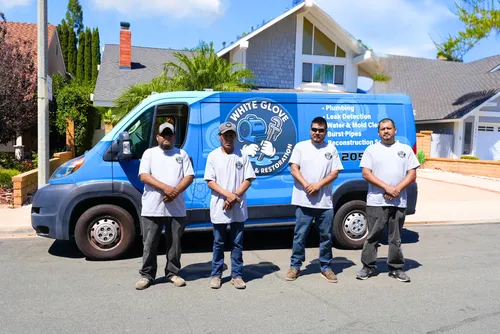
White Glove Plumbing Orange County
1430 E Borchard Ave, Santa Ana, CA 92705
White Glove Plumbing Orange County is a full-service plumbing and restoration company based in Santa Ana, serving residential and commercial clients throughout Los Angeles, CA. They provide a wide range of services including emergency plumbing, leak detection, hydro-jetting, water heater installation, grease trap pumping, sewage cleanup, mold remediation, and water damage restoration. The company offers 24/7 emergency services to quickly address urgent plumbing and restoration needs. Their expertise includes advanced capabilities such as slab leak reroutes, sewer camera inspections, and certified mold remediation. White Glove Plumbing combines plumbing and restoration services to manage repairs and rebuilds efficiently, reducing the need for multiple contractors.
Roto-Rooter Plumbing & Water Cleanup
20422 Beach Blvd #225, Huntington Beach, CA 92648
Roto-Rooter Plumbing & Water Cleanup offers comprehensive plumbing and water cleanup services in Long Beach, CA. They handle a wide range of issues including drain cleaning, sewer line repairs, water heater services, grease trap maintenance, and emergency flood cleanup. The company uses advanced technology such as high-definition inspection cameras and hydro-jetting to address plumbing challenges efficiently. With expertise tailored to local conditions and building codes, Roto-Rooter serves both residential and commercial clients. They provide 24/7 emergency plumbing services to quickly resolve urgent problems and minimize damage.
Understanding Local Grease Trap Regulations
Compliance in Lake Forest is governed by a combination of California state law and local municipal codes. The primary goal is to protect the public sewer infrastructure from FOG-related blockages, which can lead to sanitary sewer overflows (SSOs).
- The 25% Rule: This is the universal standard. California Health & Safety Code and local ordinances require that grease interceptors be pumped out and cleaned before the combined FOG and solid waste reaches 25% of the total liquid depth of the trap 2 3. This ensures the device can continue to effectively separate grease from wastewater.
- Mandatory Record-Keeping: It's not enough to just have the service performed. You must obtain and retain detailed service reports or manifests from your licensed waste hauler. Inspectors can request these records for up to three years as proof of compliance during routine or complaint-driven inspections4.
- Enforcement Actions: The City of Lake Forest and Orange County sanitation districts are serious about enforcement. Non-compliance can result in written notices, significant fines, and in severe cases, a suspension of your wastewater discharge permit, which could effectively shut down your kitchen operations.
Determining Your Service Frequency
While the 25% rule sets the maximum allowable accumulation, your ideal service interval is dictated by your specific operation. Waiting until you hit the legal limit is often risky and can lead to reduced trap efficiency and odor issues.
- High-Volume & High-Grease Kitchens: Restaurants serving fried foods, pizza, or dishes with heavy sauces typically require monthly or bi-monthly grease trap pumping.
- Moderate-Volume Establishments: Many full-service restaurants find a quarterly (every 3 months) schedule sufficient to stay well under the 25% threshold and maintain compliance 5.
- Lower-Volume Operations: Some cafes or bakeries with minimal grease production may manage with semi-annual (every 6 months) service, but this should be verified through regular monitoring.
The most reliable method is to have your service provider assess your trap during each cleaning and recommend a schedule based on the actual rate of accumulation. This data-driven approach prevents guesswork.
The Professional Service Process
Hiring a licensed, professional grease trap cleaning company is non-negotiable for compliance. Their process ensures a complete job that meets regulatory standards.
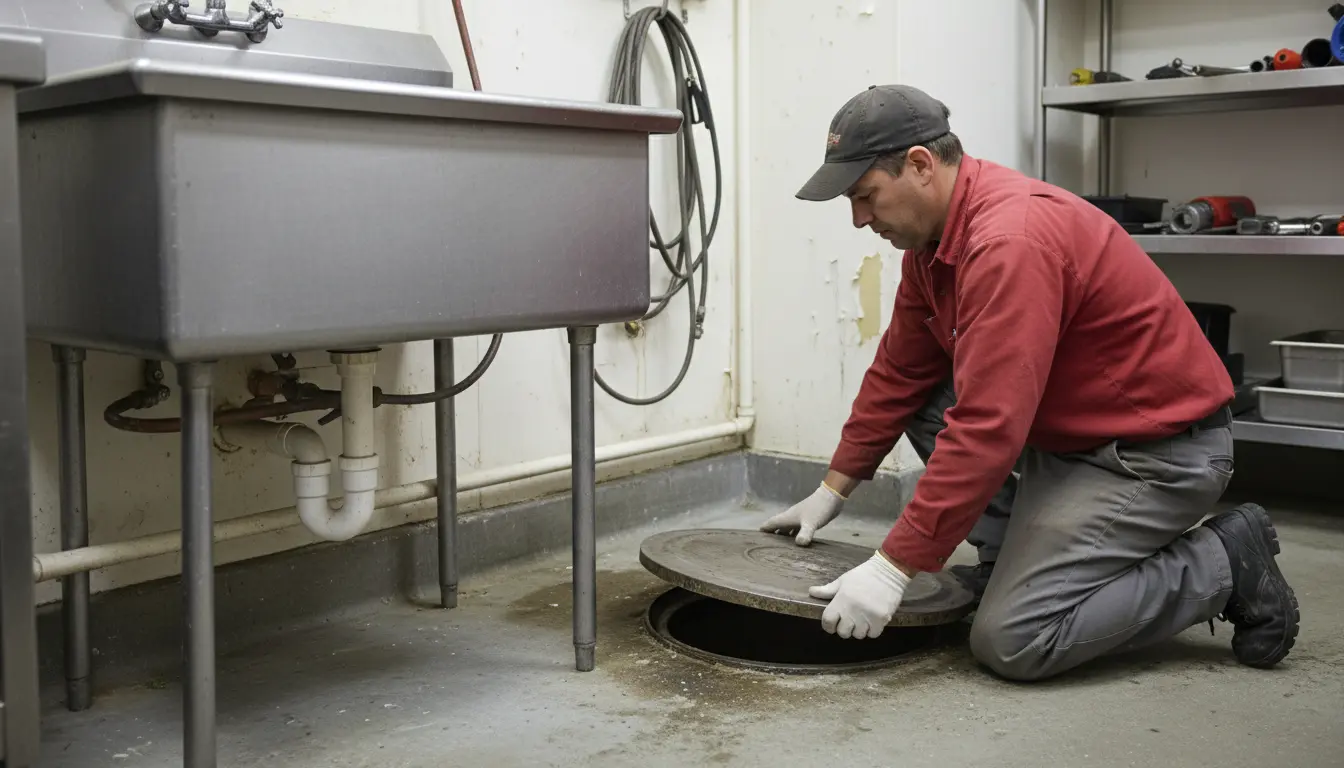
- Access & Inspection: The crew will locate and access your grease interceptor, which must be readily accessible per code. They perform a visual inspection.
- Complete Pump-Out: Using a vacuum truck, all contents-wastewater, FOG, food solids, and sludge-are fully removed from the trap 6. A simple "skimming" of the top layer is not compliant.
- High-Pressure Cleaning: The interior walls, baffles, and piping are jet-sprayed to remove any clinging grease and debris.
- Waste Disposal & Documentation: The collected waste is transported to an approved facility for rendering or disposal. Crucially, the provider issues you a detailed service manifest listing volumes, dates, and disposal locations, which serves as your legal proof of service7.
Find the perfect grease trap cleaning companies for your needs
Get personalized recommendations and expert advice
Cost of Grease Trap Maintenance in Lake Forest
Investing in regular maintenance is significantly less expensive than dealing with the consequences of neglect. Costs are influenced by trap size, accessibility, and service frequency.
- Preventive Maintenance Pump-Out: For a standard, scheduled cleaning, restaurant owners in Lake Forest can expect costs in the range of $250 to $400 per service. This is the cost of compliance and operational smoothness.
- Emergency Service Charges: If a grease trap overflows or causes a backup, emergency service calls can cost $800 to $1,200 or more8 9. These situations often also incur fines from the city and lost revenue from operational downtime.
- Long-Term Savings: By adhering to a preventive schedule, smart owners avoid emergency premiums, potential fines (which can be thousands of dollars), and the catastrophic cost of a sewer line repair or replacement on their property10.
Preparing for Health & Safety Inspections
Inspections can be scheduled or unannounced. Being prepared is the best way to pass with ease.
- Organize Your Records: Keep all grease trap service manifests in a dedicated, easily accessible binder or digital folder. Having the last 3-5 records on hand is recommended11.
- Train Your Staff: Ensure kitchen staff understand best practices for minimizing grease down the drain, such as using sink strainers and scraping plates into trash bins before washing.
- Maintain Accessibility: Keep the area around your grease trap clear. Inspectors and service technicians need unobstructed access to the manhole covers12.
- Know Your System: Be aware of your trap's location, size, and the last service date. Proactive knowledge demonstrates good management to an inspector.
Best Practices for Kitchen Staff
Compliance starts with daily habits in the kitchen. Even the best grease trap will fail if overwhelmed.
- Scrape, Don't Rinse: Food solids should be scraped into compost or trash bins, not rinsed down the sink.
- Use Collection Containers: Collect cooled frying oil and pan grease in sealed containers for proper recycling or disposal, never pour it down any drain.
- Install and Maintain Screens: Use sink basket strainers to catch food particles and empty them into the trash regularly.
- Avoid Garbage Disposals: If possible, avoid using garbage disposals, as they emulsify fats and make them harder for the grease trap to capture.
Implementing these practices extends the time between necessary pump-outs, saves money, and reduces the risk of clogs within your own plumbing.
Frequently asked questions
Sources
Footnotes
-
How Often to Clean Restaurant Grease Traps in Los Angeles, CA - https://bakercommodities.com/blog/2025/01/23/la-laws-for-grease-recycling/ ↩
-
12.20.220. Grease trap requirements. - https://codelibrary.amlegal.com/codes/fullerton/latest/fullerton_ca/0-0-0-18563 ↩
-
Grease Trap Cleaning For California Restaurants - https://cacciaplumbing.com/blog/grease-trap-cleaning-california-restaurants/ ↩
-
City of Lakeport, CA Fats, Oils, And Grease Program - eCode360 - https://ecode360.com/47777472 ↩
-
1 Grease Trap & Interceptor Pumping COMPANY In Lake Forest - https://greasemanagement.org/greasetrapservicelakeforest.html ↩
-
California Health and Safety Code § 114201 (2024) - Justia Law - https://law.justia.com/codes/california/code-hsc/division-104/part-7/chapter-7/article-2/section-114201/ ↩
-
Lake Forest's Grease Trap Installation, Replacement and Repair ... - https://www.greasemanagement.org/lakeforestgreasetraprepair.html ↩
-
How to Clean a Grease Trap (and How Often You Should) - https://greaseconnections.com/how-to-clean-a-grease-trap-and-how-often-you-should/ ↩
-
Ultimate Grease Trap Pumping Cost Guide: Essential Money-Saving ... - https://www.texwaywastewater.com/grease-trap-pumping-cost/ ↩
-
Grease Trap Cleaning in Lake Forest CA - https://greasetrapcleaningsanjuancapistrano.com/lake-forest-ca.html ↩
-
Grease Trap Regulations and Compliance: What You Need to Know - https://www.texwaywastewater.com/grease-trap-regulations-and-compliance/ ↩
-
Overview of Title XVI Chapter 8 Grease and Oil Management Program - Food Service Facilities - https://www.pueblo.us/DocumentCenter/View/33392/Overview-of-Chapter-8-Food-Service-Facilities ↩