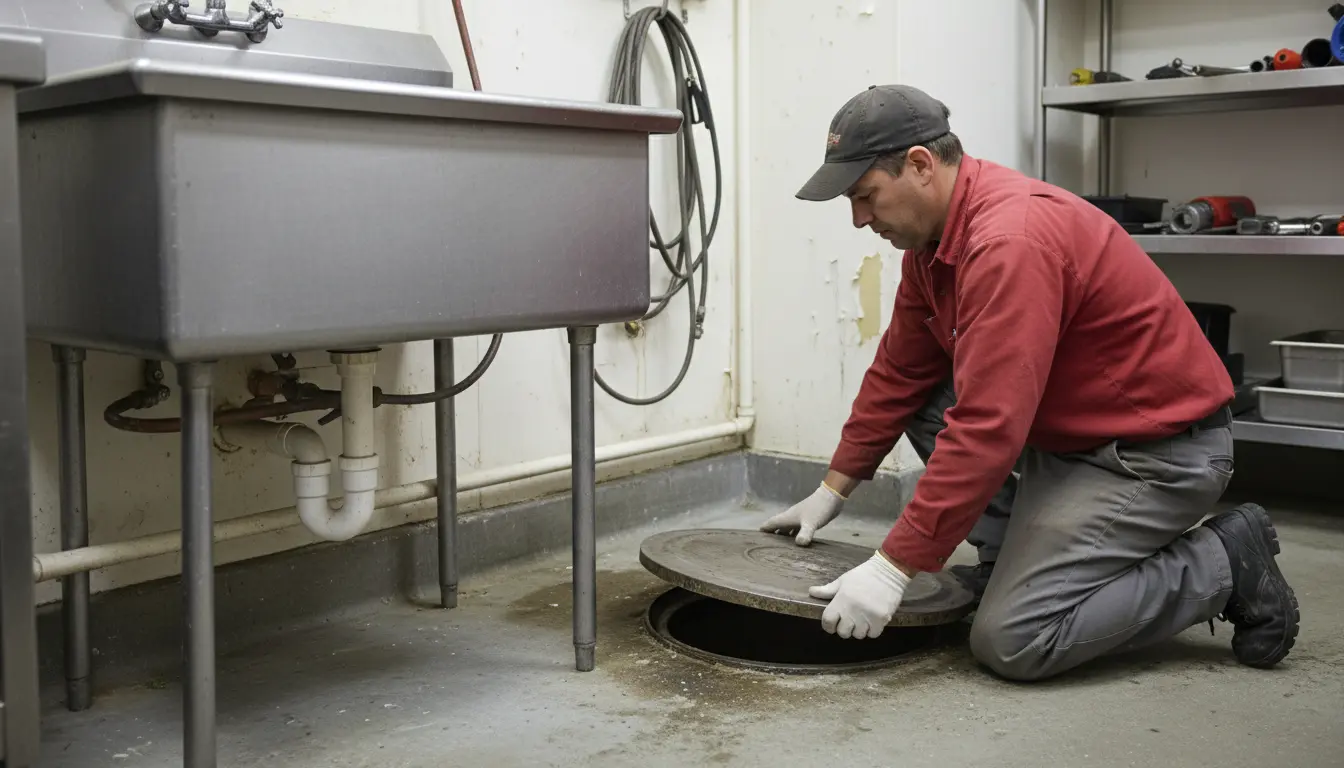
Find the Best Grease Trap Cleaning Companies for Your Business
No obligation • Fast responses • Nationwide coverage

Why you can trust Restaurant Waste Disposal
Restaurant Waste Disposal is a leading U.S. resource for comparing restaurant composting, food-waste recycling, grease trap cleaning, and used cooking oil collection services. Our editorial team researches providers, checks credentials, and organizes unbiased information so operators can make informed decisions. Companies cannot pay to change ratings or placement.
Search providers near you
Top Grease Trap Cleaning Companies in Cupertino, California Ranked
For restaurant owners and food service operators in Cupertino, maintaining a clean and compliant grease trap or interceptor is a critical, non-negotiable part of daily operations. These systems are your first line of defense against fats, oils, and grease (FOG) entering the municipal sewer lines, protecting your business from costly backups, fines, and operational shutdowns. In Cupertino and throughout Santa Clara County, grease trap maintenance is governed by a strict combination of the California Plumbing Code (CPC) and local ordinances, with enforcement carried out through routine health inspections. Understanding the specific requirements for pumping frequency, record-keeping, and certified service providers is essential for seamless compliance and the long-term health of your plumbing infrastructure.
Roto-Rooter Plumbing & Water Cleanup
1780 Whipple Rd Ste 203G, Union City, CA 94587
Roto-Rooter Plumbing & Water Cleanup provides comprehensive plumbing and water cleanup services in San Jose, CA. They serve both residential and commercial clients, offering a wide range of solutions including grease trap cleaning, sewer and drain cleaning, water heater repair and installation, and emergency flood services. The company uses advanced plumbing technology and equipment to handle complex plumbing systems and offers 24/7 emergency plumbing support to address urgent issues such as burst pipes and sewer backups. Roto-Rooter is licensed and insured, serving the local community with expertise and a commitment to compliance with local codes.
Caccia Home Services
1660 Gilbreth Rd, Burlingame, CA 94010
Caccia Home Services is a plumbing and home services provider based in San Mateo, CA. They offer a wide range of services including grease trap cleaning, hydro jetting, sewer line repair, water treatment, and emergency plumbing. Their capabilities include trenchless sewer services and installation and maintenance of water heaters, including tankless and heat pump models. The company also provides electrical services such as EV charger installation and lighting upgrades. Caccia Home Services is known to respond to emergency plumbing needs.
Roto-Rooter Plumbing & Water Cleanup
41111 Mission Blvd Ste 202, Fremont, CA 94539
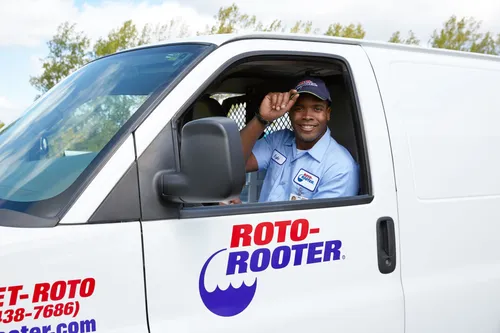
Roto-Rooter Plumbing & Water Cleanup is a plumbing company serving San Jose, CA, and nearby communities including Fremont, Sunol, Pleasanton, Milpitas, and Warm Springs. They provide a wide range of plumbing services for residential and commercial clients, including drain cleaning, water heater repair, emergency plumbing, and grease trap cleaning. The company offers 24/7 emergency plumbing services and uses advanced equipment such as high-pressure water jetting (hydro-jetting) for effective drain maintenance. Established in 1935, Roto-Rooter has a long history of serving customers with professional plumbing solutions.
Roto-Rooter Plumbing & Water Cleanup
1500 41st Ave Ste 260, Capitola, CA 95010
Roto-Rooter Plumbing & Water Cleanup provides comprehensive plumbing services in San Jose, CA, specializing in both residential and commercial systems. Their offerings include drain cleaning, sewer line repair and replacement, water heater installation and repair, grease trap maintenance, and floodwater cleanup. The company uses advanced equipment such as hydro-jetting for effective drain cleaning and offers 24/7 emergency plumbing services to address urgent issues promptly. Serving Capitola and surrounding communities, Roto-Rooter has extensive experience managing plumbing challenges unique to the area, including compliance with local regulations and environmental concerns.
Eco-Flow Plumbing Inc.
122 Hubbard St, Santa Cruz, CA 95060
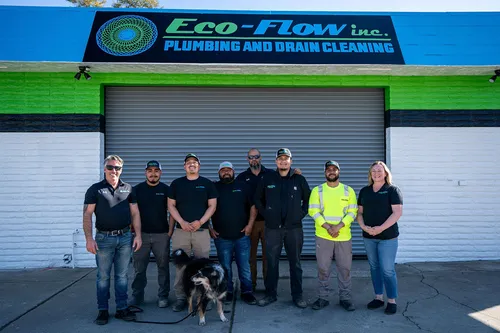
Eco-Flow Plumbing Inc. is a licensed and insured plumbing company serving San Jose, CA, and the surrounding Santa Cruz area. Since 2008, they have provided plumbing services for both residential and commercial clients, including sewer repairs, water heater services, and restaurant grease trap cleaning. Their team is equipped to perform high-pressure water jetting for pipe cleaning and emergency situations.
Understanding Local Grease Interceptor Regulations
Compliance in Cupertino starts with knowing the rules. Your establishment's grease control system falls under the jurisdiction of both state and local codes. The foundational regulation is the California Plumbing Code (CPC), which sets the standards for the design, installation, and accessibility of grease interceptors. Locally, Santa Clara County enforces these codes and may have additional requirements, often mandating that pumping service providers hold specific county permits.
The core operational rule is the 25% rule: traps must be pumped when the combined FOG and solid accumulation reaches 25% of the liquid depth of the trap1 2. However, even if that threshold isn't met, a mandatory minimum pumping frequency of every six months applies1 2. This "whichever comes first" standard ensures that no trap goes too long without service. High-volume kitchens, such as busy diners or fast-food restaurants, will likely need service much more frequently-anywhere from weekly to monthly-to stay under the 25% limit 3.
The Critical Importance of Documentation and Logs
In the eyes of an inspector, if a service wasn't documented, it didn't happen. Meticulous record-keeping is just as important as the physical pumping service itself. You are required to maintain a detailed logbook or file that includes, at a minimum:
- The date of each grease interceptor cleaning or pumping.
- The name and license information of the service provider.
- The volume of grease and solids removed.
- The disposal method or manifest number (provided by your hauler).
- All corresponding invoices and receipts.
These records must be readily available for review during any routine health inspection. Failure to produce them can be grounds for a violation, even if the trap itself was recently serviced. Modern service providers often offer digital portals for tracking and storing this information, simplifying compliance.
What to Expect During an Inspection
City and county health inspectors conduct regular visits to food service facilities to ensure public safety and code adherence. A key part of this inspection will focus on your grease management program. The inspector will likely:
- Review Maintenance Records: They will ask for your service log and invoices to verify pumping frequency and provider legitimacy 4.
- Physically Inspect the Trap: They will check for proper accessibility (as required by code), look for signs of overflow or leakage, and may visually assess the FOG level.
- Check for Proper Installation: Ensuring the interceptor is correctly sized and installed according to CPC standards 5.
Non-compliance discovered during an inspection can lead to a range of penalties, including formal notices of violation, substantial fines, a mandated increase in your service frequency, and in severe or repeat cases, an order to cease operations until the issue is resolved 6.
Service Cost Factors and Investment
The cost for professional grease trap pumping in the Cupertino area is an investment in your business's continuity. Prices are not one-size-fits-all and depend on several variables. Generally, you can expect a per-service cost ranging from $120 for a small or infrequently serviced trap to over $400 for a large, high-volume interceptor7 8.
Key factors influencing price include:
- Trap Size and Volume: Larger interceptors hold more waste and require more labor and disposal capacity.
- Accumulation Level: A heavily impacted trap takes longer to clean.
- Service Frequency: Regularly scheduled maintenance is typically less expensive per visit than an emergency call for a clogged or overflowing unit.
- Accessibility: Traps that are difficult to access may incur additional charges.
- Bundled Services: Some providers offer cost savings if you bundle grease trap cleaning with other services like used cooking oil collection or septic system maintenance 9.
Find the perfect grease trap cleaning companies for your needs
Get personalized recommendations and expert advice
Choosing a Licensed and Compliant Service Provider
Selecting the right service partner is a crucial business decision. Working with an unlicensed or non-compliant pumper can leave you with inadequate service and still liable for violations. When vetting providers, ensure they are:
- Licensed and Insured: They must hold all necessary business licenses and environmental hauling permits required by Santa Clara County and the State of California.
- Knowledgeable of Local Codes: They should be able to clearly explain Cupertino and Santa Clara County's specific requirements.
- Transparent with Documentation: They must provide detailed service reports and proper waste disposal manifests for your records10 11.
- Reliable and Responsive: Look for established companies with a reputation for showing up on schedule for preventative maintenance, not just emergency calls.
A qualified provider acts as a compliance partner, helping you navigate regulations and avoid the steep costs of non-compliance.
Proactive Maintenance vs. Reactive Repairs
A proactive grease management strategy is always more cost-effective than a reactive one. Scheduled, preventative pumping based on your kitchen's output prevents FOG from hardening in your internal plumbing lines, which is a common cause of slow drains and complete blockages12. An emergency call for a sewer backup can cost thousands in plumbing repairs, lost business, and potential health code violations.
Furthermore, consistent maintenance extends the lifespan of your grease interceptor itself. Allowing solids to compact and decompose at the bottom of the tank can cause damage and lead to premature, expensive replacement of the entire unit.
Steps for Ensuring Ongoing Compliance
To keep your Cupertino restaurant running smoothly and in full compliance, follow this actionable checklist:
- Verify Local Ordinances: Contact the City of Cupertino or Santa Clara County Environmental Health Department to confirm any hyper-local amendments to the state code.
- Establish a Baseline: Have a licensed provider assess your current trap condition and recommend a starting service frequency.
- Schedule Preventative Maintenance: Set up a regular pumping schedule based on your volume-quarterly, monthly, or as needed-well within the six-month maximum.
- Maintain Impeccable Records: Designate a single, organized location (physical or digital) for all service logs and invoices.
- Train Your Staff: Educate kitchen staff on best practices for minimizing FOG going down the drain, such as using sink strainers and scraping plates before washing.
Frequently asked questions
Sources
Footnotes
-
Grease Trap Cleaning For California Restaurants - https://cacciaplumbing.com/blog/grease-trap-cleaning-california-restaurants/ ↩ ↩2
-
12.20.220. Grease trap requirements. - https://codelibrary.amlegal.com/codes/fullerton/latest/fullerton_ca/0-0-0-18563 ↩ ↩2
-
Grease Trap Regulations and Compliance: What You Need to Know - https://www.texwaywastewater.com/grease-trap-regulations-and-compliance/ ↩
-
Orlando Grease Trap Maintenance Guide: Essential Compliance Protocols - myshyft.com - https://www.myshyft.com/blog/grease-trap-cleaning-orlando-florida/ ↩
-
Chapter 18.08 GREASE TRAPS - General Code - https://www.codepublishing.com/CA/PacificGrove/html/PacificGrove18/PacificGrove1808.html ↩
-
California Health and Safety Code § 114201 (2024) - Justia Law - https://law.justia.com/codes/california/code-hsc/division-104/part-7/chapter-7/article-2/section-114201/ ↩
-
Grease Trap Pumping San Francisco - North Bay Restaurant Services - https://northbayrestaurantservices.com/grease-trap-pumping-san-francisco/ ↩
-
Restaurant Grease Trap & Interceptor Cleaning Cost - https://greasemanagement.org/pricing.html ↩
-
Ultimate Grease Trap Pumping Cost Guide: Essential Money-Saving ... - https://www.texwaywastewater.com/grease-trap-pumping-cost/ ↩
-
The Ultimate Guide to Restaurant Grease Trap Cleaning - https://mokherplumbing.com/ultimate-guide-restaurant-grease-trap-cleaning/ ↩
-
Professional Grease Trap Pumping Service for Clean Operation - https://www.a1tank.net/grease-trap-pumping-service/ ↩
-
Grease Trap Cleaning from Santa Clarita to San Diego - https://phoenixpumping.com/grease-trap-maintenance/ ↩