Find the Best Grease Trap Cleaning Companies for Your Business
No obligation • Fast responses • Nationwide coverage

Why you can trust Restaurant Waste Disposal
Restaurant Waste Disposal is a leading U.S. resource for comparing restaurant composting, food-waste recycling, grease trap cleaning, and used cooking oil collection services. Our editorial team researches providers, checks credentials, and organizes unbiased information so operators can make informed decisions. Companies cannot pay to change ratings or placement.
Search providers near you
Top Grease Trap Cleaning Companies in Colton, California Ranked
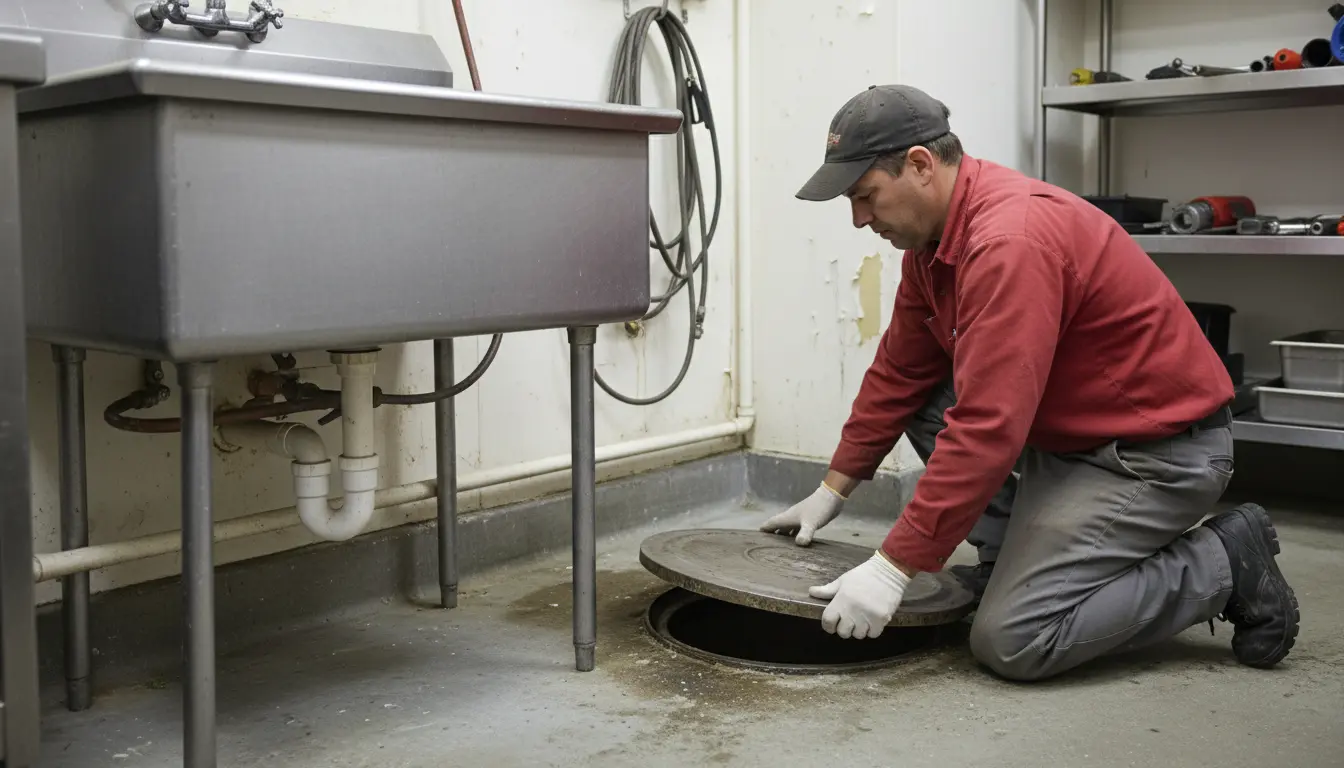
For restaurant owners and food service operators in Colton, maintaining a grease interceptor is a critical and non-negotiable part of daily business. These systems, commonly called grease traps, are your first line of defense in preventing fats, oils, and grease (FOG) from entering the city's sewer lines, where they can cause costly and disruptive blockages. Compliance with local and state regulations is not just about avoiding fines; it's about being a responsible partner in protecting Colton's wastewater infrastructure. This guide outlines the essential requirements, best practices, and local considerations for effective grease management in your establishment.
Roto-Rooter Plumbing & Water Cleanup
1131 W 6th St Ste 209, Ontario, CA 91762
Roto-Rooter Plumbing & Water Cleanup provides a wide range of plumbing services in Anaheim, CA, including residential and commercial plumbing, floodwater cleanup, mold remediation, sewer and drain cleaning, and grease trap maintenance. The company is equipped to handle everything from routine repairs to complex installations and uses advanced technologies such as hydro jetting and no-dig pipe replacement to address sewer line issues efficiently. Roto-Rooter offers 24/7 emergency plumbing services to quickly respond to urgent problems like burst pipes, sewer backups, and water heater repairs. Serving Anaheim and surrounding communities, Roto-Rooter combines national expertise with local knowledge to meet diverse plumbing needs.
Roto-Rooter Plumbing & Water Cleanup
3579 Arlington Ave #800, Riverside, CA 92506
Roto-Rooter Plumbing & Water Cleanup provides a wide range of plumbing and water cleanup services in Riverside, CA. They handle everything from routine maintenance and repairs to complex commercial plumbing needs, including grease trap cleaning, sewer line repair, and water damage cleanup. Their team is experienced with local plumbing challenges and building codes, serving both residential and commercial clients. Roto-Rooter offers 24/7 emergency plumbing services to address urgent issues such as burst pipes, sewer backups, and clogged drains. They also specialize in hydro-jetting and use advanced technology for sewer inspections and pipe replacement. With a history dating back to the invention of the electric drain snake in 1935, Roto-Rooter continues to apply innovative solutions to plumbing problems.
Roto-Rooter Plumbing & Water Cleanup
9631 Business Center Dr Ste L-14, Rancho Cucamonga, CA 91730
Roto-Rooter Plumbing & Water Cleanup provides comprehensive plumbing services in San Bernardino, CA, specializing in both residential and commercial plumbing solutions. Their offerings include drain cleaning, sewer line repair, water heater services, grease trap maintenance, and emergency water damage cleanup. The company uses advanced technology such as high-definition inspection cameras and hydro-jetting to address plumbing issues efficiently. Founded in 1935, Roto-Rooter continues to build on its long history of innovation in plumbing services. They offer 24/7 emergency availability to handle urgent plumbing problems at any time.
Alpha Omega Plumbing & Septic Services
11755 Santa Fe Ave E, Hesperia, CA 92345
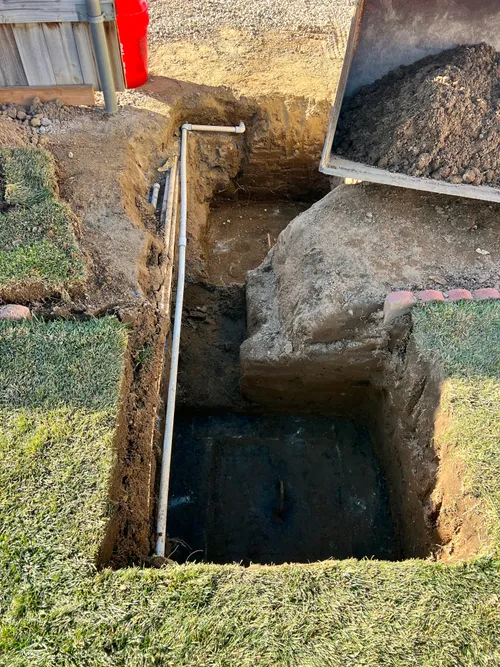
Alpha Omega Plumbing & Septic Services has been providing plumbing and septic solutions in Victorville, CA, and the entire High Desert area since 1984. They offer a range of services including grease trap cleaning, septic tank maintenance, installation, and repair of septic systems such as leach lines and seepage pits. The company emphasizes environmentally safe work practices and maintains a professional appearance with uniformed staff and well-kept vehicles.
California Pumping & Sanitation, Inc
1057 S Washington Ave, San Bernardino, CA 92408
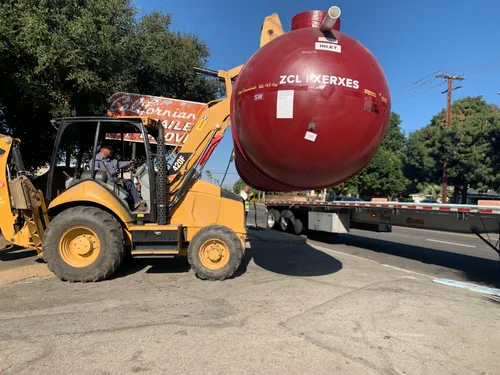
California Pumping & Sanitation, Inc is a septic and sanitation service provider based in Los Angeles, CA. Serving Southern California, they offer a wide range of services including septic tank pumping, grease trap cleaning, septic system construction, repairs, and maintenance for residential, commercial, and industrial clients. The company employs advanced technologies such as hydrojetting drain cleaning and septic tank camera inspections to ensure effective service delivery. With over 35 years of experience, California Pumping & Sanitation is licensed, bonded, and insured, providing 24/7 emergency support to its customers.
Understanding Colton's Grease Interceptor Regulations
The City of Colton mandates that all food service facilities install and maintain grease interceptors in accordance with the California Plumbing Code (CPC) and local Best Management Practices (BMPs). The primary goal is source control-stopping FOG at your property before it can contribute to sewer system problems. The city's Public Works or Wastewater division oversees this program, conducting inspections and ensuring compliance to prevent clogs and sanitary sewer overflows.
Your specific requirements, including the mandated cleaning frequency, are often detailed in a wastewater permit or ordinance. While the base rule typically requires cleaning when FOG and solids accumulate to 25% of the liquid depth, the city frequently sets a minimum schedule, such as every six months. For high-volume kitchens, quarterly pumping is a common and prudent standard to meet this performance rule and avoid violations.
Installation and Sizing Standards
Proper installation is the foundation of compliance. Your grease interceptor must be sized correctly based on your kitchen's flow rate and grease production capacity (often measured in pounds). An undersized unit will fail quickly, leading to constant maintenance issues and potential non-compliance. It must also be installed according to CPC standards, with key components like flow control devices and accessible lids for service and inspection.
A critical installation rule in Colton and throughout California is that dishwashers and food waste grinders are prohibited from discharging into a grease interceptor 1. These appliances introduce high-temperature water and fine solids that can emulsify grease or overwhelm the trap, rendering it ineffective. Ensuring your plumbing is configured correctly from the start is essential for long-term, trouble-free operation.
Maintenance Frequency and the "25% Rule"
Determining when to pump your trap is guided by the "25% Rule." This industry and regulatory standard states that a grease interceptor should be cleaned before the combined layer of floating FOG and settled solids exceeds 25% of the total liquid depth in the tank 2 3. Waiting longer allows excessive grease to pass into the sewer line, increasing your risk of causing or contributing to a blockage.
While this is a performance standard, the City of Colton often enforces a minimum schedule, such as semi-annual cleaning, to ensure consistent compliance 4. However, many busy Colton restaurants find that their actual usage necessitates service every three months (quarterly) to stay well under the 25% threshold 5 6. Self-monitoring by checking the trap between professional services is a recommended best practice to understand your establishment's unique accumulation rate.
Prohibited Practices and Effective BMPs
Simply having a trap cleaned regularly isn't enough. The City of Colton requires facilities to implement Best Management Practices (BMPs) to minimize FOG entering the drains in the first place. Key BMPs include:
- Dry Cleanup: Scraping food scraps from dishes, pots, and pans into the trash before rinsing.
- Using Strainers: Placing baskets or strainers in sink drains to catch solid food waste.
- Proper Disposal: Collecting used cooking oil in dedicated containers for recycling, not pouring it down any drain.
- Employee Training: Educating kitchen staff on proper waste disposal procedures.
Furthermore, certain actions are explicitly prohibited:
- No Additives: Do not use chemical or biological additives, enzymes, or solvents that claim to dissolve grease. These products often simply emulsify grease, allowing it to pass through the trap only to solidify further down the sewer line, causing worse blockages. Their use may violate local ordinances unless specifically approved 7.
- No Dilution: Using hot water to "flush" grease down the drain is not an acceptable substitute for interceptor cleaning and is considered a violation 8.
Find the perfect grease trap cleaning companies for your needs
Get personalized recommendations and expert advice
Compliance, Inspection, and Enforcement
The City of Colton takes grease control seriously to protect its sewer infrastructure. Inspections by city officials can be scheduled or unannounced and will focus on:
- The physical condition and accessibility of your grease interceptor.
- Review of maintenance records and pump-out receipts.
- Evidence of proper BMP implementation and any prohibited discharges 9.
Failure to comply can result in a progression of enforcement actions. This typically begins with a written warning or notice of violation, requiring corrective action by a specified date. For significant issues-like a grease-related sewer backup or overflow-the city can issue substantial fines and even order immediate, emergency pumping at the facility's expense 10. Keeping meticulous records is your best defense during an inspection.
Service Costs and Selecting a Provider
The cost for routine grease trap pumping in Colton typically ranges from $250 to $500 or more per service for standard indoor units 11. Several key factors influence this price:
- Size and Type: Larger capacity traps and outdoor grease interceptors cost more to service.
- Accessibility: Easy, ground-level access reduces labor time, while confined or difficult-to-reach traps increase cost.
- Condition: A severely neglected trap that requires extra labor or has solidified contents will be more expensive.
- Service Frequency: Regularly scheduled maintenance on a contract is often more affordable than one-time emergency calls.
Emergency service, required after a clog or overflow, can cost significantly more, often between $800 and $1,200+, due to after-hours rates and the urgent nature of the work 12 13.
When hiring a service provider in the Colton area, ensure they are licensed, insured, and familiar with the specific regulations of Colton and San Bernardino County. A reputable provider will not only pump the waste but also provide detailed documentation of the service, including volume removed, which is crucial for your compliance records.
Recordkeeping and Documentation
Maintaining thorough records is a legal requirement and a cornerstone of compliance. Your files should include:
- Service Receipts: Detailed invoices from your pumping contractor showing the date, company name, trap location/size, and gallons or pounds of waste removed.
- Waste Hauler Manifests: Documentation showing the proper disposal of the collected FOG at a licensed facility.
- Self-Inspection Logs: Notes from your own periodic checks of the trap's condition and accumulation levels.
Having this documentation organized and readily available will streamline any city inspection and demonstrate your commitment to proper grease management 14.
Frequently asked questions
Sources
Footnotes
-
California Health and Safety Code § 114201 (2024) - Justia Law - https://law.justia.com/codes/california/code-hsc/division-104/part-7/chapter-7/article-2/section-114201/ ↩
-
Grease Trap Regulations and Compliance: What You Need to Know - https://www.texwaywastewater.com/grease-trap-regulations-and-compliance/ ↩
-
Grease Trap Cleaning Guide: 25% Rule, Schedule & Compliance - https://greaseconnections.com/how-to-clean-a-grease-trap-and-how-often-you-should/ ↩
-
Standard Grease Interceptor - Colton, CA - https://www.coltonca.gov/DocumentCenter/View/587 ↩
-
12.20.220. Grease trap requirements. - https://codelibrary.amlegal.com/codes/fullerton/latest/fullerton_ca/0-0-0-18563 ↩
-
Grease Trap Cleaning For California Restaurants - https://cacciaplumbing.com/blog/grease-trap-cleaning-california-restaurants/ ↩
-
SECTION 9 SOURCE CONTROL 9-01 GREASE, OIL AND/OR ... - https://www.centralsan.org/sites/main/files/file-attachments/section_9_source_control_0.pdf ↩
-
FOOD AND RESTAURANT - Colton, CA - https://www.coltonca.gov/DocumentCenter/View/676 ↩
-
City of Glendale, CA - eCode360 - https://ecode360.com/43349972 ↩
-
City of Claremont, CA REGULATION OF DISCHARGES OF FATS, ... - https://ecode360.com/43832820 ↩
-
Grease Trap Cleaning Prices | Guide on the Industry Average - https://grease-cycle.com/grease-trap-pumping-cost/ ↩
-
Ultimate Grease Trap Pumping Cost Guide: Essential Money-Saving ... - https://www.texwaywastewater.com/grease-trap-pumping-cost/ ↩
-
Restaurant Grease Trap & Interceptor Cleaning Cost - https://greasemanagement.org/pricing.html ↩
-
Grease Trap Cleaning in Colton, CA | Grease Interceptor Pumping - https://greasetrapcleaningcolton.com/ ↩