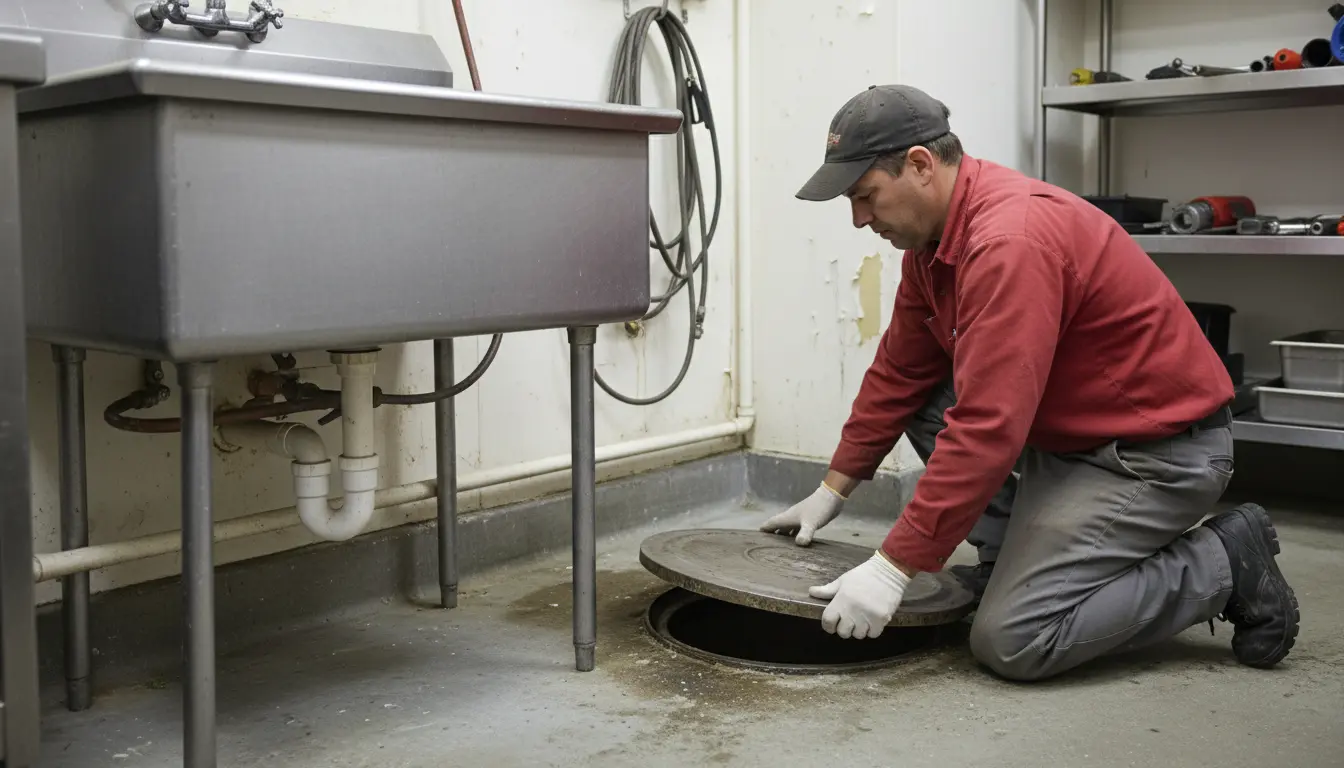
Find the Best Grease Trap Cleaning Companies for Your Business
No obligation • Fast responses • Nationwide coverage

Why you can trust Restaurant Waste Disposal
Restaurant Waste Disposal is a leading U.S. resource for comparing restaurant composting, food-waste recycling, grease trap cleaning, and used cooking oil collection services. Our editorial team researches providers, checks credentials, and organizes unbiased information so operators can make informed decisions. Companies cannot pay to change ratings or placement.
Search providers near you
Top Grease Trap Cleaning Companies in Bellflower, California Ranked
For any restaurant or food service establishment in Bellflower, managing fats, oils, and grease (FOG) is a critical operational and legal responsibility. Proper grease trap and interceptor maintenance is not just a best practice-it's a requirement enforced by local and state health codes to protect the city's sewer infrastructure. Compliance involves regular cleaning, meticulous record-keeping, and understanding specific Los Angeles County regulations. This guide provides Bellflower business owners with the essential information needed to navigate grease management, avoid costly fines, and ensure their establishment runs smoothly.
Zoom Drain
15540 Rockfield Blvd C100, Irvine, CA 92618
Zoom Drain is a grease trap cleaning and drain service company based in Los Angeles, CA. They provide residential and commercial drain and sewer cleaning, inspection, repairs, and preventive maintenance. Their services cover clogged drains, sewer pump repair, sump pump replacement, and landscape drain maintenance. Zoom Drain uses advanced technology like hydro jetting to clear blockages, including tree roots, and offers 24/7 emergency services. They serve areas including Anaheim, Irvine, Santa Ana, and throughout Orange County. The company is known for its specialized services in food and hospitality sectors, contractor support, and tailored maintenance plans.
Roto-Rooter Plumbing & Water Cleanup
241 E Colorado Blvd #202, Pasadena, CA 91101
Roto-Rooter Plumbing & Water Cleanup provides comprehensive residential and commercial plumbing services in Los Angeles, CA. They specialize in a wide range of plumbing solutions including grease trap cleaning, sewer line repairs, water heater installation and repair, and emergency floodwater cleanup. The company is equipped with advanced tools such as hydro-jetting equipment to handle complex plumbing issues efficiently. Serving the Pasadena area and surrounding communities, Roto-Rooter offers 24/7 emergency plumbing services throughout the year to address urgent plumbing needs. They are fully licensed and insured, focusing on both routine maintenance and emergency repairs.
Roto-Rooter Plumbing & Water Cleanup
3848 Campus Dr STE 220, Newport Beach, CA 92660
Roto-Rooter Plumbing & Water Cleanup provides comprehensive plumbing and water cleanup services in Long Beach, CA. They handle a wide range of issues including floodwater cleanup, sewer and drain cleaning, faucet and toilet repairs, water heater services, and grease trap maintenance. The company serves both residential and commercial clients, offering advanced capabilities such as high-pressure water jetting (hydro-jetting) and trenchless sewer line replacement. With decades of experience dating back to 1935, Roto-Rooter offers 24/7 emergency plumbing services to address urgent problems at any time.
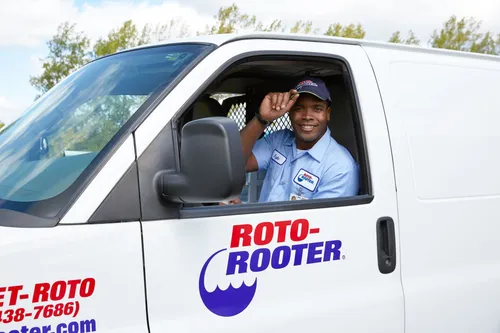
Roto-Rooter Plumbing & Water Cleanup
2050 W Chapman Ave #202, Orange, CA 92868
Roto-Rooter Plumbing & Water Cleanup offers a wide range of plumbing services in Los Angeles, CA, including grease trap cleaning, sewer and drain cleaning, water heater repair, and emergency flood cleanup. The company serves both residential and commercial clients, addressing issues from routine maintenance to urgent repairs. They utilize advanced tools such as HD inspection cameras and hydro-jetting to clear blockages and perform no-dig pipe replacements. Established with a legacy dating back to the invention of the original electric drain snake in 1935, Roto-Rooter provides 24/7 emergency plumbing services to handle urgent situations any time of day or night.
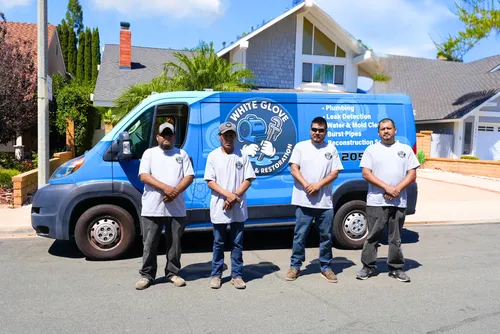
White Glove Plumbing Orange County
1430 E Borchard Ave, Santa Ana, CA 92705
White Glove Plumbing Orange County is a full-service plumbing and restoration company based in Santa Ana, serving residential and commercial clients throughout Los Angeles, CA. They provide a wide range of services including emergency plumbing, leak detection, hydro-jetting, water heater installation, grease trap pumping, sewage cleanup, mold remediation, and water damage restoration. The company offers 24/7 emergency services to quickly address urgent plumbing and restoration needs. Their expertise includes advanced capabilities such as slab leak reroutes, sewer camera inspections, and certified mold remediation. White Glove Plumbing combines plumbing and restoration services to manage repairs and rebuilds efficiently, reducing the need for multiple contractors.
Understanding Local Grease Trap Regulations
In Bellflower, grease trap rules are governed by a combination of the California Health and Safety Code and the Los Angeles County Department of Public Works FOG Program. These regulations are designed to prevent sewer blockages and overflows, which can cause significant environmental damage and public health issues.
California Health and Safety Code § 114201 mandates that all food service facilities properly maintain grease traps or interceptors to ensure efficient operation1. This state law is the foundation, but local enforcement adds specific layers. The LA County FOG program provides detailed guidelines, requiring that grease removal devices be easily accessible for service and inspection. Furthermore, installations must comply with the California Plumbing Code, which includes specific sizing tables (like Table 1014.3.6) to determine the minimum capacity, often starting at 750 gallons for many establishments.
The Critical "25% Rule" and Cleaning Frequency
How often should you clean your grease interceptor? The industry and regulatory standard is the "25% Rule." This means a grease trap should be pumped and cleaned whenever the combined volume of FOG and settled solids reaches 25% of the trap's total capacity 2.
For most Bellflower restaurants, this translates to a cleaning schedule of every 1 to 3 months. However, the exact frequency depends entirely on your volume of cooking. A high-volume fryer operation will need service more often than a low-volume sandwich shop. Waiting until the trap is more than 25% full significantly reduces its efficiency, allowing grease to pass into the sewer lines and increasing your risk of a violation during a health inspection.
What Health Inspectors Look For: Documentation is Key
During a routine health inspection, the inspector will ask to see your grease trap service records. You are required to keep these records on-site for a minimum of three years 3. Acceptable documentation includes detailed invoices or service reports from your licensed grease hauler that show:
- The date of service.
- The company's name and license details.
- The volume of waste removed.
- The disposal method and location.
Failure to produce these records can result in a citation just as easily as a poorly maintained trap itself. Inspectors use this paperwork to verify that you are adhering to a preventive maintenance schedule rather than reacting to emergencies.
Find the perfect grease trap cleaning companies for your needs
Get personalized recommendations and expert advice
Cost of Grease Trap Service in Bellflower
Investing in regular maintenance is far more cost-effective than dealing with the consequences of neglect. Service costs vary based on the size of your trap, its condition, and your location.
- Preventive/Routine Cleaning: For a well-maintained trap cleaned on a regular schedule, costs in the Bellflower area typically range from $175 to $475+ per service4 5. Many service providers offer preventative maintenance plans that bundle regular pumping and inspections for a set monthly or quarterly fee, often between $250 and $400, which can provide budget predictability6.
- Emergency Service: If a trap becomes completely clogged or causes a backup, emergency service calls can cost $800 to $1,200 or more7 8. This stark difference highlights the financial wisdom of sticking to a preventive schedule.
- Installation & Corrective Costs: If a new trap is needed or major repairs are required, costs will be significantly higher and must be completed in compliance with LA County and Bellflower permits9.
Best Practices for Bellflower Restaurant Owners
Beyond scheduling regular cleanings, proactive in-house practices can extend the time between service visits and improve overall efficiency.
- Train Your Staff: Ensure all kitchen staff scrape food scraps into trash bins, not sinks. Even small amounts of solid waste accelerate grease trap filling.
- Use Strainers: Install and maintain sink basket strainers to catch solids.
- Avoid Hot Water and Degreasers: Pouring hot water or chemical degreasers down the drain liquefies grease, allowing it to pass through the trap only to solidify later in the cooler sewer lines, causing blockages downstream.
- Confirm Local Requirements: Always check with Bellflower's building department and the LA County Public Works FOG program for any specific local ordinances before installing a new trap or altering your plumbing10.
- Choose a Reputable Service Provider: Work with a licensed, insured, and experienced provider who understands LA County's specific documentation and disposal requirements.
Consequences of Non-Compliance
Ignoring grease trap maintenance leads to serious problems. The first line of enforcement is typically a fine from a health inspector or the LA County Public Works department. Repeated violations can lead to increasingly heavy penalties. In severe cases, a restaurant can be held liable for the cost of cleaning a public sewer blockage caused by its grease discharge. The most disruptive consequence could be a forced temporary closure until the grease management system is brought back into compliance, resulting in lost revenue and reputational damage.
Frequently asked questions
Sources
Footnotes
-
California Health and Safety Code § 114201 (2024) - Justia Law - https://law.justia.com/codes/california/code-hsc/division-104/part-7/chapter-7/article-2/section-114201/ ↩
-
Grease Traps for Restaurants: The Essential Guide - https://therestaurantwarehouse.com/blogs/restaurant-equipment/grease-trap-for-restaurant-guide ↩
-
The Ultimate Guide to Restaurant Grease Trap Cleaning - https://mokherplumbing.com/ultimate-guide-restaurant-grease-trap-cleaning/ ↩
-
Grease Trap Cleaning Guide: 25% Rule, Schedule & Compliance - https://greaseconnections.com/how-to-clean-a-grease-trap-and-how-often-you-should/ ↩
-
Restaurant Grease Trap & Interceptor Cleaning Cost - https://greasemanagement.org/pricing.html ↩
-
The Cost To Clean A Grease Trap For Restaurants - https://thegreasecompany.com/blog/greasetrapcleaningcost/ ↩
-
Ultimate Grease Trap Pumping Cost Guide: Essential Money-Saving ... - https://www.texwaywastewater.com/grease-trap-pumping-cost/ ↩
-
Grease Trap Cleaning in Bellflower CA - https://greasetrapcleaningstanton.com/bellflower-ca.html ↩
-
#1 Grease Trap INSTALLATION Bellflower | Restaurant ... - https://greasemanagement.org/installationbellflower.html ↩
-
Purpose of Fats, Oils and Grease (FOG) Program: DEFINITIONS - http://pw.lacounty.gov/epd/industrial_waste/pdf/misc/restaurantpretreatmentguidelines.pdf ↩