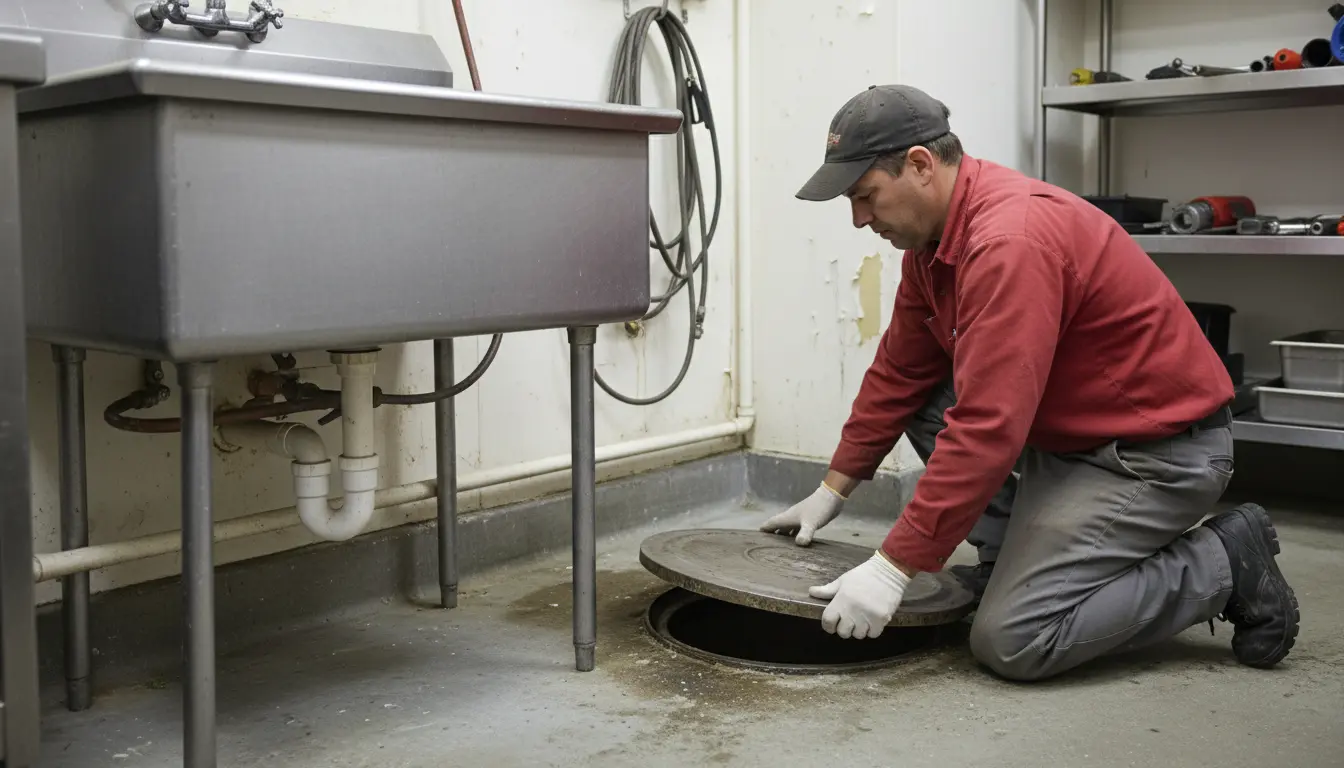
Find the Best Grease Trap Cleaning Companies for Your Business
No obligation • Fast responses • Nationwide coverage

Why you can trust Restaurant Waste Disposal
Restaurant Waste Disposal is a leading U.S. resource for comparing restaurant composting, food-waste recycling, grease trap cleaning, and used cooking oil collection services. Our editorial team researches providers, checks credentials, and organizes unbiased information so operators can make informed decisions. Companies cannot pay to change ratings or placement.
Search providers near you
Top Grease Trap Cleaning Companies in Alameda, California Ranked
For any restaurant, café, or food service business in Alameda, managing fats, oils, and grease (FOG) is a critical operational and regulatory responsibility. Proper grease interceptor maintenance is not just about avoiding unpleasant backups; it's a mandated part of protecting the city's sewer infrastructure and ensuring your business remains in compliance with local ordinances. The Union Sanitary District, which oversees wastewater for the Tri-City area including Alameda, enforces specific rules to prevent sewer blockages and environmental harm. Understanding the requirements for service frequency, documentation, and working with licensed providers is essential to run smoothly and avoid significant fines.
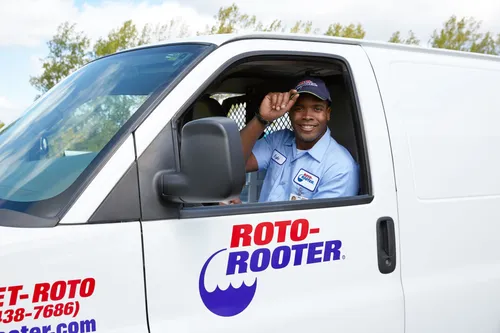
Roto-Rooter Plumbing & Water Cleanup
1780 Whipple Rd Ste 203G, Union City, CA 94587
Roto-Rooter Plumbing & Water Cleanup provides comprehensive plumbing and water cleanup services in San Jose, CA. They serve both residential and commercial clients, offering a wide range of solutions including grease trap cleaning, sewer and drain cleaning, water heater repair and installation, and emergency flood services. The company uses advanced plumbing technology and equipment to handle complex plumbing systems and offers 24/7 emergency plumbing support to address urgent issues such as burst pipes and sewer backups. Roto-Rooter is licensed and insured, serving the local community with expertise and a commitment to compliance with local codes.
Caccia Home Services
1660 Gilbreth Rd, Burlingame, CA 94010
Caccia Home Services is a plumbing and home services provider based in San Mateo, CA. They offer a wide range of services including grease trap cleaning, hydro jetting, sewer line repair, water treatment, and emergency plumbing. Their capabilities include trenchless sewer services and installation and maintenance of water heaters, including tankless and heat pump models. The company also provides electrical services such as EV charger installation and lighting upgrades. Caccia Home Services is known to respond to emergency plumbing needs.
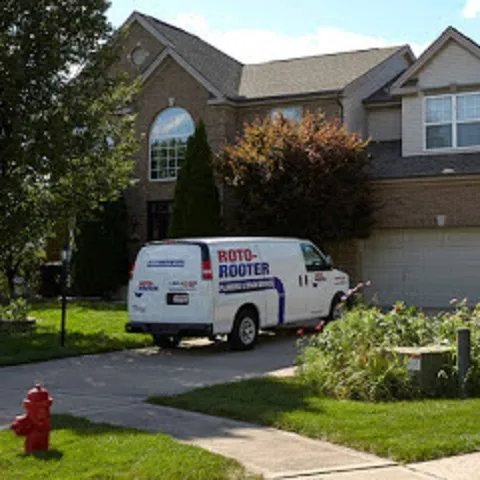
Roto-Rooter Plumbing & Water Cleanup
95 W 11th St #204A, Tracy, CA 95376
Roto-Rooter Plumbing & Water Cleanup provides a wide range of plumbing services in Tracy, CA, including residential and commercial plumbing, sewer and drain cleaning, water heater repair, and grease trap maintenance. The company is experienced in handling local plumbing challenges and codes, offering specialized services such as hydro-jetting and no-dig sewer line replacement. Established in 1935, Roto-Rooter has a long history of plumbing expertise and offers 24/7 emergency plumbing services to address urgent issues like burst pipes and sewer backups.
Roto-Rooter Plumbing & Water Cleanup
1210 Central Blvd Ste 123, Brentwood, CA 94513
Roto-Rooter Plumbing & Water Cleanup provides comprehensive plumbing and water cleanup services in Antioch, CA. Their offerings cover residential and commercial plumbing needs, including grease trap cleaning, sewer line repairs, water heater installation and repair, floodwater cleanup, and mold remediation. The company is equipped with advanced tools like hydro-jetting for drain cleaning and offers 24/7 emergency plumbing services to address urgent issues such as burst pipes and sewer backups. Serving Antioch and surrounding areas, Roto-Rooter is experienced in handling complex plumbing systems and environmental factors affecting local infrastructure.
Roto-Rooter Plumbing & Water Cleanup
1130 N Broadway Ste 200C, Walnut Creek, CA 94596
Roto-Rooter Plumbing & Water Cleanup provides comprehensive plumbing services in Oakland, CA, covering residential and commercial needs. Their offerings include drain cleaning, sewer line repair and replacement, grease trap cleaning, water heater installation and repair, floodwater cleanup, and mold remediation. The company is equipped to handle complex commercial plumbing systems and offers specialized services such as hydro-jetting and trenchless sewer line repairs. Roto-Rooter serves the Oakland area and surrounding counties with 24/7 emergency plumbing availability to address urgent issues any time of day or night.
Understanding Local Grease Trap Regulations
Alameda food service establishments must adhere to regulations set by the Union Sanitary District (USD) and the California Health and Safety Code. The core rule is the "25% rule": grease traps and interceptors must be pumped out when the combined accumulation of FOG and solids reaches 25% of the liquid depth of the unit 1 2. This isn't merely a suggestion-it's a enforceable standard that inspectors use during compliance checks.
Beyond this trigger, the USD mandates that all grease interceptors be easily accessible for cleaning and inspection. Furthermore, businesses are required to keep detailed maintenance records. This log should include the date of service, the name of the servicing company, and the volume of waste removed. These records must be provided to inspectors upon request, making proper documentation a key part of your operational routine.
Determining Your Service Frequency
How often you need grease trap pumping services depends largely on your volume of business and the size of your interceptor. While the 25% accumulation is the legal trigger, common practice provides a helpful guideline:
- High-Volume Establishments: Busy diners, fast-food restaurants, and large kitchens typically require the most frequent service-often monthly or even bi-weekly.
- Typical Full-Service Restaurants: Most sit-down restaurants find that a schedule of every 1 to 3 months is necessary to stay ahead of the 25% accumulation rule.
- Lower-Volume Operations: Smaller cafes, bakeries, or establishments with limited frying may manage with quarterly (every 3-6 months) or semi-annual service, but must still monitor levels closely.
The Union Sanitary District can also mandate more frequent cleaning if a history of blockages or compliance issues exists. A common requirement in many jurisdictions, including references in California law, is a minimum pumping frequency of every 90 days, which serves as a good baseline for planning 3.
The Cost of Compliance vs. Non-Compliance
Investing in regular grease trap maintenance is far more economical than facing the consequences of neglect. Service costs in the Alameda area vary based on interceptor size and service frequency.
- Scheduled Maintenance Costs: For a standard restaurant, a routine pumping service typically ranges from $250 to $400 4. Lower-volume operations might see costs starting around $120, while high-volume sites may pay $385 or more per scheduled service 4.
- Emergency Service Premiums: Reacting to a clog or overflow necessitates emergency service, which can cost between $800 and $1,200 or more-a steep premium over scheduled maintenance 5 6.
- The True Cost of Fines: Beyond service charges, failure to comply with USD ordinances can lead to direct fines from the district. More critically, if FOG from your establishment contributes to a public sewer line blockage, you can be held liable for the very costly cleanup and repair charges.
Find the perfect grease trap cleaning companies for your needs
Get personalized recommendations and expert advice
The Proactive Maintenance Advantage
A proactive, scheduled maintenance plan is the hallmark of a well-managed kitchen. It transforms grease trap cleaning from a reactive, panic-driven expense into a predictable, budgeted operational cost. Regular pumping prevents the buildup that leads to slow drains, foul odors, and catastrophic backups inside your own facility 7.
This approach also ensures you always have the required documentation ready for an inspector, demonstrating your commitment to compliance. By the time FOG and solids are visible or causing problems, you are likely already in violation of the 25% rule. Scheduled service with a licensed hauler keeps you consistently within regulations.
Choosing a Licensed Service Provider
Not all waste haulers are equal. It is crucial to hire a service provider licensed to operate within the Union Sanitary District's jurisdiction 8. Licensed haulers understand the local reporting requirements and will properly dispose of the collected FOG at approved facilities, ensuring the entire process is compliant.
When evaluating providers, ask about their record-keeping and whether they provide detailed service reports that you can add to your logbook. A reliable provider will also be able to assess your specific operation and recommend a service frequency that aligns with both your business volume and USD mandates, helping you optimize your schedule and costs.
Best Practices for In-House Management
While professional pumping is mandatory for interceptors, daily in-house practices significantly impact your trap's condition and service frequency.
- Scrape, Don't Rinse: Scrape all food scraps and grease from plates, pots, and pans into the trash before washing.
- Use Strainers: Install and regularly clean sink strainers to catch solid particles.
- Avoid Additives: So-called "grease dissolving" additives often violate local codes and can simply move the problem further down the sewer line, potentially leading to violations 9. Always check with the USD before using any chemical treatment.
- Train Your Staff: Ensure every kitchen employee understands how their actions affect the grease trap. Simple habits make a big difference in accumulation rates.
Staying proactive with these practices extends the time between necessary pump-outs, saving you money and reducing the risk of compliance issues.
Frequently asked questions
Sources
Footnotes
-
Fats, Oils and Grease Control Ordinance Ordinance No. 38 ... - Union Sanitary District ↩
-
12.20.220. Grease trap requirements. - American Legal Code Library ↩
-
California Health and Safety Code § 114201 (2024) - Justia Law ↩
-
Commercial Grease Trap Cleaning Services in Bay Area - Power Plumbing USA ↩ ↩2
-
Ultimate Grease Trap Pumping Cost Guide: Essential Money-Saving ... - Texway Wastewater ↩
-
Grease Trap Pumping San Francisco - North Bay Restaurant Services ↩
-
How to Clean a Grease Trap (and How Often You Should) - Grease Connections ↩
-
Restaurant Pollution Prevention - Union Sanitary District - CA.gov ↩
-
Grease Trap Cleaning For California Restaurants - Caccia Plumbing ↩