Find the Best Grease Trap Cleaning Companies for Your Business
No obligation • Fast responses • Nationwide coverage

Why you can trust Restaurant Waste Disposal
Restaurant Waste Disposal is a leading U.S. resource for comparing restaurant composting, food-waste recycling, grease trap cleaning, and used cooking oil collection services. Our editorial team researches providers, checks credentials, and organizes unbiased information so operators can make informed decisions. Companies cannot pay to change ratings or placement.
Search providers near you
Top Grease Trap Cleaning Companies in Waco, Texas Ranked
For restaurant owners and food service operators in Waco, maintaining a clean and compliant grease trap or interceptor is a non-negotiable aspect of daily operations. These essential systems prevent fats, oils, and grease (FOG) from entering the city's sewer lines, protecting public infrastructure and the environment. The City of Waco Health District enforces strict local ordinances aligned with Texas Commission on Environmental Quality (TCEQ) standards, mandating regular pumping by licensed haulers and proper record-keeping. Neglecting this critical maintenance can lead to severe blockages, costly emergency repairs, significant environmental fines, and even the risk of business closure. Understanding the specific requirements and establishing a reliable service schedule is key to smooth, compliant operations.

Understanding Waco's Grease Interceptor Regulations
In Waco, all food service establishments are required to have a properly sized and installed grease removal device. The City of Waco Health District conducts routine inspections to ensure these systems are maintained according to code, which is designed to prevent sewer overflows and protect water quality. Compliance isn't just about avoiding fines; it's about being a responsible business in the community.
A foundational rule is the location of the grease trap. City ordinances typically require that grease interceptors be installed outside the building, not indoors, and must be easily accessible for service vehicles and pumping equipment 1. This exterior placement is crucial for safe and efficient cleaning. During an inspection, health officials will check for proper access and the overall condition of the interceptor.
The cornerstone of compliance is documentation. Every time your grease trap is serviced, the licensed hauler must provide a detailed manifest or "trip ticket." This document records who performed the service, when it was done, and the volume of waste removed. Restaurant managers must keep these records on file, as they are the first thing an inspector will ask to see. Proper manifests prove you are meeting your legal obligations.
The Professional Pump-Out Process
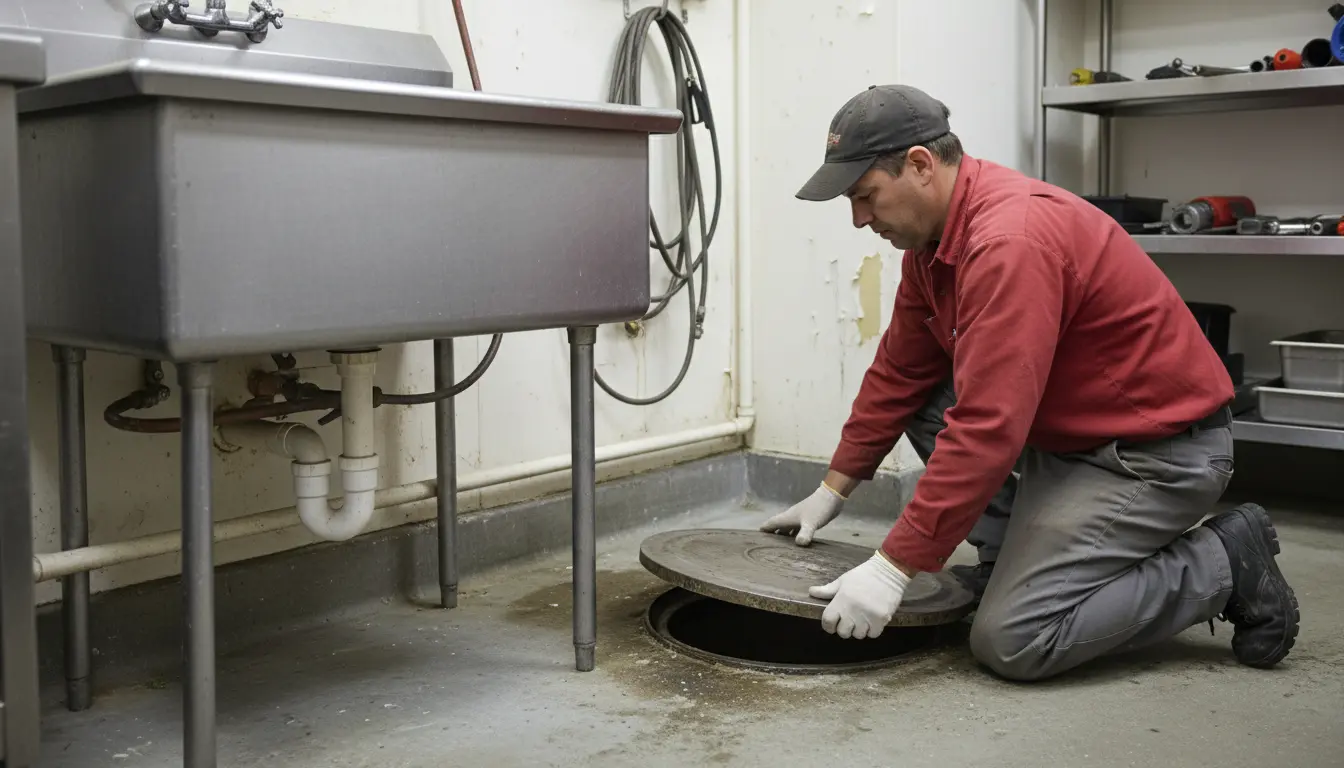
Grease trap cleaning is not a DIY task for kitchen staff. While employees can and should perform daily "dry scraping" of dishes to remove food solids before washing, the full evacuation and disposal of FOG waste must be handled by a professional, TCEQ-licensed hauler 2. Here's what a proper service entails:
- Full Evacuation: The hauler will pump out the entire contents of the interceptor-water, grease, and solids. Regulations state that a trap should not contain more than 25-50% grease and solids by volume when cleaning is complete 3 4.
- High-Pressure Washing: After pumping, the interior walls and baffles of the trap are pressure-washed to remove clinging grease and residue.
- Waste Disposal: The collected FOG is transported to an approved facility, such as a wastewater treatment plant or rendering facility, for proper processing or recycling.
- Documentation Provided: You receive the completed manifest for your records.
Attempting to bypass this process or extending service intervals too far often results in a hardened, concrete-like layer of "grease cap" and "solid cap" at the top and bottom of the trap, which is far more difficult and expensive to remove.
Determining Your Service Frequency
How often does your Waco restaurant need grease trap pumping? The standard requirement for most establishments is quarterly service, or every three months. However, this is not a one-size-fits-all rule. The required frequency is based on your specific usage and capacity.
High-volume kitchens, such as those in large restaurants, cafeterias, or establishments with significant fried food offerings, may generate FOG much faster. In these cases, the City of Waco Health District or your service provider may mandate monthly or bi-monthly service to prevent over-accumulation. The key is to work with your licensed hauler to assess your buildup rate and establish a schedule that keeps you in compliance between inspections. Waiting for a blockage or a foul odor is a sign you've waited too long.
Find the perfect grease trap cleaning companies for your needs
Get personalized recommendations and expert advice
Cost of Compliance: Preventative vs. Emergency
Investing in regular grease interceptor maintenance is a predictable operating cost that pales in comparison to the expense of neglect. In the Waco area, typical costs for scheduled, preventative pump-out service range from $175 to $400 per service, depending on the size of your trap and the frequency of service 5.
Contrast this with emergency service. A severe blockage or sewer backup that requires immediate, after-hours attention can easily cost $800 to $1,200 or more 6 7. Furthermore, if FOG from your establishment causes damage to the public sewer system, you could be liable for massive cleanup costs and environmental fines from regulatory bodies. The most significant cost-saving strategy is proactive, scheduled maintenance coupled with proper kitchen practices.
Best Practices for Reducing Buildup and Cost
You can directly influence the efficiency of your grease trap and potentially extend time between professional services with smart kitchen habits:
- Dry Scrape and Pre-Rinse: Train staff to scrape all food scraps into trash or compost bins before dishes enter the sink or dishwasher. This simple step prevents solids from entering the interceptor where they mix with grease to form a thick sludge.
- Use Drain Screens: Install and regularly clean strainers in all sink drains to catch food particles.
- Never Pour Grease Down the Drain: Collect all used fryer oil, pan drippings, and grease in sealed containers for collection by a rendering service. Post clear "No Grease" signs above sinks.
- Maintain Water Temperature: Avoid using excessive hot water to "melt" grease down the drain; it will simply re-solidify in the cooler pipes and interceptor.
Industry experts note that effective staff training on these practices can reduce grease trap buildup by up to 40%, directly impacting your required service frequency and annual maintenance costs 8 9.
Partnering with the Right Service Provider
Choosing a reliable, licensed grease trap cleaning service in Central Texas is a critical business decision. Look for a provider that:
- Holds current TCEQ licensing for wastewater and grease waste transportation.
- Offers flexible, scheduled service contracts to ensure you never miss a pump-out.
- Provides clear, detailed manifests immediately after each service.
- Has a reputation for reliability and can offer emergency support if needed.
- Understands the specific inspection protocols of the City of Waco Health District.
For definitive guidance on local ordinances and a list of certified haulers, restaurant managers should proactively contact the City of Waco Health District's Environmental Health division 10. Establishing a partnership with a knowledgeable provider turns grease trap maintenance from a regulatory headache into a seamless part of your operational routine.
Frequently asked questions
Sources
Footnotes
-
§ 51.64 LOCATION OF GREASE TRAP/INTERCEPTOR FOR ... - https://codelibrary.amlegal.com/codes/texascity/latest/texascity_tx/0-0-0-2479 ↩
-
Grease Trap Regulations and Maintenance - ReGrease - https://regrease.com/grease-trap-regulations-houston/ ↩
-
Model Standards for a Grease Ordinance - https://www.tceq.texas.gov/downloads/assistance/water/wastewater/fats-oils-grease/model-standard.pdf/@@download/file/model-standard.pdf ↩
-
Restaurants are Required to Maintain Grease Traps - https://www.defendyourdrainsnorthtexas.org/restaurants.html ↩
-
Ultimate Grease Trap Pumping Cost Guide: Essential Money-Saving ... - https://www.texwaywastewater.com/grease-trap-pumping-cost/ ↩
-
The Ultimate Guide to Restaurant Grease Trap Pumping ... - https://epicseptic.com/the-ultimate-guide-to-restaurant-grease-trap-pumping-cleaning-in-central-texas/ ↩
-
The Cost To Clean A Grease Trap For Restaurants - https://thegreasecompany.com/blog/greasetrapcleaningcost/ ↩
-
How to Clean a Grease Trap (and How Often You Should) - https://greaseconnections.com/how-to-clean-a-grease-trap-and-how-often-you-should/ ↩
-
Why Central Texas Restaurants Need Quarterly Grease Trap ... - https://epicseptic.com/why-central-texas-restaurants-need-quarterly-grease-trap-service-contracts-and-a-partner-like-epic/ ↩
-
Food Establishments - City of Waco - https://www.waco-texas.com/Departments/Health-District/Environmental-Health/Food-Establishments ↩