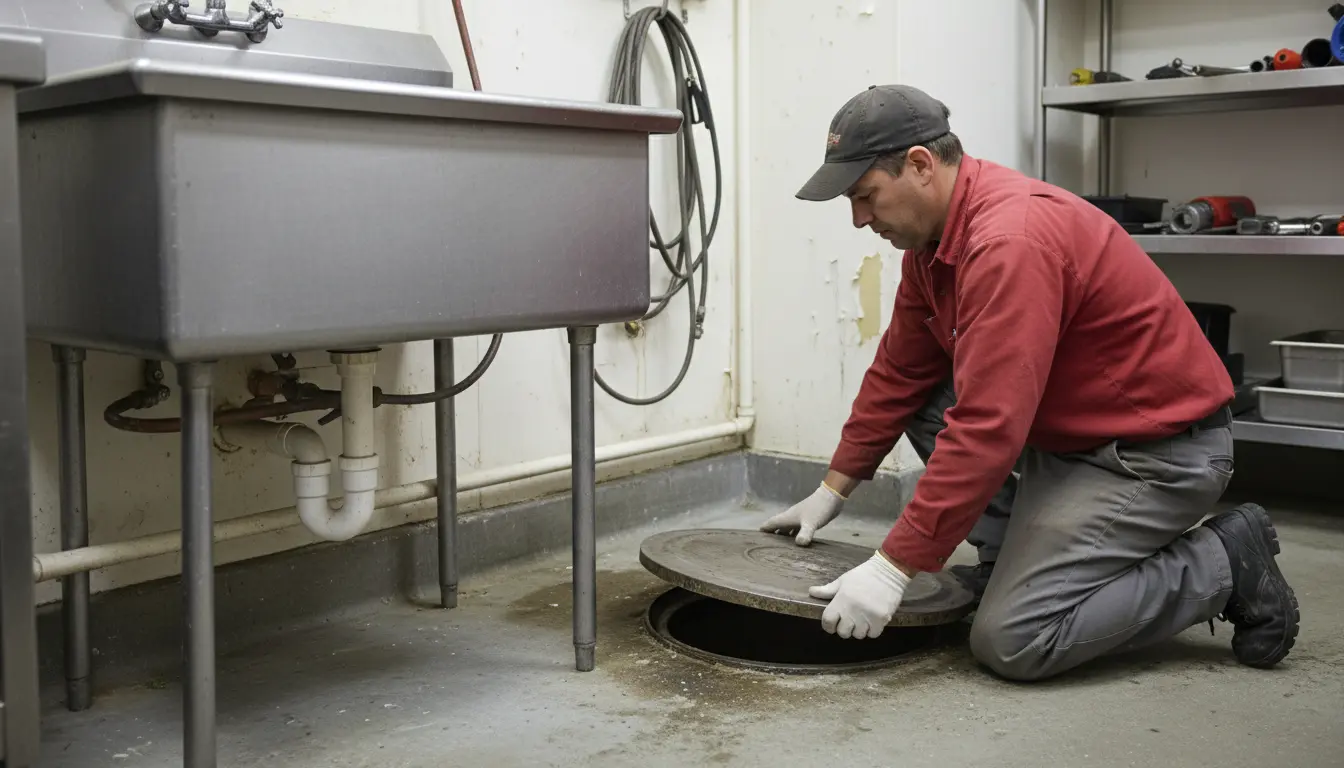
Find the Best Grease Trap Cleaning Companies for Your Business
No obligation • Fast responses • Nationwide coverage

Why you can trust Restaurant Waste Disposal
Restaurant Waste Disposal is a leading U.S. resource for comparing restaurant composting, food-waste recycling, grease trap cleaning, and used cooking oil collection services. Our editorial team researches providers, checks credentials, and organizes unbiased information so operators can make informed decisions. Companies cannot pay to change ratings or placement.
Search providers near you
Top Grease Trap Cleaning Companies in Sherman, Texas Ranked
For restaurant owners and food service operators in Sherman, maintaining a clean and compliant grease interceptor is a critical part of daily operations. The City of Sherman enforces specific Fats, Oils, and Grease (FOG) control regulations designed to protect the local sewer system from costly blockages and environmental damage. Effective grease trap maintenance isn't just about avoiding fines; it's a fundamental practice for ensuring your business runs smoothly, preventing emergency backups, and managing long-term costs. This guide outlines the local requirements, best practices, and professional insights for managing your grease trap system in compliance with Sherman's ordinances.
Understanding and adhering to the local FOG program is essential. The regulations mandate that all food service establishments properly install, maintain, and regularly service their grease interceptors. Non-compliance can lead to severe penalties, including fines and potential enforcement actions, not to mention the risk of causing or contributing to a sanitary sewer overflow, which carries significant consequences. A proactive approach to grease trap pumping and cleaning is universally recognized as far more economical than reacting to an emergency.
Sherman's Grease Interceptor Regulations Explained
The City of Sherman's FOG control program is based on model standards from the Texas Commission on Environmental Quality (TCEQ) and is designed to prevent grease from entering the wastewater collection system. Key components of the ordinance that every food service operator must know include:
- Mandatory Pumping Frequency: Grease traps and interceptors must be pumped a minimum of every 90 days. However, they must be serviced more frequently if the combined FOG and solids accumulate to 25% of the wetted capacity of the trap or if the establishment has a history of compliance issues 1 2.
- Full Evacuation Requirement: Cleaning must be thorough. All grease, solids, and liquids must be removed from the trap, including residues from the walls, baffles, and pipes. Simply skimming the surface is not sufficient and will not meet the city's standard for a complete cleanout.
- Accessibility and Integrity: The grease interceptor and its lid must be kept easily accessible for service and inspection at all times. Furthermore, no modifications can be made to the trap or plumbing that would allow grease to bypass the system.
- Proper Sizing: The city has specific sizing requirements based on fixture units. This is particularly important for smaller "under-the-sink" grease traps, which must be sized correctly to be effective 3.
The Critical Role of Documentation and Professional Service
Compliance in Sherman is heavily reliant on proper documentation and using certified professionals. You cannot have your kitchen staff handle grease waste disposal; it must be handled by a licensed hauler.
- Manifest Tracking: Every time your grease interceptor is pumped, the licensed hauler must provide you with a manifest or trip ticket. This document is a legal record that tracks the waste from its point of generation (your restaurant) through its transportation and final disposal at an approved facility 4.
- Record Keeping: You are required to keep these manifests on-site for a minimum of three years. They must be made available for review by city inspectors upon request. This paper trail is your primary proof of compliance 5.
- Using TCEQ-Certified Haulers: It is imperative to contract with a waste hauler who is properly licensed and certified by the TCEQ. They have the expertise and equipment to perform a complete evacuation and can properly document the service with the required manifests.
- Staff Training: While professionals handle the pumping, your staff plays a key role in daily maintenance. Training employees on best practices (like dry-wiping dishes and scraping food into trash bins) reduces the load on your grease trap, extends time between services, and improves overall efficiency.
Find the perfect grease trap cleaning companies for your needs
Get personalized recommendations and expert advice
Cost Considerations for Grease Trap Maintenance
The cost of grease trap service in Sherman varies based on the size of your interceptor, its location, and the frequency of service. However, one principle holds true: preventative maintenance is always less expensive than emergency cleanups or fines for non-compliance.
- Basic Preventative Service: For smaller traps or routine maintenance visits, costs can generally range from $175 to $225 or more per service call.
- Average Restaurant Interceptor: A standard 1000-gallon grease trap for a typical restaurant may cost around $400 or more for a complete pumping and cleaning service 6.
- Larger or Complex Systems: Larger volume interceptors or those that are difficult to access can cost $2,500 or more for a single service 7.
- The High Cost of Neglect: Failing to pump regularly leads to hardened grease and solids, which require more labor-intensive removal. The cost of an emergency call to address a backup or overflow, coupled with potential fines from the city and lost business revenue, will far exceed the planned cost of routine preventative pumping.
Best Practices for Daily Grease Management
Complementing professional cleanings with smart in-house practices maximizes your system's effectiveness and longevity.
- Dry Wipe and Scrape: Before rinsing, dishes, pots, and pans should be wiped with a paper towel or scraped into a trash bin. This simple step prevents large amounts of grease and food solids from ever entering the drain 8.
- Avoid the Garbage Disposal: Food waste disposals (garburators) should not be used. They send pulverized food particles into the grease trap, where they accumulate rapidly, filling the trap with solids and requiring more frequent pumping.
- Use Strainers and Screens: Install and regularly clean strainers in all sink drains to catch food particles.
- Manage Water Temperature: Do not pour water hotter than 140°F (60°C) down drains that flow to the grease trap. Excessively hot water can melt and re-liquefy grease, allowing it to flow past the trap and solidify further down the sewer line, causing blockages 9.
- Schedule Regular Inspections: In addition to pumping, have your service provider inspect the condition of the trap's baffles, lids, and inlet/outlet pipes during each service to ensure everything is functioning correctly 10.
Staying compliant with the City of Sherman's FOG guidelines requires diligence: maintain detailed records, use licensed professional haulers, and perform regular preventative maintenance. This proactive approach is the most effective strategy to avoid costly issues, fines, and operational disruptions 11.
Frequently asked questions
Sources
Footnotes
-
City of Sherman Fats, Oils, and Grease Pollution Prevention - https://www.ci.sherman.tx.us/DocumentView.aspx?DID=364 ↩
-
How often do I need to pump my grease trap / intercep - Sherman, TX - https://www.ci.sherman.tx.us/Faq.aspx?QID=140 ↩
-
city of sherman fats, oils, and grease (fog) control guide - https://www.ci.sherman.tx.us/DocumentView.aspx?DID=687 ↩
-
Model Standards for a Grease Ordinance - https://www.tceq.texas.gov/downloads/assistance/water/wastewater/fats-oils-grease/model-standard.pdf/@@download/file/model-standard.pdf ↩
-
Grease Trap Regulations and Compliance: What You Need to ... - https://www.texwaywastewater.com/grease-trap-regulations-and-compliance/ ↩
-
Ultimate Grease Trap Pumping Cost Guide: Essential Money-Saving ... - https://www.texwaywastewater.com/grease-trap-pumping-cost/ ↩
-
The Cost To Clean A Grease Trap For Restaurants - https://thegreasecompany.com/blog/greasetrapcleaningcost/ ↩
-
Restaurants are Required to Maintain Grease Traps - https://www.defendyourdrainsnorthtexas.org/restaurants.html ↩
-
Grease Trap Regulations and Maintenance - ReGrease - https://regrease.com/grease-trap-regulations-houston/ ↩
-
Grease Trap Inspection - CCPIA - https://ccpia.org/grease-trap-inspection/ ↩
-
The Ultimate Guide to Restaurant Grease Trap Pumping ... - https://epicseptic.com/the-ultimate-guide-to-restaurant-grease-trap-pumping-cleaning-in-central-texas/ ↩