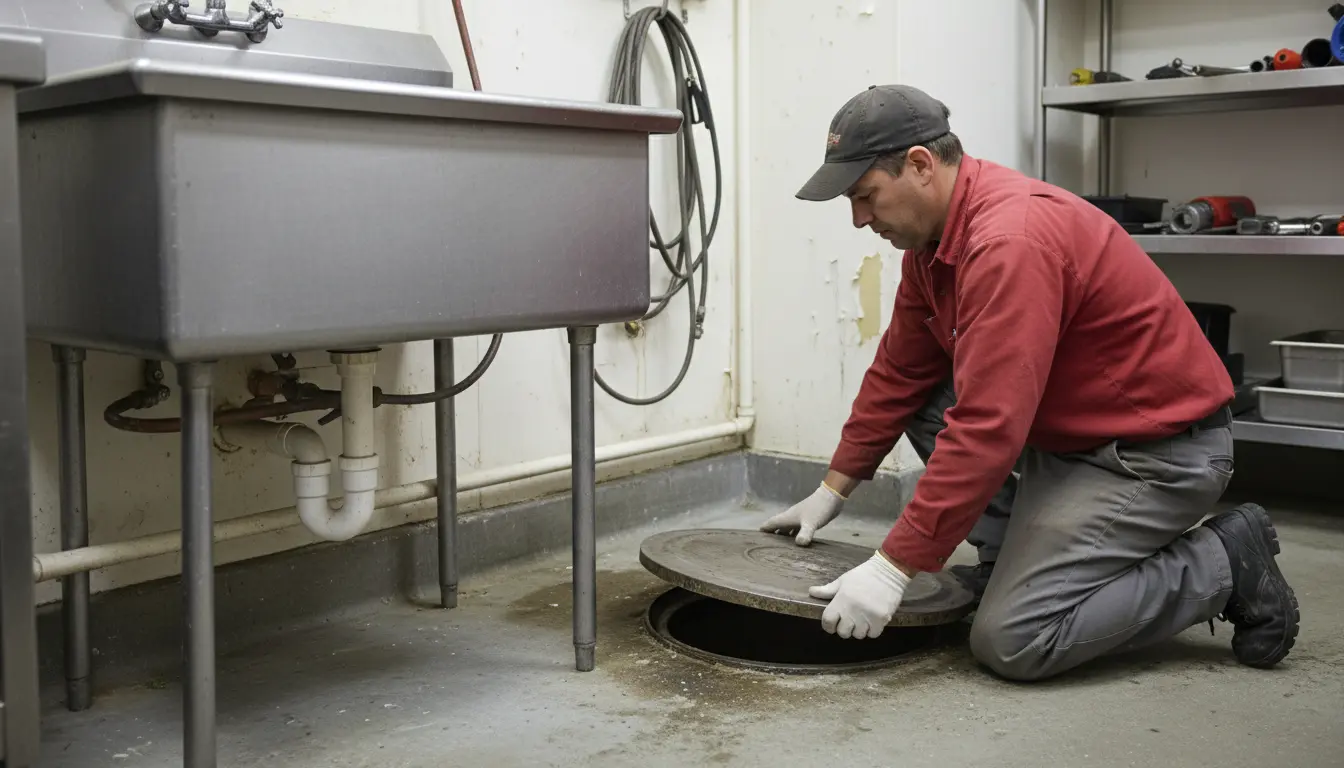
Find the Best Grease Trap Cleaning Companies for Your Business
No obligation • Fast responses • Nationwide coverage

Why you can trust Restaurant Waste Disposal
Restaurant Waste Disposal is a leading U.S. resource for comparing restaurant composting, food-waste recycling, grease trap cleaning, and used cooking oil collection services. Our editorial team researches providers, checks credentials, and organizes unbiased information so operators can make informed decisions. Companies cannot pay to change ratings or placement.
Search providers near you
Top Grease Trap Cleaning Companies in Coppell, Texas Ranked
For any restaurant or food service facility in Coppell, proper grease interceptor maintenance is not just a best practice-it's a legal requirement. The City of Coppell enforces specific ordinances to manage Fats, Oils, and Greases (FOG), aligning with broader Texas Commission on Environmental Quality (TCEQ) standards to protect the local sewer system from blockages and environmental harm. This means regular, professional cleaning of your grease trap or interceptor is mandatory, with detailed rules on placement, connection, and servicing frequency. Neglecting these duties can lead to severe penalties, including fines and potential operational shutdowns, making a proactive maintenance plan essential for every food service operator.
Understanding and complying with these regulations is the first step toward responsible operation. Your facility's specific requirements depend on factors like the volume of food prepared, the type of cuisine, and the physical size of your installed grease interceptor.
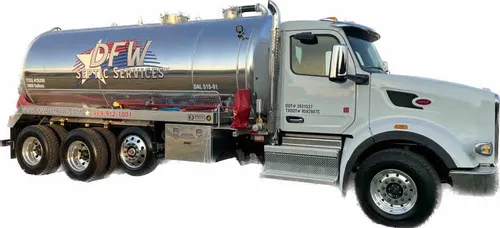
DFW Septic and Grease Services
4881 Montgomery Rd, Midlothian, TX 76065
DFW Septic and Grease Services provides septic system cleaning and grease trap maintenance for residential and commercial properties in Fort Worth, TX, and surrounding counties including Ellis, Tarrant, Dallas, Rockwall, Kaufman, Henderson, Navarro, Johnson, and Hill. They serve a variety of clients such as restaurants, cafeterias, retirement homes, schools, supermarkets, and convenience stores. Their services include onsite inspections, waste collection, and customer guidance to ensure proper system care. The company emphasizes regular septic tank pumping every three years or as needed based on usage and environmental factors.
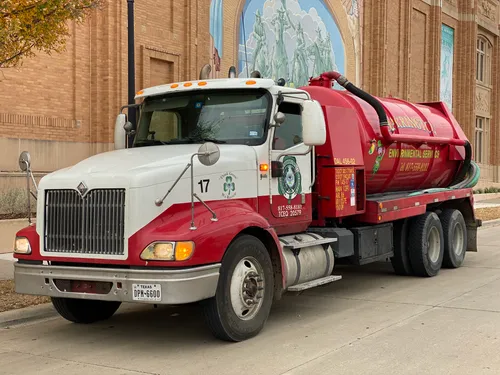
Fort Worth Grease Trap & Septic Cleaning
4015 W Vickery Blvd, Fort Worth, TX 76107
Fort Worth Grease Trap & Septic Cleaning provides grease trap and septic tank cleaning services in Fort Worth, TX. The company specializes in grease trap pumping and septic system maintenance. Recently acquired by Harrington Environmental, it continues to serve local businesses with grease trap cleaning and septic tank services.
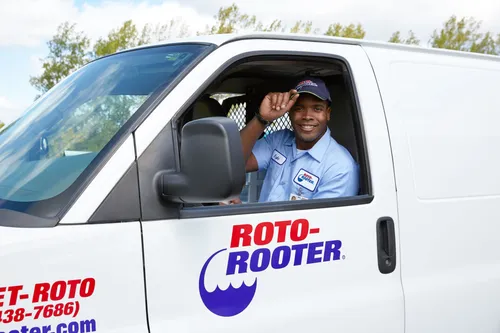
Roto-Rooter Plumbing & Water Cleanup
1225 Belt Line Rd Ste 103A, Garland, TX 75040
Roto-Rooter Plumbing & Water Cleanup provides comprehensive plumbing and water cleanup services in Fort Worth, TX, specializing in both residential and commercial plumbing needs. Their offerings include sewer and drain cleaning, grease trap maintenance, water heater repair and installation, floodwater cleanup, and mold remediation. The company uses advanced equipment such as hydro-jetting for drain cleaning and offers trenchless sewer line repair methods. Serving Garland and surrounding counties, Roto-Rooter has extensive experience handling complex plumbing systems and emergency situations. They provide 24/7 emergency plumbing services to address urgent issues promptly.
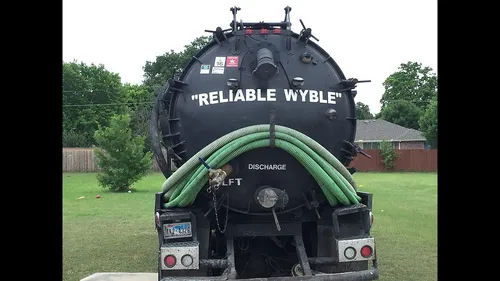
Wyble's Pumping Service
13515 Liberty School Rd, Azle, TX 76020
Wyble's Pumping Service provides grease trap cleaning and septic tank services in Fort Worth, TX. The company is known for handling emergency and semi-emergency pump and cleanout needs, including availability during holidays when other providers may not respond.
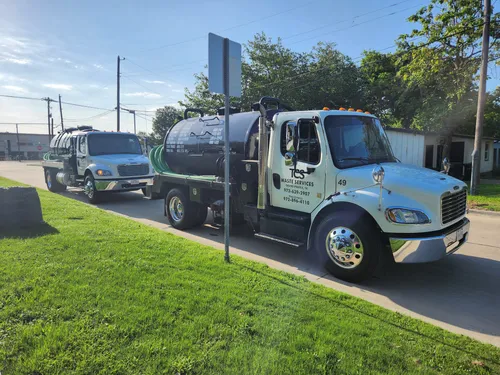
TCS Grease Trap Cleaners
Fort Worth, TX
TCS Grease Trap Cleaners provides grease trap cleaning services in Fort Worth, TX. The company focuses on customer satisfaction by treating clients as lifetime partners and seeking regular feedback to improve service quality. They offer thorough grease trap cleaning and go beyond basic expectations to ensure a positive experience.
Understanding Coppell's Grease Management Ordinances
The City of Coppell operates under its own detailed food ordinance, which incorporates model standards for FOG control as recommended by the TCEQ. These rules are designed to prevent sewer overflows, which can cause significant public health issues and costly municipal repairs. For a restaurant owner, this translates into a clear set of operational mandates you must follow.
Key provisions include the requirement that all sinks in food preparation areas-including prep sinks, utensil washing sinks, mop sinks, and even handwashing sinks-must be connected to the grease interceptor 1. The interceptor itself must be located outside the facility and be properly sized according to the local plumbing code 1. Most critically, the actual pumping and cleaning must be performed by a licensed waste hauler; restaurant staff cannot handle this disposal themselves. Keeping detailed records of every service is a critical part of compliance and will be necessary during inspections.
How Often Should You Schedule Service?
The standard pumping frequency mandated by Coppell's ordinance is a minimum of every 90 days 2. However, this is a minimum requirement. Your trap may need service more often if it reaches capacity sooner. The rule specifies that pumping is required when 25% of the interceptor's volume is occupied by sediment and FOG, or if your facility's wastewater discharge begins to exceed limits for pollutants like Biochemical Oxygen Demand (BOD) or Total Suspended Solids (TSS) 3.
In practice, the schedule for your FOG interceptor maintenance is determined by your specific operation. A high-volume restaurant or one serving cuisine with significant grease production (like fried foods or certain ethnic dishes) may require monthly service. The size of your installed unit is also a major factor. A smaller trap serving a busy kitchen will fill much faster than a large, adequately sized interceptor. Regular monitoring of your interceptor's condition is the best way to establish a reliable, compliant schedule that prevents emergencies.
What Does Professional Cleaning Entail?
A proper grease interceptor service is far more than just pumping out liquid. A full service from a licensed hauler should be a comprehensive cleaning process. This typically includes pumping out all liquid and semi-solid waste, manually scraping and removing hardened fats and solids from the walls and bottom, and thoroughly cleaning the baffles that are crucial for the trap's separation function.
The service technician should also inspect all components, including the inlet and outlet tees, lids, and seals, to ensure everything is functioning correctly and there are no leaks or damage. After cleaning, the trap should be refilled with clean water to restore proper operation. This level of service ensures the interceptor works efficiently until the next scheduled maintenance, providing maximum protection for your plumbing and the public sewer lines.
The Cost of Compliance and Neglect
Investing in regular grease interceptor maintenance is a predictable operational cost. In the Coppell area, basic service typically ranges from $175 to $400 or more per visit, with the final price heavily dependent on the size of your unit. For example, servicing a 1,000-gallon interceptor may cost around $400 4 5 6.
Find the perfect grease trap cleaning companies for your needs
Get personalized recommendations and expert advice
Contrast this with the potential costs of non-compliance. Fines from the city for ordinance violations can be substantial. More critically, a severely neglected trap can lead to sewer backups in your own kitchen, resulting in emergency service calls, which are significantly more expensive than routine maintenance, and potential business interruption during cleanup and repairs 7 8. In the worst-case scenario, repeated violations can lead to the city mandating a temporary closure until the issue is resolved, costing far more in lost revenue than a consistent service plan ever would 9.
Selecting a Licensed Service Provider in Coppell
Choosing the right partner for your FOG management is crucial. You must select a hauler that is properly licensed by the TCEQ to transport and dispose of grease waste. When evaluating providers, look for companies with experience serving Coppell restaurants and a clear understanding of the local ordinance requirements.
A reliable provider will offer scheduled service plans, detailed documentation (including waste manifests for your records), and emergency support. They should be able to advise you on optimal service frequency based on their assessment of your operation. You can find local, certified providers by searching for terms like "grease trap cleaning Coppell TX" or "FOG services Coppell Texas" 10.
Best Practices for Kitchen Staff
While professional pumping is mandatory, kitchen staff play a vital role in extending the time between services and maintaining interceptor efficiency. Implement simple best practices like scraping all food scraps from plates and cookware into the trash before washing. Avoid pouring any fats, oils, or grease down the drain-instead, collect them in containers for proper disposal or recycling. Be mindful of what goes into the garbage disposal, as starchy foods and coffee grounds can contribute to solids buildup in the interceptor. Educating your team on these practices reduces the load on your grease trap, helps prevent clogs in your own drains, and supports overall compliance.
Recordkeeping and Inspection Preparedness
Maintaining meticulous records is a key part of your compliance responsibility. You should keep a file with all service reports, waste hauler manifests, and invoices for at least three years. These documents prove that you are adhering to the mandated pumping schedule and using a licensed disposer.
During a city inspection, you will likely be asked to present this documentation. Having it organized and readily available demonstrates due diligence and can streamline the inspection process. It also helps you track your service history and costs, making it easier to manage this essential aspect of your facility's operations.
Frequently asked questions
Sources
Footnotes
-
construction standard requirements for food service facilities - https://www.coppelltx.gov/DocumentCenter/View/473/Construction-Standards-for-Food-Service-Facilities-PDF ↩ ↩2
-
keeping .o.f food· .and .equipment, OF .COPPELL, TEXAS - https://www.coppelltx.gov/DocumentCenter/View/481/City-of-Coppell-Food-Ordinance-Amendments-PDF ↩
-
Model Standards for a Grease Ordinance - https://www.tceq.texas.gov/downloads/assistance/water/wastewater/fats-oils-grease/model-standard.pdf/@@download/file/model-standard.pdf ↩
-
The Ultimate Guide to Restaurant Grease Trap Pumping ... - https://epicseptic.com/the-ultimate-guide-to-restaurant-grease-trap-pumping-cleaning-in-central-texas/ ↩
-
Ultimate Grease Trap Pumping Cost Guide: Essential Money-Saving ... - https://www.texwaywastewater.com/grease-trap-pumping-cost/ ↩
-
The Cost To Clean A Grease Trap For Restaurants - https://thegreasecompany.com/blog/greasetrapcleaningcost/ ↩
-
How to Clean a Grease Trap (and How Often You Should) - https://greaseconnections.com/how-to-clean-a-grease-trap-and-how-often-you-should/ ↩
-
Dallas Grease Trap Cleaning: Essential Facility Maintenance ... - https://www.myshyft.com/blog/grease-trap-cleaning-dallas-texas/ ↩
-
Grease Trap Regulations and Compliance: What You Need to ... - https://www.texwaywastewater.com/grease-trap-regulations-and-compliance/ ↩
-
Grease Trap Cleaning in Coppell TX | Grease Interceptor Pumping - https://greasetrapcleaningbedford.com/coppell-tx.html ↩