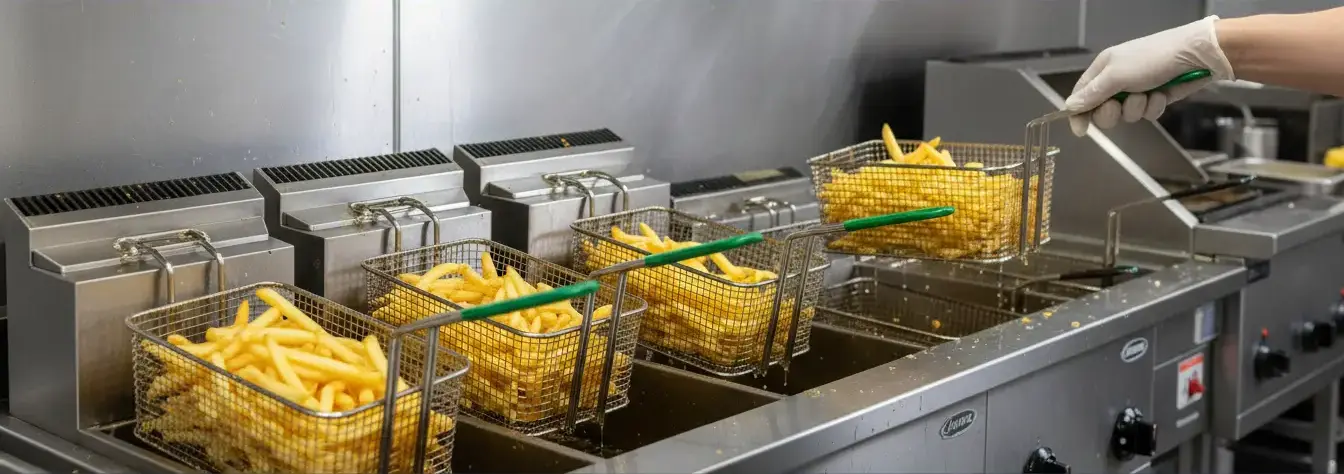
Find the Best Used Cooking Oil Collection Companies for Your Business
No obligation • Fast responses • Nationwide coverage

Why you can trust Restaurant Waste Disposal
Restaurant Waste Disposal is a leading U.S. resource for comparing restaurant composting, food-waste recycling, grease trap cleaning, and used cooking oil collection services. Our editorial team researches providers, checks credentials, and organizes unbiased information so operators can make informed decisions. Companies cannot pay to change ratings or placement.
Search providers near you
Top Used Cooking Oil Collection Companies in Palm Desert, California Ranked
For restaurants and food service establishments in Palm Desert, managing used cooking oil (UCO) and grease is a critical operational and environmental responsibility. Proper disposal of this waste stream is not just a best practice-it's a legal requirement governed by state and local regulations. By partnering with a professional collection service, businesses can transform a waste product into a valuable resource, contributing to the circular economy and producing renewable biofuels. This guide outlines the essential steps for compliance, the benefits of professional grease recycling, and how to navigate the process in the Coachella Valley.
Understanding Local Regulations and Compliance
In Palm Desert and throughout Riverside County, used cooking oil and grease are classified as hazardous waste when discarded. This classification comes with strict rules to protect public infrastructure and the local environment. The primary legal mandate is that fats, oils, and grease (FOG) must never be poured down sinks, drains, or toilets. Such improper disposal leads to severe sewer blockages, costly municipal repairs, and environmental contamination, which can result in significant fines for the responsible business 1 2.
Commercial kitchens are typically required to install and maintain grease interceptors or traps. These devices capture grease before it enters the wastewater system, but they require regular pumping and cleaning to function effectively. The City of Palm Desert directs residents with small quantities of household cooking oil to its Household Hazardous Waste (HHW) program 3. However, for commercial generators like restaurants, the city and county regulations necessitate using licensed, professional haulers for all used oil and grease trap waste collection and recycling 4. Maintaining detailed records of all oil pickups and hauler documentation is also a key part of demonstrating compliance with state guidelines 5.
Proper On-Site Storage and Handling
Safe and compliant storage is the first step in a successful oil collection program. Proper handling minimizes workplace hazards and ensures the oil remains a high-quality feedstock for recyclers.
- Cool Completely: Always allow oil to cool fully before handling to prevent burns and fire risks.
- Use Designated Containers: Transfer cooled oil into sturdy, leak-proof containers with secure lids. Dedicated collection barrels or drums provided by your hauler are ideal. In a pinch, original, clean cooking oil containers can be used temporarily.
- Secure Outdoor Storage: Store collection containers in a designated, secure area outside the kitchen, such as a dumpster enclosure. This area should be clearly marked and accessible for scheduled pickups by hauling trucks.
- Prevent Contamination: Keep containers covered to avoid water or debris contamination, which can lower the oil's recycling value and cause spoilage.
Following these storage protocols not only ensures safety and compliance but also maximizes the potential economic return from your used oil.
The Collection and Recycling Process
Professional used cooking oil collection is a streamlined service designed for convenience. Once you have a contract with a licensed hauler, they will typically provide you with specialized collection containers. Your staff simply pours cooled UCO into these containers, which are stored in an agreed-upon, accessible location.
On a scheduled basis-whether weekly, bi-weekly, or monthly-a collection truck will service your location. The driver will pump the contents of your container into the truck's tank, clean up any minor spills, and leave you with an empty, clean container ready for use. They should also provide you with a manifest or receipt documenting the volume collected, which is crucial for your records 6 7.
The collected oil is then transported to a processing facility. There, it undergoes filtration to remove food particles and water. The purified oil is a prime raw material for creating biodiesel, a renewable diesel fuel, or is refined into industrial lubricants and other bio-based products 8. This process ensures that waste from Palm Desert kitchens is diverted from landfills and given a productive second life.
Economic and Environmental Benefits for Your Business
Engaging a professional UCO collection service offers tangible advantages that go beyond mere regulatory compliance.
Cost Savings and Potential Revenue: Many collection companies structure their services to be cost-neutral or even profitable for restaurants. It is common for providers to offer free grease trap cleaning and free used oil collection in exchange for the rights to the oil 9 10. For establishments generating large volumes of high-quality, uncontaminated oil, some haulers may even offer a payment per gallon, turning a waste line item into a small revenue stream.
Risk Mitigation: The most significant financial benefit is avoiding penalties. Fines for illegal dumping or for causing sewer line blockages can be substantial. Professional, documented collection completely eliminates this risk.
Sustainability Leadership: Consumers increasingly support businesses with strong environmental practices. By recycling your cooking oil into biofuel, you directly reduce fossil fuel demand and greenhouse gas emissions. Promoting your participation in a grease recycling program enhances your brand's green credentials and can be a powerful marketing point in an eco-conscious community like Palm Desert.
Find the perfect used cooking oil collection companies for your needs
Get personalized recommendations and expert advice
Choosing a Service Provider in Palm Desert
Selecting a reliable used cooking oil collector is a key business decision. When evaluating potential partners, consider the following:
- Licensing and Insurance: Verify the hauler is fully licensed by the California Department of Food and Agriculture (CDFA) and other relevant agencies, and carries adequate insurance 11.
- Service Reliability: Look for a company with a proven track record of on-time pickups and professional service. Inconsistent collection can lead to overflows, odors, and compliance issues.
- Container Provision and Maintenance: Ensure they provide sturdy, sealed collection containers and regularly maintain or replace them.
- Transparent Documentation: The provider must supply clear manifests or electronic records for every pickup to aid in your compliance reporting.
- Service Offerings: Many companies offer bundled services, such as combining used oil collection with grease trap pumping. This can simplify logistics and potentially offer better value.
Local and regional companies like The Grease Company, Phoenix Pumping, and Baker Commodities actively service Southern California and the Coachella Valley. Contact several providers to discuss your specific volume, schedule needs, and to receive detailed quotes.
Frequently asked questions
Sources
Footnotes
-
Navigating Legal Requirements for Used Cooking Oil Disposal - https://bakercommodities.com/blog/2024/02/08/legal-requirement-used-cooking-grease/ ↩
-
Southern California Commercial Kitchen Cooking Oil recycling ... - https://thegreasecompany.com/blog/how-the-grease-is-protecting-you-by-recycling-cooking-oil/2/ ↩
-
Household Hazardous Waste Disposal | City of Palm Desert - https://www.palmdesert.gov/our-city/departments/public-works/waste-management-and-recycling-services/household-hazardous-waste-disposal ↩
-
Cooking Oil - Riverside County Waste Resources - https://rcwaste.org/cooking-oil ↩
-
Cal. Code Regs. Tit. 3, § 1180.24 - Requirements to Document and ... - https://www.law.cornell.edu/regulations/california/3-CCR-1180.24 ↩
-
Cooking Oil Collection & Grease Recycling Service - https://thegreasecompany.com/oilcollection.html ↩
-
Recycling Used Cooking Oil With Green Grease Environmental - https://www.youtube.com/watch?v=KP05Yx-GkHk ↩
-
What happens with the used oil from restaurants and fast-food ... - https://www.quora.com/What-happens-with-the-used-oil-from-restaurants-and-fast-food-chains-Is-there-any-sort-of-recycling ↩
-
How Recycling Used Cooking Oil Can Save Restaurants Money and ... - https://www.cbs42.com/business/press-releases/ein-presswire/864508472/how-recycling-used-cooking-oil-can-save-restaurants-money-and-enhance-sustainability-efforts ↩
-
Used Cooking Oil Recycling for Restaurants in Southern ... - https://phoenixpumping.com/blog/used-cooking-oil-recycling-for-restaurants-in-southern-california-phoenix-pumping-leads-the-way/ ↩
-
FAQs for Used Oil Collection Centers - https://dtsc.ca.gov/faqs-for-used-oil-collection-centers/ ↩