Find the Best Used Cooking Oil Collection Companies for Your Business
No obligation • Fast responses • Nationwide coverage

Why you can trust Restaurant Waste Disposal
Restaurant Waste Disposal is a leading U.S. resource for comparing restaurant composting, food-waste recycling, grease trap cleaning, and used cooking oil collection services. Our editorial team researches providers, checks credentials, and organizes unbiased information so operators can make informed decisions. Companies cannot pay to change ratings or placement.
Search providers near you
Top Used Cooking Oil Collection Companies in Murrieta, California Ranked
For restaurants and food service businesses in Murrieta, managing used cooking oil (UCO) is a critical operational and environmental responsibility. In California, this waste stream is regulated as hazardous waste, requiring proper handling by licensed professionals to ensure compliance and protect local infrastructure. Fortunately, a structured system exists where specialized providers offer collection services, often including free secure containers and scheduled pickups, turning a potential liability into a resource for products like biodiesel. This guide outlines the essential steps, local regulations, and service options for effective waste grease management in the Murrieta area.
Understanding Local Regulations for Waste Oil
Navigating the regulatory landscape is the first step for any Murrieta food establishment. Used cooking oil is classified as a hazardous waste in California, which mandates specific handling protocols 1. It is illegal to pour used fryer oil down any drain, as it can solidify and cause severe blockages in both private plumbing and public sewer lines, leading to costly repairs and significant fines 2. Furthermore, any company that transports this waste grease off-site must be licensed by the California Department of Food and Agriculture (CDFA) 3. For disposal, Riverside County landfills may accept used cooking oil only under strict conditions, such as when it contains less than 50% moisture and is non-putrefied; otherwise, it is considered liquid waste and requires specialized handling 4.
The Importance of Licensed Haulers
Working with a licensed hauler is not just a recommendation-it's a legal necessity for compliance. These providers ensure that the entire chain of custody, from your kitchen to the recycling facility, is documented and meets state standards. They supply the required documentation, such as manifests, which serve as proof of proper disposal for your business records. This partnership safeguards your business from potential liability and contributes to a legitimate recycling economy.
Best Practices for On-Site Oil Management
Proper handling begins the moment the oil leaves your fryer. Implementing a few key practices can prevent accidents, maintain safety, and ensure the oil remains suitable for recycling.
Cooling and Transfer: Always allow oil to cool completely before attempting to move it. Transferring hot oil is a major safety hazard and can damage storage containers. Once cooled, carefully pour the oil into the dedicated, secure container provided by your service company.
Secure Storage: Theft of used cooking oil is an unfortunate reality, as it has value on the commodities market. To prevent theft and contamination, storage is crucial. Service providers typically offer locking tubs or drums designed for either indoor or outdoor use. These containers should be kept in a secure, accessible location for scheduled pickups. In the event of a spill, use absorbent materials like cat litter or commercial spill pads to clean it up immediately.
Scheduled Pickup: Your licensed hauler will establish a regular collection schedule based on your volume of oil production. When the container is full, they will collect it, replace it with a clean one if necessary, and provide documentation for the pickup 5.
Find the perfect used cooking oil collection companies for your needs
Get personalized recommendations and expert advice
The Recycling Journey and Potential Value
Once collected, your used cooking oil begins a new life. It is transported to processing facilities where it is cleaned and converted into valuable products. The primary end product is biodiesel, a renewable fuel that powers vehicles and equipment. This process ensures the oil is diverted from landfills and waterways, supporting California's environmental goals.
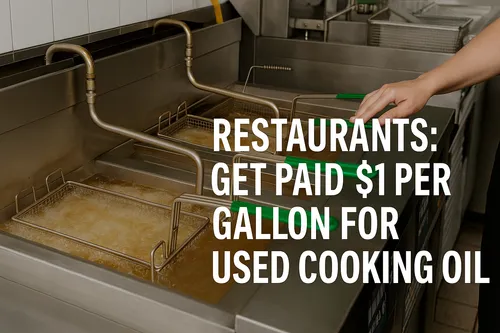
The economic model for used fryer oil collection often benefits the generator. For restaurants with lower volumes (typically under 100 gallons per month), collection and container services are frequently provided at no charge, as the value of the recycled material covers the service cost 6. Establishments with higher output may even qualify for rebate programs, where they can earn a per-gallon payment (ranging from $0.10 to $0.65) for their oil 7. It's important to distinguish this from grease trap waste, which is a separate, water-heavy byproduct that requires costly cleaning and de-watering services and is not typically a source of revenue 7.
Service Providers in the Murrieta Area
Several licensed companies serve the Riverside County region, offering comprehensive used cooking oil collection solutions tailored for commercial kitchens.
- Grand Natural Inc.: This provider offers free containers and flexible indoor or outdoor storage solutions for Murrieta businesses. They also provide related services like grease trap cleaning, offering a one-stop shop for kitchen grease management 8.
- The Grease Company (TGC): TGC emphasizes secure collection solutions with locking containers and handles the compliance paperwork for clients. They service the broader Southern California area, including Murrieta, and focus on protecting businesses through proper recycling protocols 9.
- Grease Management: Serving Riverside County, this company provides licensed used cooking oil collection and ensures all necessary documentation for hazardous waste transportation is completed 10.
When selecting a provider, confirm their CDFA license, understand their service schedule, and clarify all costs or potential rebates associated with your specific oil output.
Creating a Sustainable Kitchen Routine
Integrating used oil management into your daily closing procedures is key. Designate a trained staff member to be responsible for cooling, transferring, and securing the oil. Regularly inspect storage containers for leaks or damage. Maintain a file for all pickup manifests and service agreements. By treating used cooking oil as a regulated commodity rather than mere waste, Murrieta restaurants can operate more sustainably, remain compliant, and potentially offset some operational costs, all while contributing to the local circular economy.
Frequently asked questions
Sources
Footnotes
-
Used Oil Generator Requirements - https://dtsc.ca.gov/used-oil-generator-requirements/ ↩
-
Restaurant Oil Disposal: Explained - Eazy Grease - https://eazygrease.com/how-do-restaurants-get-rid-of-their-oil/ ↩
-
Cooking Oil Collection In Anaheim - The Grease Company - https://thegreasecompany.com/cookingoilcollectionanaheim.html ↩
-
Cooking Oil - Riverside County Waste Resources - https://rcwaste.org/cooking-oil ↩
-
Used Cooking Oil Collection Los Angeles - Pick Up & Recycling. - https://greasemanagement.org/oilcollectionlosangeles.html ↩
-
Restaurant Used Cooking Oil Recycling & Disposal Guide - https://greaseconnections.com/restaurant-used-cooking-oil-disposal-recycling-revenue-guide/ ↩
-
Used Cooking Oil Collection / Pick Up & Recycling. - https://greasemanagement.org/usedoilcollection.html ↩ ↩2
-
Used Cooking Oil Collection Murrieta - https://www.grandnaturalinc.com/locations/used-cooking-oil-recycling-in-murrieta.html ↩
-
Southern California Commercial Kitchen Cooking Oil recycling ... - https://thegreasecompany.com/blog/how-the-grease-is-protecting-you-by-recycling-cooking-oil/2/ ↩
-
Used Cooking Oil Collection For Restaurants - Grease Management - https://greasemanagement.org/greasecollection.html ↩