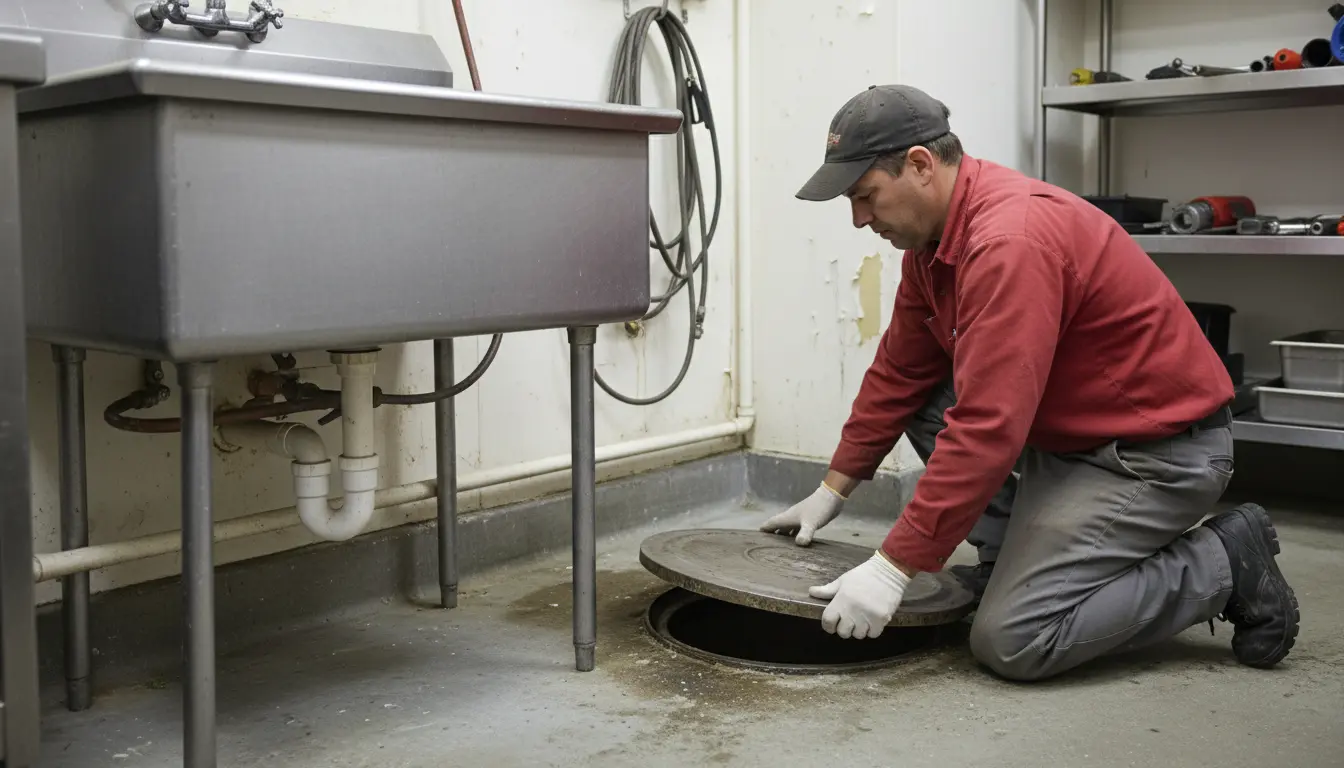
Find the Best Grease Trap Cleaning Companies for Your Business
No obligation • Fast responses • Nationwide coverage

Why you can trust Restaurant Waste Disposal
Restaurant Waste Disposal is a leading U.S. resource for comparing restaurant composting, food-waste recycling, grease trap cleaning, and used cooking oil collection services. Our editorial team researches providers, checks credentials, and organizes unbiased information so operators can make informed decisions. Companies cannot pay to change ratings or placement.
Search providers near you
Top Grease Trap Cleaning Companies in Port St Lucie, Florida Ranked
For any restaurant or food service establishment in Port St. Lucie, maintaining a clean and compliant grease trap is not just a matter of plumbing-it's a critical legal and environmental responsibility. Florida state law and local ordinances mandate strict schedules and procedures for grease interceptor maintenance to prevent fats, oils, and grease (FOG) from entering and clogging the public sewer system. Non-compliance can lead to severe penalties, including significant fines and potential operational disruptions. This guide outlines the essential regulations, best practices, and local service considerations for effective grease management in PSL, helping you protect your business and the community's infrastructure.
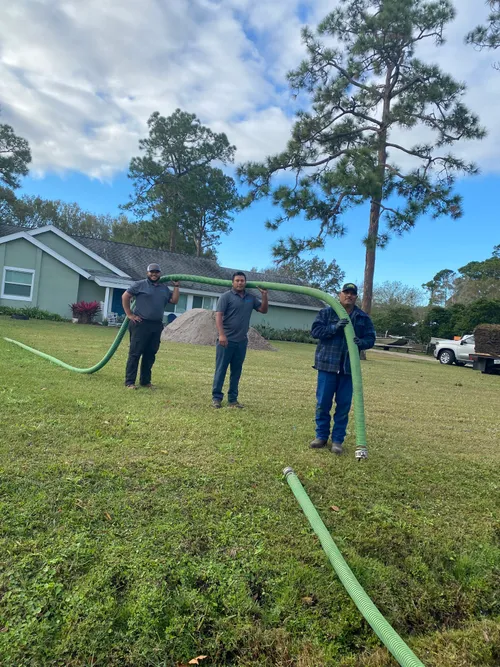
All Coast Septic Services
3106 Mura Dr, Fort Pierce, FL 34982
All Coast Septic Services is a grease trap cleaning and septic system company based in Port St Lucie, FL. They provide a full range of septic services including installation, maintenance, repair, and inspections of septic tanks and drainfields. With over 20 years of experience, their licensed technicians handle issues such as drainfield problems and septic tank pumping. The company also offers 24/7 emergency services to address urgent septic system needs.
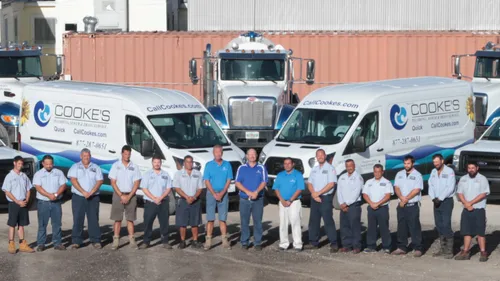
Cooke's Plumbing and Septic, a Wind River Environmental Company
Port St Lucie, FL
Cooke's Plumbing and Septic, a Wind River Environmental Company, provides plumbing and septic services in Port St Lucie, FL, and surrounding counties. Serving residential, commercial, municipal, and industrial clients, they offer comprehensive solutions including grease trap cleaning, septic pumping, sewer jetting, and drain cleaning. With over 60 years of experience since 1958, Cooke's combines local expertise with the resources of Wind River Environmental to deliver reliable and environmentally compliant services. They are available 24/7 for emergency plumbing and septic needs.
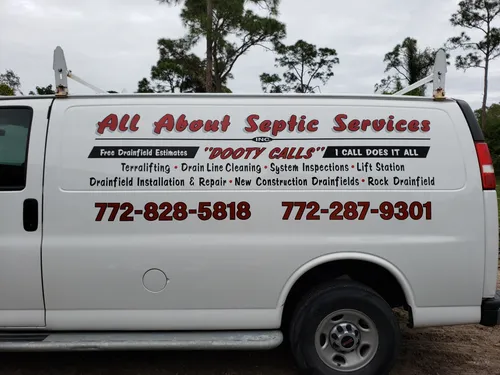
All About Septic Services inc.
991 Edwards Rd, Fort Pierce, FL 34982
All About Septic Services inc. is a septic service provider based in Port St Lucie, FL. They offer a wide range of services including septic tank pumping, inspections, repairs, installations, and grease trap cleaning. The company also handles lift stations and drainfield repairs and replacements. They emphasize environmentally responsible practices and use the latest technologies to maintain septic systems effectively. All About Septic Services provides 24/7 emergency service to address urgent septic issues promptly.
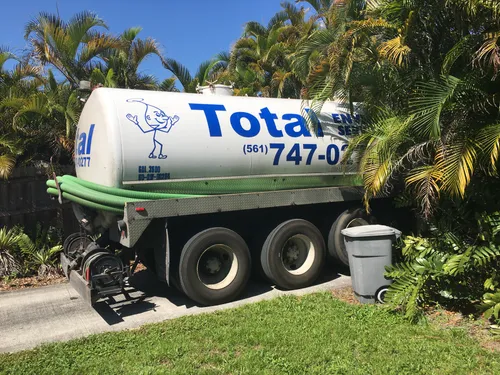
Total Septic Services
300 Center St, Jupiter, FL 33458
Total Septic Services is a plumbing and septic tank contractor based in Jupiter, FL, serving Northern Palm Beach and Southern Martin counties. They specialize in pumping septic tanks and grease traps, high velocity line jetting, drain field rejuvenations, and city water and sewer connections. The company is part of a third-generation business with a central office in Orlando, offering a broad range of services including storm drain cleaning, pond restoration, camera inspection, and Vactor jetting. Total Septic Services provides 24-hour emergency response for septic, sewer, and drain issues.
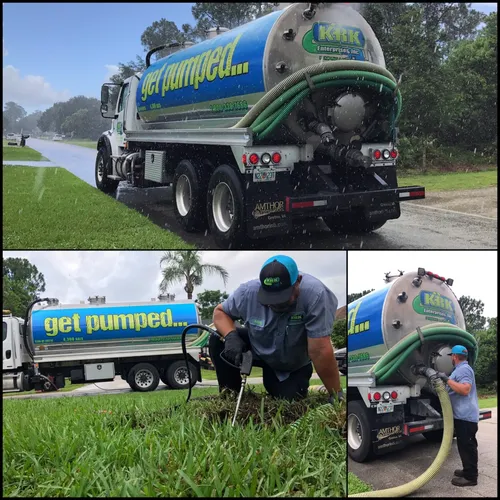
KRK Pumping and Plumbing
3102 Enterprise Rd, Fort Pierce, FL 34982
KRK Pumping and Plumbing provides grease trap repair, clogged drain cleaning, and used cooking oil collection services in Port St Lucie, FL, and throughout Florida. With over 20 years of experience, they offer a wide range of services including grease and oil recycling, backflow certification, hydro-jetting, septic tank maintenance, and video camera inspections. Their use of advanced technology such as vacuum trucks and video inspections helps quickly diagnose and resolve plumbing issues. KRK also offers 24/7 emergency services to address urgent drainage and sewer problems.
Understanding Florida and Port St. Lucie Grease Trap Regulations
Compliance begins with knowing the rules. In Florida, grease trap maintenance is governed by Florida Statute 403.0741 and enforced by the Florida Department of Environmental Protection (DEP) in conjunction with local authorities 1. While Port St. Lucie follows the state's framework, the city council reviews and can implement specific local requirements, so it's crucial to stay informed of any municipal memorandums or agenda items that may affect your business.
The cornerstone of the regulation is the mandatory use of a licensed hauler for all grease waste removal. Every service visit must be documented with a manifest (or receipt), which proves the collected FOG was transported and disposed of at a permitted facility. These manifests are not just paperwork; they are your primary proof of compliance during inspections. You are required to keep them on file and readily available for review by inspectors from the DEP or the city.
Required Cleaning Frequency and Standards
How often you need to schedule grease interceptor pumping is not left to guesswork. State rules establish a clear minimum standard:
- Minimum Frequency: Grease traps must be pumped at least twice per calendar year.
- Condition-Based Cleaning: More frequent cleaning is required if monitoring shows a grease layer exceeding 6 inches or a solids layer exceeding 8 inches near the outlet baffle.
- Complete Cleaning: The service is not complete with just a pump-out. The cleaning must include the removal of all contents, followed by the scrubbing of sidewalls, baffles, and inlet/outlet pipes to ensure no residual grease remains.
Establishments with higher volume cooking or specific menu items may find they need service more often than the biannual minimum. A qualified local service provider can help you determine the optimal schedule for your operation.
The Inspection Process and Enforcement
Both the Florida DEP and local Port St. Lucie officials have the authority to conduct inspections of your food service establishment. During an inspection, they will typically:
- Review your service manifests for the required period.
- Physically inspect the cleanliness and accessibility of the grease trap.
- Check records for any use of grease-digesting additives, which must be approved by the control authority before use.
- Verify the trap area is clear of debris and easily accessible for service and inspection.
Enforcement for violations can be stringent. Penalties may include substantial fines, and in cases of illegal dumping or chronic non-compliance, the ultimate sanction of license revocation is a real possibility. Additionally, some Florida counties impose extra fees for late manifest submissions, a practice you should confirm applies in Port St. Lucie.
Cost Expectations for Service in Port St. Lucie
Understanding the potential costs helps in budgeting for this necessary expense. Pricing for grease trap pumping is not flat; it varies based on the size of your interceptor, its condition, and your service agreement. For a typical larger trap (e.g., 1000-1500 gallons), a single pump-out can range from $225 to $315 or more 2 3. Many local providers offer service plans or contracts that can provide more predictable pricing and often include priority scheduling. It's important to note that emergency or one-time service calls outside of a plan will typically command a higher price.
Find the perfect grease trap cleaning companies for your needs
Get personalized recommendations and expert advice
Choosing a Local Service Provider
Selecting the right company for your grease interceptor maintenance is a key business decision. The most important qualification is ensuring the hauler is fully licensed and insured to operate in Florida. Always ask for proof. A reputable provider, such as Elite Electric, Plumbing & Air which services the Port St. Lucie area, will not only perform the physical cleaning but also handle the crucial compliance paperwork by providing you with a signed manifest at the completion of every service.
When evaluating providers, ask specific questions: Do they offer inspection and maintenance plans? Can they provide references from other local restaurants? How do they document and provide the required manifests? A reliable partner will be transparent about their process and help you navigate the compliance landscape.
Your Compliance Checklist
To stay in good standing and avoid costly penalties, integrate these steps into your operational routine:
- Confirm Your Schedule: Don't just assume twice-a-year is enough. Partner with your licensed hauler to set a pumping schedule based on your actual usage and the condition of your trap.
- File All Manifests: Create a dedicated, organized file (physical or digital) for every service manifest. These are your legal receipts.
- Maintain Accessibility: Ensure the area around your grease interceptor is always clear of storage, debris, or obstacles for both service technicians and inspectors.
- Verify Local Rules: Proactively check with the City of Port St. Lucie or St. Lucie County for any updates to local fees, reporting requirements, or ordinances that may go beyond state rules 4 5.
- Pre-Approval for Additives: If you are considering using any enzymatic or bacterial additives, you must get written approval from the control authority before introducing them into your system 6 7.
Frequently asked questions
Sources
Footnotes
-
The 2025 Florida Statutes - Online Sunshine - https://www.leg.state.fl.us/Statutes/index.cfm?App_mode=Display_Statute&Search_String=&URL=0400-0499/0403/Sections/0403.0741.html ↩
-
Grease Trap Cleaning in Port St. Lucie - Elite Electric, Plumbing & Air - https://www.eliteelectricandair.com/plumbing/grease-trap-cleaning/ ↩
-
Grease Trap Cleaning Prices | Guide on the Industry Average - https://grease-cycle.com/grease-trap-pumping-cost/ ↩
-
city of port st lucie - council agenda memorandum - https://psl.granicus.com/MetaViewer.php?view_id=&event_id=946&meta_id=117785 ↩
-
Florida Grease Compliance | 90-Day Rule & County Fees - https://greaseconnections.com/resources/compliance/fl/ ↩
-
Grease Waste | Florida Department of Environmental Protection - https://floridadep.gov/waste/permitting-compliance-assistance/content/grease-waste ↩
-
30-203. Food service establishments: grease traps and ... - Lee County - http://leecounty-fl.elaws.us/code/coor_ch30_artxiii_sec30-203 ↩