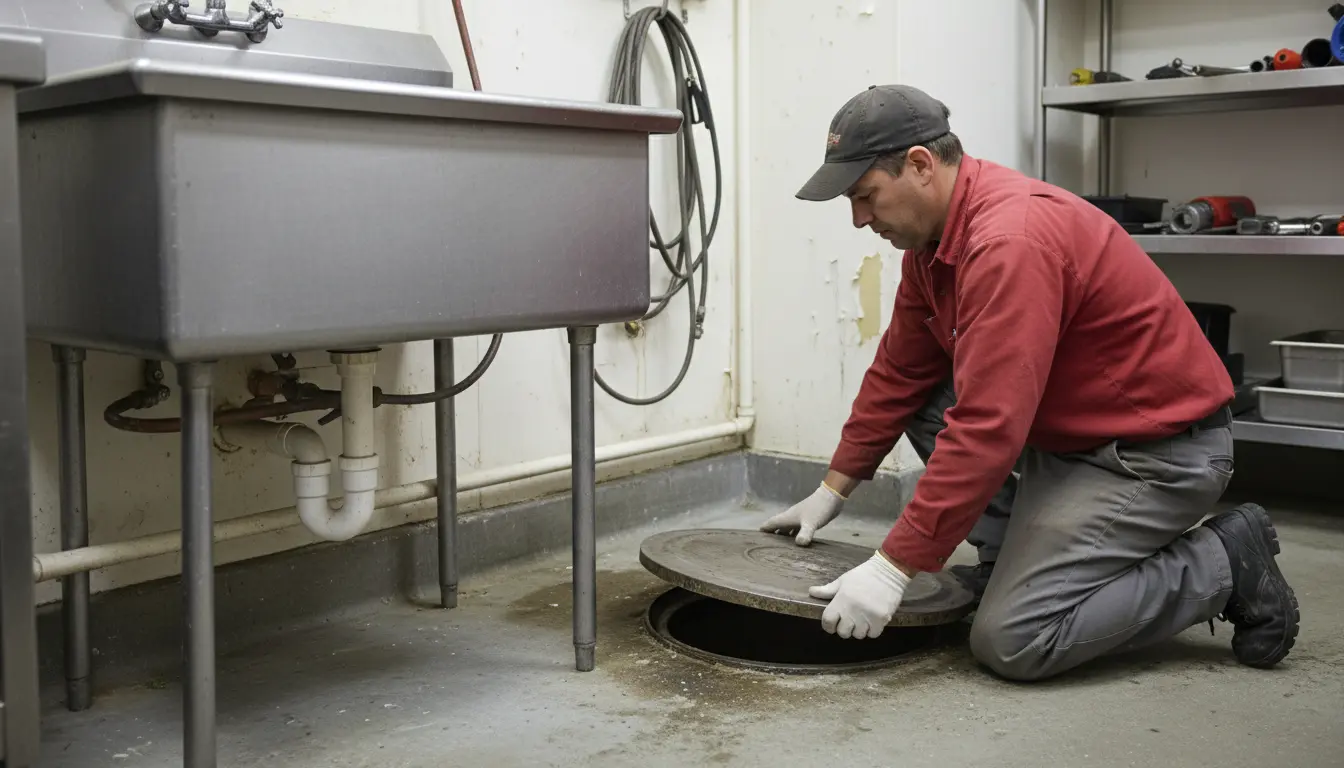
Find the Best Grease Trap Cleaning Companies for Your Business
No obligation • Fast responses • Nationwide coverage

Why you can trust Restaurant Waste Disposal
Restaurant Waste Disposal is a leading U.S. resource for comparing restaurant composting, food-waste recycling, grease trap cleaning, and used cooking oil collection services. Our editorial team researches providers, checks credentials, and organizes unbiased information so operators can make informed decisions. Companies cannot pay to change ratings or placement.
Search providers near you
Top Grease Trap Cleaning Companies in Pensacola, Florida Ranked
For restaurant owners and managers in Pensacola, maintaining a clean and compliant grease trap (or grease interceptor) is a critical, non-negotiable part of daily operations. Florida state law and local ordinances mandate strict protocols for the servicing and disposal of fats, oils, and grease (FOG) to protect the city's sewer infrastructure and waterways. Non-compliance can lead to severe penalties, including hefty fines and operational disruptions. This guide outlines the essential regulations, schedules, and best practices for effective grease management in Pensacola's food service industry, helping you avoid costly violations and ensure your establishment runs smoothly.
Xtreme Plumbing, Septic, & Portable Toilet Rentals
9900 Pensacola Blvd, Pensacola, FL 32534
Xtreme Plumbing, Septic, & Portable Toilet Rentals is a family-owned business serving Pensacola, FL, since 2016. They offer a wide range of services including septic tank maintenance, plumbing, grease trap cleaning, portable toilet rentals, and dumpster rentals. The company is fully licensed and insured, providing specialized capabilities such as grease trap cleaning and septic system services. They also offer after-hours emergency service to support urgent needs.
Boyett's Septic Tank & Portable Toilets
7300 Mobile Hwy, Pensacola, FL 32526
Boyett's Septic Tank & Portable Toilets is a locally owned sanitation company based in Pensacola, FL. They offer septic tank cleaning, pumping, and grease trap services, as well as portable restroom rentals for events and construction sites. Serving Escambia, Santa Rosa, and Okaloosa counties, their licensed technicians use current technology to maintain septic tanks, grease traps, laundry tanks, and lift stations. Established in 1957, Boyett's has over 50 years of experience in sanitation services. They provide 24/7 availability for waste management support.

AAA Thompson's Septic Inc
4125 Plant Ave, Pace, FL 32571
AAA Thompson's Septic Inc is a family-owned septic service company based in Pensacola, FL. They offer a full range of commercial and residential septic services including grease trap cleaning, septic tank pumping, inspections, certifications, drain line repairs, new installations, and lift pump maintenance. The company has been serving Santa Rosa and Escambia Counties for more than 35 years, providing reliable septic system maintenance and repairs. They also offer electronic reminders for maintenance and specialize in restaurant grease trap services.
Anthony's Septic Tank Services
31378 US-90, Seminole, AL 36574
Anthony's Septic Tank Services is a family-owned business based in Mobile, AL, offering septic tank and grease trap cleaning services. They provide residential, commercial, and industrial septic tank installations, repairs, pumping, inspections, and certifications. The company also offers commercial grease trap pumping and uses BIOFORCE products. With 45 years of experience, they serve the Mobile area and provide emergency after-hours and weekend service, available 24/7 for urgent needs.
Understanding Florida and Pensacola Grease Trap Regulations
Compliance begins with knowing the rules. At the state level, the Florida Department of Environmental Protection (FDEP) sets the framework. A key state law, SB 1110, explicitly prohibits the illegal practice of "pump and return," where waste is pumped from a trap only to be returned to it after the hauler takes a portion 1. All grease waste must be transported by a licensed hauler to an approved disposal facility. Furthermore, every service must be documented with a detailed manifest, which you are required to keep on file as proof of proper disposal.
Locally, Pensacola restaurants must also adhere to codes enforced by the city's water utility department and Escambia County. These local rules often specify the required cleaning frequency-commonly based on a "25% rule" (pump when solids and FOG reach 25% of the trap's capacity) or a mandated time interval, such as every 90 days 2 3. Registration or permit fees for your grease interceptor may also be required by the local authority, similar to fees in other Florida counties 2.
The Importance of Proper FOG Management
When FOG is poured down drains, it cools and solidifies inside sewer pipes. Over time, this creates massive blockages that can lead to sanitary sewer overflows (SSOs), which are environmentally damaging, violate public health codes, and can result in significant fines levied against the responsible business. A well-maintained grease interceptor is your first and most important line of defense, capturing FOG before it enters the public sewer system. Regular, professional cleaning is not just a good idea-it's the law.
Determining Your Grease Interceptor Cleaning Schedule
How often should your Pensacola restaurant clean its grease trap? The answer isn't the same for every establishment. Frequency depends on several factors:
- Volume of Food Served: High-volume restaurants generate more FOG.
- Type of Cuisine: Establishments that do a lot of frying, or serve particularly greasy foods, will fill their interceptors faster.
- Size/Capacity of the Trap: A smaller trap serving a busy kitchen will require more frequent service than a large interceptor.
While local codes may set a minimum standard (e.g., quarterly), many restaurants find that monthly service is necessary to stay within the 25% capacity rule and avoid emergencies 4 5. The best practice is to work with your licensed hauler to establish a schedule based on your specific usage, and to have the trap inspected regularly to gauge accumulation.
What to Expect During Inspection and Enforcement
Inspections are conducted to ensure compliance. Both FDEP and local Pensacola or Escambia County water/health department officials have the authority to inspect your facility. During an inspection, they will typically:
- Request to see your service manifests for the past 1-3 years.
- Physically inspect the condition and contents of your grease interceptor.
- Verify that your hauler is properly licensed.
- Check for any evidence of illegal dumping or maintenance issues.
Penalties for violations can be severe, ranging from substantial fines to the revocation of operating licenses, especially for repeat offenses or illegal dumping. Maintaining impeccable records is your best defense during an inspection.
Find the perfect grease trap cleaning companies for your needs
Get personalized recommendations and expert advice
Cost Factors for Grease Trap Pumping in Pensacola
The cost for professional grease interceptor cleaning varies. For a standard, scheduled pumping service of a well-maintained trap, restaurants can generally expect costs to range from $150 to $500 or more per service 6. Several variables influence the final price:
- Trap Size and Location: Larger traps and those in hard-to-access locations cost more to service.
- Frequency: Signing up for a recurring maintenance plan often results in a lower per-service cost compared to one-time emergency calls.
- Condition: A severely neglected trap that requires extra labor or hydro-jetting will be more expensive.
- Local Fees: Be aware of potential local registration or permit fees for your grease interceptor, which are separate from the service cost.
Emergency service, required for a completely clogged or overflowing trap, can cost significantly more-often ranging from $800 to $1,200 or higher due to the immediate response and increased labor 7 8. Preventive, scheduled maintenance is always the most cost-effective approach.
Essential Action Items for Pensacola Restaurant Operators
- Confirm Local Requirements: Contact the Pensacola Water System and/or the Escambia County Health Department to get the exact local code, required service intervals, and any registration or permit fees for your establishment.
- Hire a Licensed Hauler: Always contract with a FDEP-licensed grease waste hauler. Verify their license and ensure they provide a signed, detailed manifest after every service 9 10.
- Maintain Impeccable Records: Keep all service manifests and invoices in an organized file for at least three years. This is your primary proof of compliance during inspections.
- Train Your Staff: Educate kitchen and dishwashing staff on best practices to minimize FOG going down the drain. This includes scraping plates, using drain screens, and disposing of grease in dedicated containers, not sinks 11.
- Schedule Proactively: Don't wait for an emergency or a violation notice. Establish a regular pumping schedule with your hauler based on your actual usage and stick to it.
Frequently asked questions
Sources
Footnotes
-
Florida Restaurants Now Facing Stronger Regulations For Grease ... - https://www.tampa.gov/news/florida-restaurants-now-facing-stronger-regulations-grease-disposal-102321 ↩
-
Florida Grease Compliance | 90-Day Rule & County Fees - https://greaseconnections.com/resources/compliance/fl/ ↩ ↩2
-
How Often Should Restaurants Clean Their Grease Traps? A ... - https://scjetting.com/how-often-should-restaurants-clean-their-grease-traps-a-complete-maintenance-guide/ ↩
-
Grease Trap Restaurant: The Essential Guide - https://therestaurantwarehouse.com/blogs/restaurant-equipment/grease-trap-restaurant-guide ↩
-
Grease Trap Regulations and Compliance: What You Need to Know - https://www.texwaywastewater.com/grease-trap-regulations-and-compliance/ ↩
-
Grease Trap Cleaning Prices | Guide on the Industry Average - https://grease-cycle.com/grease-trap-pumping-cost/ ↩
-
Restaurant Grease Trap & Interceptor Cleaning Cost - https://greasemanagement.org/pricing.html ↩
-
Ultimate Grease Trap Pumping Cost Guide: Essential Money-Saving ... - https://www.texwaywastewater.com/grease-trap-pumping-cost/ ↩
-
Grease Waste | Florida Department of Environmental Protection - https://floridadep.gov/waste/permitting-compliance-assistance/content/grease-waste ↩
-
30-203. Food service establishments: grease traps and ... - Lee County - http://leecounty-fl.elaws.us/code/coor_ch30_artxiii_sec30-203 ↩
-
Grease Disposal Regulations in South Florida: Expert Insights - https://www.greaseprosrecycling.com/grease-disposal-regulations-fl/ ↩