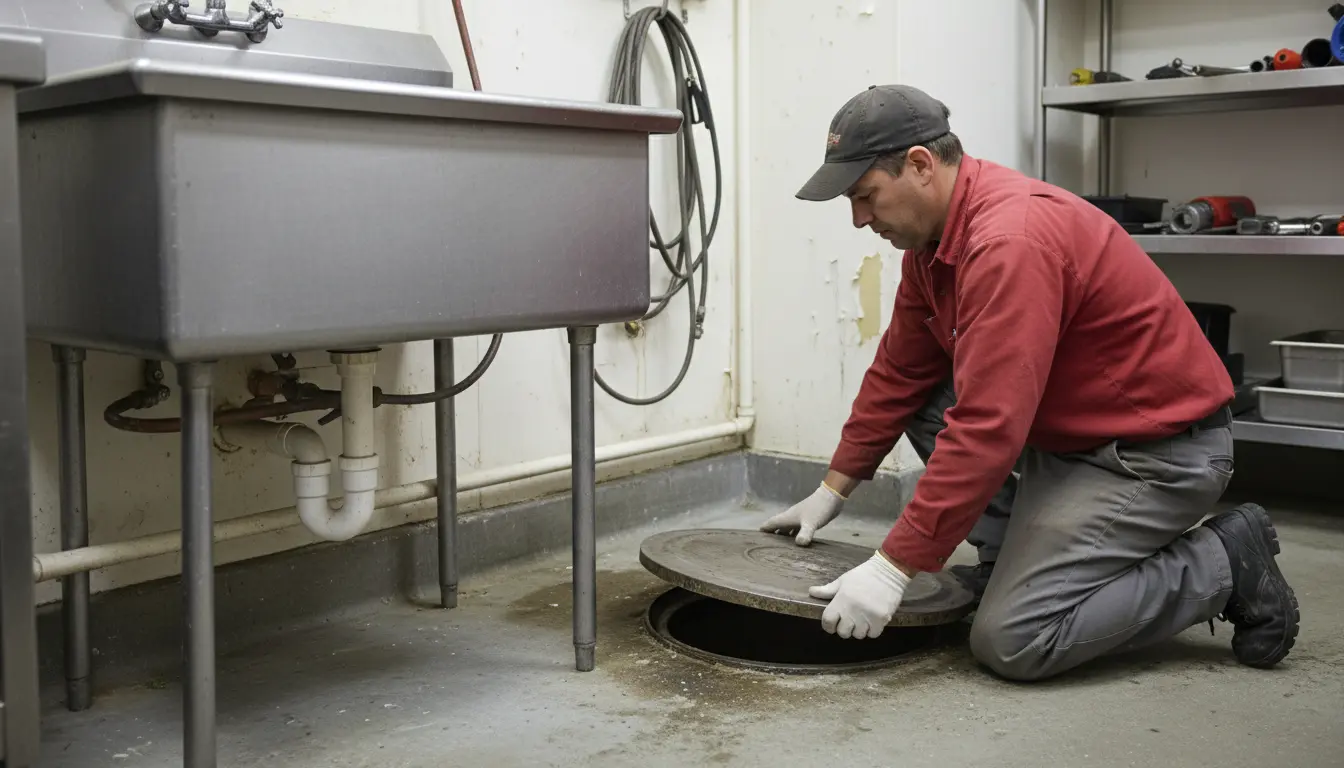
Find the Best Grease Trap Cleaning Companies for Your Business
No obligation • Fast responses • Nationwide coverage

Why you can trust Restaurant Waste Disposal
Restaurant Waste Disposal is a leading U.S. resource for comparing restaurant composting, food-waste recycling, grease trap cleaning, and used cooking oil collection services. Our editorial team researches providers, checks credentials, and organizes unbiased information so operators can make informed decisions. Companies cannot pay to change ratings or placement.
Search providers near you
Top Grease Trap Cleaning Companies in Winston Salem, North Carolina Ranked
For any restaurant or food service establishment in Winston Salem, managing fats, oils, and grease (FOG) is not just a matter of kitchen maintenance-it's a legal requirement. The City of Winston Salem enforces a strict Grease Control Policy designed to protect the public sewer system from costly and disruptive blockages. Compliance hinges on the proper installation, maintenance, and cleaning of grease interceptors (commonly called grease traps). This involves working with licensed professionals, adhering to a mandated pumping schedule, and keeping meticulous records. Failure to comply can result in enforcement actions, including fines and required system upgrades. Understanding the local regulations and service landscape is essential for restaurant operators to ensure smooth, compliant, and odor-free kitchen operations.
Zoom Drain
105 Creek Ridge Rd G, Greensboro, NC 27406
Zoom Drain is a drain and sewer service provider based in Greensboro, NC, specializing in residential and commercial plumbing needs. They offer tailored solutions for diverse property types in the area, including grease trap maintenance and advanced drain cleaning techniques. Their services include rooter work, pipe inspections, and the use of specialized treatments like Zoom Jetting® and RootX® herbicide to maintain and restore drainage systems. Zoom Drain serves Greensboro and nearby communities such as Asheboro and Browns Summit. The company emphasizes preventive maintenance to enhance plumbing efficiency and reduce the risk of major repairs.
Queen's Septic Tank Service
Greensboro, NC
Queen's Septic Tank Service is a family-owned business based in Archdale, NC, serving Greensboro and surrounding areas including Guilford, Randolph, Davidson, and Forsyth Counties. Since 1986, they have provided residential and commercial septic services such as installations, pumping, repairs, inspections, grease trap pumping, and backhoe and light grading services. As a certified Level IV Wastewater System Installer, they offer expertise in septic system care. The company also provides after-hours emergency service for urgent septic needs.
Roto-Rooter Plumbing & Water Cleanup
4248 Piedmont Pkwy, Greensboro, NC 27410
Roto-Rooter Plumbing & Water Cleanup provides comprehensive residential and commercial plumbing services in Greensboro, NC. Their offerings include floodwater cleanup, sewer and drain cleaning, water heater repair and installation, grease trap maintenance, and mold remediation. The company uses advanced equipment like hydro-jetting for drain cleaning and offers 24/7 emergency plumbing services to address urgent issues such as burst pipes and sewer backups. Serving Greensboro and surrounding counties, Roto-Rooter leverages deep local knowledge and extensive experience to handle complex plumbing systems effectively.
Roto-Rooter Plumbing & Water Cleanup
4265 Brownsboro Rd #206, Winston-Salem, NC 27106
Roto-Rooter Plumbing & Water Cleanup offers comprehensive plumbing and water cleanup services in Winston Salem, NC. They serve both residential and commercial clients with a wide range of solutions including sewer and drain cleaning, water heater repair and installation, grease trap cleaning, floodwater cleanup, mold remediation, and sewer line inspections and repairs. The company is equipped with advanced tools such as hydro-jetting equipment to handle complex commercial plumbing systems efficiently. Roto-Rooter provides 24/7 emergency plumbing services year-round, addressing urgent issues like burst pipes, sewer backups, and clogged drains. They serve Winston Salem and surrounding communities in Forsyth, Alamance, Randolph, Guilford, Rockingham, Stokes, and Davidson counties.
Riddle Septic Solutions.
Winston Salem, NC
Riddle Septic Solutions is a locally owned, family-operated company based in Winston Salem, NC. They provide a range of septic services including installations, inspections, repairs, pumping, grease trap cleaning, and lift station maintenance for residential, commercial, and industrial clients. The company uses modern techniques such as hydro jetting to maintain and repair septic systems efficiently. Riddle Septic Solutions combines hands-on experience with up-to-date tools to handle routine maintenance and emergency repairs.
Understanding Winston Salem's Grease Control Regulations
The foundation of grease management in Winston Salem is the city's official Grease Control Policy. This policy mandates that all commercial kitchens generating wastewater containing FOG must install and maintain an approved grease interceptor. The goal is to prevent these materials from entering the public sewer lines, where they can cool, solidify, and create major blockages leading to sanitary sewer overflows (SSOs).
Key regulatory points every food service business owner must know:
- Mandatory Equipment: A grease interceptor is required for any facility that prepares, serves, or sells food.
- Professional Installation: All interceptors must be installed by a licensed North Carolina plumbing contractor, and the design must be approved by the City of Winston Salem before installation begins.
- Owner Responsibility: The restaurant (the "User") is financially responsible for the continuous and effective operation of the interceptor, including the complete removal of all contents-solids, grease, and wastewater-during cleaning.
- Strict Prohibitions: "Decanting," or the practice of separating liquids from solids and returning wastewater to the interceptor, is strictly prohibited. Similarly, backflushing grease and solids into the sewer system is banned. These practices circumvent the purpose of the trap and violate city code.
Types of Grease Interceptors and Maintenance Rules
Not all grease traps are the same, and the type you have dictates specific maintenance rules. The two primary categories are large, in-ground grease interceptors and smaller under-the-counter grease traps.
Large Grease Interceptors: These are typically located outside or underground and have a capacity of over 100 gallons. They service the entire kitchen's plumbing. For these units, maintenance must be performed by a licensed waste hauler or plumber. The prohibition on decanting is absolute for these systems.
Under-the-Counter Grease Traps: These smaller units (usually under 100 gallons) are often installed near dish pits or prep sinks. The city's policy allows for an exception: if a restaurant cleans its own small, under-counter unit, it may decant the effluent. However, strict conditions apply. The unit must be properly sized for the total fixture capacity, include flow control devices, and dishwashers cannot be connected to them 1. For most restaurants, relying on a professional service for even these small traps is the safest and most compliant path.
Required Pumping Frequency and Compliance Inspections
How often you need to clean your grease trap isn't a guess-it's defined by city policy and the volume of your kitchen. The rule states pumping is required at least every 30 days or when the interceptor is 75% full by volume of FOG and solids2 3. High-volume kitchens, such as busy restaurants or large institutional cafeterias, will likely require monthly or even bi-monthly service to stay within this limit 4.
The City of Winston Salem conducts inspections to ensure compliance 5. During an inspection, you will be required to show detailed service records from your grease trap cleaning provider. These records are your proof of compliance and should include dates of service, the company name, the volume of waste removed, and the disposal location. Non-compliance can trigger a formal notice, requiring you to make improvements to your system or maintenance practices within six months, and may lead to fines enforced by local utilities 6.
Find the perfect grease trap cleaning companies for your needs
Get personalized recommendations and expert advice
The Professional Grease Trap Cleaning Process
Hiring a licensed professional ensures the job is done completely and in accordance with all regulations. A proper service visit involves much more than just sucking out liquid. A comprehensive cleaning includes:
- Complete Evacuation: All contents-water, grease, and solid food scraps (known as "brown grease")-are pumped out and removed from the site.
- High-Pressure Jetting: The empty tank is cleaned with high-pressure hot water to scour the walls, baffles, and inlet/outlet pipes, removing all clinging FOG.
- System Inspection: The technician will inspect the interceptor for structural damage, check baffles, and ensure inlet and outlet tees are functioning correctly to maximize efficiency.
- Proper Disposal: The collected FOG waste is transported to an approved facility, such as a wastewater treatment plant or rendering facility, for proper processing or disposal.
- Detailed Documentation: You receive a service report, which is a critical document for your records to prove compliance during city inspections.
Cost Factors for Grease Trap Cleaning in Winston Salem
The cost for professional grease interceptor pumping and cleaning in Winston Salem varies based on several key factors. Understanding these can help you budget and evaluate service quotes.
- Size/Capacity: This is the primary cost driver. A small 500-gallon interceptor will cost less per service than a 1,500-gallon or larger unit.
- Service Frequency: Committing to a regular service plan (e.g., quarterly, monthly) often reduces the per-visit cost compared to one-time emergency calls.
- Accessibility: Easily accessible, above-ground traps are simpler to service than those buried under concrete or in tight spaces.
- Amount of Waste: A heavily impacted trap that is overdue for service may require more labor and time to clean thoroughly.
As a general guide, based on regional service data:
- Pumping a small (approx. 500-gallon) interceptor may start around $475 per visit7.
- For a medium-sized trap (1,000-1,500 gallons), costs often range from $225 to $315 per pumping when on a scheduled service plan 8 9.
- These prices typically include the complete evacuation, cleaning, proper disposal, and documentation you need for compliance 10.
Consequences of Poor Grease Trap Maintenance
Neglecting your grease interceptor is a costly risk. Beyond the immediate threat of city fines for non-compliance, operational problems will inevitably arise:
- Sewer Backups: The most severe consequence is a backup of foul-smelling, unsanitary wastewater into your kitchen or restaurant floor, forcing immediate closure and incurring massive cleanup costs.
- Chronic Drain Clogs: Slow-draining sinks and floor drains are a common symptom of grease buildup in your internal plumbing lines.
- Persistent Odors: As FOG decomposes in the trap, it generates hydrogen sulfide gas, leading to a rotten egg smell that can permeate your kitchen and dining areas.
- Increased Maintenance Costs: Emergency pump-out services are significantly more expensive than scheduled maintenance, and severe blockages may require expensive plumbing repairs.
Staying proactive with a licensed service provider is the most effective strategy to avoid these headaches, maintain a hygienic kitchen, and remain in good standing with the City of Winston Salem 11.
Frequently asked questions
Sources
Footnotes
-
2018 North Carolina State Building Code: Plumbing Code - https://codes.iccsafe.org/s/NCPC2018/chapter-10-traps-interceptors-and-separators/NCPC2018-Ch10-Sec1003.3.1 ↩
-
Grease Control Policy - City of Winston-Salem - https://www.cityofws.org/DocumentCenter/View/2883/Grease-Control-Policy-PDF ↩
-
Grease Trap Pumping Services for NC Restaurants | Full Circle Environmental - https://www.fullcircleenv.com/services/grease-trap-pumping/ ↩
-
grease trap pumping winston-salem nc - Transou's Plumbing & Septic - https://www.plumbwithfamily.com/septic/grease-trap-pumping/ ↩
-
Food Service Establishments | City of Winston-Salem, NC - https://www.cityofws.org/1095/Food-Service-Establishments ↩
-
Grease Control Policy - NC Pretreatment Consortium - https://ncpretreatment.com/wp-content/uploads/2019/07/2019-Grease-Policy-New-Logo.pdf ↩
-
Commercial Grease Trap Cleaning Services in Winston ... - https://www.forsythrooterservice.com/commercial-grease-trap-cleaning-services-in-winston-township-nc/ ↩
-
Grease Trap Cleaning Prices | Guide on the Industry Average - https://grease-cycle.com/grease-trap-pumping-cost/ ↩
-
How Much Does it Cost to Clean a Grease Trap Professionally? - https://www.jsewerandplumbing.com/how-much-does-it-cost-to-clean-a-grease-trap-professionally/ ↩
-
The Cost To Clean A Grease Trap For Restaurants - https://thegreasecompany.com/blog/greasetrapcleaningcost/ ↩
-
Winston Salem Grease Trap Cleaning and Pumping - Greasecycle - https://grease-cycle.com/north-carolina/winston-salem-grease-trap-cleaning/ ↩