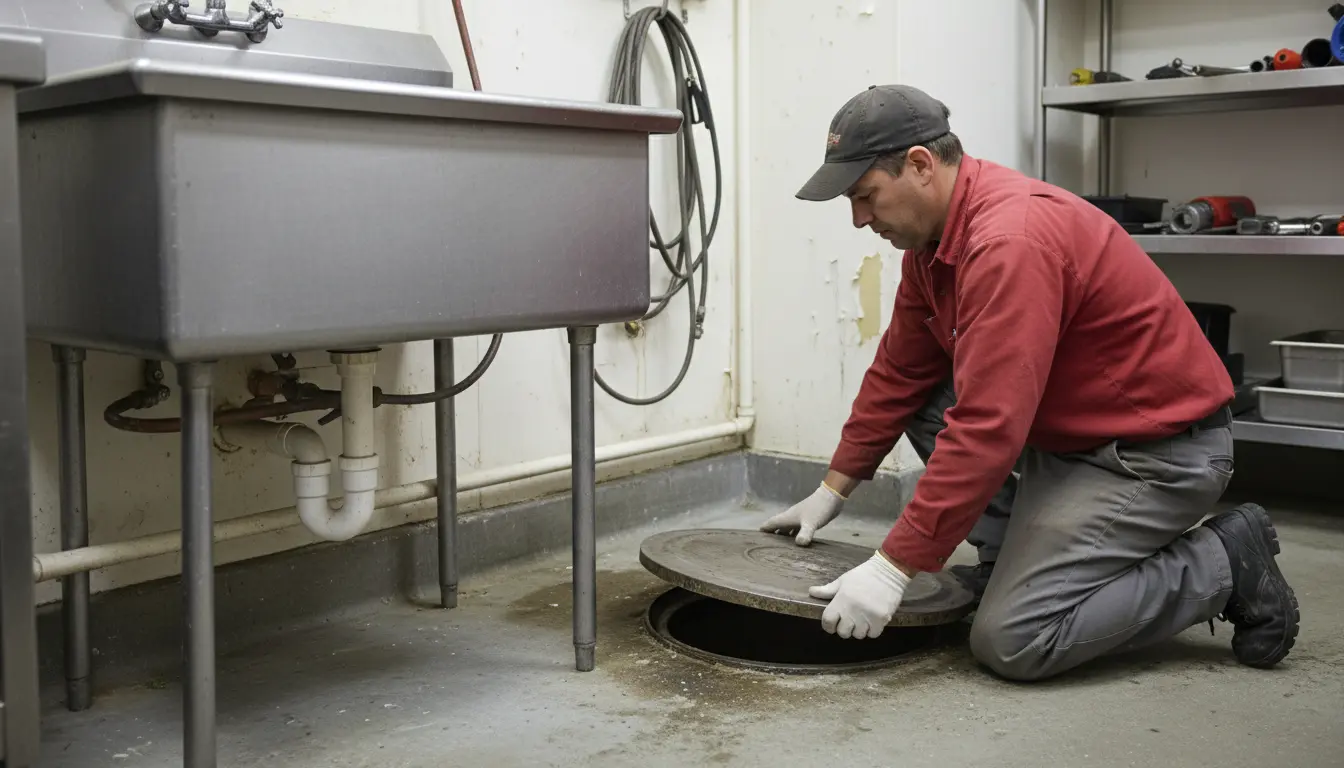
Find the Best Grease Trap Cleaning Companies for Your Business
No obligation • Fast responses • Nationwide coverage

Why you can trust Restaurant Waste Disposal
Restaurant Waste Disposal is a leading U.S. resource for comparing restaurant composting, food-waste recycling, grease trap cleaning, and used cooking oil collection services. Our editorial team researches providers, checks credentials, and organizes unbiased information so operators can make informed decisions. Companies cannot pay to change ratings or placement.
Search providers near you
Top Grease Trap Cleaning Companies in Grand Rapids, Michigan Ranked
For any restaurant, café, or food service establishment in Grand Rapids, managing kitchen grease is a critical operational and legal responsibility. Proper grease interceptor maintenance is not just about avoiding unpleasant odors or slow drains; it's a mandated requirement to protect the city's sewer infrastructure from costly blockages and environmental harm. Local codes are specific and enforcement is active, making a proactive and documented approach to grease trap cleaning essential for business continuity. Understanding the regulations, typical costs, and best practices for grease management can help Grand Rapids food service operators stay compliant and avoid significant fines.
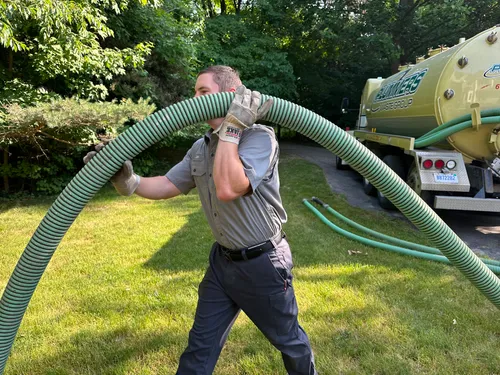
Plummers Septic and Sewer
4525 Clay Ave SW, Grand Rapids, MI 49548
Plummers Septic and Sewer is a family-owned waste management company based in Grand Rapids, MI, serving West Michigan including Lowell, Ionia, Sparta, Wyoming, and Dorr. Established in 1957, they provide septic tank cleaning, sewer and drain cleaning, and grease trap cleaning services for residential and commercial clients. Their capabilities include operating a privately owned waste disposal treatment facility and a fleet of specialized trucks to ensure efficient service across their coverage area. Plummers emphasizes environmental compliance and cost control through integrated waste collection and disposal solutions.
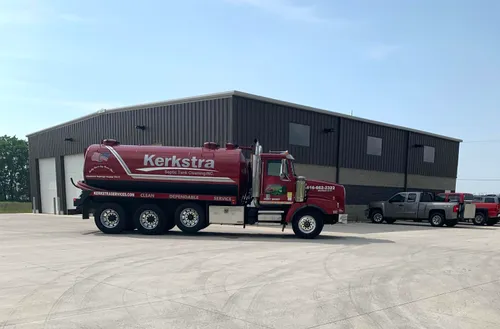
Kerkstra Septic Tank Cleaning
5324 Rich St, Allendale, MI 49401
Kerkstra Septic Tank Cleaning provides septic tank and grease trap cleaning services in Georgetown, MI, and surrounding counties including Kent, Ottawa, and Muskegon. The company offers routine septic pumping, system inspections for real estate transactions, and grease trap cleaning to prevent kitchen clogs. Kerkstra is known for its thorough septic system evaluations and dependable cleaning services. They have been serving homeowners in the area for over 10 years.
Robinson Septic Tank Cleaning
113 S Union St Apartment 2, Sparta, MI 49345
Robinson Septic Tank Cleaning is a family-owned business serving Georgetown, MI, and surrounding counties. They offer residential and commercial septic cleaning, grease trap cleaning, well and septic evaluations for home sales, portable toilet rentals, and lift pump service. Founded in 1979 in Pierson, MI, the company has over 30 years of experience and expanded with a location in Sparta, MI in 2003. They provide service across Montcalm, Mecosta, Muskegon, Newaygo, Kent, Ionia, and Ottawa counties. Robinson Septic Tank Cleaning is available 24/7 for routine and emergency septic services.
Understanding Local Grease Interceptor Regulations
In Grand Rapids and throughout Michigan, food service establishments (FSEs) are legally required to install and maintain approved grease traps or interceptors 1. These devices are the first line of defense, capturing fats, oils, and grease (FOG) before they enter the wastewater system. The local ordinances, often aligned with state plumbing codes, set clear standards for maintenance. A key rule is that traps must be cleaned before the accumulated grease and solids reach 25% of the liquid volume in the interceptor 2. This isn't a suggestion-it's a compliance threshold that inspectors will check.
Proper cleaning means more than just skimming the top. Licensed service providers must fully evacuate all contents: the floating grease mat, the wastewater, and the sludge layer at the bottom. The interior walls should also be washed down. It's important to note that simply using bacterial or enzyme treatments is generally not an approved substitute for physical pumping and removal, and such products may require specific approval from the local water authority 3.
The Importance of Record Keeping
One of the most critical, yet sometimes overlooked, aspects of compliance is documentation. Grand Rapids restaurants must maintain detailed service records for a minimum of three years. These logs should include the date of service, the name of the servicing company, the volume of waste removed, and the disposal method. During routine inspections by the Grand Rapids Water Department (or the local sewer district), these records will be the first thing requested. Solid documentation is your best proof of a proactive maintenance program.
Inspection Schedules and Enforcement Consequences
Inspections of grease management systems are a regular part of doing business in the food service industry here. The frequency can vary, but establishments should be prepared for inspections by the city's water and sewer department at any time 4. The focus is on preventing sewer line blockages, which can lead to sanitary sewer overflows (SSOs)-a serious environmental and public health issue.
The consequences of non-compliance are severe and costly. Enforcement actions can include:
- Substantial Fines: Monetary penalties for violations can be significant.
- Mandatory Operational Shutdowns: In cases of severe non-compliance, the city can order a restaurant to cease operations until the grease interceptor is brought up to code.
- Costly Remediation: If a restaurant's FOG discharge contributes to a sewer blockage ("fatberg"), the business can be held financially responsible for the emergency cleanup costs, which can reach tens of thousands of dollars.
Investing in regular, preventive maintenance is far more economical than facing reactive enforcement and emergency service calls.
Typical Costs for Grease Interceptor Services
Costs for grease trap pumping and cleaning in Grand Rapids vary based on the size of the interceptor, its location, accessibility, and the service frequency. Here's a general breakdown of what food service operators can expect:
- Preventative / Scheduled Cleaning: For a routine service call on a smaller, in-house grease trap, costs typically range from $175 to $400 per visit5 6. This is the most cost-effective approach and is often performed on a monthly or bi-monthly schedule.
- Monthly Service Agreements: Many providers offer service contracts for regular maintenance. These can average $250 to $400 per month, providing predictable budgeting and ensuring consistent compliance 7.
- High-Volume or Emergency Cleaning: Larger interceptors or emergency calls due to a full or malfunctioning trap are significantly more expensive. These services can range from $800 to $1,200 or more per visit8 9.
Find the perfect grease trap cleaning companies for your needs
Get personalized recommendations and expert advice
Best Practices for Grand Rapids Restaurant Owners
Beyond hiring a licensed hauler, there are several steps kitchen managers can take to improve grease interceptor efficiency and longevity.
1. Confirm Local Grand Rapids Rules: Always start by contacting the Grand Rapids Water Department (DWSD) for the most current local ordinances and requirements 10. Municipal codes can have specific nuances.
2. Implement Kitchen Best Practices: The less FOG that goes down the drain, the better. Use sink strainers, scrape plates into trash bins before washing, and collect used cooking oil separately in dedicated containers. Training staff on these practices is essential.
3. Schedule Proactive Maintenance: Don't wait for a problem. Work with your service provider to establish a cleaning schedule-often monthly-based on your kitchen's volume. This prevents the 25% accumulation threshold from being breached.
4. Ensure Proper Disposal: Never pour grease or interceptor waste down a drain, floor drain, or into a storm sewer. All waste must be removed by a licensed hauler who will transport it to an approved rendering facility or wastewater treatment plant11.
5. Document Every Service: As emphasized, keep a dedicated logbook or digital file for every service record. This simple habit is a powerful tool during inspections.
Adopting a comprehensive approach to grease management protects your business from regulatory risk, reduces the chance of disruptive plumbing issues, and contributes to the proper functioning of Grand Rapids's public infrastructure.
Frequently asked questions
Sources
Footnotes
-
2021 Michigan Plumbing Code - 1003.3.1 Grease interceptors and ... - https://codes.iccsafe.org/s/MIPC2021P1/chapter-10-traps-interceptors-and-separators/MIPC2021P1-Ch10-Sec1003.3.1 ↩
-
§ 52.19 GREASE, OIL AND SAND INTERCEPTORS. - https://codelibrary.amlegal.com/codes/bigrapidsmi/latest/bigrapids_mi/0-0-0-1642 ↩
-
How to Clean a Grease Trap (and How Often You Should) - https://greaseconnections.com/how-to-clean-a-grease-trap-and-how-often-you-should/ ↩
-
Michigan Town Implementing Grease Trap Cleaning Ordinance - https://replaceyourgarbagedisposal.com/grease-trap-cleaning/michigan-town-implementing-grease-trap-cleaning-ordinance/ ↩
-
Grease Trap Cleaning Michigan: How to Comply with State ... - https://dpoolecleaning.com/grease-trap-cleaning-michigan-how-to-comply-with-state-regulations/ ↩
-
How to Clean Out a Grease Trap | PowerVac of Michigan - https://yourworkorder.com/the-ultimate-guide-to-restaurant-grease-trap-cleaning/ ↩
-
Grease Trap Cleaning Prices | Guide on the Industry Average - https://grease-cycle.com/grease-trap-pumping-cost/ ↩
-
Ultimate Grease Trap Pumping Cost Guide: Essential Money-Saving ... - https://www.texwaywastewater.com/grease-trap-pumping-cost/ ↩
-
The Cost To Clean A Grease Trap For Restaurants - https://thegreasecompany.com/blog/greasetrapcleaningcost/ ↩
-
Grease Trap Cleaning in Grand Rapids, MI - Costs 12 / 2025 - https://www.homeyou.com/mi/grease-trap-cleaning-grand-rapids-costs ↩
-
APPENDIX A Grease Trap and Interceptor Requirements Definitions - https://fcwsd.org/documents/728/Appendix_A_Grease_Trap_Requirements.pdf ↩