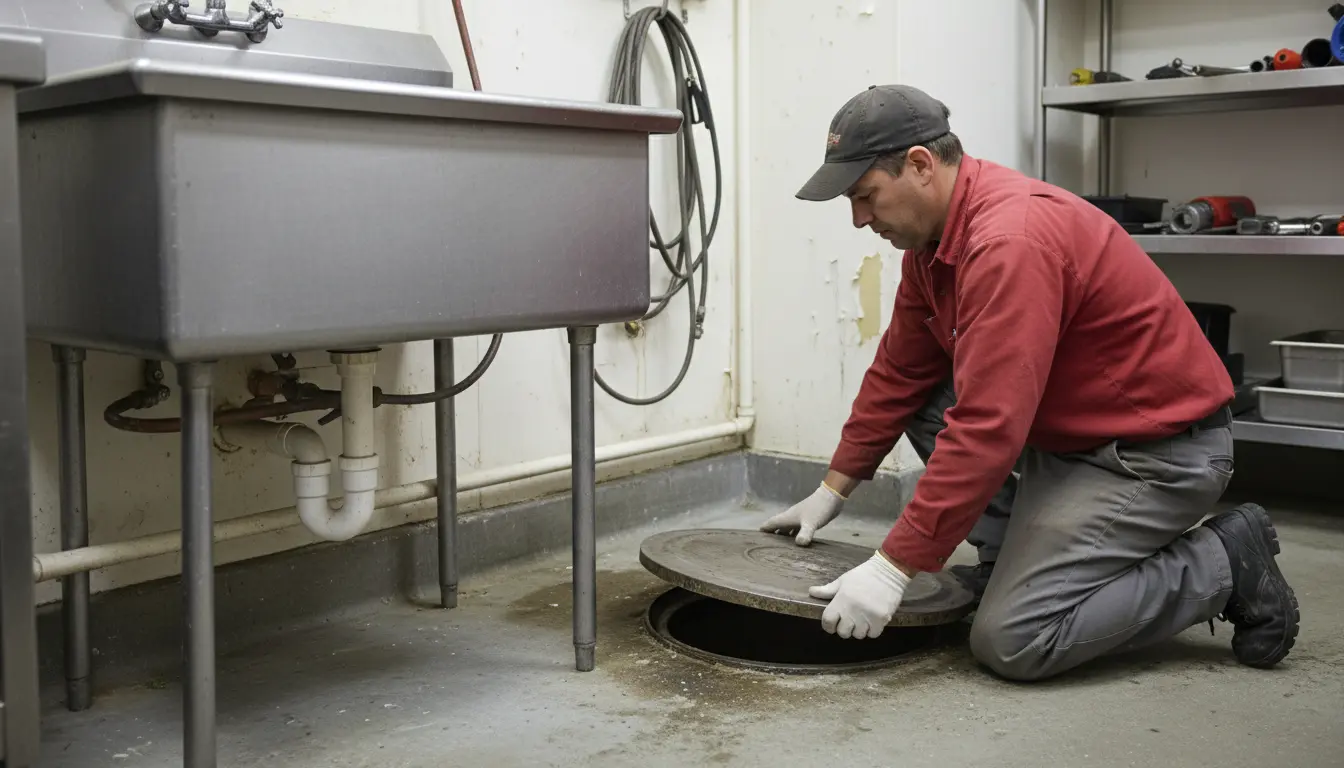
Find the Best Grease Trap Cleaning Companies for Your Business
No obligation • Fast responses • Nationwide coverage

Why you can trust Restaurant Waste Disposal
Restaurant Waste Disposal is a leading U.S. resource for comparing restaurant composting, food-waste recycling, grease trap cleaning, and used cooking oil collection services. Our editorial team researches providers, checks credentials, and organizes unbiased information so operators can make informed decisions. Companies cannot pay to change ratings or placement.
Search providers near you
Top Grease Trap Cleaning Companies in Detroit, Michigan Ranked
For any food service establishment in Detroit, from bustling downtown diners to neighborhood pizzerias, maintaining a grease interceptor isn't just a dirty chore-it's a critical line of defense. Proper grease trap maintenance protects your plumbing, prevents costly and disruptive sewage backups, and, most importantly, ensures compliance with strict city and state health codes. Neglecting this essential service can lead to severe fines, citations, or even a forced operational shutdown. A proactive, scheduled cleaning program with detailed record-keeping is the most effective strategy for Detroit restaurant owners to avoid these steep penalties and keep their kitchens running smoothly.
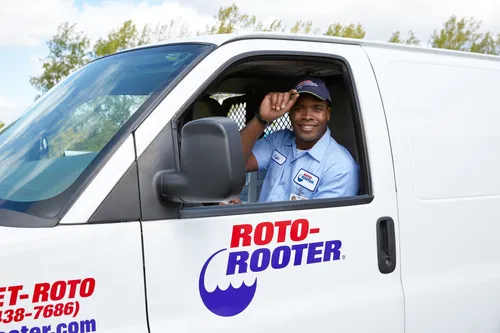
Roto-Rooter Plumbing & Water Cleanup
422 W Congress St, Detroit, MI 48226
Roto-Rooter Plumbing & Water Cleanup offers comprehensive residential and commercial plumbing services in Detroit, MI. Their experienced team handles a wide range of needs including sewer and drain cleaning, water heater repairs and installations, grease trap maintenance, and emergency flood and water damage cleanup. They use advanced equipment such as hydro-jetting for drain cleaning and provide both conventional and trenchless sewer line repairs. Serving Detroit and surrounding counties, Roto-Rooter is available 24/7 for emergency plumbing services to address urgent issues promptly.
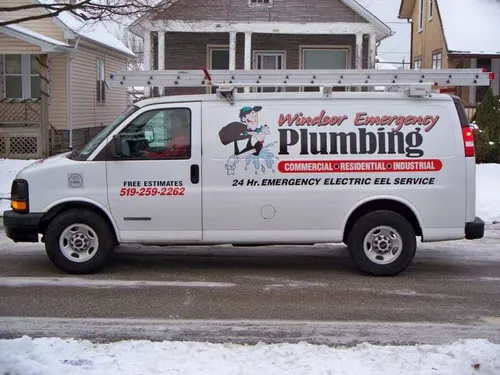
Windsor Emergency Plumbing
Dearborn, MI
Windsor Emergency Plumbing is a plumbing service provider located in Dearborn, MI, offering 24/7 emergency plumbing solutions for commercial, residential, and industrial clients. Their services include grease trap cleaning and installations, sewer inspections with color video cameras, backflow prevention, water line repairs, and hot water system specialists. With over 35 years of experience serving Windsor, Essex, and Kent County, they provide comprehensive plumbing repairs and installations with a guarantee that jobs are done right the first time or the callback is free.

Hernandez Sanitation (formerly: Orbit Septic Tank Pumping)
1325 Gore Rd, Harrow, ON N0R 1G0, Canada
Hernandez Sanitation (formerly Orbit Septic Tank Pumping) provides residential and commercial sanitation services in West Bloomfield, MI. They offer a variety of pipe and drain cleaning services including septic tank cleaning, grease trap cleaning, catch basin cleaning, holding tank cleaning, and high-pressure sewer jetting. Their team works to maintain and clear sewer lines by removing grease, scale, and debris to prevent backups and flooding. Serving the Windsor and Essex County area, Hernandez Sanitation supports both homes and businesses with specialized sanitation solutions.
Understanding Detroit's Grease Interceptor Requirements
In Detroit and throughout Michigan, the law is clear: commercial kitchens must install and maintain grease interceptors or Automatic Grease Removal Devices (AGRDs). These devices are mandated for wastewater lines connected to kitchen sinks, floor drains, dishwashers, and any other fixture in food preparation areas. The primary goal of these regulations is to prevent fats, oils, and grease (FOG) from entering the public sewer system, where they can solidify, cause blockages, and lead to expensive municipal repairs and environmental issues.
Local codes, which often mirror state guidelines, enforce specific operational rules. A key standard many inspectors follow is the "25% Rule." This means your grease interceptor should be pumped and cleaned before the combined volume of accumulated grease and solids reaches 25% of the interceptor's total liquid capacity 1 2. This isn't merely a suggestion; it's a common benchmark for compliance. Furthermore, the disposal of the collected FOG waste is strictly regulated. All waste must be transported by licensed professionals to approved treatment facilities in accordance with EPA and local guidelines-you cannot simply pour it out 3 4 5.
The High Cost of Non-Compliance: Inspections and Enforcement
The City of Detroit, primarily through its Health Department, actively enforces grease management regulations. Inspectors can arrive for routine checks or in response to complaints, and they have the authority to issue citations, impose significant fines, or order an immediate shutdown for non-compliant facilities. In some cases, violations can also attract attention from state agencies like the Michigan Department of Agriculture and Rural Development (MDARD) or the federal EPA.
Your best protection during an inspection is meticulous documentation. You must keep detailed, on-site records as proof of compliance. This includes:
- Service Logs: Dates of every cleaning and maintenance visit.
- Waste Manifests: Signed documents from your service provider detailing the volume of waste removed and the approved disposal facility it was taken to.
- Receipts/Invoices: Proof of payment for professional services.
Without these records, you have no defense against a violation. Warning signs like consistently slow-draining sinks, gurgling sounds from drains, foul odors, or an increase in pests are not just nuisances-they are indicators of an overfull or failing interceptor that could trigger an emergency inspection if a backup occurs 6.
Establishing an Effective Cleaning Schedule & Best Practices
There is no universal schedule for grease interceptor cleaning; frequency depends entirely on your kitchen's volume. High-volume establishments like large restaurants or banquet halls may require monthly service, while lower-volume cafes might manage with quarterly cleanings 7 8 9. The key is to have a professional assess your operation and recommend a schedule that prevents you from ever approaching the 25% accumulation limit.
Beyond scheduled pumping, daily kitchen practices are your first line of defense:
- Scrape, Don't Rinse: Train staff to scrape all food scraps into compost or trash bins before washing dishes.
- Use Strainers: Install and empty sink strainers to catch solid particles.
- Avoid "Miracle" Solutions: Do not use chemical or enzyme-based "grease digesters." These products often just break grease into smaller particles that move downstream, where they re-solidify and cause blockages in your own or the city's pipes, potentially creating a worse compliance issue 10 11.
Professional cleaning is non-negotiable for thoroughness and compliance. Specialists use industrial equipment to fully evacuate the tank, scrape walls, and remove all FOG and solids, ensuring your system functions correctly and meets regulatory standards 12.
Find the perfect grease trap cleaning companies for your needs
Get personalized recommendations and expert advice
What to Expect: Service Costs for Detroit Restaurants
The cost of grease trap pumping in Detroit varies based on the size of your interceptor, its location (indoor vs. outdoor), and how often service is performed. While prices can fluctuate, understanding general ranges helps in budgeting:
- Standard Restaurant Trap: For a typical indoor grease trap, a routine pumping service often ranges from $250 to $400 per visit. Many service providers offer lower per-service rates if you sign a recurring maintenance contract 13.
- Large Outdoor Interceptors: These larger, in-ground systems require more labor and equipment, with costs typically starting around $325 and can exceed $1,040 for very large or complex cleanings.
- Emergency Service: Neglecting regular maintenance almost guarantees a backup will occur at the worst possible time. Emergency call-out fees, plus the urgent service, can quickly cost between $800 and $1,200 or more 14 15.
Investing in regular maintenance is unequivocally more cost-effective than facing an emergency service bill, a city fine, or lost revenue from a shutdown.
Choosing a Service Provider for Long-Term Compliance
Selecting the right grease management partner is a strategic business decision. Look for a licensed, insured, and experienced provider familiar with Detroit and Michigan codes. They should offer comprehensive services, including pumping, high-pressure jetting of associated lines, and, crucially, provide you with detailed documentation-service reports and waste manifests-after every visit. A reputable company will help you establish a compliant schedule, advise on best practices for your staff, and be a resource during health inspections. This partnership turns a regulatory obligation into a manageable part of your operational routine, safeguarding your business's reputation and bottom line.
Frequently asked questions
Sources
Footnotes
-
Grease Trap Cleaning Guide: 25% Rule, Schedule & Compliance - https://greaseconnections.com/how-to-clean-a-grease-trap-and-how-often-you-should/ ↩
-
2021 Michigan Plumbing Code - 1003.3.1 Grease interceptors and ... - https://codes.iccsafe.org/s/MIPC2021P1/chapter-10-traps-interceptors-and-separators/MIPC2021P1-Ch10-Sec1003.3.1 ↩
-
Avoiding Regulatory Fines Through Proper Grease Management - https://evergreengrease.com/posts/avoiding-fines-through-proper-grease-management ↩
-
Grease Trap Cleaning Detroit, MI - Hood Safe LLC - https://hoodsafe.us/grease-trap-cleaning/ ↩
-
City Regulations/Local Ordinance for Grease Interceptors - https://www.greaseguardianusa.com/city-grease-trap-codes/ ↩
-
Cleaning Compliance for Detroit Food Processing Facilities - D Poole - https://dpoolecleaning.com/cleaning-compliance-for-detroit-based-food-processing-facilities/ ↩
-
Grease Trap Cleaning Michigan: How to Comply with State ... - https://dpoolecleaning.com/grease-trap-cleaning-michigan-how-to-comply-with-state-regulations/ ↩
-
Why Grease Trap Cleaning Detroit Restaurants Can't Wait - https://dpoolecleaning.com/detroit-restaurants-grease-trap-cleaning/ ↩
-
Grease Trap Cleaning - Top Hood Cleaners - https://tophoodcleaners.com/grease-trap-cleaning/ ↩
-
Maintenance of grease traps and interceptors - https://serviceauthority.org/wp-content/uploads/2024/12/FOGMaintGuidelinesContractors02212022.pdf ↩
-
Grease Trap Regulations and Compliance: What You Need to Know - https://www.texwaywastewater.com/grease-trap-regulations-and-compliance/ ↩
-
Detroit Restaurants: The Importance of Grease Trap ... - https://evergreengrease.com/posts/importance-of-grease-trap-maintenance ↩
-
Grease Trap Pumping Cost vs. Grease Trap Maintenance Cost - https://www.stateindustrial.com/video/cost-comparison-pumping-v-chemicals-to-maintain-a-grease-trap/ ↩
-
Ultimate Grease Trap Pumping Cost Guide: Essential Money-Saving ... - https://www.texwaywastewater.com/grease-trap-pumping-cost/ ↩
-
Grease Trap Cleaning Prices | Guide on the Industry Average - https://grease-cycle.com/grease-trap-pumping-cost/ ↩