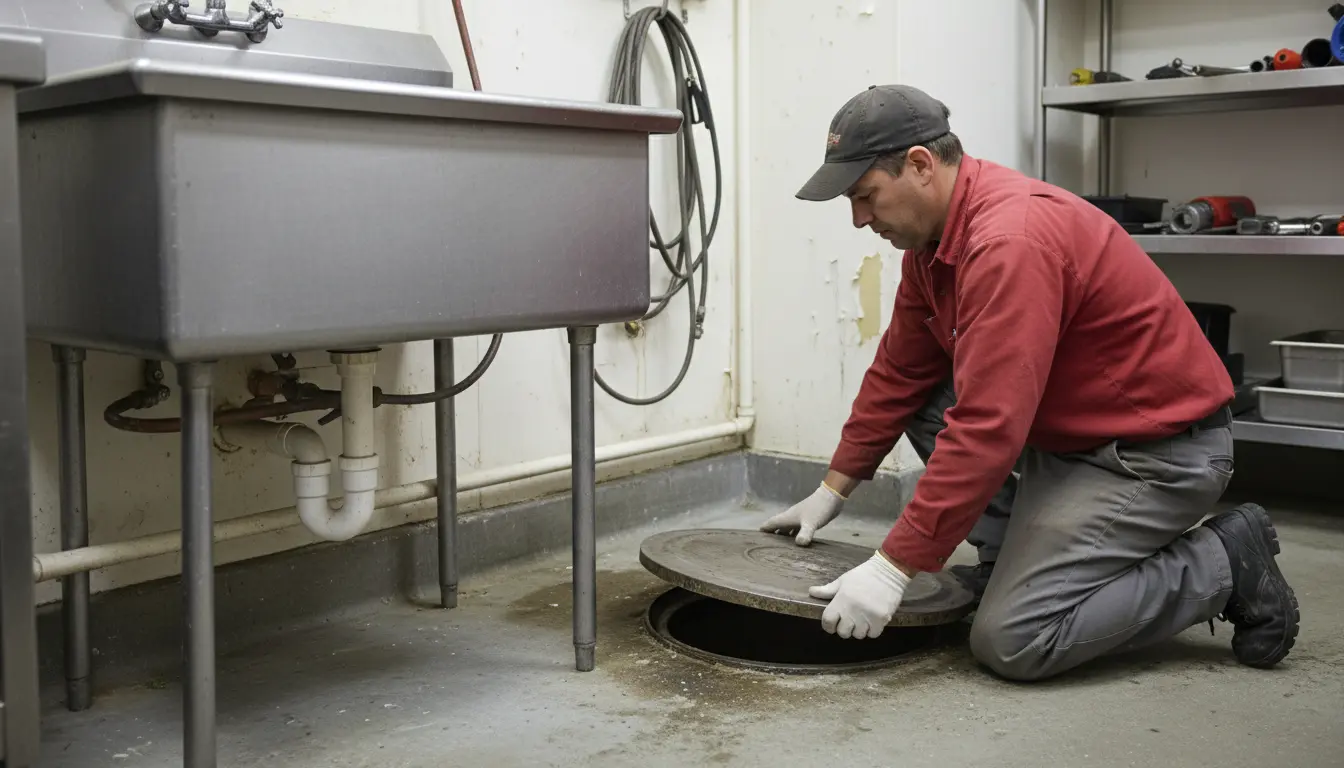
Find the Best Grease Trap Cleaning Companies for Your Business
No obligation • Fast responses • Nationwide coverage

Why you can trust Restaurant Waste Disposal
Restaurant Waste Disposal is a leading U.S. resource for comparing restaurant composting, food-waste recycling, grease trap cleaning, and used cooking oil collection services. Our editorial team researches providers, checks credentials, and organizes unbiased information so operators can make informed decisions. Companies cannot pay to change ratings or placement.
Search providers near you
Top Grease Trap Cleaning Companies in Quincy, Massachusetts Ranked
For restaurant owners and food service operators in Quincy, proper grease trap and interceptor maintenance is not just a best practice-it's a legal requirement with significant consequences for non-compliance. The city, guided by both Massachusetts state law and local ordinances, enforces strict protocols for the inspection, cleaning, and record-keeping of these essential plumbing fixtures. A well-maintained grease management system prevents costly sewer blockages, avoids unpleasant odors, and protects Quincy's public sewer infrastructure from harmful fats, oils, and grease (FOG). Understanding the specific regulations and establishing a reliable service schedule is critical for the smooth operation of any commercial kitchen in the city.
Rooterman
Boston, MA
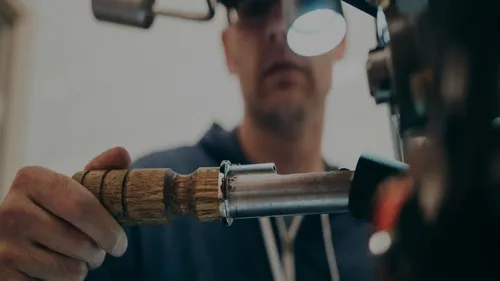
Rooterman is a plumbing and drain cleaning company serving Boston, MA, with over 50 years of experience. They offer a range of services including grease trap cleaning, emergency plumbing, water damage cleanup, and water heater repair and replacement. Rooterman uses advanced techniques such as power drain snakes, high-pressure water jets, and video inspections to locate and resolve plumbing issues efficiently. Their technicians are available for emergencies, including nights, weekends, and holidays.
Bay State Sewage Disposal, Inc. Environmental Services Company
105 Kingman St, Lakeville, MA 02347
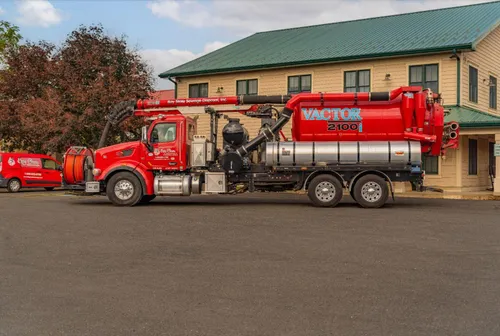
Bay State Sewage Disposal, Inc. Environmental Services Company is a family-owned business based near Plymouth, MA, specializing in residential and commercial septic system services. They serve southeastern Massachusetts, Rhode Island, Cape Cod, and surrounding areas, offering septic pumping, repairs, maintenance, grease trap cleaning, and sewer line services. Their capabilities include commercial vactor truck services and video drain and sewer line inspections. Established in 1984, the company provides 24/7 emergency services with fully licensed technicians.
Wind River Environmental of Carver, MA
245 Plymouth St, Carver, MA 02330
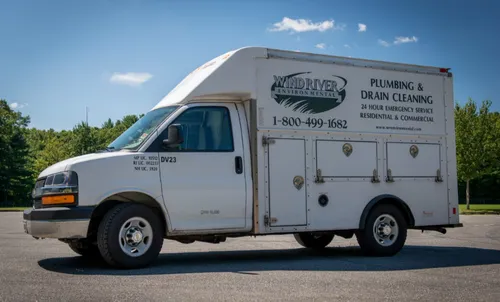
Wind River Environmental of Carver, MA provides septic, plumbing, and grease trap cleaning services to residential, commercial, and municipal clients in Plymouth, MA. The company offers a wide range of wastewater management solutions including septic pumping, grease trap cleaning, drain cleaning, and lift station maintenance. With over 75 years of combined experience through its network, Wind River Environmental is familiar with local regulations and environmental considerations. They provide 24/7 emergency services to address urgent septic and grease issues.

Roto-Rooter Plumbing & Water Cleanup of Plymouth
32 Court St Unit 204, Plymouth, MA 02360
Roto-Rooter Plumbing & Water Cleanup of Plymouth provides comprehensive plumbing services in Plymouth, MA, covering both residential and commercial needs. Their offerings include emergency flood services, sewer and drain cleaning, grease trap maintenance, water heater repairs, and mold remediation. The company uses advanced technologies such as HD inspection cameras and trenchless pipe replacement to address complex plumbing issues efficiently. Established in 1935, Roto-Rooter combines decades of experience with 24/7 emergency availability to support customers anytime.

Roto-Rooter Plumbing & Water Cleanup
50 Franklin St #407, Boston, MA 02110
Roto-Rooter Plumbing & Water Cleanup provides comprehensive plumbing and water cleanup services in Boston, MA. They handle a wide range of needs including floodwater cleanup, sewer and drain cleaning, faucet and toilet repairs, water heater services, grease trap maintenance, and mold remediation. Serving both residential and commercial clients, their team is experienced with Boston's unique plumbing challenges, such as older infrastructure and seasonal weather impacts. Founded in 1935, Roto-Rooter offers 24/7 emergency plumbing services, ensuring assistance is available at any time. Their capabilities include high-pressure hydro-jetting for drain cleaning and extensive sewer line repairs.
Understanding Quincy's Grease Trap Regulations
Compliance in Quincy is governed by a combination of state and municipal codes. The primary authority is the Massachusetts State Plumbing Code, specifically 310 CMR 15.351, which sets the baseline for all commercial grease interceptors in the state. This regulation mandates that trap owners inspect their units monthly and arrange for cleaning whenever the grease and oil layer accumulates to 25% of the trap's effective liquid depth, or at a minimum, every three months-whichever comes first.
Quincy reinforces these state rules with its own local ordinances. The city's Municipal Code (Article II, Chapter 270) requires all food service establishments to perform regular cleaning and maintenance of their grease control devices. The Quincy Board of Health (BOH) is the primary enforcement agency, conducting inspections to verify that businesses are adhering to these schedules and maintaining proper documentation. Failure to comply can result in fines and citations, especially if a neglected trap contributes to a sewer backup or sanitary sewer overflow.
Key Requirements for Compliance
To stay within the law, Quincy restaurant operators must focus on several core areas:
- Regular Inspection and Pumping: You cannot simply "set it and forget it." Point-of-use traps, typically smaller units under sinks, often require monthly cleaning due to their limited capacity. Larger in-ground or exterior grease interceptors generally follow a quarterly pumping schedule, but high-volume kitchens may need service even more frequently 1. The 25% rule is a critical trigger; if a monthly inspection shows the FOG layer is one-quarter of the depth, cleaning is required immediately, regardless of the calendar2 3.
- Proper Documentation and Record-Keeping: Maintaining detailed records is as important as the physical cleaning itself. You are required to keep a logbook or binder on-site that contains monthly inspection checklists and the pumping manifests or receipts provided by your licensed hauler after each service. This binder must be readily available for review by a Board of Health inspector during routine or complaint-driven visits.
- Use of Licensed Haulers: All collected grease trap waste must be disposed of by a hauler permitted for wastewater or septage transport in Massachusetts4. Using an unlicensed service can lead to improper disposal and liability for your business. Always verify a provider's licensing before contracting.
- Prohibited Practices: It is strictly forbidden to use chemical or biological additives-such as emulsifiers, enzymes, or solvents-designed to dissolve grease and allow it to pass through the trap into the sewer lines5 6. Similarly, bleach should never be introduced into a grease trap. These substances merely move the problem downstream, where the grease can re-solidify and cause blockages in the public sewer, leading to severe penalties for your establishment7.
The Cost of Grease Trap Service in Quincy
Investing in regular grease interceptor maintenance is a fundamental cost of doing business. While prices can vary based on several factors, understanding the typical ranges helps in budgeting. Service costs are primarily influenced by the size (capacity in gallons) and location of your trap, as well as the frequency of service.
- Small, Indoor Grease Traps: These under-sink units, often serviced monthly, can range from approximately $100 to over $200 per service 8.
- Large, In-Ground Interceptors: The cost for pumping a larger exterior trap on a quarterly basis has a wider range, typically from $200 to over $1,000 per cleaning9. The final price depends on the trap's gallon capacity, the volume of waste to be removed, and the service provider's accessibility.
It's important to view this as preventative maintenance. While the upfront cost of a quarterly pump-out may seem significant, it pales in comparison to the expense of an emergency clean-out caused by a complete blockage or the fines levied for regulatory non-compliance. Furthermore, consistent cleaning extends the lifespan of your grease trap and prevents disruptive kitchen downtime.
Find the perfect grease trap cleaning companies for your needs
Get personalized recommendations and expert advice
Creating an Effective Maintenance Plan
A proactive approach is the best defense against violations and operational headaches. Start by confirming the exact size and location of all grease interceptors in your facility. Next, establish a relationship with a reputable, licensed grease trap cleaning service that understands Quincy's specific codes. Work with them to determine an optimal schedule based on your kitchen's volume-it may need to be more frequent than the minimum quarterly requirement.
Internally, assign a staff member to conduct and document the mandatory monthly inspections. Use a standardized checklist that notes the date, the depth of the grease layer, and any signs of issues. File every service manifest from your hauler in your dedicated compliance binder immediately. If you are ever unsure about an interpretation of the local rules, the Quincy Board of Health can provide guidance10.
Consequences of Non-Compliance
The Quincy Board of Health takes grease management seriously due to its direct impact on the city's sewer system and environmental health. Inspections can be routine or triggered by specific incidents11. Penalties for violations are not merely theoretical; they are actively enforced. Establishments found without proper records, with traps exceeding the 25% grease limit, or whose negligence leads to a sewer issue can face substantial fines12 11. In severe cases, repeat offenses could jeopardize the establishment's operating license. The financial and reputational cost of non-compliance far outweighs the investment in a consistent maintenance program.
Frequently asked questions
Sources
Footnotes
-
Commercial Kitchen Grease Trap Guidelines - https://www.bwsc.org/sites/default/files/2019-01/commercial_kitchen_grease_trap_guidelines.pdf ↩
-
310 CMR, § 15.351 - System Pumping and Routine Maintenance - https://www.law.cornell.edu/regulations/massachusetts/310-CMR-15-351 ↩
-
Grease Trap Regulations and Compliance: What You Need to Know - https://www.texwaywastewater.com/grease-trap-regulations-and-compliance/ ↩
-
Grease Trap Cleaning - Thrillshare - https://files-backend.assets.thrillshare.com/documents/asset/uploaded_file/4608/Toa/6868d5f2-1615-4166-96e7-bfe294b5d0a1/grease_trap_cleaning.docx?disposition=inline ↩
-
Commercial Kitchen Grease Trap Guidelines | Boston Water and Sewer Commission - https://www.bwsc.org/business-customers/programs-guidelines-assistance/commercial-kitchen-grease-trap-guidelines ↩
-
Massachusetts Codes and Regulations Regarding Grease Traps - https://foodgreasetrappers.com/2021/03/massachusetts-codes-and-regulations-regarding-grease-traps/ ↩
-
Grease Trap Cleaning and Maintenance Services - Service Pumping and Drain Co., Inc.™ - https://www.servicepumpingdrain.com/services/grease-trap-maintenance/ ↩
-
Grease Trap Pumping Cost vs. Grease Trap Maintenance Cost - https://www.stateindustrial.com/article/grease-trap-pumping-cost-vs-grease-trap-maintenance-cost/ ↩
-
Grease Trap Cleaning Prices | Guide on the Industry Average - https://grease-cycle.com/grease-trap-pumping-cost/ ↩
-
RE: Grease Trap/Interceptor/Filter Cleaning - https://cms7files1.revize.com/quincyma2024/Document%20Center/Department/Public%20Works/Regulatory%20Compliance/April%2030%202022%20Reports/App%20E%20ISP%20Grease%20Trap%20Letter%202021.12.06.pdf ↩
-
Massachusetts Businesses Face Fines For Lack of Grease Trap ... - https://replaceyourgarbagedisposal.com/grease-trap-cleaning/massachusetts-businesses-face-fines-grease-trap-cleaning/ ↩ ↩2
-
Grease Trap Regulations - Millis MA | - https://www.millisma.gov/board-health/files/grease-trap-regulations ↩