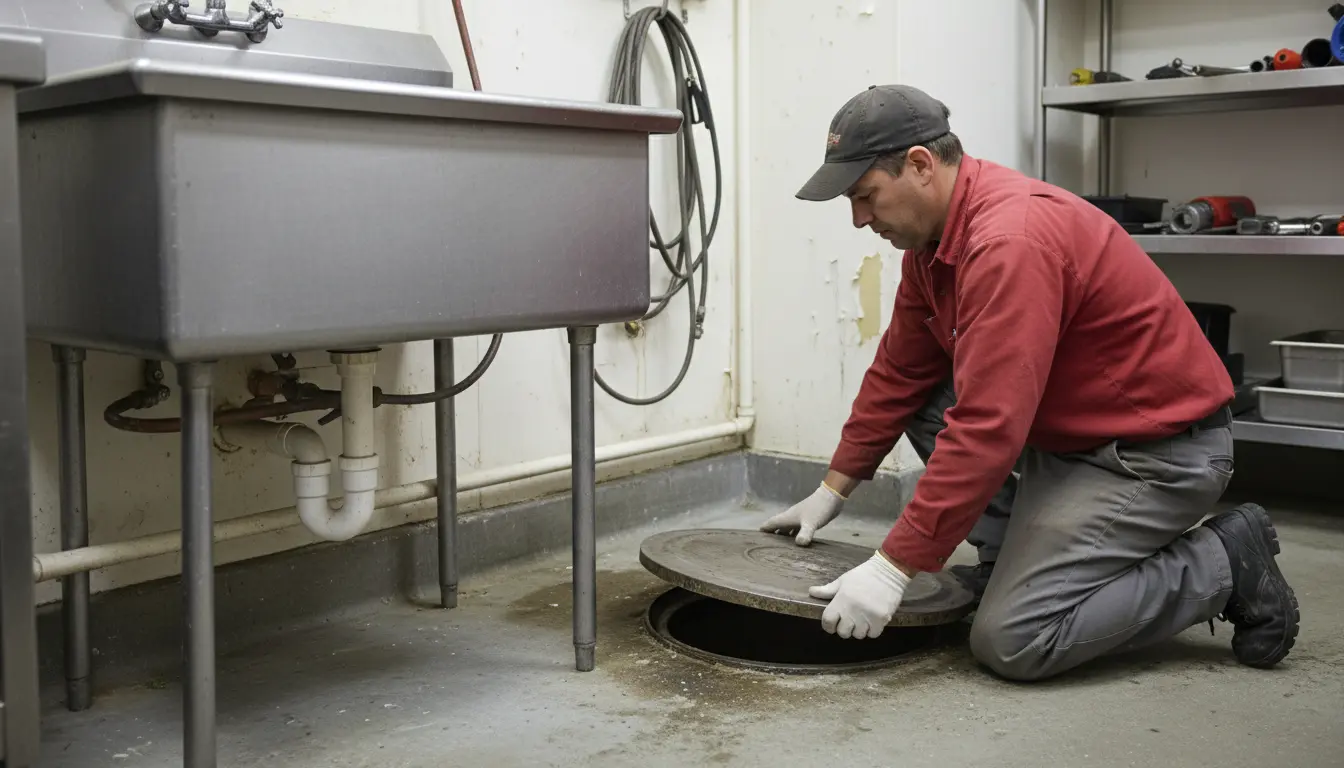
Find the Best Grease Trap Cleaning Companies for Your Business
No obligation • Fast responses • Nationwide coverage

Why you can trust Restaurant Waste Disposal
Restaurant Waste Disposal is a leading U.S. resource for comparing restaurant composting, food-waste recycling, grease trap cleaning, and used cooking oil collection services. Our editorial team researches providers, checks credentials, and organizes unbiased information so operators can make informed decisions. Companies cannot pay to change ratings or placement.
Search providers near you
Top Grease Trap Cleaning Companies in Lawrence, Massachusetts Ranked
For any restaurant, food service establishment, or commercial kitchen in Massachusetts, proper grease trap cleaning is not just a maintenance task-it's a critical legal requirement. The state enforces strict regulations to prevent fats, oils, and grease (FOG) from entering and clogging municipal sewer systems, which can lead to costly backups, environmental damage, and significant fines. Compliance hinges on understanding a layered framework of state codes and local bylaws, working with licensed haulers, and maintaining meticulous records. This guide outlines the essential rules, best practices, and operational knowledge you need to manage your grease interceptor service effectively and stay in good standing with local health authorities.
Rooterman
Boston, MA
Rooterman is a plumbing and drain cleaning company serving Boston, MA, with over 50 years of experience. They offer a range of services including grease trap cleaning, emergency plumbing, water damage cleanup, and water heater repair and replacement. Rooterman uses advanced techniques such as power drain snakes, high-pressure water jets, and video inspections to locate and resolve plumbing issues efficiently. Their technicians are available for emergencies, including nights, weekends, and holidays.
Elite drains llc
468 Wood Ln, North Andover, MA 01845
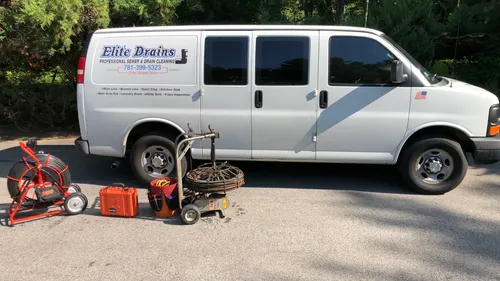
Elite Drains LLC is a drain and sewer cleaning company based in Lawrence, MA, serving the North Shore area and traveling up to 60 miles for clients. They specialize in sewer and drain cleaning, including main line, branch line, and connection plumbing, and offer professional video inspections to assess plumbing conditions. The company provides 24/7 emergency service for both residential and commercial properties, ensuring availability for urgent drain and sewer issues. Their team is fully insured and trained to handle jobs of any size with advanced tools and technology.
Rooter Man
46 Portland St, Lawrence, MA 01843
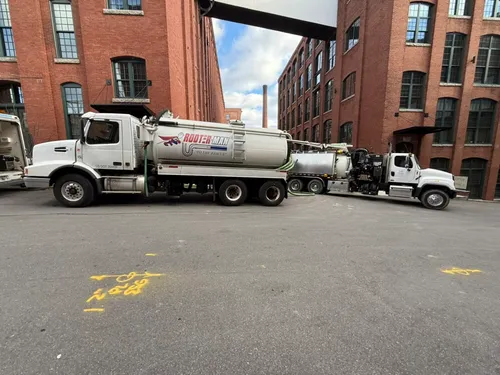
Rooter Man is a service provider based in Lawrence, MA, specializing in commercial and residential septic, sewer, and drain services. They serve Northeast Massachusetts and Southern New Hampshire, offering a wide range of services including grease trap cleaning, high-pressure jetting, video camera inspections up to 36 inches, pipe locating, and septic tank pumping. The company also provides 24/7 emergency rodding services for clogged drains, sewer backups, and septic overflows. Rooter Man supports both homes and businesses such as restaurants and office buildings, with preventive maintenance scheduling available to help maintain systems and prevent issues.
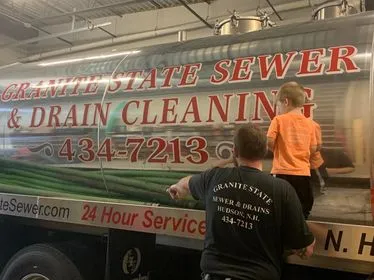
Granite State Sewer & Drain Cleaning
4 Candy Ln #10, Hudson, NH 03051
Granite State Sewer & Drain Cleaning is a family- and veteran-owned business serving Nashua, NH, and nearby areas. Since 1988, they have provided residential and commercial drainage solutions, including grease trap cleaning, sewer line services, and septic tank maintenance. Their team specializes in confined space entry and uses advanced camera technology to diagnose and address drainage issues efficiently. The company offers 24/7 emergency services to handle urgent situations at any time.
Roto-Rooter Plumbing & Water Cleanup
50 Franklin St #407, Boston, MA 02110
Roto-Rooter Plumbing & Water Cleanup provides comprehensive plumbing and water cleanup services in Boston, MA. They handle a wide range of needs including floodwater cleanup, sewer and drain cleaning, faucet and toilet repairs, water heater services, grease trap maintenance, and mold remediation. Serving both residential and commercial clients, their team is experienced with Boston's unique plumbing challenges, such as older infrastructure and seasonal weather impacts. Founded in 1935, Roto-Rooter offers 24/7 emergency plumbing services, ensuring assistance is available at any time. Their capabilities include high-pressure hydro-jetting for drain cleaning and extensive sewer line repairs.
Understanding Massachusetts Grease Trap Regulations
The foundation of grease management in Massachusetts is built on state environmental code, specifically 310 CMR 15.351. This regulation sets the minimum standard for maintenance frequency, which is then often amplified by stricter local town or city bylaws. The core state rule mandates that grease interceptors must be inspected and cleaned as often as necessary to prevent discharge of FOG, but not less than:
- Monthly for internal grease traps (typically smaller, under-sink "point-of-use" units).
- Quarterly (every three months) for large, in-ground, or external grease interceptors.
However, the most crucial operational rule is the 25% rule: traps must be pumped whenever the combined floating grease and settled solids accumulate to 25% of the liquid depth of the trap, whichever requirement comes first1 2. Many municipalities, including Millis, Saugus, and New Bedford, enforce these standards rigorously, often emphasizing monthly service for all traps to ensure compliance1 3 4.
Types of Grease Traps and Interceptors
Knowing your equipment type directly impacts your service schedule:
- Internal/Point-of-Use Traps: Smaller units (often under 100 gallons) located near dishwashing or prep sinks. They have limited capacity and require the most frequent attention, often monthly.
- External/In-Line Interceptors: Large, in-ground tanks (often 500-2000+ gallons) that serve the entire kitchen's wastewater flow. These are subject to quarterly pumping minimums but must be monitored for the 25% fill rule.
Permitting, Record-Keeping, and Compliance
Your local Board of Health is the primary regulatory authority for grease trap compliance. Most towns require food establishments to obtain a permit that includes specific conditions for grease interceptor maintenance5.
Record-keeping is non-negotiable. You must maintain detailed service logs, often on official forms provided by your local Board of Health. These logs should be readily available for inspection and must include:
- Date of service
- Name and license number of the pumping/hauling company
- Volume of grease, solids, and wastewater removed
- Disposal location (the licensed facility where the waste was taken)
- Signature of the hauler representative
Failure to maintain these records can result in violations and fines just as severe as missing a pumping service.
Professional Cleaning Practices and Hauler Requirements
Grease trap cleaning in Massachusetts is not a DIY job. State and local regulations require that servicing be performed by a licensed and permitted "Offal Hauler" or "Grease Hauler" 6. These professionals are registered with the state and authorized to transport and dispose of grease waste properly.
A proper cleaning involves more than just removing liquid. Best practices include7 8:
- Full Cleaning: Pumping out all contents, including water, grease, and solids.
- Scraping and High-Pressure Washing: Manually scraping baffles, walls, and the bottom of the trap to remove hardened grease (FOG).
- Inspection: Checking for damage, leaks, and proper baffle function.
- Proper Disposal: Transporting waste to a licensed rendering plant or wastewater treatment facility.
The preferred method is often "Pump and Return," where the wastewater portion is returned to the trap after the grease and solids are removed, helping to re-seed the bacterial action needed for separation. The "Dry Pump" method removes all contents.
Find the perfect grease trap cleaning companies for your needs
Get personalized recommendations and expert advice
Best Practices to Extend Service Intervals & Reduce Costs
Proactive kitchen practices can significantly reduce grease load, extending the time between necessary pump-outs and lowering annual service costs.
- Dry-Wipe Pots and Pans: Scrape food scraps and grease into the trash before washing.
- Minimize Garbage Disposal Use: Food solids increase sludge buildup in the trap.
- Use Grease-Absorbing Products Judiciously: Some products simply solidify grease, which still must be pumped out and does not eliminate the need for service.
- Train Staff: Ensure all kitchen employees understand what should and should not go down the drain.
- Regular Visual Checks: Monitor your internal traps frequently for grease buildup.
Cost Considerations for Grease Trap Service
Costs for grease interceptor pumping in Massachusetts vary based on several key factors: the size and location of the trap, its accessibility, the frequency of service, and the rates of your local licensed hauler. As a general range 9:
- Small Internal Traps (e.g., under 100 gallons): Typically range from $150 to $300+ per service visit.
- Large External Interceptors (e.g., 1,000+ gallons): Can range from $300 to $800+ per quarterly pumping service.
It's important to note that these are baseline service costs. Additional fees may apply for emergency service, difficult access, or if the trap requires more intensive manual cleaning. Establishing a regular service contract with a reputable, licensed hauler is often the most reliable and cost-effective approach, ensuring compliance and preventing emergency blockages.
Consequences of Non-Compliance
Ignoring grease trap maintenance is a high-risk proposition. Consequences enforced by local Boards of Health and sewer authorities can include10 11:
- Substantial Fines: Per violation, per day.
- Sewer Backups: Leading to operational shutdowns, property damage, and even higher cleanup costs.
- Permit Suspension: Your food establishment permit could be suspended or revoked.
- Legal Liability: If a grease-caused sewer spill damages public property or the environment.
- Increased Sewer Charges: Some municipalities impose higher fees on establishments with poor FOG control.
Frequently asked questions
Sources
Footnotes
-
Grease Trap Regulations - Millis MA | - https://www.millisma.gov/board-health/files/grease-trap-regulations ↩ ↩2
-
310 CMR, § 15.351 - System Pumping and Routine Maintenance | State Regulations | US Law | LII / Legal Information Institute - https://www.law.cornell.edu/regulations/massachusetts/310-CMR-15-351 ↩
-
§ 201-4 . Installation and maintenance of grease traps and removal ... - https://www.northbridgemass.org/board-of-health/files/grease-interceptors ↩
-
Grease Trap Regulations | Saugus Board of Health - https://www.saugus-ma.gov/board-health/files/grease-trap-regulations ↩
-
Permitting Guidebook for Food Establishments - Milford, MA - https://www.milfordma.gov/DocumentCenter/View/381/Permitting-Guidebook-for-Food-Establishments-PDF ↩
-
Grease Trap Management - City of Revere, Massachusetts - https://www.revere.org/departments/health/greasetrap ↩
-
Restaurant Grease Trap Cleaning FAQs - Mahoney Environmental - https://www.mahoneyes.com/restaurant-grease-trap-cleaning-faqs/ ↩
-
Grease Trap Cleaning and Maintenance Services - Service Pumping and Drain Co., Inc.™ - https://www.servicepumpingdrain.com/services/grease-trap-maintenance/ ↩
-
Grease Management - Easton Utilities - https://eastonutilities.com/wastewater-grease-management/ ↩
-
FOG Frequently Asked Questions - Public Infrastructure - New Bedford - https://www.newbedford-ma.gov/public-infrastructure/wastewater/fog-program/fog-frequently-asked-questions/ ↩
-
Commercial Kitchen Grease Trap Guidelines - https://www.bwsc.org/business-customers/programs-guidelines-assistance/commercial-kitchen-grease-trap-guidelines ↩