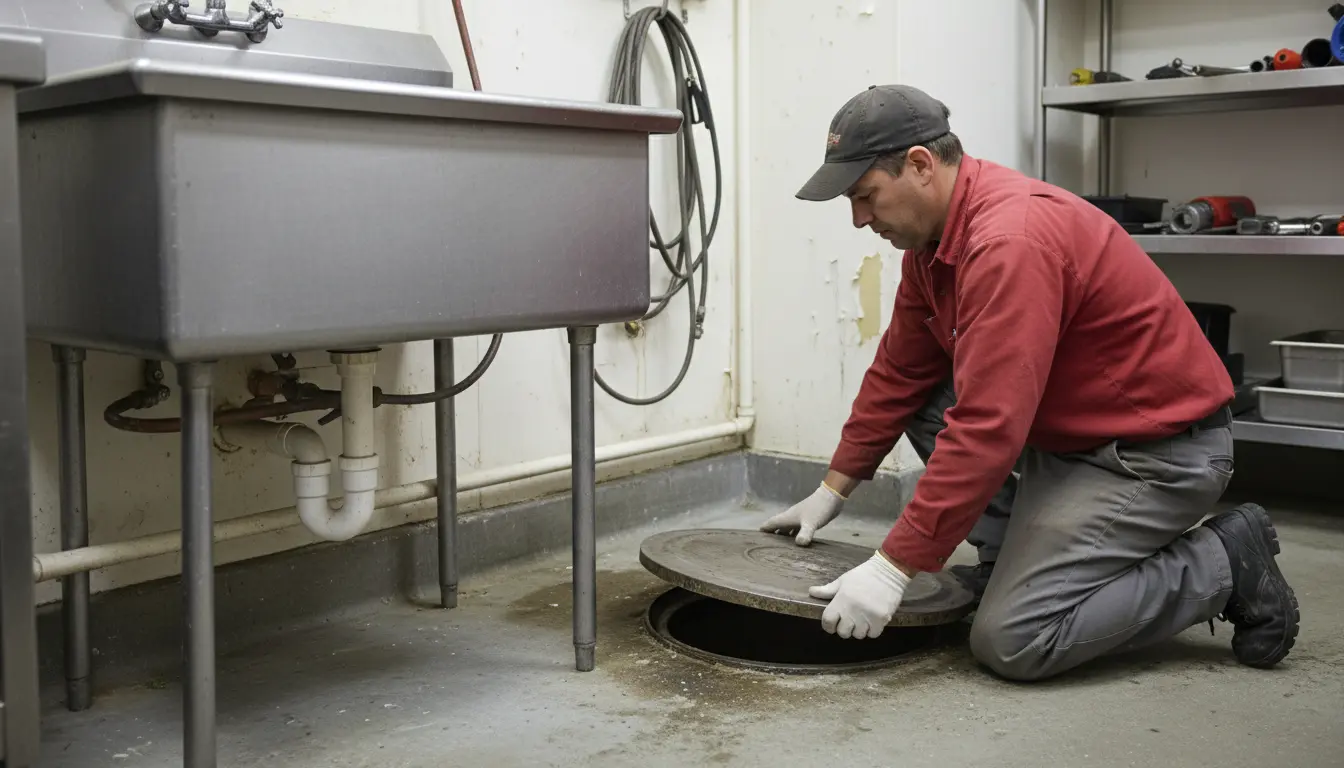
Find the Best Grease Trap Cleaning Companies for Your Business
No obligation • Fast responses • Nationwide coverage

Why you can trust Restaurant Waste Disposal
Restaurant Waste Disposal is a leading U.S. resource for comparing restaurant composting, food-waste recycling, grease trap cleaning, and used cooking oil collection services. Our editorial team researches providers, checks credentials, and organizes unbiased information so operators can make informed decisions. Companies cannot pay to change ratings or placement.
Search providers near you
Top Grease Trap Cleaning Companies in Washington, New Jersey Ranked
For any food service establishment in New Jersey, maintaining a clean and compliant grease trap or interceptor is a critical operational and legal responsibility. The state's primary goal is to prevent Fats, Oils, and Grease (FOG) from entering municipal sewer systems, where they can cause costly blockages, backups, and environmental damage. Compliance is governed by a combination of statewide plumbing codes and a complex web of local municipal ordinances, making it essential for restaurant owners and managers to understand both the general rules and their specific local requirements. Proper maintenance involves regular pumping by licensed haulers, meticulous record-keeping, and adherence to permitting processes that vary from town to town.
Loeffels Waste Oil Services
43 Layton Ln, Sparta, NJ 07871
Loeffels Waste Oil Services is a family-owned company based near New York, NY, specializing in used cooking oil collection and grease trap cleaning. They serve commercial clients with reliable waste oil removal and grease trap maintenance, including emergency pump-out services. With over ninety years of experience, Loeffels Waste Oil Services emphasizes safety and efficiency in their operations.
Arrow Sewer and Drain
165 Union Ave, Middlesex, NJ 08846
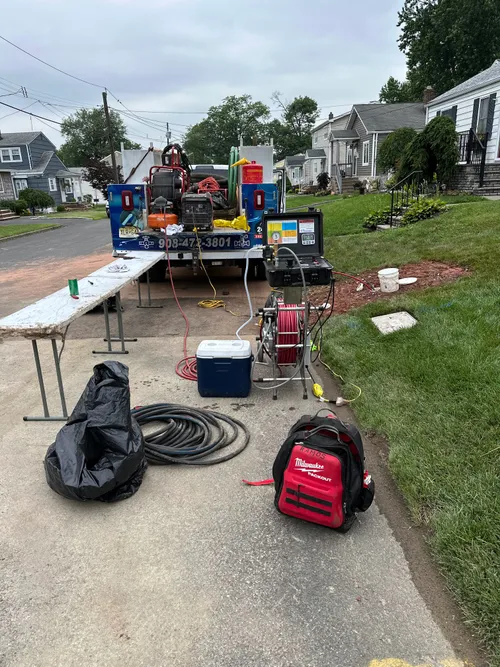
Arrow Sewer and Drain is a plumbing and sewer service provider based in Middlesex, New Jersey, serving residential and commercial clients throughout Edison and the broader New Jersey area. They offer a wide range of services including grease trap cleaning, trenchless sewer repair, hydro jet drain cleaning, hydro excavation, septic tank installation and replacement, and emergency plumbing. Their use of advanced equipment such as sewer scopes, cured-in-place pipe (CIPP) technology, and hydro excavation allows for efficient, non-invasive repairs that minimize disruption to properties. With over 15 years of experience, Arrow Sewer and Drain provides 24/7 emergency plumbing services to address urgent issues at any time.
Zoom Drain
Allentown, PA
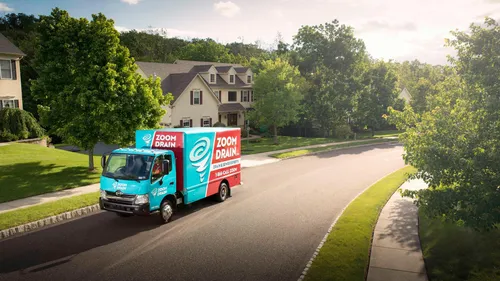
Zoom Drain is a drain and sewer service provider based in Allentown, PA, serving the Philadelphia metro area. They offer residential and commercial services including emergency drain cleaning, sewer repairs, grease trap maintenance, and routine maintenance plans. Zoom Drain is equipped to handle tough clogs and provides specialized services such as grease trap cleaning and pump replacement. Their team uses advanced tools and technology to address various drain and sewer needs efficiently. The company is known for its tailored maintenance plans for property managers and specialized services for the food and hospitality sectors.
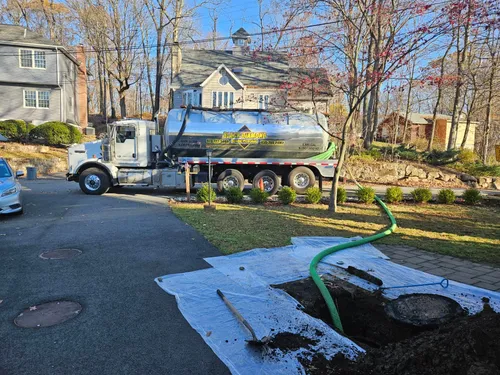
Black Diamond Septic Pumping
500 Mansel Dr, Landing, NJ 07850
Black Diamond Septic Pumping provides septic tank pumping, grease trap cleaning, and emergency septic services in Hillsborough, NJ. They serve both residential and commercial clients across New Jersey with capabilities including high-pressure tank cleaning and lid and riser installations. With over 20 years of experience, the company offers 24/7 emergency septic pumping to address urgent issues anytime.
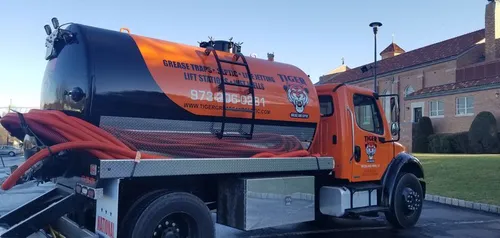
Tiger Grease and Septic
New York, NY
Tiger Grease and Septic provides grease trap cleaning and septic pumping services in New York, NY. They serve restaurants and residential clients by removing grease and food solids from grease traps and maintaining septic systems to prevent backups and odors. Their fleet includes specialized equipment such as a low profile vacuum truck, a portable ProVac unit for tight indoor spaces, and large volume tankers. The company offers same-day emergency pumping and services seven days a week to accommodate client needs.
Understanding New Jersey's Regulatory Framework
New Jersey's approach to grease management is built on a two-tiered system: a foundational state code and specific local enforcement.
Statewide Plumbing Code: New Jersey has adopted the International Plumbing Code (IPC) statewide. This code sets the baseline performance standard, generally requiring that grease interceptors be cleaned when the accumulation of FOG and solids reaches 25% of the tank's liquid depth. For most high-volume food service operations, this condition is typically met, and thus cleaning is required, at a minimum frequency of every 90 days 1 2. This 90-day rule is a common benchmark cited by regulators and service providers across the state.
Local Municipal Ordinances: The state code provides the minimum standard, but individual counties and municipalities often implement stricter or more detailed rules. Your local sewer authority or municipal public works department is the ultimate governing body. Towns like Princeton and Mount Olive, for example, publish their own specific regulations regarding permitting, inspection schedules, and reporting protocols. It is your responsibility to contact your local authority to obtain the correct permits and understand any unique requirements, such as annual reporting or additional fees, which override the general guidelines.
Compliance Requirements for Restaurant Owners
Staying compliant involves more than just scheduling a pump-out. It requires understanding the full scope of legal and procedural obligations.
- Permitting: Nearly all municipalities in New Jersey require food service establishments to obtain a grease trap or FOG control permit from the local sewer authority. This is not a one-time state license but a local requirement that may need annual renewal. The application process is handled directly by your town or city.
- Licensed Haulers: Grease trap waste is considered a regulated substance. New Jersey law mandates that pumping and disposal must be performed by a licensed liquid waste hauler. These professionals are registered with the state and have the permits necessary to transport and dispose of FOG at approved facilities, such as rendering plants or wastewater treatment centers.
- Cleaning Standards: A compliant cleaning service must fully evacuate the contents of the trap or interceptor. "FOG returned to the trap" methods, where only the liquid layer is removed, are generally not acceptable under the IPC standards adopted in New Jersey. The goal is to remove all accumulated grease and solids 3.
- Documentation and Manifests: This is a crucial step for proving compliance. Every time your trap is serviced, the licensed hauler must provide you with a detailed manifest or receipt. This document serves as a chain-of-custody record, tracking the waste from your site to its final disposal destination. You are required to maintain these manifests on file and submit them to your local authority, often on a quarterly or annual basis 4 5.
Service Frequency and Best Practices
While the 90-day rule is a common requirement, the actual needed frequency for your establishment depends on several factors. High-volume kitchens, those with menu items heavy in fried foods, or establishments with older, smaller traps may need service more often-potentially every 30 to 60 days. Monitoring your trap is key. Signs you need service sooner include slow drainage, foul odors, or visible grease buildup approaching the 25% threshold.
Proactive maintenance goes beyond pumping. Best practices include:
- Training kitchen staff on proper scrapage (scraping plates into trash, not the sink).
- Using sink strainers to catch food solids.
- Avoiding the use of emulsifiers or enzymes that simply push grease further down the line instead of capturing it in the trap.
- Scheduling regular inspections of the trap between pump-outs to check for baffle integrity and overall condition.
Find the perfect grease trap cleaning companies for your needs
Get personalized recommendations and expert advice
Cost of Grease Trap Services in New Jersey
The cost for grease trap maintenance in New Jersey varies based on several factors, but understanding the typical price ranges can help with budgeting.
- Regular Pumping Service: For a standard pump-out of a typical commercial grease trap, restaurants can expect to pay between $250 and $400 per service 6. This is the baseline cost for routine maintenance performed on a scheduled basis (e.g., quarterly).
- Factors Influencing Cost: The final price can be affected by the size and capacity of your trap, its physical location and accessibility (e.g., indoors vs. outdoors, under equipment), the distance for the hauler, and any local municipal fees or surcharges that the service provider passes through 7 8.
- Emergency Service Costs: Neglecting regular maintenance can lead to a full blockage or sewer backup, requiring an emergency call. Emergency pump-out and cleaning services are significantly more expensive, often ranging from $800 to $1,200 or more per call, due to after-hours rates and the complexity of resolving a severe clog 9 10. Investing in regular scheduled service is the most cost-effective strategy to avoid these high emergency fees and potential fines from your municipality.
Navigating Local Variations
As emphasized, local rules are paramount. Before signing a service contract, take these steps:
- Identify Your Authority: Contact your town's Department of Public Works, Sewer Department, or Health Department to determine who oversees FOG regulations.
- Obtain the Rules: Request a copy of the local ordinance regarding grease interceptor maintenance, permitting, and reporting.
- Verify Hauler Licenses: Ensure any service provider you consider can provide proof of their New Jersey waste hauler license and is familiar with your town's specific manifest submission process.
- Keep Impeccable Records: Maintain a dedicated binder or digital folder for all permits, service invoices, and waste manifests. This will be invaluable during municipal inspections or audits.
Frequently asked questions
Sources
Footnotes
-
Grease Traps | Princeton, NJ - https://www.princetonnj.gov/825/Grease-Traps ↩
-
§ 415-6. Grease Trap Maintenance. - Mount Olive Township - https://www.mountolivetwpnj.org/media/516 ↩
-
Commercial Grease Trap Cleaning in New Jersey and New York - https://www.davidzuidema.com/septic-services/commercial-grease-trap-cleaning/ ↩
-
Borough of Gibbsboro, NJ Disposal of Grease Interceptor Waste - https://ecode360.com/10094055 ↩
-
New Jersey FOG Regulations - D&W Alternative Energy - https://dandwalternativeenergy.com/blog/new-jersey-fog-regulations/ ↩
-
New Jersey FOG & Used Oil Rules: Permits & 90-Day Limit - https://greaseconnections.com/resources/compliance/nj/ ↩
-
Grease Trap Cleaning in Old Bridge, NJ - Costs 10 / 2025 - Homeyou - https://www.homeyou.com/nj/grease-trap-cleaning-old-bridge-costs ↩
-
Grease Trap Pumping Cost vs. Grease Trap Maintenance Cost - https://www.stateindustrial.com/article/grease-trap-pumping-cost-vs-grease-trap-maintenance-cost/ ↩
-
Ultimate Grease Trap Pumping Cost Guide: Essential Money-Saving ... - https://www.texwaywastewater.com/grease-trap-pumping-cost/ ↩
-
Grease Trap Pumping Services in Dallas - https://dallasgrease.com/grease-trap-pumping/ ↩