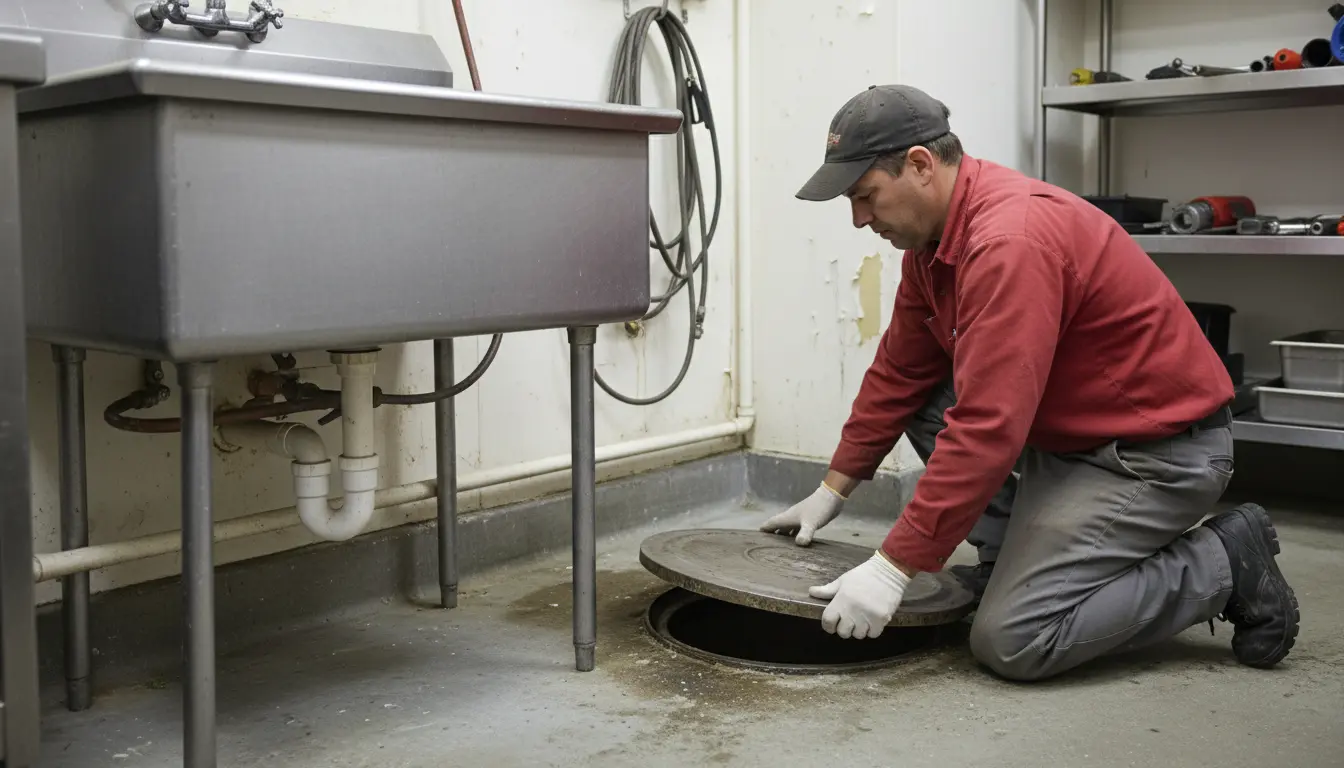
Find the Best Grease Trap Cleaning Companies for Your Business
No obligation • Fast responses • Nationwide coverage

Why you can trust Restaurant Waste Disposal
Restaurant Waste Disposal is a leading U.S. resource for comparing restaurant composting, food-waste recycling, grease trap cleaning, and used cooking oil collection services. Our editorial team researches providers, checks credentials, and organizes unbiased information so operators can make informed decisions. Companies cannot pay to change ratings or placement.
Search providers near you
Top Grease Trap Cleaning Companies in Wayne, New Jersey Ranked
For any restaurant or food service facility in Wayne, New Jersey, proper grease trap maintenance isn't just a good practice-it's a legal requirement. Local and state regulations mandate the installation, regular cleaning, and diligent record-keeping for grease interceptors to prevent costly sewer blockages and environmental harm. Navigating these rules, which are based on New Jersey's Uniform Construction Code (UCC) and enforced by municipal inspectors, is essential for smooth operations and avoiding significant penalties. This guide outlines the critical steps for compliance, from understanding local ordinances to scheduling service with licensed professionals.
PowerFlo Sewer Service
2277 Victory Blvd, Staten Island, NY 10314
PowerFlo Sewer Service is a sewer and drain cleaning company serving New York, NY. They provide a range of services including grease trap cleaning, water jet cleaning, camera inspection, vacuum pumping, and flood control for residential, commercial, and condominium customers. The company emphasizes respect and care for customers' properties and employs experienced technicians to handle both simple and complex drainage problems. PowerFlo Sewer Service is known for leaving no mess behind and maintaining clear communication throughout the service process.
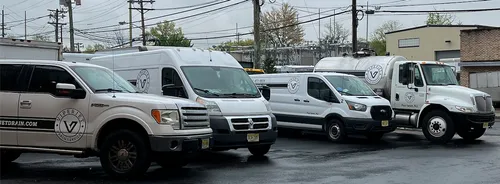
Viper Jet Drain Services
5-02 Banta Pl, Fair Lawn, NJ 07410
Viper Jet Drain Services provides drain, septic, and grease trap cleaning services in New York, NY, and New Jersey. They serve residential, commercial, and municipal clients with solutions ranging from household drain cleaning to large-scale sewer and stormwater management. Their licensed and insured technicians use advanced equipment such as hydro jetting and camera inspections to deliver reliable results. The family-owned company emphasizes expertise and customer care, offering emergency services and professional maintenance for grease traps and septic systems.
Loeffels Waste Oil Services
43 Layton Ln, Sparta, NJ 07871
Loeffels Waste Oil Services is a family-owned company based near New York, NY, specializing in used cooking oil collection and grease trap cleaning. They serve commercial clients with reliable waste oil removal and grease trap maintenance, including emergency pump-out services. With over ninety years of experience, Loeffels Waste Oil Services emphasizes safety and efficiency in their operations.
EarthCare, A Wind River Company
Woodbridge, NJ
EarthCare, A Wind River Company, provides septic and grease trap cleaning services in Woodbridge, NJ, and the surrounding North Jersey and Hudson Valley areas. They serve residential, commercial, and municipal clients with a wide range of services including pumping, cleaning, waste hauling, disposal, and environmental compliance. With a history dating back to 1946, EarthCare operates one of the industry's largest fleets and offers 24/7 emergency availability. Their services include detailed inspections and real-time reporting to help clients maintain compliance with local and state regulations.
Zoom Drain
152 Stevens Ave, Jersey City, NJ 07305
Zoom Drain is a drain and sewer cleaning company serving New York, NY, and the surrounding North Jersey area. They provide services for residential and commercial properties, including grease trap maintenance and sewer cleaning. The company uses advanced equipment such as PowerSnake, Zoom Jetting®, and video inspection to address clogs, root invasions, and other drain issues efficiently. Zoom Drain also offers specialized solutions like Zoom Drain Bio™ to dissolve common drain blockages. Their team is known for knowledgeable technicians and tailored maintenance plans to meet diverse customer needs.
Understanding Local Grease Interceptor Regulations
Wayne Township operates under specific local ordinances that are aligned with New Jersey's broader Fats, Oils, and Grease (FOG) regulations. The cornerstone of compliance is the mandatory use of properly sized and installed grease traps or interceptors for all establishments that produce grease-laden wastewater 1. These devices must be designed to meet standards such as those from the Plumbing & Drainage Institute (PDI G101), be constructed of impervious materials, and be installed on a separate line that serves only kitchen and prep areas 1 2. It is strictly prohibited to discharge interceptor waste back into the sewer system or to use garbage disposals in conjunction with these units 1.
Key Compliance Requirements
- Mandatory Installation: All food service facilities are required to have a functioning grease interceptor.
- Proper Design: Units must meet PDI G101 standards and be correctly vented.
- Dedicated Line: Installation must be on a separate line from grease-producing fixtures only.
Scheduling and Frequency of Grease Trap Pumping
The most critical operational task is maintaining a regular pumping schedule. New Jersey regulations, often referred to as the "one-quarter rule," require that grease interceptors be cleaned when the combined floating grease and settled solids reach 25% of the unit's liquid depth 3. For most busy commercial kitchens in Wayne, this translates to a cleaning frequency of every 1 to 3 months. However, the exact schedule can vary dramatically based on your kitchen's volume, the types of food prepared, and the size of your interceptor. Waiting until the trap is overly full reduces its effectiveness, increases the risk of clogs, and is a common violation noted during inspections.
Determining Your Service Schedule
- The 25% Rule: Pumping is legally required when grease and solids fill a quarter of the trap's depth.
- Typical Frequency: Most restaurants require service every 1-3 months.
- Volume Dependent: High-volume establishments may need monthly service, while lower-volume operations might extend to quarterly.
The Non-Negotiable: Maintaining Your Cleaning Logbook
One of the most frequently overlooked yet heavily enforced aspects of compliance is record-keeping. Wayne restaurants are required to maintain a detailed logbook for a minimum of 24 months, and it must be available for review by health or plumbing inspectors at any time. Each service entry must include the date of pumping, the name of the licensed service provider, the volume of waste removed, and the signature of the person who performed the work. This log serves as your primary proof of compliance and is your first line of defense during an inspection. Neglecting this paperwork can result in fines just as severe as those for not pumping the trap itself.
Find the perfect grease trap cleaning companies for your needs
Get personalized recommendations and expert advice
Inspection Protocols and Potential Penalties
Wayne Township enforces its grease interceptor ordinances through annual inspections, which may be conducted by licensed plumbers or municipal health officers 4 5. These inspectors will check for proper installation, review your maintenance logbook, and may visually inspect the interceptor's condition. Enforcement is based on the local rules derived from the NJ UCC, and penalties for non-compliance are designed to be stringent 6. Violations can lead to substantial fines-for example, ordinances in similar New Jersey municipalities stipulate fines starting at $250 for a first offense and escalating to $500 or more for subsequent violations 5 6. Furthermore, if a grease-related sewer blockage is traced back to your establishment, you can be held responsible for all cleanup and repair costs.
Consequences of Non-Compliance
- Routine Inspections: Annual checks by licensed plumbers or health officers.
- Financial Penalties: Fines that start at hundreds of dollars and escalate.
- Liability: Responsibility for all costs associated with sewer blockages caused by grease discharge.
Understanding Service Costs and Selecting a Provider
The cost for professional grease trap pumping in Wayne varies based on several factors, including the size and location (indoor vs. outdoor) of your interceptor, the frequency of service, and the accessibility of the unit. For a standard commercial kitchen, you can expect a typical pumping service to range from $250 to $500 or more per visit 7 8. Smaller, indoor grease traps may be serviced for between $175 and $475 if they are well-maintained 9 10. It is crucial to hire a licensed New Jersey vendor for this work, as they will be familiar with state and local codes, provide the necessary documentation for your logbook, and ensure the waste is disposed of according to environmental regulations.
Action Plan for Wayne Restaurant Owners
- Contact the Township: Reach out to the Wayne Township Health Department or Plumbing Inspector to obtain a copy of the specific local ordinance and clarify any questions.
- Schedule Regular Service: Contract with a licensed, reputable service provider to establish a pumping schedule (every 1-3 months) based on your specific needs.
- Maintain Diligent Records: Keep your service logbook meticulously updated and on-site at all times.
- Prepare for Inspections: Ensure your interceptor is accessible and that your records are in order for annual or surprise inspections.
Frequently asked questions
Sources
Footnotes
-
Grease Traps, Interceptors and Oil Separators - eCode360 - https://ecode360.com/13731865 ↩ ↩2 ↩3
-
N.J. Admin. Code § 7:9A-8.1 - Grease removal and high strength ... - https://www.law.cornell.edu/regulations/new-jersey/N-J-A-C-7-9A-8-1 ↩
-
Commercial Grease Trap Cleaning in New Jersey and New York - https://www.davidzuidema.com/septic-services/commercial-grease-trap-cleaning/ ↩
-
Installation and Maintenance of Grease Traps - eCode360 - https://ecode360.com/34939379 ↩
-
ordinance #10-15 - Revize - https://cms1files.revize.com/denville/docs/Ordinance_10_15___GREASE_INTERCEPTOR_2015.pdf ↩ ↩2
-
Grease Trap Sizing in NYC & NJ: What Many Kitchens Get Wrong - https://filtakleenco.com/grease-trap-sizing/ ↩ ↩2
-
New Jersey FOG Regulations - D&W Alternative Energy - https://dandwalternativeenergy.com/blog/new-jersey-fog-regulations/ ↩
-
Ultimate Grease Trap Pumping Cost Guide: Essential Money-Saving ... - https://www.texwaywastewater.com/grease-trap-pumping-cost/ ↩
-
How Much Does a Proper Grease Trap Cleaning Cost? - https://hulseyenvironmental.com/how-much-does-a-proper-grease-trap-cleaning-partner-cost/ ↩
-
Grease Trap Cleaning Prices | Guide on the Industry Average - https://grease-cycle.com/grease-trap-pumping-cost/ ↩