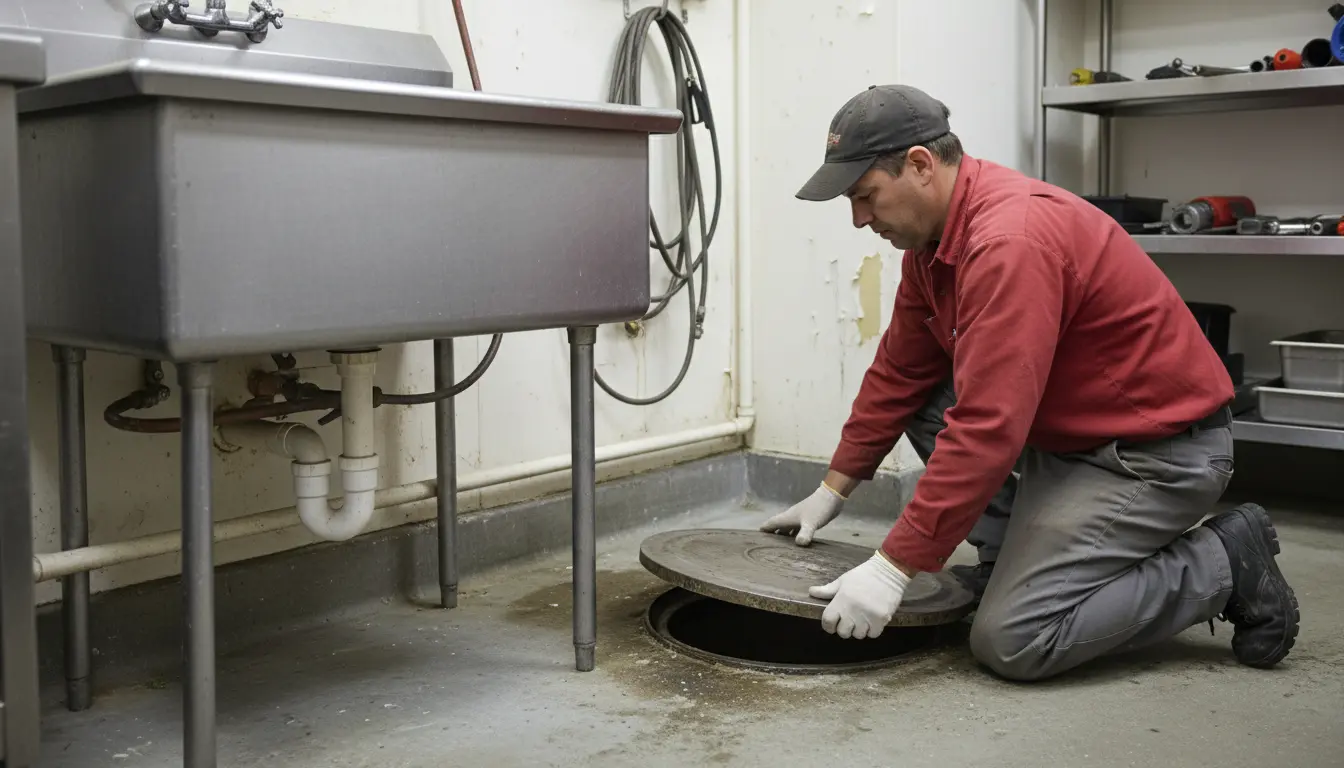
Find the Best Grease Trap Cleaning Companies for Your Business
No obligation • Fast responses • Nationwide coverage

Why you can trust Restaurant Waste Disposal
Restaurant Waste Disposal is a leading U.S. resource for comparing restaurant composting, food-waste recycling, grease trap cleaning, and used cooking oil collection services. Our editorial team researches providers, checks credentials, and organizes unbiased information so operators can make informed decisions. Companies cannot pay to change ratings or placement.
Search providers near you
Top Grease Trap Cleaning Companies in South Brunswick, New Jersey Ranked
For any restaurant, cafeteria, or food service establishment in South Brunswick, proper grease interceptor maintenance is a critical operational and legal requirement. New Jersey state law and local enforcement mandate strict adherence to cleaning schedules and record-keeping to prevent fats, oils, and grease (FOG) from entering the public sewer system. Failure to comply can lead to costly blockages, significant fines, and operational shutdowns. This guide outlines the essential regulations, best practices, and local considerations for effective grease management in South Brunswick.
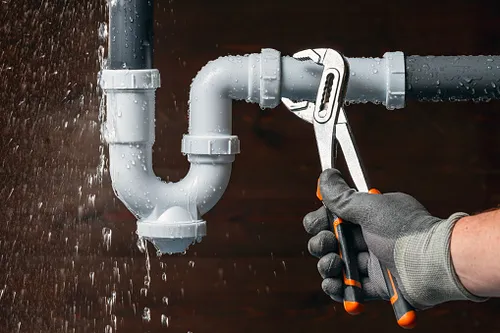
PowerFlo Sewer Service
2277 Victory Blvd, Staten Island, NY 10314
PowerFlo Sewer Service is a sewer and drain cleaning company serving New York, NY. They provide a range of services including grease trap cleaning, water jet cleaning, camera inspection, vacuum pumping, and flood control for residential, commercial, and condominium customers. The company emphasizes respect and care for customers' properties and employs experienced technicians to handle both simple and complex drainage problems. PowerFlo Sewer Service is known for leaving no mess behind and maintaining clear communication throughout the service process.
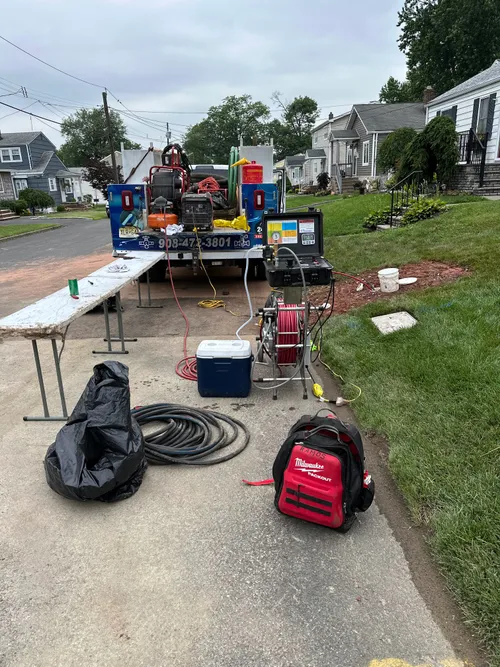
Arrow Sewer and Drain
165 Union Ave, Middlesex, NJ 08846
Arrow Sewer and Drain is a plumbing and sewer service provider based in Middlesex, New Jersey, serving residential and commercial clients throughout Edison and the broader New Jersey area. They offer a wide range of services including grease trap cleaning, trenchless sewer repair, hydro jet drain cleaning, hydro excavation, septic tank installation and replacement, and emergency plumbing. Their use of advanced equipment such as sewer scopes, cured-in-place pipe (CIPP) technology, and hydro excavation allows for efficient, non-invasive repairs that minimize disruption to properties. With over 15 years of experience, Arrow Sewer and Drain provides 24/7 emergency plumbing services to address urgent issues at any time.
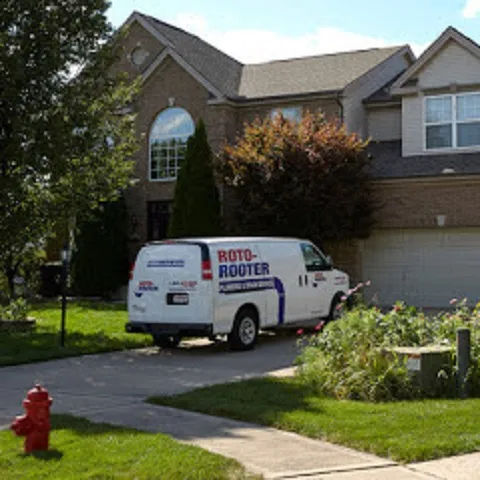
Roto-Rooter Plumbing & Water Cleanup
23 Emmons St Ste 202, Long Branch, NJ 07740
Roto-Rooter Plumbing & Water Cleanup provides comprehensive plumbing services for homes and businesses in Brick, NJ. Their offerings include commercial plumbing, emergency plumbing available 24/7, drain cleaning, grease trap pumping and cleaning, sewer line services, water heater repair and installation, and water softener and filtration system services. The company uses advanced capabilities such as hydro-jetting and video camera sewer inspections to address plumbing issues efficiently. Serving the Long Branch metro area and surrounding communities, Roto-Rooter is fully licensed and insured to handle a wide range of plumbing needs.
Wind River Environmental
Toms River, NJ
Wind River Environmental is a grease trap cleaning company serving Toms River, NJ, and the Central New Jersey area. They provide residential, commercial, municipal, and industrial septic, grease, and drain cleaning services. The company is part of the Wind River Environmental family, which has been an industry leader since 1946, and has been serving Central New Jersey locally for nearly 30 years. Wind River Environmental offers 24/7 emergency services and uses cost-efficient, minimally invasive methods to maintain and repair septic systems and grease traps.
Roto-Rooter Plumbing & Water Cleanup
438 Lawton Pl #1, Perth Amboy, NJ 08861
Roto-Rooter Plumbing & Water Cleanup provides comprehensive plumbing services in Edison, NJ, and the surrounding counties. They serve both residential and commercial customers with a wide range of offerings including drain cleaning, sewer line repair and replacement, water heater installation and repair, grease trap maintenance, and water damage cleanup. The company is equipped to handle complex commercial plumbing systems and uses advanced tools such as hydro-jetting for drain cleaning. Roto-Rooter offers 24/7 emergency plumbing services to address urgent issues like burst pipes, sewer backups, and clogged drains promptly. Serving the Edison area and nearby communities, Roto-Rooter is a licensed and insured provider with extensive local knowledge.
Understanding New Jersey Grease Trap Regulations
At the core of South Brunswick's requirements is the New Jersey Administrative Code (NJAC 7:9A-8.1), which governs grease removal devices for all commercial food service facilities. This state law is enforced locally by Township officials, including Health Department and Plumbing Subcode inspectors. The regulations are designed to protect the municipal wastewater infrastructure from FOG, which can congeal and cause severe sewer backups and environmental issues.
Key state mandates include:
- Mandatory Installation: Any establishment that prepares or serves food must have a properly sized and located grease trap or interceptor.
- Proper Sizing: Traps must be sized using a state-provided formula (Q = D x HR/2 x 12.5 x LF) based on factors like the number of seats and meal types.
- Prohibited Practices: It is illegal to discharge FOG directly into sinks or drains or to use garbage grinders that bypass the grease interceptor.
- Owner Responsibility: The business owner is solely responsible for all costs associated with the installation, repair, and regular cleaning of the grease trap 1.
Determining Your Cleaning Frequency
One of the most common questions is, "How often should my grease trap be cleaned?" The answer is not one-size-fits-all and depends on your specific operation. The NJ state code provides a baseline, but local inspectors can require more frequent service.
- The 25% Rule: A universal standard is that a grease interceptor must be pumped and cleaned before the combined volume of FOG and settled solids exceeds 25% of the trap's liquid depth 2 3. For a high-volume kitchen, this could happen in a matter of weeks.
- The 90-Day Minimum: Many municipalities, including those in New Jersey, enforce a maximum interval of 90 days between cleanings as a default requirement 4.
- Operational Reality: For busy South Brunswick restaurants, pizzerias, or diners, a monthly or even bi-weekly cleaning schedule is often necessary to stay compliant and prevent issues 5. The only way to know for sure is to have your trap inspected regularly and monitor accumulation rates.
Local Enforcement and Required Documentation
South Brunswick Township actively enforces these regulations through routine inspections. Being prepared for an inspector's visit is crucial to avoid violations.
- The Inspection: Township officials from the Health Department or Construction Office can inspect your grease interceptor at any reasonable time to verify proper maintenance and function.
- The Cleaning Log: You are required by law to maintain a detailed maintenance log for at least the past 24 months. This log must be readily available for inspection and should include:
- Date of each service
- Name and license number of the servicing company
- Volume of waste removed
- Disposal method and location (e.g., licensed rendering facility)
- Consequences of Non-Compliance: Violations can result in substantial penalties. These often start with fines (e.g., $250 for a first offense) and can escalate for repeat offenses 6 7. More severely, if your neglected trap causes a sewer blockage, you can be held liable for all cleanup and repair costs incurred by the Township.
Find the perfect grease trap cleaning companies for your needs
Get personalized recommendations and expert advice
Choosing a Licensed Service Provider
You cannot have just any waste hauler clean your grease trap. New Jersey requires that grease waste be handled by licensed grease haulers who dispose of it at approved facilities, such as rendering plants or wastewater treatment facilities equipped to handle FOG.
When selecting a grease trap cleaning service in the South Brunswick area, ensure they provide:
- Proof of a valid New Jersey waste hauler license.
- Proper documentation for your logs, including disposal receipts (often called "tipping tickets").
- A complete service that includes pumping all contents, high-pressure jetting of the interior, and inspection of the baffles and inlet/outlet tees.
- Transparent pricing and reliable scheduling to keep you compliant.
Cost Considerations for Service
The cost for professional grease interceptor pumping in South Brunswick varies based on several factors. While prices can fluctuate, typical ranges are:
- Small, Under-Sink Grease Traps: For a small indoor unit, a cleaning may cost between $75 and $150 per service 8.
- Standard Commercial Grease Interceptors: For most restaurants with an exterior in-ground or concrete interceptor, expect costs to range from $175 to $300 or more per cleaning 9 10.
The final price is influenced by the trap's size (in gallons), its accessibility, the volume of FOG accumulated, and the service provider's disposal costs. Establishing a regular service contract can often provide cost predictability and ensure you never miss a critical cleaning date.
Proactive Maintenance Beyond Pumping
Scheduled pumping is the cornerstone of compliance, but proactive maintenance extends the life of your equipment and improves its efficiency.
- Scrape, Don't Rinse: Train kitchen staff to scrape all food scraps and FOG into the trash before washing dishes. Pre-rinse sinks with baskets can catch solids.
- Use of Enzymes: While not a substitute for mechanical cleaning, some facilities use bacterial or enzyme additives to help break down grease between pump-outs. Check with your service provider or local inspector to see if these are recommended and which products are effective.
- Visual Inspections: Between professional services, visually check the trap's inlet and outlet for flow and any signs of blockage or excessive buildup.
Key Action Steps for South Brunswick Establishments
- Verify Compliance: Confirm that your existing grease trap is correctly sized and installed according to NJAC 7:9A-8.1. A licensed plumber can assist with this assessment 11.
- Establish a Schedule: Based on your volume, start with a monthly cleaning schedule and adjust based on the 25% rule. Err on the side of more frequent service.
- Organize Documentation: Create a dedicated binder for your grease trap maintenance logs, hauler licenses, and disposal receipts. Keep it in a manager's office for easy access during inspections.
- Partner with a Professional: Select a reliable, licensed local service provider and set up a recurring service agreement.
- Communicate with the Township: For definitive answers on local code interpretations or inspection schedules, contact the South Brunswick Township Health Department or Clerk's office directly 12.
Frequently asked questions
Sources
Footnotes
-
N.J. Admin. Code § 7:9A-8.1 - Grease removal and high ... - https://www.law.cornell.edu/regulations/new-jersey/N-J-A-C-7-9A-8-1 ↩
-
Grease Traps - Township of South Hackensack, NJ - eCode360 - https://ecode360.com/33193654 ↩
-
How to Clean a Grease Trap (and How Often You Should) - https://greaseconnections.com/how-to-clean-a-grease-trap-and-how-often-you-should/ ↩
-
New Jersey FOG & Used Oil Rules: Permits & 90-Day Limit - https://greaseconnections.com/resources/compliance/nj/ ↩
-
Installation and Maintenance of Grease Traps - eCode360 - https://ecode360.com/34939379 ↩
-
Borough of Somerville, NJ Grease Traps - eCode360 - https://ecode360.com/37645334 ↩
-
New Jersey FOG Regulations - D&W Alternative Energy - https://dandwalternativeenergy.com/blog/new-jersey-fog-regulations/ ↩
-
Ultimate Grease Trap Pumping Cost Guide: Essential Money-Saving ... - https://www.texwaywastewater.com/grease-trap-pumping-cost/ ↩
-
Commercial Grease Trap Cleaning in New Jersey and New York - https://www.davidzuidema.com/septic-services/commercial-grease-trap-cleaning/ ↩
-
How Much Does It Cost To Clean A Grease Trap? - https://www.greasecollection.com/blog/how-much-does-it-cost-to-clean-a-grease-trap/ ↩
-
Grease Trap Regulations and Maintenance - A Rooter Pros - https://njsewerdrain.com/grease-trap-and-grease-interceptor-regulations-in-nj/ ↩
-
Grease Traps, Interceptors and Oil Separators - eCode360 - https://ecode360.com/13731865 ↩