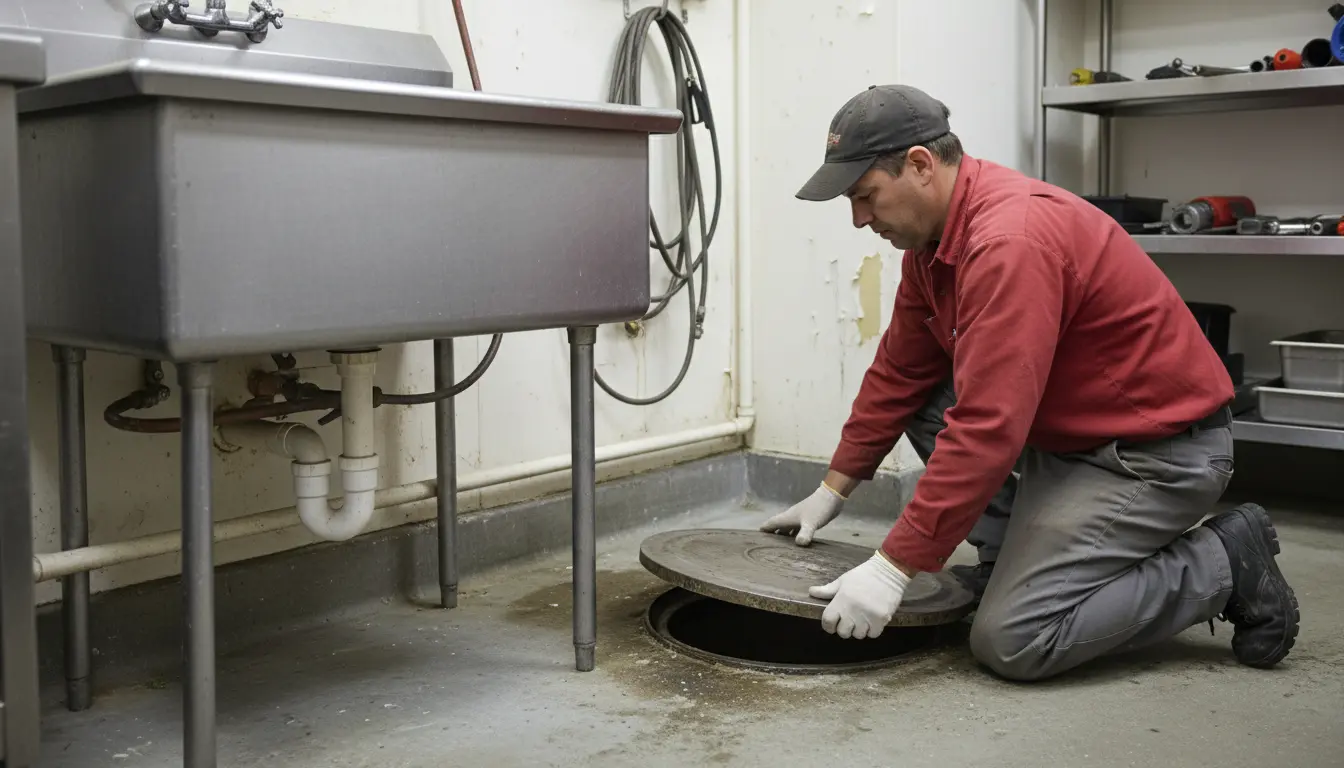
Find the Best Grease Trap Cleaning Companies for Your Business
No obligation • Fast responses • Nationwide coverage

Why you can trust Restaurant Waste Disposal
Restaurant Waste Disposal is a leading U.S. resource for comparing restaurant composting, food-waste recycling, grease trap cleaning, and used cooking oil collection services. Our editorial team researches providers, checks credentials, and organizes unbiased information so operators can make informed decisions. Companies cannot pay to change ratings or placement.
Search providers near you
Top Grease Trap Cleaning Companies in Toms River, New Jersey Ranked
For any restaurant, deli, bakery, or food service establishment (FSE) in Toms River, managing fats, oils, and grease (FOG) is a critical operational and legal responsibility. The Township of Toms River, under the authority of the Toms River Municipal Utilities Authority (TRMUA), enforces strict regulations to prevent FOG from entering the public sewer system, where it can cause costly and disruptive blockages. Compliance hinges on proper grease interceptor maintenance, which includes regular professional cleaning, meticulous record-keeping, and using licensed service providers. Neglecting these duties can lead to significant fines, emergency cleanup charges, and operational shutdowns. This guide outlines the essential requirements and best practices for effective grease management in Toms River.
Roto-Rooter Plumbing & Water Cleanup
23 Emmons St Ste 202, Long Branch, NJ 07740
Roto-Rooter Plumbing & Water Cleanup provides comprehensive plumbing services for homes and businesses in Brick, NJ. Their offerings include commercial plumbing, emergency plumbing available 24/7, drain cleaning, grease trap pumping and cleaning, sewer line services, water heater repair and installation, and water softener and filtration system services. The company uses advanced capabilities such as hydro-jetting and video camera sewer inspections to address plumbing issues efficiently. Serving the Long Branch metro area and surrounding communities, Roto-Rooter is fully licensed and insured to handle a wide range of plumbing needs.
Wind River Environmental
Toms River, NJ
Wind River Environmental is a grease trap cleaning company serving Toms River, NJ, and the Central New Jersey area. They provide residential, commercial, municipal, and industrial septic, grease, and drain cleaning services. The company is part of the Wind River Environmental family, which has been an industry leader since 1946, and has been serving Central New Jersey locally for nearly 30 years. Wind River Environmental offers 24/7 emergency services and uses cost-efficient, minimally invasive methods to maintain and repair septic systems and grease traps.
Zoom Drain
1745 Lakewood Rd Unit 10, Toms River, NJ 08755
Zoom Drain is a specialist in sewer and drain services based in Lakewood, NJ, serving Ocean County including Manasquan and surrounding areas. The company focuses on residential and commercial drain cleaning, repairs, inspections, pump replacements, and grease trap maintenance. Zoom Drain uses advanced camera inspections and offers tailored maintenance plans to keep plumbing systems functioning efficiently. They also provide specialized grease trap cleaning for the food and hospitality sector to maintain sanitary conditions. The company emphasizes comprehensive drain care solutions and supports property managers, contractors, and homeowners with customized services. Zoom Drain is known for handling complex sewer and drain issues and offers a 30-day satisfaction guarantee.
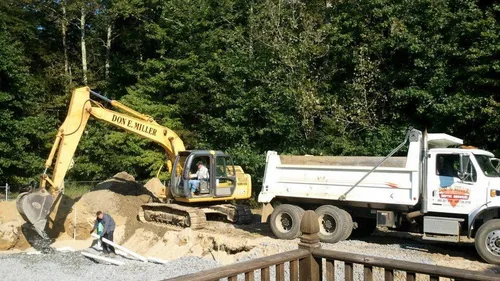
Don E Miller Septic Service Inc & Donny's Potty's
362 Meany Rd, Wrightstown, NJ 08562
Don E Miller Septic Service Inc & Donny's Potty's is a family-owned septic service provider based in Brick, NJ. Serving North Hanover Township and surrounding areas, they offer a wide range of services including septic system maintenance, installations, inspections, repairs, and portable toilet rentals. The company specializes in grease trap and tank pumping, camera inspections, dosing systems, jetting, and bacterial treatments among other septic system solutions. Established in 1963, this third-generation business brings decades of experience to residential, commercial, and municipal customers.
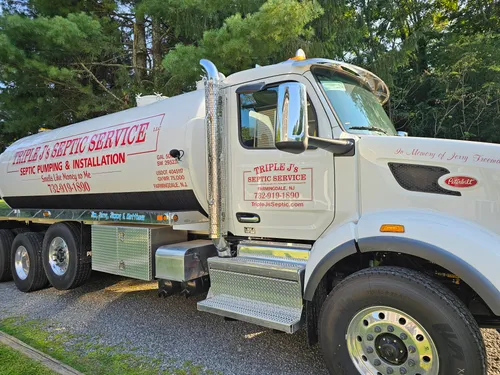
Triple J Septic Services LLC
34 Asbury Ave, Farmingdale, NJ 07727
Triple J Septic Services LLC is a family-owned business based in Lakewood, NJ, providing septic tank pumping, repairs, installations, and grease trap pumping. Founded by Gerald Freeman in the late 1980s, the company holds an A-901 State License, ensuring compliance with New Jersey regulations. They manage complex projects with a hands-on approach, including coordination with engineers and other contractors to meet client needs efficiently.
Understanding Toms River's FOG Control Ordinance
Toms River's code specifically prohibits the discharge of FOG into the sanitary sewer in amounts that could cause obstruction or interfere with the system's operation. The primary tool for compliance is a properly sized and maintained grease removal device. The local ordinance empowers the TRMUA to inspect facilities, review maintenance logs, and enforce penalties for violations. The goal is proactive prevention, protecting the community's sewer infrastructure from backups and overflows that can result from accumulated grease 1.
Key authorities involved include the TRMUA and the New Jersey Department of Environmental Protection (NJDEP), whose regulations (NJAC 7:9A) provide the foundation for local codes. Inspections are a standard part of compliance; in Toms River, an initial inspection fee may apply, with higher fees for any necessary reinspections if violations are found.
Types of Grease Removal Devices
Knowing which type of device your establishment uses is the first step in proper maintenance. The terms "grease trap" and "grease interceptor" are often used interchangeably, but they refer to different systems with distinct capacities.
- Grease Traps: These are typically smaller, interior units often found under a sink or in a kitchen prep area. They are designed to capture smaller amounts of FOG (generally under 100 pounds) and require more frequent cleaning. They are common in lower-volume operations.
- Grease Interceptors: These are larger, exterior units usually installed underground outside the building. They handle significant volumes of wastewater and are required for most full-service restaurants. They have a much greater capacity (over 100 pounds of FOG) and are subject to specific state sizing standards.
Both types function by slowing wastewater flow, allowing FOG to cool, solidify, and float to the top while food solids settle at the bottom. The clarified water in the middle layer is then discharged to the sewer. Proper components like baffles, flow regulators, and sampling ports are essential for effective operation.
Sizing and Installation Requirements
An improperly sized grease interceptor is a common compliance issue. If it's too small, it will fill too quickly and fail to prevent FOG discharge. If it's too large, it may not function correctly. Sizing in New Jersey is governed by NJAC 7:9A-8.1 and is based on a formula that considers the number of seats, hours open per day, and a "loading factor" that accounts for the type of food service 2.
For example, a high-volume restaurant with a garbage disposal (grinder) will have a significantly higher loading factor than a coffee shop. It's crucial that your interceptor was sized and permitted correctly during installation. Some common mistakes include connecting garbage grinders to systems not designed for them, which is often prohibited, or failing to account for future expansion of menu or seating 3. If you are opening a new FSE or renovating your kitchen, consulting with a licensed professional and the TRMUA during the planning stage is vital.
Mandatory Cleaning Frequency and Standards
The universal rule in Toms River and across New Jersey is that grease interceptors must be cleaned when the combined volume of FOG and settled solids reaches 25% of the unit's capacity. Waiting until it's fuller drastically reduces its effectiveness and almost guarantees a violation.
- Typical Schedule: For most active restaurants, this 25% threshold is reached every 1 to 3 months, making quarterly service a common baseline. However, high-volume establishments like large diners or banquet halls may require monthly cleaning 4 5. The TRMUA has the authority to mandate more frequent pumping if inspections or history indicate it's necessary.
- The Cleaning Process: Proper cleaning is not just a pump-out. A licensed service should:
- Remove all contents (FOG, solids, and wastewater).
- Scrape and remove hardened grease from the walls, baffles, and inlet/outlet tees.
- Inspect the components for damage.
- Properly dispose of the waste at an approved facility.
- Return the unit to empty, ensuring it's ready to operate at full capacity 6.
Simply pumping out the liquid layer is insufficient and can lead to immediate re-clogging and compliance failure.
Find the perfect grease trap cleaning companies for your needs
Get personalized recommendations and expert advice
The Critical Importance of Maintenance Logs
Your maintenance log is your primary proof of compliance during an inspection. Toms River regulations require FSEs to maintain detailed records for a minimum of 24 months (2 years), and these logs must be readily available for review by the TRMUA.
A compliant log for each service should include:
- The date and time of cleaning.
- The name and signature of the person performing the service.
- The company name and license number of the service provider.
- The volume of grease and solids removed (in gallons or pounds).
- The disposal method and location (waste hauler manifest number).
- Observations about the interceptor's condition.
Digital logs or signed service tickets from your provider are acceptable if they contain all required information. Incomplete or missing logs can be treated as a violation, equivalent to not having performed the service 7.
Costs, Violations, and Penalties
Understanding the cost of compliance versus the cost of violations is essential for budgeting.
- Preventative Maintenance Costs: For a basic, regularly serviced interior grease trap, a cleaning visit in the Toms River area may range from approximately $175 to $225 8 9. Costs for larger underground interceptors or those requiring more frequent service (monthly) will be higher. These are manageable, predictable operational expenses.
- Violation and Emergency Costs: Neglect leads to much higher costs. Violations can include failure to maintain the interceptor, improper discharge, missing logs, or using an unlicensed pumper.
- Emergency Fees: If a grease-caused sewer blockage is traced to your establishment, you will be responsible for the municipal cleanup costs, which can be substantial.
- Service Premiums: A severely neglected interceptor requires an emergency cleaning, which is far more labor-intensive and costly than routine service.
Choosing a Licensed Service Provider in Toms River
This is not a DIY task. Toms River requires that grease interceptor cleaning and waste disposal be performed by licensed and insured professionals 12. When selecting a provider:
- Verify they hold a valid license from the State of New Jersey for waste hauling.
- Ensure they provide detailed, compliant service tickets that can serve as your maintenance log.
- Ask about their disposal practices-waste must be taken to an approved facility, not dumped illegally.
- Look for providers familiar with TRMUA inspection standards and local code specifics.
- Consider companies that offer additional services like interceptor inspection, jetting of connected lines, and used cooking oil collection for a comprehensive waste management solution.
Regular, documented maintenance by a reputable provider is the most effective way to ensure smooth operations, protect the local environment, and avoid the steep penalties associated with FOG violations in Toms River.
Frequently asked questions
Sources
Footnotes
-
464z 19 - eCode360 - https://ecode360.com/DO0275/laws/LF1109143.pdf ↩
-
N.J. Admin. Code § 7:9A-8.1 - Grease removal and high ... - https://www.law.cornell.edu/regulations/new-jersey/N-J-A-C-7-9A-8-1 ↩
-
Township of Toms River, NJ Discharge of Fats, Oils and Grease - https://ecode360.com/36928485 ↩
-
Commercial Grease Trap Cleaning in New Jersey and New York - https://www.davidzuidema.com/septic-services/commercial-grease-trap-cleaning/ ↩
-
How to Clean a Grease Trap (and How Often You Should) - https://greaseconnections.com/how-to-clean-a-grease-trap-and-how-often-you-should/ ↩
-
Installation and Maintenance of Grease Traps - eCode360 - https://ecode360.com/34939379 ↩
-
Grease Trap Regulations and Maintenance - A Rooter Pros - https://njsewerdrain.com/grease-trap-and-grease-interceptor-regulations-in-nj/ ↩
-
Grease Trap Sizing in NYC & NJ: What Many Kitchens Get Wrong - https://filtakleenco.com/grease-trap-sizing/ ↩
-
The Cost To Clean A Grease Trap For Restaurants - https://thegreasecompany.com/blog/greasetrapcleaningcost/ ↩
-
Borough of Somerville, NJ Grease Traps - eCode360 - https://ecode360.com/37645334 ↩
-
New Jersey FOG Regulations - D&W Alternative Energy - https://dandwalternativeenergy.com/blog/new-jersey-fog-regulations/ ↩
-
New Jersey FOG & Used Oil Rules: Permits & 90-Day Limit - https://greaseconnections.com/resources/compliance/nj/ ↩