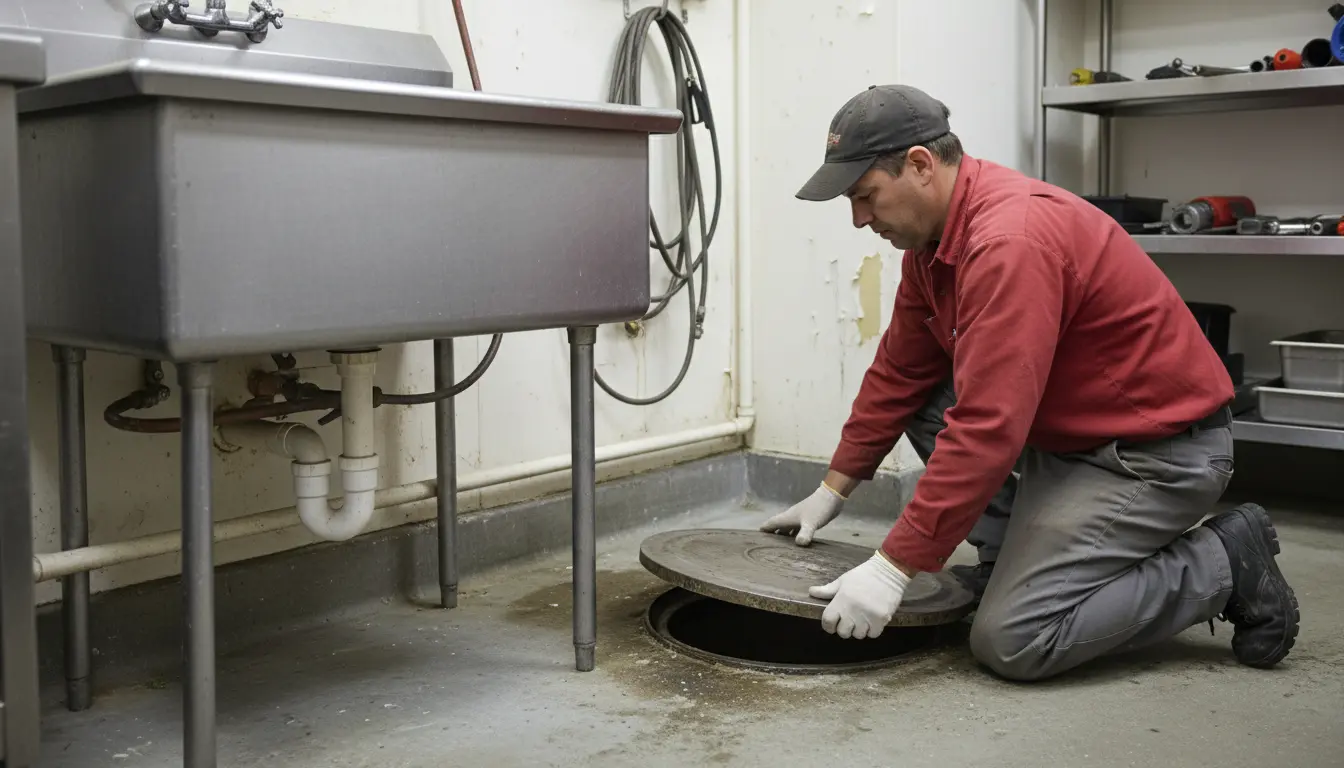
Find the Best Grease Trap Cleaning Companies for Your Business
No obligation • Fast responses • Nationwide coverage

Why you can trust Restaurant Waste Disposal
Restaurant Waste Disposal is a leading U.S. resource for comparing restaurant composting, food-waste recycling, grease trap cleaning, and used cooking oil collection services. Our editorial team researches providers, checks credentials, and organizes unbiased information so operators can make informed decisions. Companies cannot pay to change ratings or placement.
Search providers near you
Top Grease Trap Cleaning Companies in Saginaw, Michigan Ranked
For any restaurant, bar, or food service establishment in Saginaw, proper grease interceptor maintenance is a critical operational and legal requirement. These systems are the first line of defense in preventing fats, oils, and grease (FOG) from entering the city's sewer lines, where they can cause costly blockages, backups, and environmental damage. Compliance with Michigan and local Saginaw regulations isn't optional; it's a mandatory part of doing business that involves regular cleaning by licensed professionals, meticulous record-keeping, and cooperation with health and public works inspectors. This guide outlines everything Saginaw food service operators need to know about managing their grease trap and interceptor service effectively.
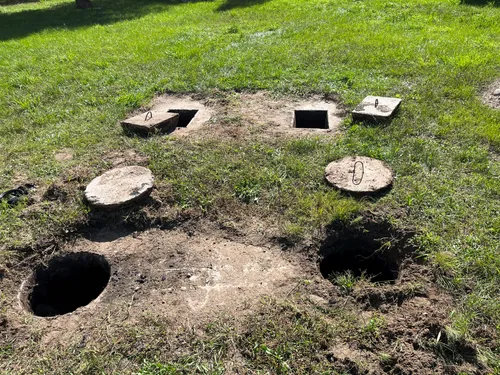
Understanding Saginaw's Grease Interceptor Requirements
In Saginaw, as throughout Michigan, the installation and maintenance of grease interceptors are governed by strict codes. The primary goal is to protect the public sewer system from FOG-related blockages, which can lead to sanitary sewer overflows (SSOs)-a serious public health and environmental concern.
Who Needs a Grease Trap or Interceptor? Mandatory installation is required for any commercial food preparation area that discharges grease-laden wastewater. This includes, but is not limited to, restaurant kitchens, bars with food service, cafeterias, bakeries, and food processing facilities. The specific sizing and type of interceptor (e.g., indoor grease trap vs. larger outdoor grease interceptor) are determined by the Michigan Plumbing Code, which local inspectors enforce.
Governing Codes and Ordinances Saginaw's requirements are based on the Michigan Plumbing Code, which incorporates standards like the 2021 International Plumbing Code (IPC) 1. Local municipalities, including Saginaw, often have additional guidance or ordinances to address specific local sewer system needs. These regulations detail everything from proper interceptor sizing and installation to mandatory maintenance schedules. Non-compliance isn't just a paperwork issue; it can result in significant fines, forced business closure, and damage to your establishment's reputation.
Determining Your Cleaning Frequency and Schedule
One of the most common questions from restaurant managers is, "How often does my grease trap need to be pumped?" The answer varies significantly based on your operation's volume and the size of your interceptor.
Standard Municipal Guidelines Most Michigan municipalities, including Saginaw, establish a baseline cleaning frequency, typically every 1 to 3 months. However, this is a general rule. High-volume kitchens, such as those in busy diners or large event venues, will almost certainly require more frequent service-often monthly or even weekly-to prevent overflows and ensure efficient operation.
The 25% Rule A best practice used by many service providers and recommended in industry guidance is the "25% rule." An interceptor should be cleaned when the combined FOG and solids accumulation reaches 25% of the unit's liquid depth. Waiting until it's completely full drastically reduces its effectiveness and increases the risk of grease escaping into the sewer line 2 3. Your licensed hauler can assess this during service and help you establish an optimal schedule.
Find the perfect grease trap cleaning companies for your needs
Get personalized recommendations and expert advice
The Inspection Process: What to Expect in Saginaw
Health and safety inspections are a routine part of the food service industry, and grease interceptor compliance is a key component. Being prepared can make the process smooth and stress-free.
Who Conducts the Inspections? Inspections are typically carried out by two main entities: County Health Department officials during their routine food establishment inspections, and representatives from the City of Saginaw's Public Works or Sewer Department 4. Their goals are cooperative-to ensure compliance and protect the sewer infrastructure-but they have enforcement authority.
What Inspectors Look For During an inspection, you can expect officials to:
- Review Cleaning Logs: They will ask for your grease interceptor service records. You are required to maintain these logs, usually for a minimum of 3 to 5 years.
- Check Physical Condition: They may inspect the interceptor itself for proper capacity, signs of bypassing, or structural issues.
- Verify Proper Maintenance: They will look for evidence that the unit is being serviced adequately and on schedule.
The best defense is a good offense: maintain clear, detailed records from a licensed hauler and stay on a proactive cleaning schedule.
Cost Factors for Grease Trap Service in Saginaw
The cost for professional grease interceptor pumping and cleaning in Saginaw is not a flat fee. Several variables influence the final price, which typically ranges from $100 to over $500 per service visit 5.
Key Pricing Factors:
- Interceptor Size and Type: A small under-sink grease trap will cost significantly less to clean ($100-$200) than a large, in-ground concrete interceptor located outside ($300-$400+) 6 7.
- Volume of FOG and Solids: The amount of accumulated waste material directly impacts the disposal costs for the hauler.
- Accessibility: Easy-to-access units are quicker to service. Traps located in cramped basements or requiring special equipment to access may incur higher charges.
- Service Frequency: Establishments on a regular, scheduled maintenance plan often receive better pricing than those requesting emergency or one-time cleanings.
While cost is a factor, it's crucial to view this service as an investment. Delayed or skipped cleaning can lead to much higher costs from sewer line blockages, fines from the city, or even a forced shutdown for emergency remediation 8.
Best Practices for Saginaw Restaurant Operators
Beyond hiring a service, there are daily practices that can improve interceptor efficiency, reduce service costs, and ensure compliance.
1. Implement Effective Kitchen Practices Train your kitchen staff to scrape all food scraps from plates, pots, and pans into the trash or compost before rinsing. The less solid food waste that goes down the drain, the less often your interceptor will need pumping. Avoid using sink garbage disposals, as they send emulsified food particles into the interceptor, filling it faster.
2. Choose a Licensed and Permitted Hauler Always verify that your service provider is licensed to handle and transport grease waste in Michigan. They should provide you with a detailed service report after each cleaning, which is the document you will show to inspectors. This report should include the date, volume of waste removed, the hauler's license information, and the disposal location.
3. Get Everything in Writing When selecting a provider, obtain written quotes that detail the scope of service. Be wary of prices that seem too good to be true, as they may indicate subpar service or improper waste disposal. A reputable company will be transparent about its pricing and services 9.
4. Maintain Impeccable Records Keep a dedicated binder or digital folder for all grease interceptor service reports. This log is your proof of compliance and is the first thing an inspector will request. Consistent, documented service is the simplest way to pass an inspection 10.
Frequently asked questions
Sources
Footnotes
-
2021 Michigan Plumbing Code - 1003.3.1 Grease interceptors and ... - https://codes.iccsafe.org/s/MIPC2021P1/chapter-10-traps-interceptors-and-separators/MIPC2021P1-Ch10-Sec1003.3.1 ↩
-
How to Clean a Grease Trap (and How Often You Should) - https://greaseconnections.com/how-to-clean-a-grease-trap-and-how-often-you-should/ ↩
-
Guidance Document for the Sizing and Installation of Grease Traps ... - https://cms2.revize.com/revize/saginawtx/CityofSaginaw_F.O.G.Guidance_20250501.pdf ↩
-
Michigan Town Implementing Grease Trap Cleaning Ordinance - https://replaceyourgarbagedisposal.com/grease-trap-cleaning/michigan-town-implementing-grease-trap-cleaning-ordinance/ ↩
-
Restaurant Grease Trap & Interceptor Cleaning Cost - https://greasemanagement.org/pricing.html ↩
-
Rates - Arrowhead Septic Services - https://www.arrowheadseptic.net/rates ↩
-
How Much Does It Cost To Clean A Grease Trap? - https://www.greasecollection.com/blog/how-much-does-it-cost-to-clean-a-grease-trap/ ↩
-
Cost of Delayed Grease Trap Cleaning - PowerVac of Michigan - https://yourworkorder.com/the-cost-of-delayed-grease-trap-cleaning-for-michigan-businesses/ ↩
-
Grease Trap Cleaning in Saginaw, MI - https://greasetrapcleaningmidland.com/saginaw-mi.html ↩
-
Grease Trap Cleaning Michigan: How to Comply with State ... - https://dpoolecleaning.com/grease-trap-cleaning-michigan-how-to-comply-with-state-regulations/ ↩