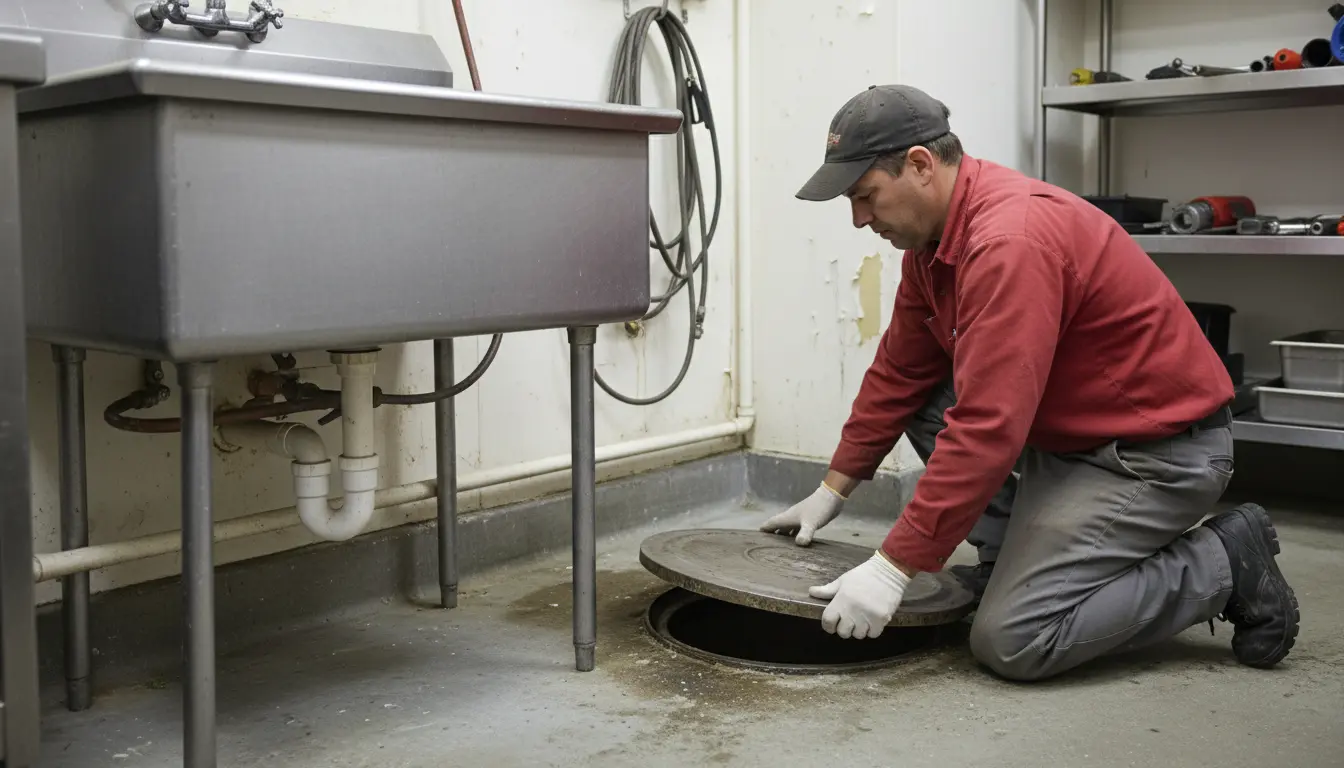
Find the Best Grease Trap Cleaning Companies for Your Business
No obligation • Fast responses • Nationwide coverage

Why you can trust Restaurant Waste Disposal
Restaurant Waste Disposal is a leading U.S. resource for comparing restaurant composting, food-waste recycling, grease trap cleaning, and used cooking oil collection services. Our editorial team researches providers, checks credentials, and organizes unbiased information so operators can make informed decisions. Companies cannot pay to change ratings or placement.
Search providers near you
Top Grease Trap Cleaning Companies in Royal Oak, Michigan Ranked
For any restaurant, hotel, or food service establishment in Royal Oak, managing fats, oils, and grease (FOG) is a critical operational and legal responsibility. Proper grease interceptor maintenance is not just about preventing clogs; it's a mandatory requirement under the Michigan Plumbing Code, enforced by local health and sewer authorities. Regular, documented cleaning of these systems protects your business from severe fines, operational shutdowns, and costly emergency plumbing repairs. This guide outlines the essential regulations, best practices, and cost considerations for keeping your grease trap or interceptor compliant and functioning efficiently in Royal Oak.
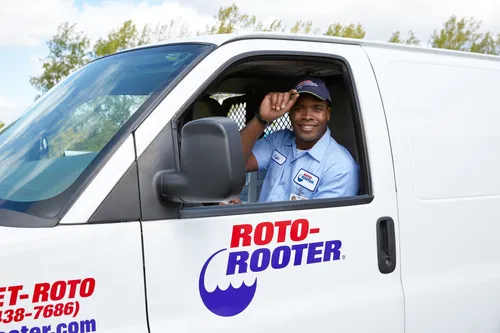
Roto-Rooter Plumbing & Water Cleanup
422 W Congress St, Detroit, MI 48226
Roto-Rooter Plumbing & Water Cleanup offers comprehensive residential and commercial plumbing services in Detroit, MI. Their experienced team handles a wide range of needs including sewer and drain cleaning, water heater repairs and installations, grease trap maintenance, and emergency flood and water damage cleanup. They use advanced equipment such as hydro-jetting for drain cleaning and provide both conventional and trenchless sewer line repairs. Serving Detroit and surrounding counties, Roto-Rooter is available 24/7 for emergency plumbing services to address urgent issues promptly.
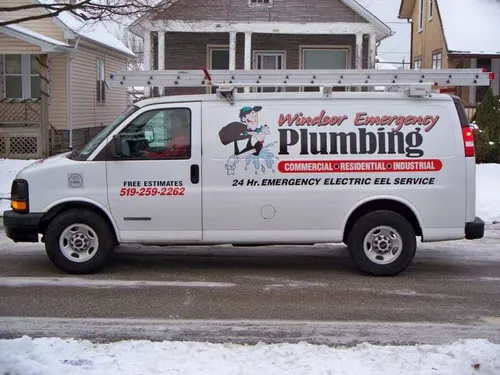
Windsor Emergency Plumbing
Dearborn, MI
Windsor Emergency Plumbing is a plumbing service provider located in Dearborn, MI, offering 24/7 emergency plumbing solutions for commercial, residential, and industrial clients. Their services include grease trap cleaning and installations, sewer inspections with color video cameras, backflow prevention, water line repairs, and hot water system specialists. With over 35 years of experience serving Windsor, Essex, and Kent County, they provide comprehensive plumbing repairs and installations with a guarantee that jobs are done right the first time or the callback is free.
Understanding Local Grease Trap Regulations
Compliance in Royal Oak starts with knowing the rules. The Michigan Plumbing Code mandates that commercial kitchens producing grease-laden waste must install and maintain approved grease interceptors 1. These regulations are designed to prevent FOG from entering the public sewer system, where it can solidify and cause major blockages and environmental issues.
Local enforcement typically involves inspections from the Oakland County Health Division and the Royal Oak Building Department, often coordinated with routine health inspections or during plumbing permit reviews. Inspectors will check for proper installation, the physical condition of the trap, and-most importantly-your service records.
The Critical Role of Documentation
One of the most emphasized aspects of compliance is record-keeping. Businesses are required to maintain detailed logs of every grease trap pumping and cleaning service for a minimum of three years. These records should include:
- The date of service
- The name and license number of the servicing company
- The volume of grease and solids removed
- The disposal method and location
Failure to produce these documents during an inspection can result in violations as serious as those for having a clogged or overflowing trap.
Determining Your Cleaning Schedule
There is no universal state-mandated frequency for grease interceptor cleaning; the schedule depends entirely on your operation's volume and output. The key is to clean based on usage and capacity, not just a fixed calendar date.
- High-Volume Kitchens: Busy restaurants, especially those with fry-heavy menus, may require monthly or even bi-weekly pump-outs to prevent overflows and maintain efficiency.
- Moderate to Low-Volume Establishments: Some cafes or lower-traffic kitchens might find a quarterly (every 3 months) schedule sufficient.
- Best Practice: The most reliable method is to have your service provider conduct an initial assessment and recommend a frequency. They can then monitor accumulation during regular services and adjust the schedule as needed. Proactive cleaning is always less expensive than reacting to an emergency or a violation notice.
What to Expect During an Inspection
Knowing what inspectors look for can help you prepare and avoid surprises. During a grease trap inspection in Royal Oak, officials will typically 2 3:
- Review Service Records: This is their first request. Complete, legible logs are your first line of defense.
- Inspect the Interceptor: They will check the lid, baffles, and interior for proper function and excessive grease buildup.
- Verify Proper Disposal: They may ask for documentation that waste was hauled by a licensed service to an approved facility.
- Check for Signage: Proper labeling of the grease interceptor access point is often required.
Find the perfect grease trap cleaning companies for your needs
Get personalized recommendations and expert advice
Costs for Grease Trap Services in Royal Oak
The cost for professional grease trap cleaning varies significantly based on the type and size of your interceptor and the nature of the service. Understanding these factors can help you budget effectively.
- Small Internal Grease Traps: Commonly located under sinks, these smaller units typically cost between $75 and $225 per cleaning 4.
- Large Outdoor Grease Interceptors: These in-ground or concrete vault units, which handle waste for the entire kitchen, involve more labor and equipment. Pumping and cleaning these larger interceptors generally ranges from $325 to $950 or more per service 5 6.
- Factors Influencing Price: The final cost depends on the trap's gallon capacity, the thickness and volume of FOG inside, ease of access for service trucks, and whether it is a scheduled maintenance visit or an emergency call-out.
Crucial Cost Note: Neglecting regular maintenance is the most expensive choice. A severely clogged interceptor can lead to sewage backups, business interruption, and fines that far exceed the cost of routine cleanings. Emergency service rates are substantially higher than scheduled maintenance prices 7 8.
Best Practices for Grease Management
Beyond hiring a professional service, your daily kitchen practices play a huge role in extending the life of your grease interceptor and reducing service frequency.
- Scrape, Don't Rinse: Train staff to scrape all food solids into trash or compost bins before washing dishes. Food particles accelerate grease trap filling.
- Use Enzyme Treatments Cautiously: While some enzyme or bacterial additives can help break down grease between cleanings, they are not a substitute for physical pumping and removal. Always check with your local authority or service provider before use, as some municipalities have restrictions 9.
- Schedule Proactively: Partner with a licensed, insured hauler to establish a preventive maintenance schedule. A reliable provider will help you track volume and adjust service frequency to keep you compliant and cost-effective 10.
Staying compliant with grease interceptor regulations in Royal Oak hinges on three pillars: using a licensed and reputable cleaning service, maintaining impeccable service records, and cleaning proactively based on your kitchen's actual output. This disciplined approach protects your business from regulatory penalties and avoids the far greater costs of plumbing emergencies.
Frequently asked questions
Sources
Footnotes
-
2021 Michigan Plumbing Code - 1003.3.1 Grease interceptors and ... - https://codes.iccsafe.org/s/MIPC2021P1/chapter-10-traps-interceptors-and-separators/MIPC2021P1-Ch10-Sec1003.3.1 ↩
-
Grease Trap Cleaning Michigan: How to Comply with State ... - https://dpoolecleaning.com/grease-trap-cleaning-michigan-how-to-comply-with-state-regulations/ ↩
-
City of Royal Oak, MI Sewer Regulations - eCode360 - https://ecode360.com/8261949 ↩
-
How Much Does It Cost To Clean A Grease Trap? - https://www.greasecollection.com/blog/how-much-does-it-cost-to-clean-a-grease-trap/ ↩
-
The Cost To Clean A Grease Trap For Restaurants - https://thegreasecompany.com/blog/greasetrapcleaningcost/ ↩
-
Restaurant Grease Trap & Interceptor Cleaning Cost - https://greasemanagement.org/pricing.html ↩
-
Cost of Delayed Grease Trap Cleaning - PowerVac of Michigan - https://yourworkorder.com/the-cost-of-delayed-grease-trap-cleaning-for-michigan-businesses/ ↩
-
Why Grease Trap Cleaning Detroit Restaurants Can't Wait - https://dpoolecleaning.com/detroit-restaurants-grease-trap-cleaning/ ↩
-
How to Clean a Grease Trap (and How Often You Should) - https://greaseconnections.com/how-to-clean-a-grease-trap-and-how-often-you-should/ ↩
-
Grease Trap Cleaning in Royal Oak MI | Grease Interceptor Pumping - https://greasetrapcleaningredford.com/royal-oak-mi.html ↩