
Find the Best Grease Trap Cleaning Companies for Your Business
No obligation • Fast responses • Nationwide coverage

Why you can trust Restaurant Waste Disposal
Restaurant Waste Disposal is a leading U.S. resource for comparing restaurant composting, food-waste recycling, grease trap cleaning, and used cooking oil collection services. Our editorial team researches providers, checks credentials, and organizes unbiased information so operators can make informed decisions. Companies cannot pay to change ratings or placement.
Search providers near you
Top Grease Trap Cleaning Companies in Spokane Valley, Washington Ranked
For any food service establishment in Spokane Valley, from bustling restaurants to hotel kitchens, managing fats, oils, and grease (FOG) is a critical operational and legal requirement. Proper grease interceptor maintenance is not just about avoiding clogs; it's a mandated part of Spokane County and City sewer use ordinances designed to protect the public infrastructure and the environment. Failure to adhere to strict cleaning schedules and methods can lead to severe blockages, environmental harm, and significant financial penalties. This guide outlines the essential regulations, best practices, and cost considerations for effective grease trap and interceptor maintenance specific to Spokane Valley.
Local codes, including the Spokane Municipal Code (SMC) and Spokane County Code (SCC), clearly define who is responsible and what must be done 1. All facilities that generate grease are required to install approved grease control devices (GCDs) at their own expense. The cornerstone of compliance is a consistent pumping schedule performed by licensed liquid waste haulers. For standard gravity grease interceptors (GGIs), the rule is clear: cleaning must occur at least every 90 days or when the accumulated FOG and solids reach 25% of the interceptor's volume, whichever comes first. For establishments with higher volume, this frequency may need to increase to monthly or bi-monthly schedules.
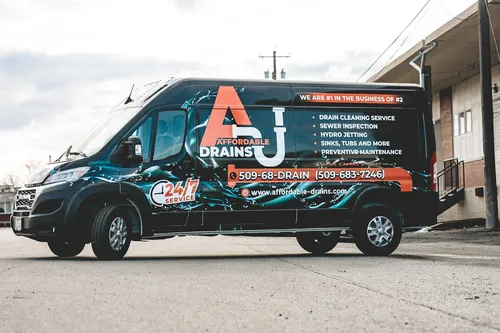
Affordable Drains
2925 E Providence Ave, Spokane, WA 99207
Affordable Drains provides professional drain cleaning and grease trap cleaning services in Spokane, WA. They serve both residential and commercial properties throughout Spokane County and Northern Idaho. Their offerings include drain cleaning for kitchen, bathroom, floor, storm, sewer, and septic lines, with advanced capabilities such as high-pressure hydro jetting and HD video camera inspections to accurately diagnose plumbing issues. Led by Manager Chris Jordan, who has over 15 years of industry experience, Affordable Drains emphasizes affordable, efficient solutions. The company also offers 24/7 emergency service to address drain backups and minimize potential damage at any time.
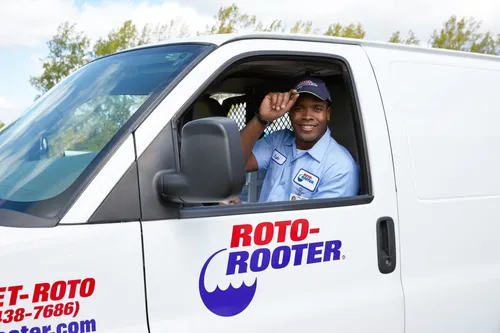
Roto-Rooter Plumbing & Water Cleanup
6214 E Alki Ave, Spokane Valley, WA 99212
Roto-Rooter Plumbing & Water Cleanup provides commercial plumbing and water cleanup services in Spokane, WA. They serve a wide range of facilities including warehouses, manufacturing centers, healthcare facilities, and retail stores. Their services include grease trap cleaning, high-pressure water jetting, sewer and water line excavation, backflow inspection and repair, and water heater installation and repair. The company uses advanced equipment such as drain snakes, rooters, and hydro-jetting to maintain and clear drains and sewers. Roto-Rooter offers 24/7 emergency plumbing services to address urgent plumbing issues promptly. They also provide water softener and filtration system installations to improve water quality. Serving the Spokane Valley metro area and surrounding communities, Roto-Rooter is fully licensed and insured, ready to assist with plumbing needs at any time.
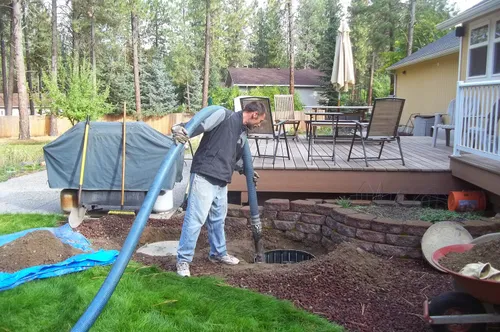
Tri-County Septic And Grease Trap Solutions
3211 S Geiger Blvd, Spokane, WA 99224
Tri-County Septic And Grease Trap Solutions is a family-owned company serving Spokane, WA, and surrounding areas. Since 1993, they have provided residential and commercial septic tank and grease trap services, including pumping, maintenance, and repair. Their team is trained to handle clogs, backups, leaks, and overflows, with expertise in grease trap interceptors and septic system issues. The company offers 24-hour emergency service to address urgent septic and grease trap problems promptly.
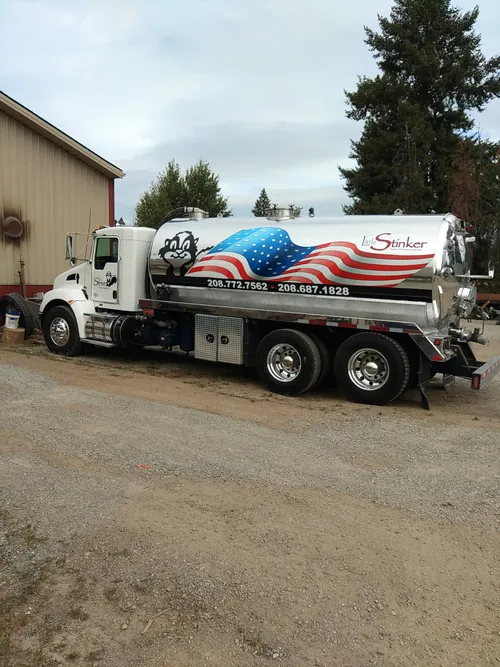
Drains Plus Rooter & Septic Service
49866 Old US Hwy 95, Rathdrum, ID 83858
Drains Plus Rooter & Septic Service is a family-owned company serving Coeur d'Alene, ID, and surrounding North Idaho communities since 1996. They provide services including rooter service, septic pumping, grease trap pumping, and drain field rejuvenation. Their expertise includes hydro jetting to restore septic drain fields, offering an alternative to full replacement. The company offers 24/7 emergency service to residential and commercial customers in the area.

Lilac City Septic Services Co
6808 S Linke Rd, Greenacres, WA 99016
Lilac City Septic Services Co is a family-owned business serving Spokane, WA, and the surrounding areas. They provide commercial and residential septic services including septic system design, installation, maintenance, and grease trap cleaning. Their capabilities extend to excavation services for sewer, water lines, and foundations, supported by over 30 years of combined experience. The company operates 24/7 to assist customers whenever needed.
Understanding Local Grease Interceptor Regulations
Compliance starts with knowing the law. In Spokane Valley, grease interceptor maintenance falls under the jurisdiction of Spokane County and City Public Works, specifically their Fats, Oils, and Grease (FOG) Control Program 2. The regulations are designed to prevent grease from entering the public sewer system, where it can cool, solidify, and cause major blockages and sanitary sewer overflows.
Key Legal Requirements:
- Mandatory Installation: Any facility preparing or serving food must have a properly sized and approved grease interceptor or trap.
- Cleaning Frequency: Gravity interceptors must be fully pumped and cleaned at minimum intervals of 90 days. However, if the interceptor reaches 25% capacity with FOG and solids before 90 days, it must be serviced immediately 3 4. Facilities with a sample box (a smaller chamber for inspection) must clean the entire interceptor immediately if grease is visible in that box.
- Proper Cleaning Method: Simply removing liquid is insufficient. The interceptor must be pumped "dry," with all solids and FOG scraped from the walls, baffles, tees, and lids. The wastewater from cleaning cannot be returned to the interceptor or sewer. The use of chemical or biological additives to dissolve grease is explicitly not permitted as a substitute for mechanical cleaning 5.
- Accessibility & Design: Interceptors must be easily accessible for service and inspection and must be sized according to the Uniform Plumbing Code based on the facility's potential grease output.
The Inspection Process: What Regulators Look For
To ensure compliance, facilities are subject to inspections. Inspectors from the public works or health departments will check several critical items 6 7:
- Capacity and Flow: Verifying the interceptor is correctly sized for the establishment's operations.
- Physical Condition: Ensuring the unit is watertight, with no cracks or leaks.
- Clearance and Access: Confirming there is adequate space around the interceptor for maintenance equipment and personnel.
- Maintenance Records: Reviewing pump-out logs and invoices from licensed haulers to prove adherence to the cleaning schedule.
- Proper Waste Disposal: Checking that garbage disposals are not discharging into the interceptor system, as this can overwhelm it with solids.
Non-compliance with these sewer use ordinances is a violation that can trigger enforcement actions, including fines and mandatory corrective measures 8.
Cost of Grease Trap Maintenance in Spokane Valley
Understanding the cost structure for grease interceptor pumping helps in budgeting and underscores the value of preventive care. Prices vary based on the interceptor's size, location, accessibility, and the service provider.
- Scheduled Preventive Pumping: For a typical restaurant grease interceptor, a routine, scheduled pumping service generally ranges from $250 to $400 or more per service visit 9. Many providers offer contract pricing for regular quarterly service, which can provide cost predictability.
- Emergency Service Costs: If an interceptor overflows, causes a backup, or triggers a violation due to lack of maintenance, the cost for an emergency pump-out and cleanup escalates dramatically. Emergency calls can easily cost $800 to $1,200 or higher, not including potential fines or repair costs for damaged plumbing 10 11.
- Scheduling for Value: To minimize operational disruption, schedule pumping during your slowest business hours. Proactive, contract-based service with a licensed hauler is invariably less expensive than reacting to an emergency or a violation notice.
Find the perfect grease trap cleaning companies for your needs
Get personalized recommendations and expert advice
Consequences of Non-Compliance
Ignoring grease interceptor maintenance carries significant risks beyond just a clogged pipe. The primary consequence is a violation of the Spokane Municipal Code and Spokane County Code, which can result in substantial fines levied by the local authority. More critically, grease discharged into the sewer can solidify and create blockages not only in your own lateral line but also in the main public sewer. This can lead to sanitary sewer overflows (SSOs), which are serious environmental incidents that can contaminate local waterways and result in even more severe penalties and public relations damage. Regular maintenance is a small price to pay compared to the cost of environmental remediation and legal fees.
Choosing a Licensed Service Provider
Not all waste haulers are equal for this specialized task. In Spokane Valley, it is crucial to hire a licensed liquid waste hauler experienced in grease interceptor cleaning. A qualified provider will:
- Be fully licensed and insured to handle grease waste in accordance with local and state regulations.
- Provide detailed service reports and invoices that you can use as proof of compliance during inspections.
- Perform the complete "pump and scrape" service as required by code, not just a partial liquid removal.
- Properly dispose of the collected FOG at an approved facility, often for recycling into biodiesel.
- Offer guidance on optimal scheduling based on your specific volume and interceptor size.
Establishing a relationship with a reliable provider is the best way to ensure consistent, code-compliant maintenance.
Best Practices for Restaurant Owners and Managers
Adopting proactive habits in your kitchen can extend the time between necessary pump-outs and improve the efficiency of your grease control device.
- Dry Wiping: Scrape food scraps and grease from dishes, pots, and pans into the trash before rinsing.
- Collect Cooking Oil: Use dedicated containers to collect used fryer oil for separate recycling; never pour it down the drain.
- Minize Garbage Disposal Use: Avoid using sink-mounted garbage disposals, as they increase the solid load in your interceptor. Compost food scraps where possible.
- Use Strainers: Place strainers in all sink drains to catch food particles.
- Train Staff: Ensure all kitchen staff understand the importance of keeping FOG out of the drains and the basics of how the grease interceptor system works.
- Keep Detailed Records: Maintain a dedicated logbook or digital file with every service invoice, noting the date, volume pumped, and the hauler's name. This is your first line of defense during an inspection.
By integrating these practices with a strict, documented pumping schedule, you protect your business from unexpected costs, operational downtime, and regulatory penalties.
Frequently asked questions
Sources
Footnotes
-
Fats, Oils, and Grease (FOG) Control | Spokane County, WA - https://www.spokanecounty.gov/5250/Fats-Oils-and-Grease-FOG-Control ↩
-
Industrial Pretreatment Program - Spokane County, WA - https://www.spokanecounty.gov/DocumentCenter/View/29630/Fats-Oils-and-Grease ↩
-
Spokane Municipal Code - Section 13.03.0508 - https://my.spokanecity.org/smc/?Section=13.03.0508 ↩
-
GREASE INTERCEPTOR MAINTENANCE - Spokane County - https://www.spokanecounty.gov/DocumentCenter/View/51136/Gravity-Grease-Interceptor-GGI-Maintenance---English?bidId= ↩
-
Chapter 15.05 FATS, OILS AND GREASE - General Code - https://www.codepublishing.com/WA/Bremerton/html/Bremerton15/Bremerton1505.html ↩
-
Grease Trap Inspection - InterNACHI® - https://www.nachi.org/grease-trap-inspection.htm ↩
-
Grease Trap Maintenance - https://static.spokanecity.org/documents/publicworks/wastewater/business/fats-oils-and-grease/grease-trap-maintenance.pdf ↩
-
Spokane Municipal Code - Section 13.03.0502: Grease ... - https://my.spokanecity.org/smc/?Section=13.03.0502 ↩
-
Grease Trap Cleaning Prices | Guide on the Industry Average - https://grease-cycle.com/grease-trap-pumping-cost/ ↩
-
Ultimate Grease Trap Pumping Cost Guide: Essential Money-Saving ... - https://www.texwaywastewater.com/grease-trap-pumping-cost/ ↩
-
The Ultimate Guide to Restaurant Grease Trap Cleaning - https://mokherplumbing.com/ultimate-guide-restaurant-grease-trap-cleaning/ ↩