
Find the Best Grease Trap Cleaning Companies for Your Business
No obligation • Fast responses • Nationwide coverage

Why you can trust Restaurant Waste Disposal
Restaurant Waste Disposal is a leading U.S. resource for comparing restaurant composting, food-waste recycling, grease trap cleaning, and used cooking oil collection services. Our editorial team researches providers, checks credentials, and organizes unbiased information so operators can make informed decisions. Companies cannot pay to change ratings or placement.
Search providers near you
Top Grease Trap Cleaning Companies in Federal Way, Washington Ranked
For any restaurant, café, or food service establishment in Federal Way, managing fats, oils, and grease (FOG) is a critical operational and legal responsibility. Proper grease trap and interceptor maintenance is not just about preventing clogs in your own kitchen; it's a key component of protecting the city's sewer infrastructure and the local environment, including the Puget Sound. Washington State and King County have established clear FOG control ordinances, and compliance requires a proactive approach to cleaning, record-keeping, and working with certified professionals. This guide outlines the essential regulations, best practices, and local considerations for maintaining your grease management system in Federal Way.
Local codes mandate that any establishment preparing or serving food must have a properly sized and functioning grease trap or interceptor. These devices are your first line of defense, capturing FOG before it enters the wastewater system. Key requirements include ensuring the trap is easily accessible for service and inspection, prohibiting the disposal of grease or food solids down any drain, and maintaining detailed, on-site logs of all cleaning and maintenance activities. Staff training on proper FOG handling is also a common requirement to prevent avoidable violations 1.
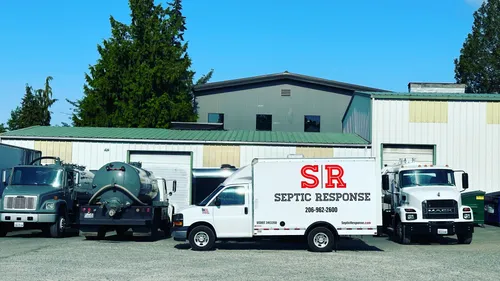
Septic Response
672 7th Ave, Kirkland, WA 98033
Septic Response is a septic service provider based in Seattle, WA, offering a range of services including septic tank pumping, grease trap cleaning, drainfield repair, and system maintenance. They serve King County, Snohomish County, and Pierce County with expertise in both traditional and advanced septic systems. Their services include septic tank inspections, pump replacements, inlet pipe cleaning, and grease trap and sewer lift station maintenance. Septic Response emphasizes preventative maintenance and uses advanced monitoring technologies to ensure system efficiency and environmental compliance. The company is known for providing detailed documentation and educational resources to help homeowners maintain their septic systems effectively.
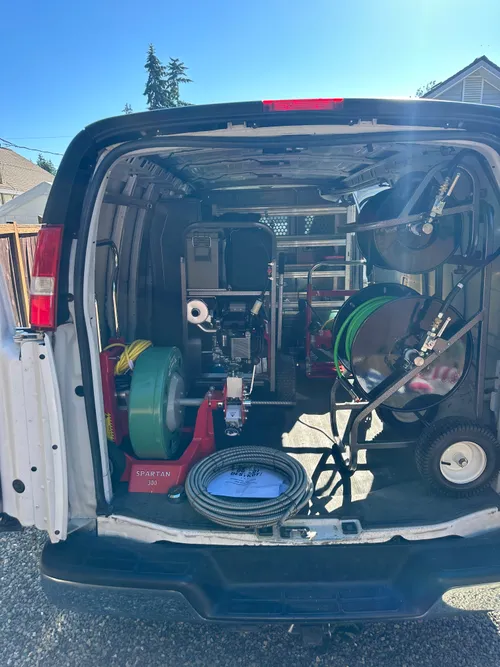
D Street Drain Cleaning
Tacoma, WA
D Street Drain Cleaning provides full-service residential and commercial drain cleaning in Tacoma, WA, including root removal and grease trap cleaning for commercial kitchens. They also offer sewer line inspections with visual camera technology and indoor fixture services such as P trap replacement and garbage disposal installation. Founded to assist customers facing drainage emergencies, the company serves the greater Seattle area with a focus on minimizing water damage caused by heavy rainfall and failing drain systems.
Drain-Pro Inc. - Washington
2511 Inter Ave, Puyallup, WA 98372
Drain-Pro Inc. - Washington provides grease trap cleaning services in Tacoma, WA. The company handles grease trap maintenance and septic tank pumping, demonstrating expertise in emergency service calls, including late-night availability. Customers have noted their ability to explain issues clearly and respond promptly to urgent needs.
Beacon Plumbing, Heating, Electrical & Mechanical Inc - Seattle
515 7th Ave S, Seattle, WA 98104
Beacon Plumbing, Heating, Electrical & Mechanical Inc is a multi-service contractor based in Seattle, WA, providing plumbing, heating, electrical, and mechanical services. Established in 1999, the company serves both residential and commercial clients throughout Seattle and the Puget Sound area. Their services include water, sewer, and pipe repairs, drain clearing, grease trap interceptor cleaning, trenchless technology, and hydro jetting. Beacon Plumbing operates 24/7 to offer immediate assistance when needed and employs licensed technicians who live locally.
Spark Drain & Sewer
210 37th St SE trlr 141, Auburn, WA 98002
Spark Drain & Sewer is a family-owned business providing drain and sewer services in Tacoma, WA. They offer a wide range of plumbing and sewer solutions including grease trap cleaning, trenchless sewer lining, hydro jetting with camera inspection, septic repair, and underground drainage installation. Their services cover both residential and commercial needs, with capabilities such as hydro excavating and restaurant drain maintenance. Spark Drain & Sewer emphasizes customer convenience and satisfaction in their service delivery.
Understanding Local FOG Control Regulations
The City of Federal Way's grease control program is designed to prevent sewer blockages and overflows, which can lead to environmental damage and costly public works repairs. Enforcement is typically administered by local authorities, such as the King County Department of Public Health or the city's Public Works department, in coordination with local sewer utilities 2. Inspections focus on verifying that traps are cleaned to the required effluent limits (often 100 mg/L of FOG), that internal components like baffles are intact and functional, and that proper service records are available for review 3.
Non-compliance can result in significant penalties. Establishments found violating FOG ordinances may face fines, be required to undertake costly remedial actions, or, in severe cases of repeat offenses or major discharges, face business closure 4 5. It is prohibited to use additives like enzymes, bacteria, or solvents as a substitute for mechanical cleaning, as these can simply move the grease problem further down the sewer line 6 4.
Determining Your Cleaning Frequency and Process
How often you need grease interceptor pumping is not arbitrary; it's determined by your establishment's volume of FOG production. For most Federal Way restaurants, scheduled cleanings occur every 1 to 3 months. High-volume kitchens, such as those in fast-food restaurants or large banquet halls, will likely require service at the more frequent end of that spectrum. The cleaning process must be thorough: a licensed hauler should fully evacuate all wastewater, accumulated grease, and solid sludge from the trap. Crucially, the baffles and walls must be scraped clean of all FOG deposits to ensure proper operation 7. The collected waste must then be transported and disposed of by a licensed hauler at an approved facility-never into a storm drain or sewer.
Costs for Grease Trap Service in Federal Way
The cost for grease trap pumping and cleaning varies based on the size of your interceptor, the frequency of service, and the amount of waste removed. For routine, scheduled maintenance of smaller to medium-sized traps, restaurants can expect costs to range from approximately $125 to $400 per service 8 9. However, these are baseline estimates. One-time or emergency cleanings, which often involve more labor and immediate response, can be significantly higher, potentially ranging from $800 to $1,200 or more 8 10. Establishing a regular maintenance schedule with a reliable provider is the most effective way to manage costs and avoid emergency premiums.
Find the perfect grease trap cleaning companies for your needs
Get personalized recommendations and expert advice
Best Practices for FOG Management Compliance
Beyond scheduling regular cleanings, Federal Way food service operators should adopt a comprehensive FOG management plan. First and foremost, contact your local authority-the City of Federal Way Public Works or King County Department of Public Health-to obtain a copy of the specific FOG control ordinance that applies to your business and clarify any local requirements.
Documentation is your best defense during an inspection. Maintain a dedicated logbook on-site that records every service event. Entries should include the date, the name of the servicing company, the volume of waste removed, the disposal method/receipt, and the signature of the service technician 11. Finally, always hire certified and licensed vendors for pumping and disposal. Using a licensed hauler ensures that waste is handled legally and provides you with the necessary paperwork for your records 11.
The Importance of Proper Sizing and Installation
Compliance starts with proper equipment. Grease traps and interceptors must be sized according to plumbing codes and the manufacturer's specifications, based on your kitchen's flow rate and fixture units. Exterior grease interceptors often have minimum size requirements, which can be as substantial as 750 gallons or more depending on local code. An undersized trap will require impractically frequent cleaning and will likely fail to meet effluent standards, leading to compliance issues. If you are opening a new establishment or renovating your kitchen, consult with a plumbing professional and your local building department to ensure your grease control system is correctly specified and installed for long-term efficacy 12.
Frequently asked questions
Sources
Footnotes
-
fats, oils, and grease (fog) control rule for food service establishments - https://cms5.revize.com/revize/butleroh/Document_Center/Water%20&%20Sewer/Forms/BCWS%20-%20Working%20FOG%20Control%20Rule.pdf ↩
-
Chapter 13.05 CONTROL OF FATS, OILS AND GREASE - https://www.codepublishing.com/WA/PortOrchard/html/PortOrchard13/PortOrchard1305.html ↩
-
plumbing-requirements-food-establishments.pdf - King County - https://cdn.kingcounty.gov/-/media/king-county/depts/dph/documents/certificates-permits-licenses/food-worker-business-permits/plumbing-requirements-food-establishments.pdf ↩
-
Grease Trap Regulations and Compliance: What You Need to ... - https://www.texwaywastewater.com/grease-trap-regulations-and-compliance/ ↩ ↩2
-
ordinance no. 1185 - City of Gig Harbor - https://www.gigharborwa.gov/Archive.aspx?ADID=1107 ↩
-
APPENDIX A Grease Trap and Interceptor Requirements Definitions - https://fcwsd.org/documents/728/Appendix_A_Grease_Trap_Requirements.pdf ↩
-
The Ultimate Guide to Restaurant Grease Trap Cleaning - https://mokherplumbing.com/ultimate-guide-restaurant-grease-trap-cleaning/ ↩
-
Ultimate Grease Trap Pumping Cost Guide: Essential Money-Saving ... - https://www.texwaywastewater.com/grease-trap-pumping-cost/ ↩ ↩2
-
Grease Trap Cleaning Prices | Guide on the Industry Average - https://grease-cycle.com/grease-trap-pumping-cost/ ↩
-
How Much Does a Proper Grease Trap Cleaning Cost? - https://hulseyenvironmental.com/how-much-does-a-proper-grease-trap-cleaning-partner-cost/ ↩
-
Washington State Grease Trap Environmental Regulations - https://www.greaseguardianusa.com/2024/06/17/washington-state-grease-trap-environmental-regulations/ ↩ ↩2
-
ordinance no. 1107 - Gig Harbor, WA - https://www.gigharborwa.gov/Archive.aspx?ADID=1185 ↩