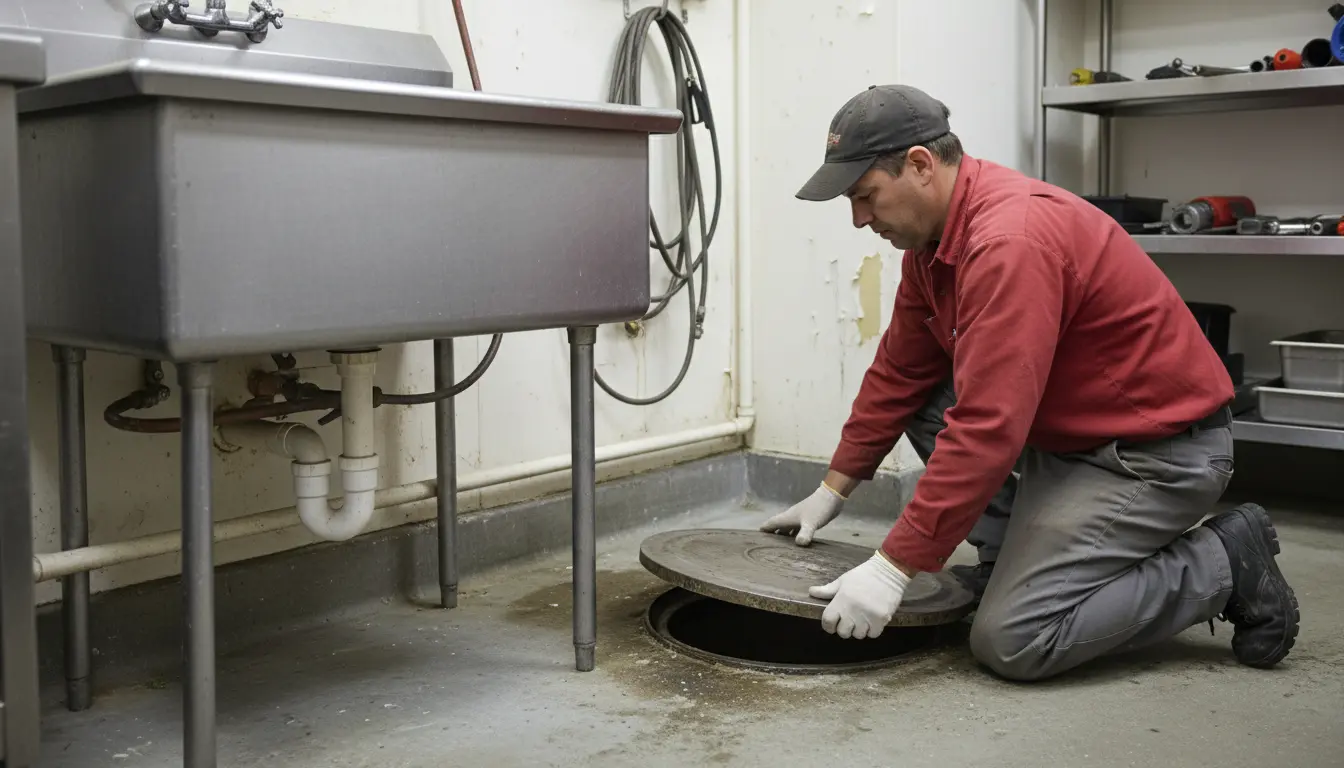
Find the Best Grease Trap Cleaning Companies for Your Business
No obligation • Fast responses • Nationwide coverage

Why you can trust Restaurant Waste Disposal
Restaurant Waste Disposal is a leading U.S. resource for comparing restaurant composting, food-waste recycling, grease trap cleaning, and used cooking oil collection services. Our editorial team researches providers, checks credentials, and organizes unbiased information so operators can make informed decisions. Companies cannot pay to change ratings or placement.
Search providers near you
Top Grease Trap Cleaning Companies in Auburn, Washington Ranked
For restaurant owners and food service operators in Auburn, managing fats, oils, and grease (FOG) is a critical operational and legal responsibility. The city enforces specific codes to prevent sewer blockages and environmental issues, making regular grease trap and interceptor maintenance non-negotiable. Understanding local regulations, proper cleaning procedures, and associated costs is essential for compliance and avoiding significant fines. This guide provides a detailed overview of everything you need to know about grease control for your Auburn-based food service facility.
Proper FOG management starts with knowing your equipment and the rules that govern it. In Auburn, your facility's operations are guided by a submitted Fats, Oils, & Grease (FOG) plan, which dictates your maintenance schedule 1. Adherence to this plan is verified through city inspections, with non-compliance leading to violations and financial penalties 1 2 3. The goal is to protect the public sewer system from costly and disruptive blockages caused by grease buildup.
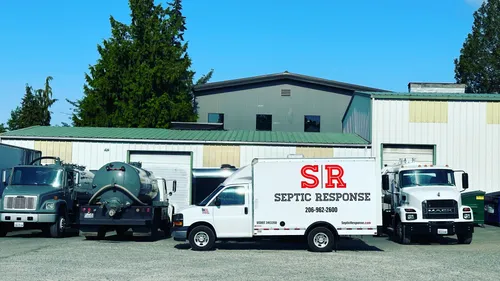
Septic Response
672 7th Ave, Kirkland, WA 98033
Septic Response is a septic service provider based in Seattle, WA, offering a range of services including septic tank pumping, grease trap cleaning, drainfield repair, and system maintenance. They serve King County, Snohomish County, and Pierce County with expertise in both traditional and advanced septic systems. Their services include septic tank inspections, pump replacements, inlet pipe cleaning, and grease trap and sewer lift station maintenance. Septic Response emphasizes preventative maintenance and uses advanced monitoring technologies to ensure system efficiency and environmental compliance. The company is known for providing detailed documentation and educational resources to help homeowners maintain their septic systems effectively.
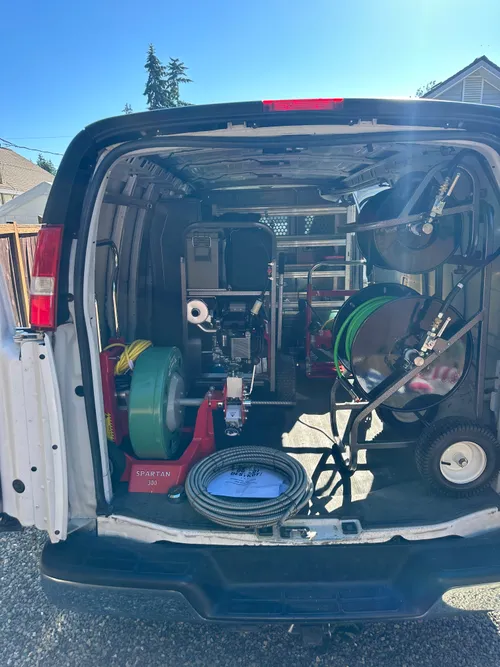
D Street Drain Cleaning
Tacoma, WA
D Street Drain Cleaning provides full-service residential and commercial drain cleaning in Tacoma, WA, including root removal and grease trap cleaning for commercial kitchens. They also offer sewer line inspections with visual camera technology and indoor fixture services such as P trap replacement and garbage disposal installation. Founded to assist customers facing drainage emergencies, the company serves the greater Seattle area with a focus on minimizing water damage caused by heavy rainfall and failing drain systems.
Drain-Pro Inc. - Washington
2511 Inter Ave, Puyallup, WA 98372
Drain-Pro Inc. - Washington provides grease trap cleaning services in Tacoma, WA. The company handles grease trap maintenance and septic tank pumping, demonstrating expertise in emergency service calls, including late-night availability. Customers have noted their ability to explain issues clearly and respond promptly to urgent needs.
Beacon Plumbing, Heating, Electrical & Mechanical Inc - Seattle
515 7th Ave S, Seattle, WA 98104
Beacon Plumbing, Heating, Electrical & Mechanical Inc is a multi-service contractor based in Seattle, WA, providing plumbing, heating, electrical, and mechanical services. Established in 1999, the company serves both residential and commercial clients throughout Seattle and the Puget Sound area. Their services include water, sewer, and pipe repairs, drain clearing, grease trap interceptor cleaning, trenchless technology, and hydro jetting. Beacon Plumbing operates 24/7 to offer immediate assistance when needed and employs licensed technicians who live locally.
Spark Drain & Sewer
210 37th St SE trlr 141, Auburn, WA 98002
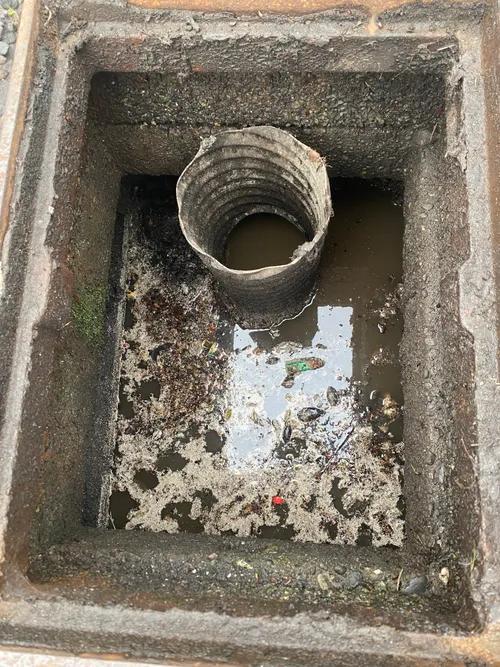
Spark Drain & Sewer is a family-owned business providing drain and sewer services in Tacoma, WA. They offer a wide range of plumbing and sewer solutions including grease trap cleaning, trenchless sewer lining, hydro jetting with camera inspection, septic repair, and underground drainage installation. Their services cover both residential and commercial needs, with capabilities such as hydro excavating and restaurant drain maintenance. Spark Drain & Sewer emphasizes customer convenience and satisfaction in their service delivery.
Understanding Auburn's Grease Trap Regulations
Auburn's municipal code provides clear directives for grease trap and interceptor maintenance. The cornerstone of compliance is following the cleaning frequency outlined in your facility's approved FOG plan, which is typically every 90 days or less. This isn't a suggestion-it's a requirement. The city's regulations are designed to ensure that grease interceptors are functioning correctly to stop FOG from entering the wastewater system.
The scope of a compliant cleaning is also specified. It's not just about pumping out liquid. A proper service must include removing the entire grease and scum layer, thoroughly scraping the baffles to ensure they are clear, and removing all accumulated bottom sludge. After this waste is hauled away, the trap must be refilled with clean water to restore proper operation. Skipping any of these steps can leave your trap inefficient and put you at risk during an inspection.
Key Rules for Self-Cleaning and Installation
For smaller operations, self-cleaning may be an option, but only under strict conditions. The Auburn code permits self-cleaning for indoor grease traps with a capacity of 55 gallons or less. If you choose this route, you must ensure that all FOG and waste is completely removed from the trap, the baffles are inspected and cleaned, and the unit is refilled with water. All waste must be disposed of properly at an approved facility-never down a drain or into a dumpster 4 5.
Installation rules are equally important for compliance. Outdoor traps must be easily accessible for both routine pumping and city inspections. Furthermore, certain connections to grease traps are prohibited. Specifically, wastewater from dishwashers or any sanitary (black water) lines should never be routed through a grease interceptor 6. These rules help maintain the trap's effectiveness and simplify maintenance.
The Cost of Grease Trap Cleaning in Auburn
Investing in regular grease trap maintenance is far more economical than facing fines or emergency repairs. Costs in Auburn vary widely based on several key factors, but understanding the price ranges can help you budget effectively.
For a standard, well-maintained indoor grease trap, you can expect cleaning costs to range from approximately $175 to $475 or more per service 7. This price typically covers the standard cleaning scope for a unit that has been serviced on a regular schedule. The final cost within this range will depend on the exact size of your trap and its accessibility.
However, costs can escalate significantly for larger, neglected, or outdoor systems. A severely neglected trap requires more labor, time, and disposal capacity to clean. Cleaning a large outdoor interceptor (e.g., 1,000+ gallons) or one that has been poorly maintained can cost anywhere from $400 to over $2,500 8 9. The primary factors driving up price are:
- Size & Capacity: Larger traps hold more waste and take longer to pump.
- Condition & Neglect: Heavy buildup of hardened grease and sludge requires extensive labor.
- Location & Accessibility: Difficult-to-reach outdoor traps may require special equipment.
- Service Frequency: Regular service keeps costs low; infrequent service leads to higher per-visit charges.
Find the perfect grease trap cleaning companies for your needs
Get personalized recommendations and expert advice
The Inspection and Enforcement Process
The City of Auburn conducts inspections to ensure food service facilities are adhering to their FOG plans and maintaining their grease control equipment. These inspections are a proactive measure to safeguard the city's sewer infrastructure. An inspector will typically check for records of recent cleanings, examine the physical condition of the trap, and ensure there are no prohibited connections.
Failure to comply with regulations has consequences. Enforcement actions can begin with a notice of violation, requiring immediate corrective action. Continued non-compliance can result in substantial fines and other penalties. The enforcement philosophy is preventative-penalties are designed to compel compliance before your facility's FOG discharge causes a sewer line blockage, which can lead to even more severe environmental and public health repercussions.
Building a Compliant Maintenance Routine
Creating a reliable routine is the best defense against violations and excessive cleaning costs. First, know your schedule. Mark your calendar for cleanings based on your FOG plan's required frequency (e.g., quarterly). Second, keep detailed records. Maintain a log of every cleaning, including the date, the service provider, the amount of waste removed, and the disposal receipt. This log is your first line of defense during an inspection.
Third, train your staff. Ensure kitchen staff understand what should and should not go down the drain. Implementing simple best practices like scraping plates into trash bins before washing and using sink strainers can dramatically reduce the grease load on your trap, extending time between services and improving efficiency. Finally, partner with a reputable service provider who understands Auburn's local codes and can provide documentation that meets inspection standards.
Consequences of Non-Compliance
Ignoring grease trap maintenance is a risky and costly decision. The immediate consequence is typically a fine from the city, but the downstream effects can be much worse. A clogged trap will eventually allow grease to enter the public sewer, where it cools, hardens, and creates blockages. These blockages can cause sewage backups into your business or neighboring properties, leading to horrific sanitation issues, business interruption, and massive liability claims.
Furthermore, the city or utility provider may pursue cost recovery for clearing the public sewer blockage caused by your facility's non-compliance. These costs can dwarf standard cleaning service fees or fines. In severe, repeated cases of violation, a business could face legal action or even have its sewer connection permit revoked, effectively shutting down operations until the issue is resolved at great expense.
Frequently asked questions
Sources
Footnotes
-
13.22.070 Grease traps and grease interceptors - Cleaning ... - https://auburn.municipal.codes/ACC/13.22.070 ↩ ↩2
-
Food Service Facility Grease Control Manual, Jan 2004 ... - https://www.mawss.com/uploads/foodservicegreasecontrolmanual.pdf ↩
-
Grease Traps for Restaurants: The Essential Guide - https://therestaurantwarehouse.com/blogs/restaurant-equipment/grease-trap-for-restaurant-guide ↩
-
Use Of A Grease Trap - Alabama Administrative Code - https://admincode.legislature.state.al.us/administrative-code/420-3-1-.22 ↩
-
FATS, OILS & GREASE (FOG) MANAGEMENT GUIDELINES - https://www.scottsborowsg.com/docs/SWSG_FOG_POLICY.pdf ↩
-
ORDINANCE NO. 2.019''"'.Dl - Alabama Department of Revenue - https://www.revenue.alabama.gov/wp-content/uploads/2022/03/Alexander_City_Grease_Trap_Ord_2018_01.pdf ↩
-
How Much Does a Proper Grease Trap Cleaning Cost? - https://hulseyenvironmental.com/how-much-does-a-proper-grease-trap-cleaning-partner-cost/ ↩
-
Ultimate Grease Trap Pumping Cost Guide: Essential Money-Saving ... - https://www.texwaywastewater.com/grease-trap-pumping-cost/ ↩
-
Restaurant Grease Trap & Interceptor Cleaning Cost - https://greasemanagement.org/pricing.html ↩