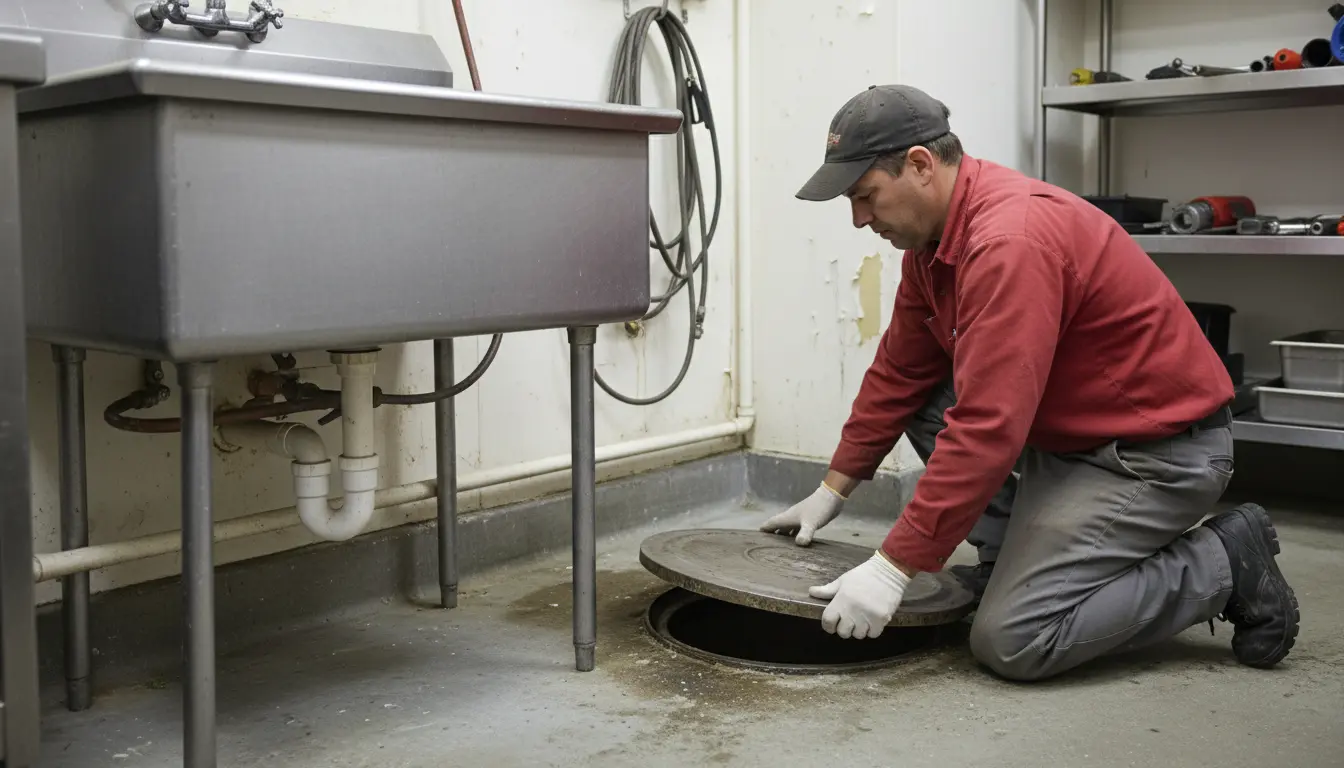
Find the Best Grease Trap Cleaning Companies for Your Business
No obligation • Fast responses • Nationwide coverage

Why you can trust Restaurant Waste Disposal
Restaurant Waste Disposal is a leading U.S. resource for comparing restaurant composting, food-waste recycling, grease trap cleaning, and used cooking oil collection services. Our editorial team researches providers, checks credentials, and organizes unbiased information so operators can make informed decisions. Companies cannot pay to change ratings or placement.
Search providers near you
Top Grease Trap Cleaning Companies in Passaic, New Jersey Ranked
For any restaurant or food service establishment in Passaic, maintaining a clean and compliant grease trap isn't just a good practice-it's a legal requirement. New Jersey state law and local Passaic County ordinances mandate strict adherence to Fats, Oils, and Grease (FOG) management protocols to protect the public sewer system from costly and disruptive blockages. Failure to comply can lead to significant fines, enforcement actions, and even liability for cleanup costs. This guide outlines the essential regulations, maintenance routines, and service considerations for effective grease interceptor management in Passaic, ensuring your business operates smoothly and avoids penalties.
Viper Jet Drain Services
5-02 Banta Pl, Fair Lawn, NJ 07410
Viper Jet Drain Services provides drain, septic, and grease trap cleaning services in New York, NY, and New Jersey. They serve residential, commercial, and municipal clients with solutions ranging from household drain cleaning to large-scale sewer and stormwater management. Their licensed and insured technicians use advanced equipment such as hydro jetting and camera inspections to deliver reliable results. The family-owned company emphasizes expertise and customer care, offering emergency services and professional maintenance for grease traps and septic systems.
Loeffels Waste Oil Services
43 Layton Ln, Sparta, NJ 07871
Loeffels Waste Oil Services is a family-owned company based near New York, NY, specializing in used cooking oil collection and grease trap cleaning. They serve commercial clients with reliable waste oil removal and grease trap maintenance, including emergency pump-out services. With over ninety years of experience, Loeffels Waste Oil Services emphasizes safety and efficiency in their operations.
EarthCare, A Wind River Company
Woodbridge, NJ
EarthCare, A Wind River Company, provides septic and grease trap cleaning services in Woodbridge, NJ, and the surrounding North Jersey and Hudson Valley areas. They serve residential, commercial, and municipal clients with a wide range of services including pumping, cleaning, waste hauling, disposal, and environmental compliance. With a history dating back to 1946, EarthCare operates one of the industry's largest fleets and offers 24/7 emergency availability. Their services include detailed inspections and real-time reporting to help clients maintain compliance with local and state regulations.
Zoom Drain
152 Stevens Ave, Jersey City, NJ 07305
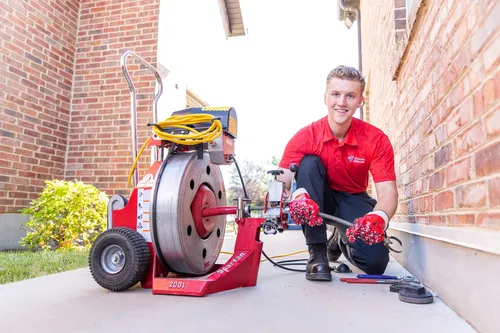
Zoom Drain is a drain and sewer cleaning company serving New York, NY, and the surrounding North Jersey area. They provide services for residential and commercial properties, including grease trap maintenance and sewer cleaning. The company uses advanced equipment such as PowerSnake, Zoom Jetting®, and video inspection to address clogs, root invasions, and other drain issues efficiently. Zoom Drain also offers specialized solutions like Zoom Drain Bio™ to dissolve common drain blockages. Their team is known for knowledgeable technicians and tailored maintenance plans to meet diverse customer needs.
Roto-Rooter Plumbing & Water Cleanup
3000 John F. Kennedy Blvd Ste 310A, Jersey City, NJ 07306
Roto-Rooter Plumbing & Water Cleanup provides comprehensive plumbing and water cleanup services in New York, NY, with a focus on Jersey City and surrounding areas. They offer a wide range of residential and commercial plumbing solutions, including grease trap cleaning, sewer line repair, drain cleaning, water heater installation and repair, and emergency flood services. The company is equipped with advanced technology such as high-pressure water jetting (hydro-jetting) and video sewer inspections to address complex plumbing issues. Roto-Rooter operates 24/7, providing emergency plumbing services year-round to quickly respond to urgent plumbing problems.
Understanding New Jersey and Passaic Grease Trap Regulations
Compliance starts with knowing the rules. At the state level, the New Jersey Administrative Code (N.J.A.C. 7:9A-8.1) requires that all food service establishments install and maintain properly sized grease removal devices 1. The sizing of your grease interceptor is typically based on factors like the number of seats, operating hours, and the type of food served. Furthermore, the device must be easily accessible for inspection, pumping, and maintenance 1.
Local municipalities within Passaic County often enforce stricter, more specific rules. Many towns require that grease traps be cleaned at least every six months, or more frequently when the accumulated FOG and solids reach 25% of the tank's capacity 2. It is critical to check with the Passaic City Health Department or Building Department for your exact local code, as requirements can vary. A common local mandate is that you must use only grease haulers registered with the county for waste disposal 3.
The Critical Importance of Maintenance Logs
One of the most frequently cited violations during inspections is inadequate record-keeping. You are required to maintain a detailed Grease Trap Maintenance Log. This log should document every professional pumping service, including the date, time, company name, hauler's signature, and the volume of waste removed.
Beyond professional cleanings, the log must also record routine internal inspections conducted by your staff. Regulations often require trained employees to check the grease interceptor for accumulation levels and signs of malfunction every two weeks or monthly. Keeping this log meticulously updated and readily available for health inspectors or plumbing subcode officials is not just recommended-it's a cornerstone of compliance and can be the difference between a pass and a fine.
Enforcement and Penalties for Non-Compliance
Who enforces these rules? A combination of authorities has oversight, including:
- Local Health Departments
- Municipal Plumbing Subcode Officials
- The Passaic Valley Sewer Commission (PVSC)
These entities conduct inspections, which can be scheduled or unannounced, to verify compliance with sizing, maintenance, and disposal regulations 4 5. The consequences for violations are serious. Fines can start at $250 or more for a first offense 4 6. More severe penalties apply if a grease-related sewer blockage occurs; your business could be held financially responsible for the cleanup and repair costs, which can run into thousands of dollars 7.
Professional Service: What to Expect and Costs
Given the complexity and legal stakes, hiring a professional, licensed grease trap cleaning service is essential. These registered haulers have the equipment and expertise to pump out the full contents of your interceptor, scrape down the walls and baffles, and ensure all waste is properly disposed of at a licensed facility-never back into the sewer.
Service costs in the Passaic area can vary based on the size of your trap, its location, and how much accumulated waste needs removal. For a standard, scheduled pumping service, restaurants can generally expect costs in the range of $250 to $400 or more per service 8 9. The frequency of service is dictated by your volume of business; a high-volume restaurant may need cleaning every 1 to 3 months, while a smaller operation might manage on a quarterly or semi-annual schedule. It's important to note that emergency service, required after a missed cleaning leads to a backup or violation notice, can cost significantly more, often between $800 and $1,200+ per call 8.
Find the perfect grease trap cleaning companies for your needs
Get personalized recommendations and expert advice
Best Practices for Passaic Restaurant Owners
Staying ahead of grease trap issues requires a proactive approach. Here are key steps to ensure compliance and smooth operations:
- Verify Your Local Code: Don't assume state rules are enough. Contact the Passaic City Health Department or your local building office to get the specific ordinance text for your establishment.
- Hire Licensed Professionals: Always contract with grease haulers who are registered with Passaic County and can provide valid documentation of proper waste disposal.
- Maintain Impeccable Records: Your maintenance log is your first line of defense during an inspection. Keep it current, organized, and on-site.
- Implement Staff Training: Designate and train employees on how to perform the required bi-weekly or monthly visual checks of the grease trap. They should know how to identify when the trap is nearing 25% capacity 10.
- Schedule Proactively: Work with your service provider to establish a pumping schedule based on your actual usage, not just the minimum legal requirement. This prevents emergencies and demonstrates good faith to inspectors.
The Risks of Improper Disposal
It cannot be overstated: pouring grease trap waste down a drain, into a storm sewer, or onto the ground is illegal and environmentally harmful. Licensed haulers transport the collected FOG to facilities that can recycle it into products like biodiesel or properly treat it 11. Improper disposal not only risks massive fines but also contributes to sewer overflows that can harm local waterways and trigger severe enforcement actions from state environmental agencies.
Frequently asked questions
Sources
Footnotes
-
N.J. Admin. Code § 7:9A-8.1 - Grease removal and high ... - https://www.law.cornell.edu/regulations/new-jersey/N-J-A-C-7-9A-8-1 ↩ ↩2
-
Installation and Maintenance of Grease Traps - eCode360 - https://ecode360.com/34939379 ↩
-
Grease Trap Regulations and Maintenance - A Rooter Pros - https://njsewerdrain.com/grease-trap-and-grease-interceptor-regulations-in-nj/ ↩
-
New Jersey FOG Regulations - D&W Alternative Energy - https://dandwalternativeenergy.com/blog/new-jersey-fog-regulations/ ↩ ↩2
-
Grease Trap Cleaning - IPC - https://www.ipc.cleaning/grease-trap-cleaning/ ↩
-
Grease Traps, Interceptors and Oil Separators - eCode360 - https://ecode360.com/13731865 ↩
-
NJ Grease Trap Pumping - A Rooter Pros - https://njsewerdrain.com/grease-trap-pumping-cleaning/ ↩
-
Ultimate Grease Trap Pumping Cost Guide: Essential Money-Saving ... - https://www.texwaywastewater.com/grease-trap-pumping-cost/ ↩ ↩2
-
How Much Does It Cost To Clean A Grease Trap? - https://www.greasecollection.com/blog/how-much-does-it-cost-to-clean-a-grease-trap/ ↩
-
Commercial Grease Trap Cleaning in New Jersey and New York - https://www.davidzuidema.com/septic-services/commercial-grease-trap-cleaning/ ↩
-
New Jersey FOG & Used Oil Rules: Permits & 90-Day Limit - https://greaseconnections.com/resources/compliance/nj/ ↩