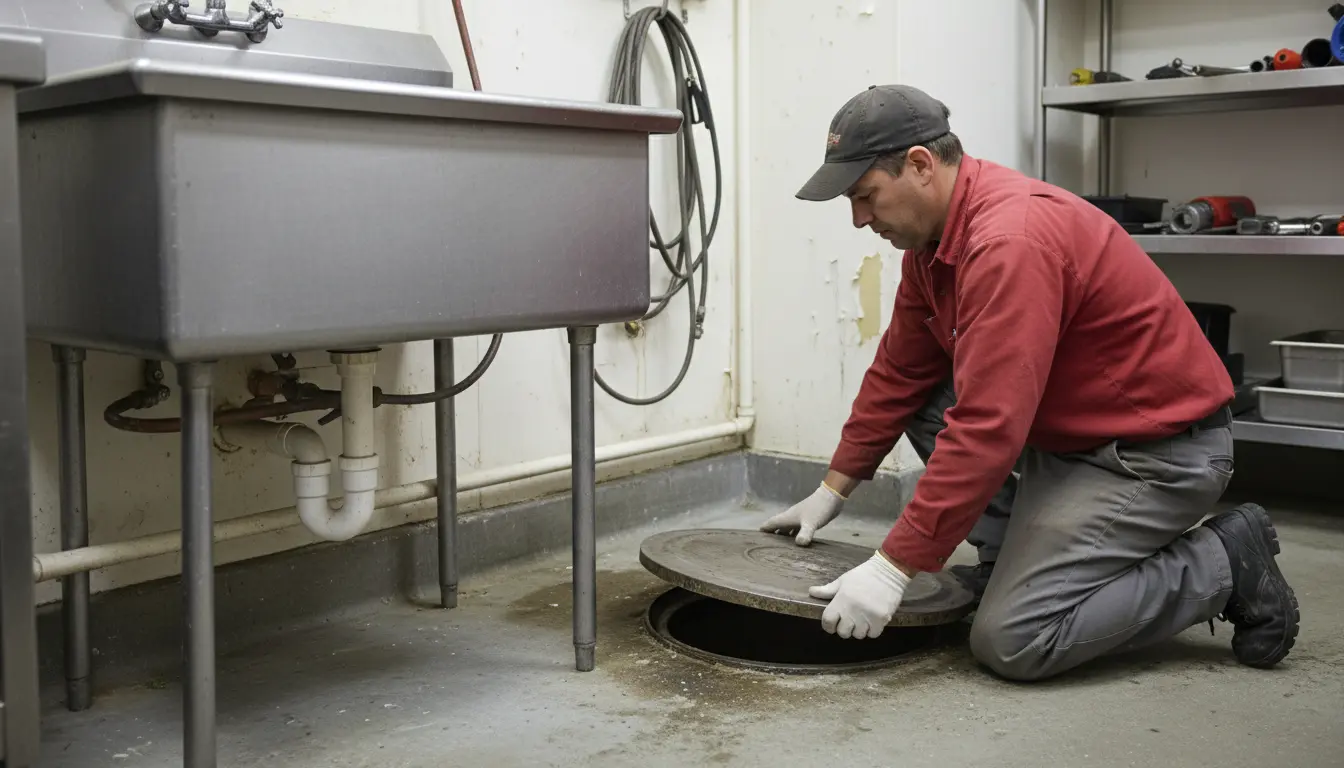
Find the Best Grease Trap Cleaning Companies for Your Business
No obligation • Fast responses • Nationwide coverage

Why you can trust Restaurant Waste Disposal
Restaurant Waste Disposal is a leading U.S. resource for comparing restaurant composting, food-waste recycling, grease trap cleaning, and used cooking oil collection services. Our editorial team researches providers, checks credentials, and organizes unbiased information so operators can make informed decisions. Companies cannot pay to change ratings or placement.
Search providers near you
Top Grease Trap Cleaning Companies in Parsippany-Troy Hills, New Jersey Ranked
For restaurant owners and food service operators in Parsippany-Troy Hills, maintaining a clean and compliant grease trap is a critical, non-negotiable aspect of daily business. These grease interceptors are your first line of defense against costly sewer blockages, unpleasant odors, and significant regulatory fines. Local ordinances, aligned with New Jersey state codes, mandate strict installation, maintenance, and record-keeping protocols for all food establishments. This guide outlines the essential requirements, typical costs, and compliance steps for effective grease trap management in Parsippany, helping you protect your business and the municipal sewer system.
PowerFlo Sewer Service
2277 Victory Blvd, Staten Island, NY 10314
PowerFlo Sewer Service is a sewer and drain cleaning company serving New York, NY. They provide a range of services including grease trap cleaning, water jet cleaning, camera inspection, vacuum pumping, and flood control for residential, commercial, and condominium customers. The company emphasizes respect and care for customers' properties and employs experienced technicians to handle both simple and complex drainage problems. PowerFlo Sewer Service is known for leaving no mess behind and maintaining clear communication throughout the service process.
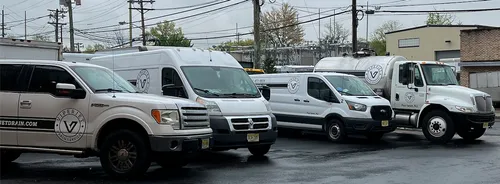
Viper Jet Drain Services
5-02 Banta Pl, Fair Lawn, NJ 07410
Viper Jet Drain Services provides drain, septic, and grease trap cleaning services in New York, NY, and New Jersey. They serve residential, commercial, and municipal clients with solutions ranging from household drain cleaning to large-scale sewer and stormwater management. Their licensed and insured technicians use advanced equipment such as hydro jetting and camera inspections to deliver reliable results. The family-owned company emphasizes expertise and customer care, offering emergency services and professional maintenance for grease traps and septic systems.
Loeffels Waste Oil Services
43 Layton Ln, Sparta, NJ 07871
Loeffels Waste Oil Services is a family-owned company based near New York, NY, specializing in used cooking oil collection and grease trap cleaning. They serve commercial clients with reliable waste oil removal and grease trap maintenance, including emergency pump-out services. With over ninety years of experience, Loeffels Waste Oil Services emphasizes safety and efficiency in their operations.
EarthCare, A Wind River Company
Woodbridge, NJ
EarthCare, A Wind River Company, provides septic and grease trap cleaning services in Woodbridge, NJ, and the surrounding North Jersey and Hudson Valley areas. They serve residential, commercial, and municipal clients with a wide range of services including pumping, cleaning, waste hauling, disposal, and environmental compliance. With a history dating back to 1946, EarthCare operates one of the industry's largest fleets and offers 24/7 emergency availability. Their services include detailed inspections and real-time reporting to help clients maintain compliance with local and state regulations.
Zoom Drain
152 Stevens Ave, Jersey City, NJ 07305
Zoom Drain is a drain and sewer cleaning company serving New York, NY, and the surrounding North Jersey area. They provide services for residential and commercial properties, including grease trap maintenance and sewer cleaning. The company uses advanced equipment such as PowerSnake, Zoom Jetting®, and video inspection to address clogs, root invasions, and other drain issues efficiently. Zoom Drain also offers specialized solutions like Zoom Drain Bio™ to dissolve common drain blockages. Their team is known for knowledgeable technicians and tailored maintenance plans to meet diverse customer needs.
Understanding Parsippany's Grease Interceptor Regulations
In Parsippany-Troy Hills Township, the use of grease traps or interceptors is mandatory for any facility that prepares or serves food. The local plumbing and health codes are designed to prevent fats, oils, and grease (FOG) from entering the public wastewater system, where they can solidify and cause severe blockages. Compliance isn't optional; it's a condition of operating your food service business. The regulations cover everything from the proper installation of the interceptor unit to its ongoing maintenance and the documentation you must keep on file.
Key installation standards require that grease interceptors be placed on a separate waste line, constructed of impervious materials, and include flow control devices. They must conform to recognized standards, such as those from the Plumbing & Drainage Institute 1. It is the owner's responsibility to ensure the interceptor is installed correctly and maintained at their own expense to ensure continuous, efficient operation.
Mandatory Maintenance Schedule and Pumping Standards
The cornerstone of compliance is adhering to a strict maintenance and pumping schedule. Parsippany's regulations, reflecting New Jersey state guidelines, specify that grease interceptors must be pumped out when the combined FOG and solids accumulate to 25% of the unit's capacity 2. Importantly, even if the trap has not reached this 25% threshold, it must be serviced at a minimum of every 90 days 3 2. This "whichever comes first" rule is a critical compliance point that inspectors will verify.
Neglecting this schedule is a primary cause of violations. A full or malfunctioning interceptor allows grease to pass into the sewer lines, creating a public nuisance and a direct liability for your business. Furthermore, after pumping, the collected waste has specific disposal requirements; it is prohibited from being discharged back into the public sewer system 4.
The Critical Role of Maintenance Logbooks
Your maintenance logbook is your documented proof of compliance. Parsippany-Troy Hills requires food service establishments to maintain detailed, signed service logs for a minimum of two years, and these records must be available for inspection at any time by township health or plumbing officials.
A proper log entry should include:
- The date and time of service.
- The name of the licensed hauler or service company that performed the work.
- The volume of grease, solids, and wastewater removed (in gallons).
- The disposal method and location for the waste.
- The signature of the service provider representative.
Incomplete or missing logs can be treated as a violation equivalent to not having the service performed at all, leading to fines. Keeping meticulous records is a simple but vital step in demonstrating your commitment to proper FOG management.
Inspection Protocols and Penalties for Non-Compliance
The Township conducts inspections to enforce these regulations. These may be performed annually by licensed plumbers or health department officials. During an inspection, officials will check the physical condition of your grease interceptor, review your maintenance logbooks for the past two years, and ensure no prohibited discharges are occurring.
If a violation is found-such as an overdue pumping, an undersized trap, or missing logs-the operator is typically given a corrective action period (e.g., 30 days) to resolve the issue 5 6. Failure to comply triggers escalating penalties. These can start with fines (e.g., $250 for a first offense) and increase for subsequent violations 7. In severe cases, or if your establishment contributes to a sewer blockage, you can be held responsible for the cleanup costs and may even face business closure or criminal charges 5 7.
Find the perfect grease trap cleaning companies for your needs
Get personalized recommendations and expert advice
Estimating the Cost of Grease Trap Services
The cost for grease interceptor pumping and cleaning in the Parsippany area is not fixed by the township and can vary significantly based on several factors. You should always obtain quotes from multiple licensed and insured service providers. Typical costs for a standard service in New Jersey can range from $200 to $500 or more per pump-out 8 9.
The final price depends on:
- Trap Size and Location: A small, accessible 50-gallon indoor trap will cost less to service than a large 1,000+ gallon concrete interceptor buried outside.
- Volume of FOG: Traps at high-volume restaurants fill faster and may require more labor-intensive cleaning.
- Service Frequency: Adhering to the 90-day schedule may qualify you for a service contract at a predictable rate.
- Service Provider: Rates differ between local companies. Ensure they are licensed with the New Jersey Department of Environmental Protection (NJDEP) for waste hauling.
Steps for Ensuring Full Compliance
- Know Your Local Ordinance: Contact the Parsippany-Troy Hills Township Health Department or the Plumbing Subcode Official to get the exact local code text and any specific fee schedules or forms 10 11.
- Verify Your Interceptor's Specifications: Ensure your current grease trap is correctly installed and sized appropriately for your kitchen's volume. An undersized unit will require impossibly frequent servicing.
- Contract with a Licensed Hauler: Work only with grease trap service companies that are fully licensed and insured in New Jersey. They will provide the proper waste manifests and documentation for your logbook 12.
- Establish a Proactive Service Schedule: Don't wait for a problem. Set up a regular service contract that meets or exceeds the 90-day/25% full requirement.
- Maintain Impeccable Records: Designate a manager to be responsible for filling out and filing the service log after every pump-out. Treat this document with the same importance as a health inspection report.
Frequently asked questions
Sources
Footnotes
-
Restaurant Grease Trap Cleaning FAQs - Mahoney Environmental - https://www.mahoneyes.com/restaurant-grease-trap-cleaning-faqs/ ↩
-
N.J. Admin. Code § 7:9A-8.1 - Grease removal and high strength ... - https://www.law.cornell.edu/regulations/new-jersey/N-J-A-C-7-9A-8-1 ↩ ↩2
-
New Jersey FOG & Used Oil Rules: Permits & 90-Day Limit - https://greaseconnections.com/resources/compliance/nj/ ↩
-
Grease Traps, Interceptors and Oil Separators - eCode360 - https://ecode360.com/13731865 ↩
-
New Jersey FOG Regulations - D&W Alternative Energy - https://dandwalternativeenergy.com/blog/new-jersey-fog-regulations/ ↩ ↩2
-
Grease Trap Regulations and Compliance: What You Need to ... - https://www.texwaywastewater.com/grease-trap-regulations-and-compliance/ ↩
-
New Jersey Ordinance to Deal with Grease Trap Pumping Concerns - https://replaceyourgarbagedisposal.com/grease-trap-pumping/new-jersey-explores-ordinance-to-deal-with-grease-trap-pumping-concerns/ ↩ ↩2
-
Commercial Grease Trap Cleaning in New Jersey and New York - https://www.davidzuidema.com/septic-services/commercial-grease-trap-cleaning/ ↩
-
NJ Grease Trap Pumping - A Rooter Pros - https://njsewerdrain.com/grease-trap-pumping-cleaning/ ↩
-
Installation and Maintenance of Grease Traps - eCode360 - https://ecode360.com/34939379 ↩
-
Township of Parsippany-Troy Hills, NJ Sewage Disposal ... - https://ecode360.com/5107974 ↩
-
Grease Trap Installation: Key Spots You Should Know - https://www.wepumpitsepticservice.com/where-is-a-grease-trap-usually-installed ↩