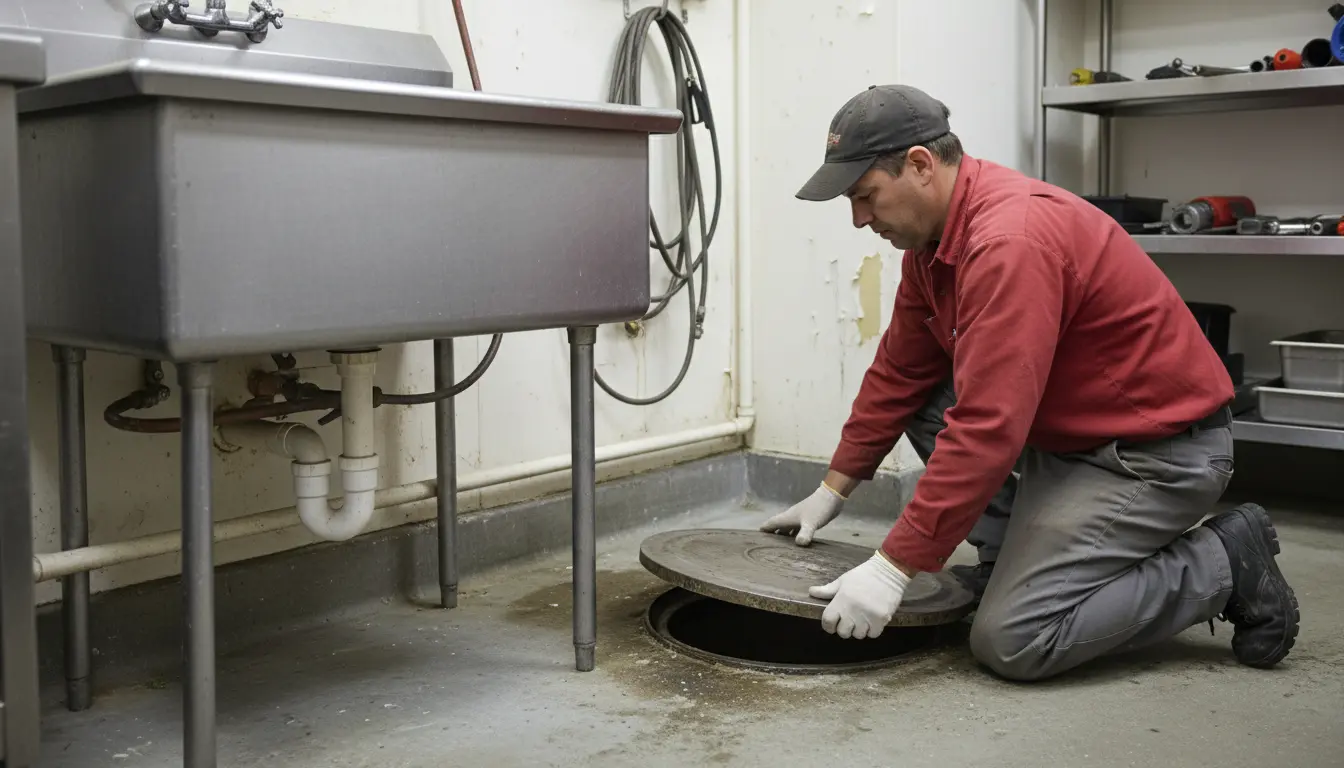
Find the Best Grease Trap Cleaning Companies for Your Business
No obligation • Fast responses • Nationwide coverage

Why you can trust Restaurant Waste Disposal
Restaurant Waste Disposal is a leading U.S. resource for comparing restaurant composting, food-waste recycling, grease trap cleaning, and used cooking oil collection services. Our editorial team researches providers, checks credentials, and organizes unbiased information so operators can make informed decisions. Companies cannot pay to change ratings or placement.
Search providers near you
Top Grease Trap Cleaning Companies in North Brunswick, New Jersey Ranked
For restaurant owners and food service operators in North Brunswick, managing fats, oils, and grease (FOG) is a critical operational and legal responsibility. Proper grease trap and grease interceptor maintenance is not just about preventing clogs and foul odors in your kitchen; it's a mandated requirement under New Jersey state law and local borough ordinances. Failure to comply can lead to severe sewer backups, environmental harm, and substantial fines from municipal inspections. This guide outlines the essential regulations, best practices, and cost considerations for keeping your establishment compliant and running smoothly.
PowerFlo Sewer Service
2277 Victory Blvd, Staten Island, NY 10314
PowerFlo Sewer Service is a sewer and drain cleaning company serving New York, NY. They provide a range of services including grease trap cleaning, water jet cleaning, camera inspection, vacuum pumping, and flood control for residential, commercial, and condominium customers. The company emphasizes respect and care for customers' properties and employs experienced technicians to handle both simple and complex drainage problems. PowerFlo Sewer Service is known for leaving no mess behind and maintaining clear communication throughout the service process.
Zoom Drain
152 Stevens Ave, Jersey City, NJ 07305
Zoom Drain is a drain and sewer cleaning company serving New York, NY, and the surrounding North Jersey area. They provide services for residential and commercial properties, including grease trap maintenance and sewer cleaning. The company uses advanced equipment such as PowerSnake, Zoom Jetting®, and video inspection to address clogs, root invasions, and other drain issues efficiently. Zoom Drain also offers specialized solutions like Zoom Drain Bio™ to dissolve common drain blockages. Their team is known for knowledgeable technicians and tailored maintenance plans to meet diverse customer needs.
Arrow Sewer and Drain
165 Union Ave, Middlesex, NJ 08846
Arrow Sewer and Drain is a plumbing and sewer service provider based in Middlesex, New Jersey, serving residential and commercial clients throughout Edison and the broader New Jersey area. They offer a wide range of services including grease trap cleaning, trenchless sewer repair, hydro jet drain cleaning, hydro excavation, septic tank installation and replacement, and emergency plumbing. Their use of advanced equipment such as sewer scopes, cured-in-place pipe (CIPP) technology, and hydro excavation allows for efficient, non-invasive repairs that minimize disruption to properties. With over 15 years of experience, Arrow Sewer and Drain provides 24/7 emergency plumbing services to address urgent issues at any time.
Roto-Rooter Plumbing & Water Cleanup
23 Emmons St Ste 202, Long Branch, NJ 07740
Roto-Rooter Plumbing & Water Cleanup provides comprehensive plumbing services for homes and businesses in Brick, NJ. Their offerings include commercial plumbing, emergency plumbing available 24/7, drain cleaning, grease trap pumping and cleaning, sewer line services, water heater repair and installation, and water softener and filtration system services. The company uses advanced capabilities such as hydro-jetting and video camera sewer inspections to address plumbing issues efficiently. Serving the Long Branch metro area and surrounding communities, Roto-Rooter is fully licensed and insured to handle a wide range of plumbing needs.
Wind River Environmental
Toms River, NJ
Wind River Environmental is a grease trap cleaning company serving Toms River, NJ, and the Central New Jersey area. They provide residential, commercial, municipal, and industrial septic, grease, and drain cleaning services. The company is part of the Wind River Environmental family, which has been an industry leader since 1946, and has been serving Central New Jersey locally for nearly 30 years. Wind River Environmental offers 24/7 emergency services and uses cost-efficient, minimally invasive methods to maintain and repair septic systems and grease traps.
Understanding New Jersey and North Brunswick FOG Regulations
New Jersey's regulatory framework for grease control is designed to protect municipal sewer systems from blockages and overflows. The primary rule, N.J. Admin. Code § 7:9A-8.1, requires any facility that is a high-FOG producer to install and maintain an approved grease removal device. This typically includes all restaurants, cafeterias, bakeries, and any kitchen discharging significant amounts of fats, oils, and grease.
Key state requirements include:
- Proper Sizing: Grease interceptors must be sized based on factors like the number of seats, meal periods, and kitchen hours to ensure adequate capacity.
- Prohibited Connections: Garbage disposals (food grinders) are expressly prohibited from discharging into a grease trap or the building drainage line that serves it.
- Local Ordinances: North Brunswick Township likely has its own supplemental codes that enforce the state rules. These local ordinances often specify licensing requirements for service providers, mandate maintenance logs, and strictly forbid pouring FOGs down sinks or floor drains.
Compliance starts with confirming your specific requirements with the North Brunswick Health Department or Public Works Department, as they enforce these rules locally.
Recommended Maintenance Frequency and Best Practices
How often should you have your grease interceptor serviced? While the state mandates maintenance to prevent FOG from entering the sewer, the exact schedule depends on your volume. A common best practice is to pump the trap when the combined grease and solids layer reaches 25% of the liquid depth 1 2.
For most North Brunswick restaurants, this translates to a cleaning schedule of:
- Every 1 to 3 months for routine maintenance.
- Bi-weekly or monthly for very high-volume kitchens, such as busy diners or large banquet halls.
Relying on a "set it and forget it" quarterly schedule can be risky. The only way to know for sure is through consistent, documented inspections.
The Critical Role of Employee Inspections and Logs
A cornerstone of compliance is the maintenance log. Restaurant owners are responsible for implementing a system where staff performs weekly visual inspections of the grease trap. These logs must detail:
- Date and time of inspection
- Condition of the trap (e.g., grease level, signs of leakage)
- Name and signature of the inspecting employee
This log becomes your first line of defense during an official inspection, proving proactive management. It also helps you identify if your pumping frequency needs adjustment before a problem occurs.
Official Inspections and Penalties for Non-Compliance
Local officials, including health inspectors and plumbing inspectors, conduct inspections to verify compliance with state and local grease control rules. During an inspection, they will:
- Review your maintenance and pumping logs.
- Physically inspect the condition of your grease interceptor.
- Check for any evidence of FOG discharge into the sewer system.
Penalties for violations can be severe. Fines for improper maintenance or illegal FOG discharge can run into thousands of dollars, not including the cost of emergency clean-up if a sewer backup occurs 3. Investing in consistent, preventative maintenance is far more cost-effective than facing regulatory penalties and operational downtime.
Find the perfect grease trap cleaning companies for your needs
Get personalized recommendations and expert advice
Cost of Grease Trap Cleaning Services
Understanding the cost factors for grease interceptor pumping helps in budgeting for this necessary expense. Prices in the North Brunswick area vary based on several key factors:
- Trap Size and Location: A small, interior grease trap under a sink is less expensive to service ($175 - $300) than a large, exterior in-ground grease interceptor ($300 - $400+ per service).
- Service Frequency: Contracting for regular, scheduled service often comes at a better rate than one-time calls.
- Service Provider: Always ensure your provider is licensed to handle grease waste in New Jersey.
Routine Pumping Cost Range: For standard scheduled service, restaurants can expect costs between $175 and $400+ per visit 4 5. Emergency Service Cost: If you skip maintenance and experience a blockage or receive a violation notice requiring immediate service, emergency pump-out costs can skyrocket to $800 - $1,200 or more6 7.
A 5-Step Compliance Checklist for North Brunswick Restaurants
- Verify Local Requirements: Contact the North Brunswick Township Health Department to understand any specific local ordinances beyond state law.
- Assess Your Equipment: Ensure you have a correctly sized and approved grease interceptor installed. Confirm that no garbage disposal units are connected to it 8 9.
- Schedule Regular Service: Contract with a licensed New Jersey grease trap cleaning company for routine pumping, typically every 1 to 3 months based on your inspection logs 10.
- Maintain Meticulous Records: Keep a dedicated logbook for weekly employee inspections and all professional service reports (date, company, waste volume removed) 11 12.
- Train Your Staff: Educate kitchen and dishwashing staff on proper FOG disposal practices-scraping grease into waste bins, not sinks-and the importance of weekly trap checks.
Frequently asked questions
Sources
Footnotes
-
New Jersey FOG & Used Oil Rules: Permits & 90-Day Limit - https://greaseconnections.com/resources/compliance/nj/ ↩
-
The Ultimate Guide to Restaurant Grease Trap Cleaning - https://mokherplumbing.com/ultimate-guide-restaurant-grease-trap-cleaning/ ↩
-
Avoiding NJ Grease Trap Fines - ARP Environmental Solutions - https://arpesgroup.com/nj-grease-trap-cleaning/avoiding-grease-trap-fines/ ↩
-
The Cost To Clean A Grease Trap For Restaurants - https://thegreasecompany.com/blog/greasetrapcleaningcost/ ↩
-
Grease Trap Cleaning in Old Bridge, NJ - Costs 10 / 2025 - Homeyou - https://www.homeyou.com/nj/grease-trap-cleaning-old-bridge-costs ↩
-
Ultimate Grease Trap Pumping Cost Guide: Essential Money-Saving ... - https://www.texwaywastewater.com/grease-trap-pumping-cost/ ↩
-
How Much Does It Cost To Clean A Grease Trap? - https://www.greasecollection.com/blog/how-much-does-it-cost-to-clean-a-grease-trap/ ↩
-
N.J. Admin. Code § 7:9A-8.1 - Grease removal and high ... - https://www.law.cornell.edu/regulations/new-jersey/N-J-A-C-7-9A-8-1 ↩
-
New Jersey FOG Regulations - D&W Alternative Energy - https://dandwalternativeenergy.com/blog/new-jersey-fog-regulations/ ↩
-
Grease Trap Cleaning in North Brunswick NJ - https://greasetrapcleaningraritan.com/north-brunswick-nj.html ↩
-
Installation and Maintenance of Grease Traps - eCode360 - https://ecode360.com/34939379 ↩
-
Grease Trap Regulations and Maintenance - A Rooter Pros - https://njsewerdrain.com/grease-trap-and-grease-interceptor-regulations-in-nj/ ↩