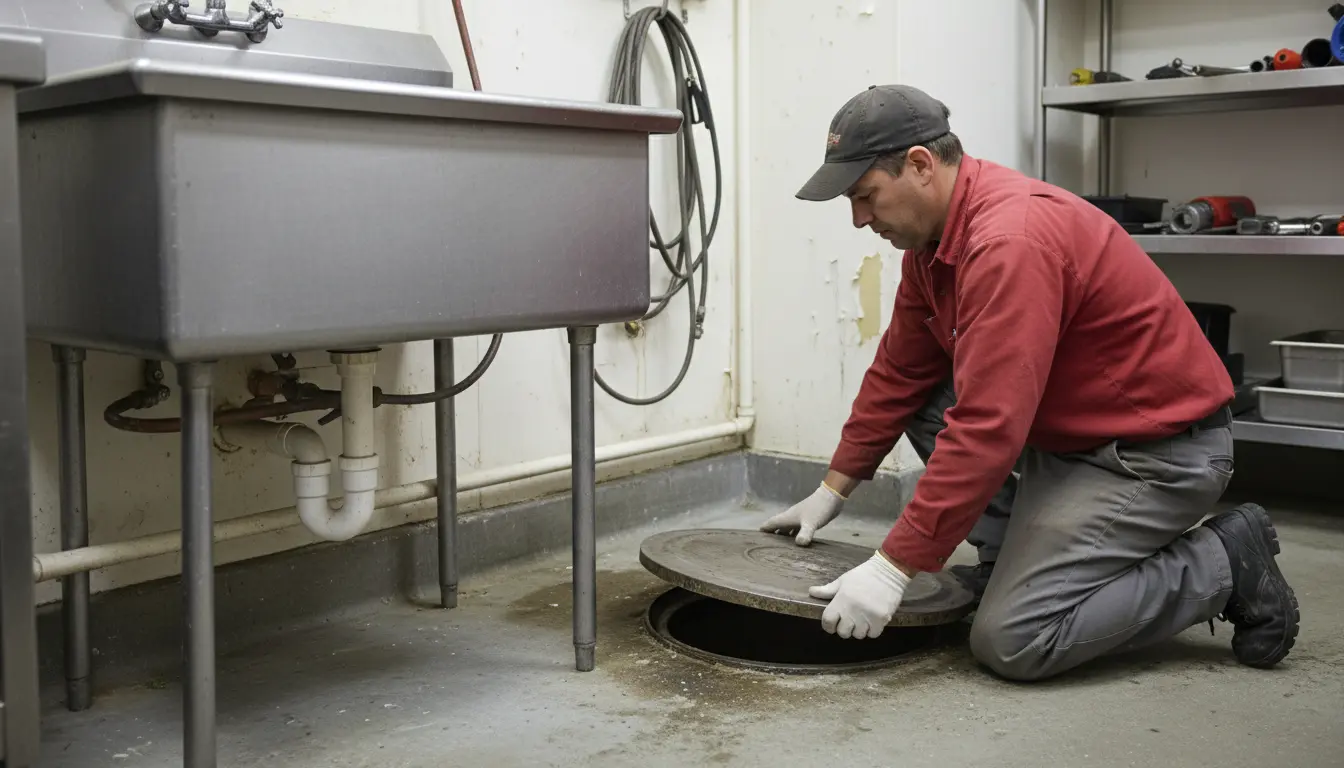
Find the Best Grease Trap Cleaning Companies for Your Business
No obligation • Fast responses • Nationwide coverage

Why you can trust Restaurant Waste Disposal
Restaurant Waste Disposal is a leading U.S. resource for comparing restaurant composting, food-waste recycling, grease trap cleaning, and used cooking oil collection services. Our editorial team researches providers, checks credentials, and organizes unbiased information so operators can make informed decisions. Companies cannot pay to change ratings or placement.
Search providers near you
Top Grease Trap Cleaning Companies in Newark, New Jersey Ranked
For any restaurant or food service establishment in Newark, managing fats, oils, and grease (FOG) is a critical operational and legal responsibility. Proper grease trap and interceptor maintenance is not just a best practice-it's a mandatory requirement enforced by state and local codes to protect the city's sewer infrastructure from costly blockages and environmental harm. Compliance involves adhering to specific New Jersey regulations on sizing, installation, routine pumping, and detailed record-keeping. Neglecting these duties can lead to severe fines, emergency repair costs, and even operational shutdowns. This guide outlines the essential knowledge for Newark business owners to maintain an effective FOG management program, ensure compliance, and avoid unnecessary expenses.
PowerFlo Sewer Service
2277 Victory Blvd, Staten Island, NY 10314
PowerFlo Sewer Service is a sewer and drain cleaning company serving New York, NY. They provide a range of services including grease trap cleaning, water jet cleaning, camera inspection, vacuum pumping, and flood control for residential, commercial, and condominium customers. The company emphasizes respect and care for customers' properties and employs experienced technicians to handle both simple and complex drainage problems. PowerFlo Sewer Service is known for leaving no mess behind and maintaining clear communication throughout the service process.
Viper Jet Drain Services
5-02 Banta Pl, Fair Lawn, NJ 07410
Viper Jet Drain Services provides drain, septic, and grease trap cleaning services in New York, NY, and New Jersey. They serve residential, commercial, and municipal clients with solutions ranging from household drain cleaning to large-scale sewer and stormwater management. Their licensed and insured technicians use advanced equipment such as hydro jetting and camera inspections to deliver reliable results. The family-owned company emphasizes expertise and customer care, offering emergency services and professional maintenance for grease traps and septic systems.
Zoom Drain
152 Stevens Ave, Jersey City, NJ 07305
Zoom Drain is a drain and sewer cleaning company serving New York, NY, and the surrounding North Jersey area. They provide services for residential and commercial properties, including grease trap maintenance and sewer cleaning. The company uses advanced equipment such as PowerSnake, Zoom Jetting®, and video inspection to address clogs, root invasions, and other drain issues efficiently. Zoom Drain also offers specialized solutions like Zoom Drain Bio™ to dissolve common drain blockages. Their team is known for knowledgeable technicians and tailored maintenance plans to meet diverse customer needs.
Arrow Sewer and Drain
165 Union Ave, Middlesex, NJ 08846
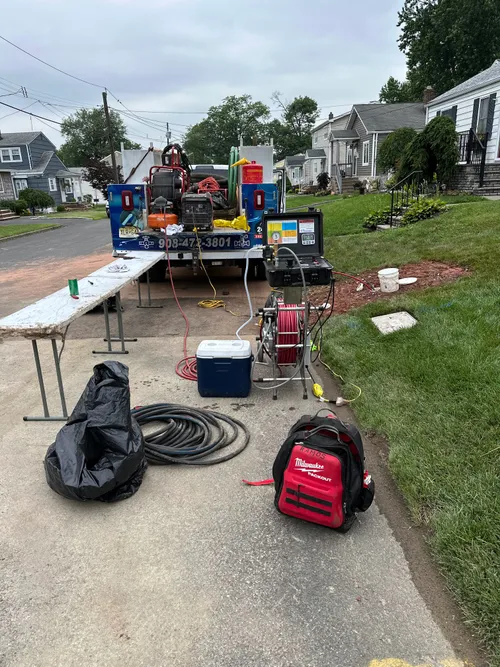
Arrow Sewer and Drain is a plumbing and sewer service provider based in Middlesex, New Jersey, serving residential and commercial clients throughout Edison and the broader New Jersey area. They offer a wide range of services including grease trap cleaning, trenchless sewer repair, hydro jet drain cleaning, hydro excavation, septic tank installation and replacement, and emergency plumbing. Their use of advanced equipment such as sewer scopes, cured-in-place pipe (CIPP) technology, and hydro excavation allows for efficient, non-invasive repairs that minimize disruption to properties. With over 15 years of experience, Arrow Sewer and Drain provides 24/7 emergency plumbing services to address urgent issues at any time.
Green Oil Recycling
317 Liberty Ave, Brooklyn, NY 11207
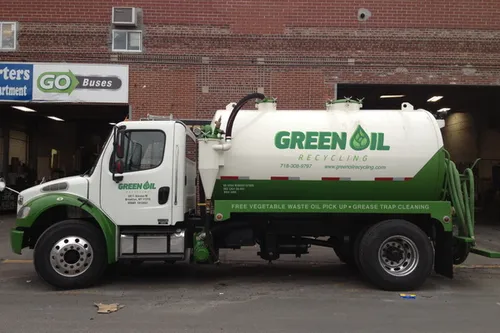
Green Oil Recycling provides professional grease trap cleaning and used cooking oil collection services in New York, NY. They specialize in maintaining commercial kitchen grease traps, including passive hydro mechanical, large pre-cast concrete gravity traps, and auto-grease removal systems like Big Dipper. Their trained technicians thoroughly clean traps, scrape walls, and use bio-safe chemicals to break down waste oil, helping kitchens stay odorless and compliant with local regulations. Green Oil Recycling serves New York City, New Jersey, and Nassau County, ensuring all waste oil disposal meets BIC, DEC, and EPA standards. They also inspect gaskets and fittings to prevent violations and hazards, working closely with Done Right Hood & Fire Safety for comprehensive grease trap and kitchen exhaust maintenance.
Understanding Newark's Grease Interceptor Regulations
In Newark, as throughout New Jersey, any facility that prepares or serves food is legally required to install and maintain a grease control device. These devices, commonly called grease traps or grease interceptors, are the first line of defense in preventing FOG from entering the public sewer system. The rules governing these systems are established by the New Jersey Uniform Construction Code, specifically the Plumbing Subcode, and are designed to ensure proper function and accessibility.
Local ordinances reinforce these state mandates, requiring that all grease interceptors be properly sized according to established standards, such as those from the Plumbing Institute (PID G101-8). The key principle is that the owner of the food service establishment bears full financial and operational responsibility for the interceptor's installation, inspection, pumping, and repair. This includes keeping the device in good working order and ensuring it is easily accessible for service and inspection by licensed professionals.
Sizing and Installation: Getting It Right from the Start
A correctly sized grease interceptor is foundational to an effective FOG management plan. An undersized unit will require impractically frequent pumping and will likely fail to prevent sewer discharges, while an oversized unit can be an unnecessary capital expense. In Newark, sizing must comply with the NJ Uniform Construction Code and is typically based on the fixture unit count of the kitchen's plumbing fixtures and the facility's capacity.
Installation standards require that interceptors be equipped with flow control devices and be readily accessible for maintenance and inspection. Working with a reputable local service provider or plumber who is intimately familiar with Newark and New Jersey codes is crucial during the design and installation phase. They can ensure your system meets all legal requirements and is positioned for easy, cost-effective servicing, preventing compliance issues before they arise 1.
The Maintenance Mandate: Inspections and Logs
Routine maintenance is non-negotiable. Newark regulations place the burden of proof on the business owner to demonstrate ongoing compliance. This is achieved through two key activities: weekly inspections and detailed maintenance logs.
- Weekly Inspections: Trained facility staff must perform a visual inspection of the grease interceptor at least once per week. This involves checking for signs of excessive FOG buildup, blockages, or mechanical issues.
- Detailed Maintenance Logs: A permanent log must be kept on-site, documenting every service event. Each entry must include the date, the volume of waste removed, the name of the servicing company or individual, and a signature. This log serves as your primary evidence of due diligence during a city inspection 2 3.
Furthermore, an annual inspection by a licensed plumber is often required to certify the system's integrity and compliance. Many professional grease trap cleaning services can manage this annual certification as part of a comprehensive service contract.
Pumping Frequency: The Critical "25% Rule"
How often should your grease trap be pumped? The New Jersey standard is clear: it must be cleaned when the combined volume of FOG and settled solids reaches 25% of the tank's total capacity 4. Allowing accumulation beyond this point significantly reduces the interceptor's efficiency and increases the risk of a sewer line violation.
For a busy Newark restaurant kitchen, this 25% threshold is typically reached every 1 to 3 months. However, frequency depends entirely on your specific volume of cooking. A high-turnover diner or a pizza shop may need monthly service, while a lower-volume café might operate on a quarterly schedule. A reliable service provider will help you establish the correct pumping frequency during initial assessments and adjust it based on their observations at each service visit 5 6.
Find the perfect grease trap cleaning companies for your needs
Get personalized recommendations and expert advice
Cost of Compliance: Preventative vs. Emergency Service
Investing in regular grease interceptor maintenance is a strategic financial decision for any Newark restaurant owner. The cost structure clearly favors preventative action.
- Preventative Pumping: A routine pump-out for a standard-sized grease trap typically ranges from $200 to $500+ per service. Costs can be lower when bundled into a scheduled service contract, which provides predictable budgeting and often includes priority service.
- Emergency Service: Responding to a clogged interceptor or, worse, a sewer backup caused by FOG, is a different financial story. Emergency calls, which may require after-hours service, specialized equipment, and urgent repairs, can easily cost $800 to $1,200 or more 7 8.
- Regulatory Fines: Beyond service costs, non-compliance carries direct penalties. Violations can result in fines, such as $250 for a first offense and $500 for subsequent offenses, not including the costs to repair any public sewer damage attributed to your facility 9 10.
The savings from adhering to a preventative schedule are substantial, protecting your business from unpredictable emergency expenses and regulatory penalties.
Best Management Practices (BMPs) for Your Kitchen
Professional pumping is essential, but what happens in your kitchen daily is equally important. Implementing simple Best Management Practices (BMPs) can dramatically reduce the FOG load on your interceptor, extending time between pump-outs and improving overall system health.
- Employee Training: Educate all kitchen staff on the importance of keeping FOG out of drains.
- Dry Wiping: Scrape food scraps and grease from pots, pans, and dishes into the trash before rinsing.
- Use Strainers: Install and maintain sink strainers to catch solid food particles.
- Proper Disposal: Never pour used cooking oil or grease down the drain. Collect it in sealed containers for recycling by a licensed used cooking oil hauler.
- Report Issues: Establish a protocol to immediately report any accidental discharges or interceptor malfunctions.
Enforcement and Consequences of Non-Compliance
Newark and New Jersey authorities take FOG regulation seriously due to the significant public cost of sewer system maintenance. Enforcement actions can be triggered by routine inspections, complaints, or sewer line blockages traced back to a specific establishment.
Violations are considered unlawful acts. Consequences escalate with severity and recurrence, starting with fines and potentially leading to liens on property, lawsuits for cost recovery from sewer damages, and in extreme cases, orders to cease operation until the violation is corrected. Proactive management is the most effective strategy to avoid these costly and disruptive scenarios.
Frequently asked questions
Sources
Footnotes
-
Grease Trap Sizing in NYC & NJ: What Many Kitchens Get ... - https://filtakleenco.com/grease-trap-sizing/ ↩
-
Grease Traps, Interceptors and Oil Separators - eCode360 - https://ecode360.com/13731865 ↩
-
New Jersey FOG & Used Oil Rules: Permits & 90-Day Limit - https://greaseconnections.com/resources/compliance/nj/ ↩
-
Grease Trap Regulations and Maintenance - A Rooter Pros - https://njsewerdrain.com/grease-trap-and-grease-interceptor-regulations-in-nj/ ↩
-
How to Clean a Grease Trap (and How Often You Should) - https://greaseconnections.com/how-to-clean-a-grease-trap-and-how-often-you-should/ ↩
-
Commercial Grease Trap Cleaning in New Jersey and New York - https://www.davidzuidema.com/septic-services/commercial-grease-trap-cleaning/ ↩
-
Ultimate Grease Trap Pumping Cost Guide: Essential Money-Saving ... - https://www.texwaywastewater.com/grease-trap-pumping-cost/ ↩
-
How Much Does a Proper Grease Trap Cleaning Cost? - https://hulseyenvironmental.com/how-much-does-a-proper-grease-trap-cleaning-partner-cost/ ↩
-
New Jersey FOG Regulations - D&W Alternative Energy - https://dandwalternativeenergy.com/blog/new-jersey-fog-regulations/ ↩
-
Borough of Lincoln Park, NJ Grease Traps - eCode360 - https://ecode360.com/32480172 ↩