
Find the Best Grease Trap Cleaning Companies for Your Business
No obligation • Fast responses • Nationwide coverage

Why you can trust Restaurant Waste Disposal
Restaurant Waste Disposal is a leading U.S. resource for comparing restaurant composting, food-waste recycling, grease trap cleaning, and used cooking oil collection services. Our editorial team researches providers, checks credentials, and organizes unbiased information so operators can make informed decisions. Companies cannot pay to change ratings or placement.
Search providers near you
Top Grease Trap Cleaning Companies in Monroe, New Jersey Ranked
For any restaurant, deli, or food service establishment in Monroe, New Jersey, managing fats, oils, and grease (FOG) is not just a matter of kitchen cleanliness-it's a legal requirement with significant financial and operational implications. Proper grease interceptor maintenance is mandated by both state law and local municipal codes to protect the public sewer system from costly blockages and environmental harm. This guide outlines the essential regulations, maintenance schedules, and best practices for FOG management specific to Monroe Township, helping local food service operators stay compliant, avoid fines, and ensure their kitchens run smoothly.
New Jersey's administrative code, specifically NJAC 7:9A-8.1, establishes the foundational rules for grease removal devices in commercial kitchens 1. These state regulations require facilities that produce significant amounts of grease to install and properly maintain an approved grease trap or interceptor. Monroe Township enforces these state standards locally, meaning every food establishment is responsible for the proper installation, operation, and maintenance of their grease control system at the owner's expense 2 3. The primary goal is to prevent FOG from entering the wastewater system, where it can solidify, cause sewer backups, and lead to expensive remediation costs for which the business can be held liable.
PowerFlo Sewer Service
2277 Victory Blvd, Staten Island, NY 10314
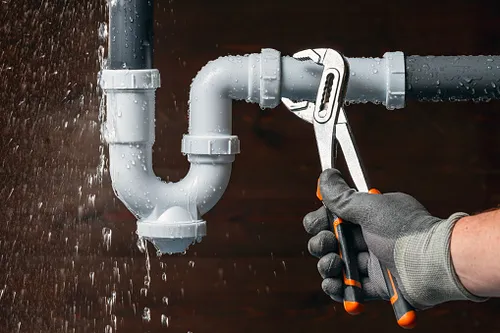
PowerFlo Sewer Service is a sewer and drain cleaning company serving New York, NY. They provide a range of services including grease trap cleaning, water jet cleaning, camera inspection, vacuum pumping, and flood control for residential, commercial, and condominium customers. The company emphasizes respect and care for customers' properties and employs experienced technicians to handle both simple and complex drainage problems. PowerFlo Sewer Service is known for leaving no mess behind and maintaining clear communication throughout the service process.
Viper Jet Drain Services
5-02 Banta Pl, Fair Lawn, NJ 07410
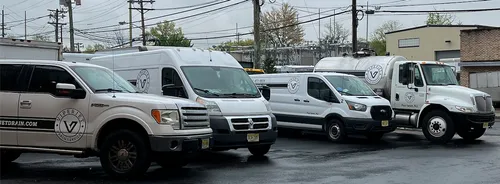
Viper Jet Drain Services provides drain, septic, and grease trap cleaning services in New York, NY, and New Jersey. They serve residential, commercial, and municipal clients with solutions ranging from household drain cleaning to large-scale sewer and stormwater management. Their licensed and insured technicians use advanced equipment such as hydro jetting and camera inspections to deliver reliable results. The family-owned company emphasizes expertise and customer care, offering emergency services and professional maintenance for grease traps and septic systems.
Loeffels Waste Oil Services
43 Layton Ln, Sparta, NJ 07871
Loeffels Waste Oil Services is a family-owned company based near New York, NY, specializing in used cooking oil collection and grease trap cleaning. They serve commercial clients with reliable waste oil removal and grease trap maintenance, including emergency pump-out services. With over ninety years of experience, Loeffels Waste Oil Services emphasizes safety and efficiency in their operations.
EarthCare, A Wind River Company
Woodbridge, NJ
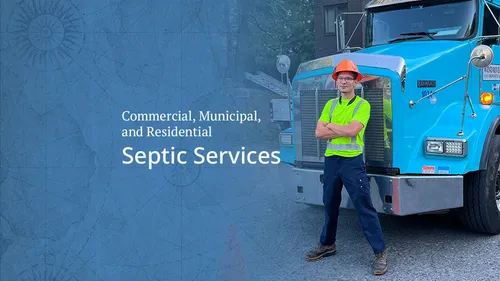
EarthCare, A Wind River Company, provides septic and grease trap cleaning services in Woodbridge, NJ, and the surrounding North Jersey and Hudson Valley areas. They serve residential, commercial, and municipal clients with a wide range of services including pumping, cleaning, waste hauling, disposal, and environmental compliance. With a history dating back to 1946, EarthCare operates one of the industry's largest fleets and offers 24/7 emergency availability. Their services include detailed inspections and real-time reporting to help clients maintain compliance with local and state regulations.
Zoom Drain
152 Stevens Ave, Jersey City, NJ 07305
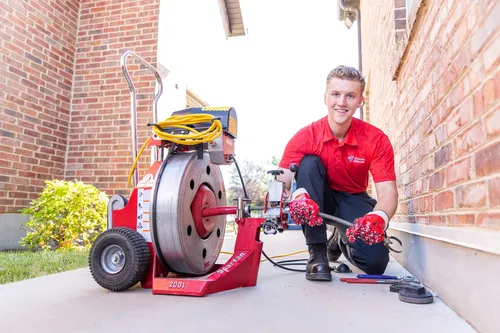
Zoom Drain is a drain and sewer cleaning company serving New York, NY, and the surrounding North Jersey area. They provide services for residential and commercial properties, including grease trap maintenance and sewer cleaning. The company uses advanced equipment such as PowerSnake, Zoom Jetting®, and video inspection to address clogs, root invasions, and other drain issues efficiently. Zoom Drain also offers specialized solutions like Zoom Drain Bio™ to dissolve common drain blockages. Their team is known for knowledgeable technicians and tailored maintenance plans to meet diverse customer needs.
Understanding New Jersey and Monroe Township FOG Regulations
Compliance starts with knowing the rules. The state code dictates not only where a grease interceptor must be installed but also how it should be sized. Sizing is typically calculated using formulas based on factors like the number of seats, meal periods, and drainage fixture units. An improperly sized trap-either too small or too large-can lead to immediate compliance failures. Local ordinances, such as Monroe's municipal code, explicitly prohibit the discharge of grease, oil, or fat into any sink, floor drain, or sanitary sewer line. Furthermore, food waste grinders (garbage disposals) and commercial dishwashers generally should not discharge into a standard grease trap, as they can overwhelm the system with solids and detergents that break down grease, allowing it to pass through.
The Critical Importance of Regular Maintenance and Cleaning
A grease trap is only effective if it is cleaned regularly. The accumulation of FOG and solids reduces the unit's capacity and efficiency. Industry experts and manufacturers commonly recommend that grease interceptors be pumped and cleaned every 30 to 90 days, though the exact frequency for your Monroe establishment depends entirely on your volume of FOG production 4. Many local health departments, including those in neighboring NJ townships, mandate a minimum cleaning frequency, such as bi-weekly inspections or quarterly professional servicing. A key operational rule is the "75% rule": a grease trap should be cleaned once the combined grease and solids accumulate to 25% of the liquid depth, or when it is 75% full, to prevent grease from escaping into the outlet pipe 5 4.
Who Can Perform the Service?
Cleaning a grease trap is not a simple DIY task. New Jersey regulations and local health codes require that grease interceptor pumping and cleaning be performed by licensed professionals, such as licensed plumbers or specialized grease trap service contractors. These professionals have the equipment and expertise to properly evacuate the contents, clean the interior baffles and walls, and dispose of the hazardous waste in accordance with environmental laws.
Documentation and Inspection Logs
Maintaining detailed records is a non-negotiable part of compliance. You must keep a log on-site that documents every service event. This log should include the date of service, the name of the servicing company or licensed professional, the volume of waste removed, and the disposal method/receipt. Many service providers will supply a logbook or sticker system. This documentation is the first thing a health inspector will request during an annual or routine inspection. Proof of regular, professional maintenance is your best defense against violations.
Enforcement and Penalties for Non-Compliance
The Monroe Township Health Department, through its Registered Environmental Health Specialist (REHS), is responsible for enforcing FOG regulations. Inspections can occur annually or in response to complaints or sewer line issues. If an inspection reveals a poorly maintained trap, illegal discharges, or effluent that exceeds local limits (often 100-150 mg/L of FOG), the health officer can issue a formal notice to correct the violation within a specified timeframe.
Failure to comply can lead to severe consequences:
- Fines: Monetary penalties are common. For example, local ordinances may stipulate fines starting at $250 for a first offense and escalating to $500 or more for subsequent violations 6 7.
- Cost Recovery: If a grease discharge from your establishment causes a blockage in the public sewer, you can be held responsible for all costs associated with cleaning and repairing the sewer line.
- Operational Disruption: In extreme cases, a health department can mandate immediate closure until the grease interceptor system is brought into compliance.
Find the perfect grease trap cleaning companies for your needs
Get personalized recommendations and expert advice
Service Cost Considerations in Monroe
The cost for professional grease trap pumping and cleaning in Monroe varies based on several factors. For a well-maintained trap receiving regular service, a typical pumping can range from $175 to $400 or more per service 8. The final price depends on:
- Trap Size and Location: Larger, underground interceptors cost more to pump than smaller, under-sink units.
- Accessibility: Easy access leads to lower costs.
- Condition: A trap that has been neglected will require more labor-intensive cleaning, potentially increasing the price.
- Service Frequency: Regular service contracts often provide more predictable pricing compared to one-time emergency calls, which can cost between $800 and $1,200 due to the urgent nature and potential for additional complications 9 10.
Proactive Steps for Monroe Restaurant Owners
To ensure seamless compliance and protect your business, follow this actionable checklist:
- Verify Local Rules: Contact the Monroe Township Health Department directly to confirm any township-specific amendments or inspection requirements beyond the state code.
- Ensure Proper Installation: If installing a new trap or evaluating an existing one, verify it is correctly sized according to NJAC 7:9A-8.1 and located for easy access 11.
- Establish a Service Schedule: Partner with a licensed grease trap cleaning service to establish a regular pumping schedule-most likely monthly or quarterly-based on your kitchen's output.
- Maintain Meticulous Records: Keep an updated, on-site service log for all maintenance and inspections.
- Train Your Staff: Educate kitchen staff on best practices, such as scraping plates into trash bins, using sink strainers, and never pouring grease down any drain.
Frequently asked questions
Sources
Footnotes
-
N.J. Admin. Code § 7:9A-8.1 - Grease removal and high ... - https://www.law.cornell.edu/regulations/new-jersey/N-J-A-C-7-9A-8-1 ↩
-
Installation and Maintenance of Grease Traps - eCode360 - https://ecode360.com/34939379 ↩
-
13.10.140 Additional pretreatment measures - Monroe Municipal Code - https://monroe.municipal.codes/MMC/13.10.140 ↩
-
How to Clean a Grease Trap (and How Often You Should) - https://greaseconnections.com/how-to-clean-a-grease-trap-and-how-often-you-should/ ↩ ↩2
-
Time for a Grease Trap Cleaning in Monroe? | The Septic Group - https://thesepticgroup.com/schedule-grease-trap-cleaning/ ↩
-
New Jersey FOG Regulations - D&W Alternative Energy - https://dandwalternativeenergy.com/blog/new-jersey-fog-regulations/ ↩
-
Township of Springfield, NJ Grease Traps and Grease Interceptors - https://ecode360.com/35108125 ↩
-
Restaurant Grease Trap & Interceptor Cleaning Cost - https://greasemanagement.org/pricing.html ↩
-
Ultimate Grease Trap Pumping Cost Guide: Essential Money-Saving ... - https://www.texwaywastewater.com/grease-trap-pumping-cost/ ↩
-
Grease Trap Regulations and Compliance: What You Need to Know - https://www.texwaywastewater.com/grease-trap-regulations-and-compliance/ ↩
-
Grease Trap Sizing in NYC & NJ: What Many Kitchens Get Wrong - https://filtakleenco.com/grease-trap-sizing/ ↩