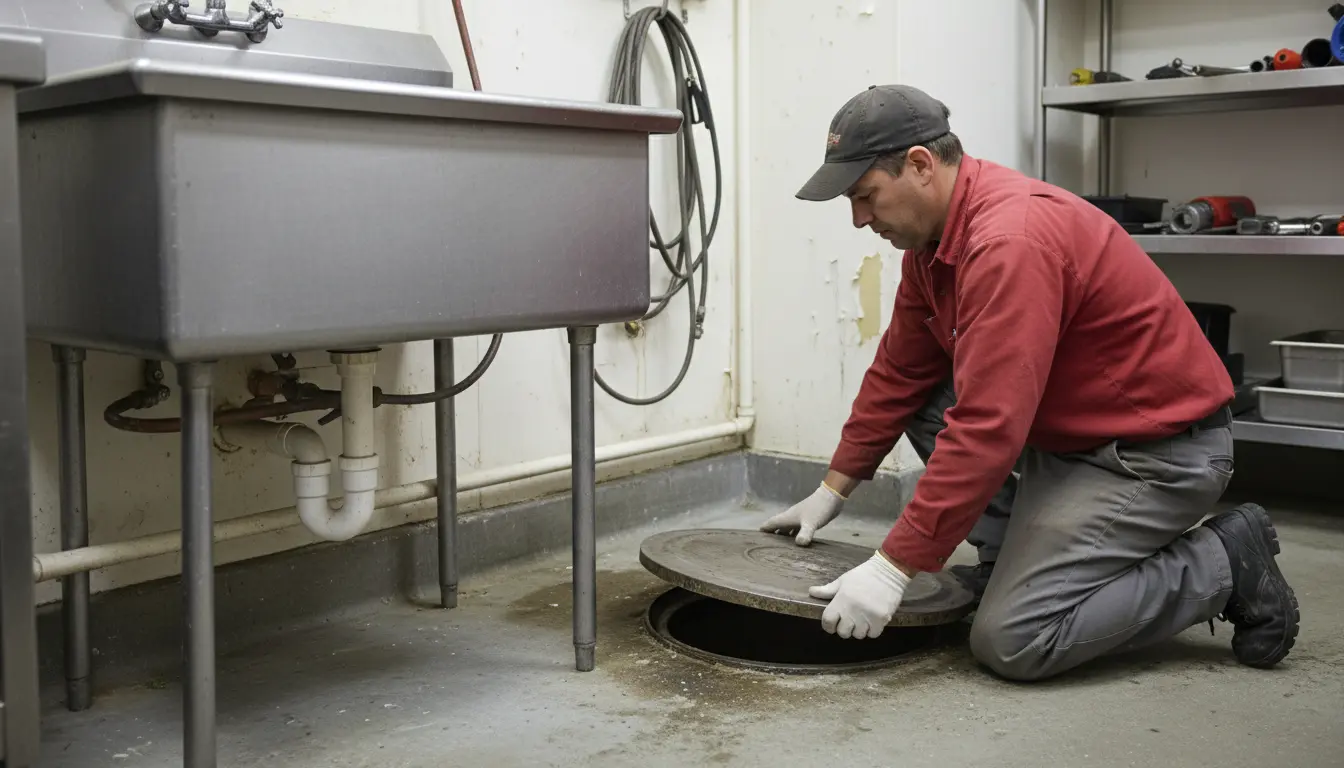
Find the Best Grease Trap Cleaning Companies for Your Business
No obligation • Fast responses • Nationwide coverage

Why you can trust Restaurant Waste Disposal
Restaurant Waste Disposal is a leading U.S. resource for comparing restaurant composting, food-waste recycling, grease trap cleaning, and used cooking oil collection services. Our editorial team researches providers, checks credentials, and organizes unbiased information so operators can make informed decisions. Companies cannot pay to change ratings or placement.
Search providers near you
Top Grease Trap Cleaning Companies in Middletown, New Jersey Ranked
For any restaurant, deli, bakery, or food service establishment in Middletown, managing fats, oils, and grease (FOG) is a critical operational and legal responsibility. Proper grease trap and interceptor maintenance is not just about preventing clogs in your own kitchen; it's a mandated requirement to protect the local sewer system from costly blockages and environmental harm. The Township of Middletown Sewerage Authority (MTSA), alongside New Jersey state regulations, enforces strict rules for grease removal to ensure community infrastructure remains functional. Compliance hinges on understanding local codes, adhering to a disciplined pumping schedule, and maintaining meticulous records. This guide outlines the essential requirements and best practices for effective grease management in Middletown, helping your business avoid violations and operate smoothly.
PowerFlo Sewer Service
2277 Victory Blvd, Staten Island, NY 10314
PowerFlo Sewer Service is a sewer and drain cleaning company serving New York, NY. They provide a range of services including grease trap cleaning, water jet cleaning, camera inspection, vacuum pumping, and flood control for residential, commercial, and condominium customers. The company emphasizes respect and care for customers' properties and employs experienced technicians to handle both simple and complex drainage problems. PowerFlo Sewer Service is known for leaving no mess behind and maintaining clear communication throughout the service process.
Zoom Drain
152 Stevens Ave, Jersey City, NJ 07305
Zoom Drain is a drain and sewer cleaning company serving New York, NY, and the surrounding North Jersey area. They provide services for residential and commercial properties, including grease trap maintenance and sewer cleaning. The company uses advanced equipment such as PowerSnake, Zoom Jetting®, and video inspection to address clogs, root invasions, and other drain issues efficiently. Zoom Drain also offers specialized solutions like Zoom Drain Bio™ to dissolve common drain blockages. Their team is known for knowledgeable technicians and tailored maintenance plans to meet diverse customer needs.
Arrow Sewer and Drain
165 Union Ave, Middlesex, NJ 08846
Arrow Sewer and Drain is a plumbing and sewer service provider based in Middlesex, New Jersey, serving residential and commercial clients throughout Edison and the broader New Jersey area. They offer a wide range of services including grease trap cleaning, trenchless sewer repair, hydro jet drain cleaning, hydro excavation, septic tank installation and replacement, and emergency plumbing. Their use of advanced equipment such as sewer scopes, cured-in-place pipe (CIPP) technology, and hydro excavation allows for efficient, non-invasive repairs that minimize disruption to properties. With over 15 years of experience, Arrow Sewer and Drain provides 24/7 emergency plumbing services to address urgent issues at any time.
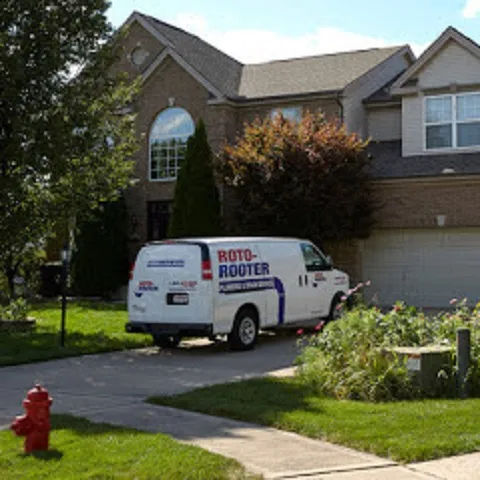
Roto-Rooter Plumbing & Water Cleanup
23 Emmons St Ste 202, Long Branch, NJ 07740
Roto-Rooter Plumbing & Water Cleanup provides comprehensive plumbing services for homes and businesses in Brick, NJ. Their offerings include commercial plumbing, emergency plumbing available 24/7, drain cleaning, grease trap pumping and cleaning, sewer line services, water heater repair and installation, and water softener and filtration system services. The company uses advanced capabilities such as hydro-jetting and video camera sewer inspections to address plumbing issues efficiently. Serving the Long Branch metro area and surrounding communities, Roto-Rooter is fully licensed and insured to handle a wide range of plumbing needs.
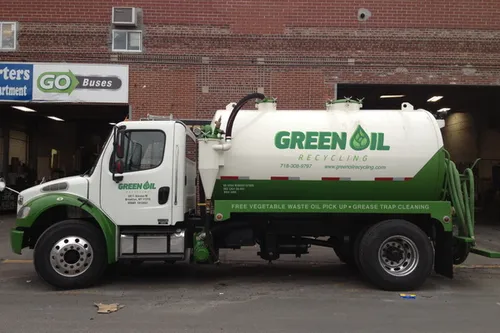
Green Oil Recycling
317 Liberty Ave, Brooklyn, NY 11207
Green Oil Recycling provides professional grease trap cleaning and used cooking oil collection services in New York, NY. They specialize in maintaining commercial kitchen grease traps, including passive hydro mechanical, large pre-cast concrete gravity traps, and auto-grease removal systems like Big Dipper. Their trained technicians thoroughly clean traps, scrape walls, and use bio-safe chemicals to break down waste oil, helping kitchens stay odorless and compliant with local regulations. Green Oil Recycling serves New York City, New Jersey, and Nassau County, ensuring all waste oil disposal meets BIC, DEC, and EPA standards. They also inspect gaskets and fittings to prevent violations and hazards, working closely with Done Right Hood & Fire Safety for comprehensive grease trap and kitchen exhaust maintenance.
Understanding Local and State Grease Interceptor Regulations
Navigating the regulatory landscape is the first step to compliance. In New Jersey, grease control is governed by a combination of state statutes and local authority ordinances.
New Jersey State Code (NJAC 7:9A-8.1) mandates that all food service facilities must install and maintain approved grease traps or interceptors 1. This regulation explicitly prohibits the use of garbage grinders when FOG components are present, directing these substances toward proper containment 1. Furthermore, the state's Uniform Construction Code has adopted standards that require the installation of grease interceptors in commercial kitchens.
Middletown Township Specifics add another layer of local oversight. The Township of Middletown Sewerage Authority (MTSA) has established rules expressly prohibiting the discharge of FOG into the sewer system without compliance. Local officials enforce these regulations to prevent sewer blockages, which can lead to backups and significant repair costs for the municipality and potentially neighboring businesses. The core principle is that preventing FOG from entering the public sewers is a shared responsibility for all commercial food operators.
Proper Grease Interceptor Installation and Specifications
Compliance begins with correct installation. A properly sized and installed interceptor is fundamental to effective operation and meeting code.
- Location and Design: Grease traps must be installed as close as possible to the source of FOG, such as under a three-compartment sink or in the main kitchen waste line. Larger, outdoor grease interceptors are required for high-volume establishments. All units must be watertight, constructed of impervious materials, and have secure, accessible covers for service and inspection 2 3.
- Sizing is Critical: One of the most common mistakes kitchens make is installing an undersized grease trap 4. Sizing is based on factors like the number of meals served, the type of food prepared, and the flow rate of wastewater. An undersized unit will fill too quickly, requiring excessively frequent pumping and increasing the risk of FOG bypassing the system entirely, which leads directly to compliance failures.
Mandatory Maintenance and Pumping Schedules
Regular, professional cleaning is the cornerstone of grease interceptor compliance. It's not a suggestion-it's a enforceable requirement.
Pumping Frequency: New Jersey regulations, which Middletown adheres to, establish a clear baseline: grease interceptors must be pumped out at a minimum of every 90 days 5. However, this is an absolute maximum interval for many establishments. The rule further states that pumping must occur whenever the combined volume of accumulated grease and solids reaches 25% of the trap's capacity 6 7. For busy restaurants, pizzerias, or diners, this often means monthly or even bi-weekly service is necessary to stay within the limit and ensure proper function 8.
The Cleaning Process: Proper service involves the complete removal of all contents-solid food waste, FOG layer, sludge, and effluent-by a licensed hauler. Simply skimming the top layer of grease is insufficient and does not constitute compliant maintenance. The waste must be transported and disposed of at a licensed facility, with the service provider issuing a waste manifest for your records.
Inspection and Record-Keeping Requirements
Maintaining detailed logs is your primary defense during an inspection and is required by code. Authorities can request these records at any time.
- Maintenance Logs: You must keep a permanent, on-site record of every grease interceptor service. Each entry should include the date, the name of the servicing company, the volume of waste removed, and the signature of the service technician.
- Annual Inspections: In addition to routine pumping, an annual inspection by a licensed plumber or qualified professional is often required to certify the interceptor's structural integrity and proper operation. This inspection report should be added to your maintenance file.
- Staff Training Records: Documenting training for kitchen staff on best practices for minimizing FOG discharge (e.g., scraping plates, using drain screens) can also demonstrate a proactive compliance effort.
Find the perfect grease trap cleaning companies for your needs
Get personalized recommendations and expert advice
Enforcement and Penalties for Non-Compliance
The consequences for neglecting grease interceptor maintenance are significant and financially punitive. Violating FOG rules is considered an unlawful act.
Fines and Costs: Penalties are structured to escalate. A first offense can result in a fine of approximately $250. Subsequent violations may incur fines around $500 plus the costs associated with investigating and remediating any sewer blockage caused by the non-compliant discharge 9 10. The MTSA actively works to identify sources of FOG-related blockages to prevent system-wide issues and will levy fines accordingly.
Beyond Fines: Chronic non-compliance can lead to more severe actions, including mandatory installation of expensive pretreatment equipment, operational restrictions, or even legal injunctions. The cost of consistent, professional cleaning is minimal compared to the financial and reputational damage of repeated violations.
Understanding Service Costs for Grease Trap Cleaning
The cost for professional grease interceptor pumping in Middletown varies based on several key factors. It's important to view this as a necessary and variable operational expense, not a fixed cost.
- Interceptor Size and Type: A small, under-sink grease trap may cost between $75 and $150 per cleaning 11. Larger, in-ground or outdoor concrete interceptors, which are common for full-service restaurants, typically range from $150 to over $300 per service 12 13.
- Frequency and Volume: Establishments that require monthly service due to high volume may negotiate a different rate structure compared to one on a standard quarterly schedule. The amount of FOG and solids removed also impacts the disposal cost for the hauler.
- Accessibility and Location: Easy, at-grade access keeps costs down. Services that require extensive hose runs, pumping from confined spaces, or after-hours work will be more expensive.
The most reliable way to get an accurate cost is to obtain quotes from several licensed New Jersey FOG service providers, detailing your interceptor's size, location, and current condition.
Choosing a Licensed Service Provider in New Jersey
This is not a DIY task. Hiring a licensed and insured professional grease hauler is essential for compliance and operational safety.
A qualified provider will not only pump your interceptor but also help you manage your compliance portfolio. They should supply detailed service tickets and waste manifests for your records, offer guidance on optimal pumping frequency based on your actual usage, and be knowledgeable about both state and Middletown Township requirements 14. Always verify a provider's license with the New Jersey Department of Environmental Protection and ensure they carry adequate insurance.
Frequently asked questions
Sources
Footnotes
-
N.J. Admin. Code § 7:9A-8.1 - Grease removal and high strength ... - https://www.law.cornell.edu/regulations/new-jersey/N-J-A-C-7-9A-8-1 ↩ ↩2
-
Borough of Clementon, NJ Grease Traps, Interceptors and Oil Separators - https://ecode360.com/13731865 ↩
-
ordinance #10-15 - Revize - https://cms1files.revize.com/denville/docs/Ordinance_10_15___GREASE_INTERCEPTOR_2015.pdf ↩
-
Grease Trap Sizing in NYC & NJ: What Many Kitchens Get Wrong - Filta Kleen - https://filtakleenco.com/grease-trap-sizing/ ↩
-
New Jersey FOG & Used Oil Rules: Permits & 90-Day Limit - https://greaseconnections.com/resources/compliance/nj/ ↩
-
Installation and Maintenance of Grease Traps - eCode360 - https://ecode360.com/34939379 ↩
-
How to Clean a Grease Trap (and How Often You Should) - https://greaseconnections.com/how-to-clean-a-grease-trap-and-how-often-you-should/ ↩
-
Grease Trap Regulations and Compliance: What You Need to Know - https://www.texwaywastewater.com/grease-trap-regulations-and-compliance/ ↩
-
New Jersey FOG Regulations - D&W Alternative Energy - https://dandwalternativeenergy.com/blog/new-jersey-fog-regulations/ ↩
-
FOOD RELATED GREASE CONTROL - https://www.tomsanj.com/userfiles/files/Grease%20Rules-and-Regulations.pdf ↩
-
How Much Does It Cost To Clean A Grease Trap? - https://www.greasecollection.com/blog/how-much-does-it-cost-to-clean-a-grease-trap/ ↩
-
Commercial Grease Trap Cleaning in New Jersey and New York - https://www.davidzuidema.com/septic-services/commercial-grease-trap-cleaning/ ↩
-
Learn About Grease Trap installation | Southern Green - https://www.southerngreen.com/blog/install-a-grease-trap-on-my-own ↩
-
Avoiding NJ Grease Trap Fines - https://arpesgroup.com/nj-grease-trap-cleaning/avoiding-grease-trap-fines/ ↩