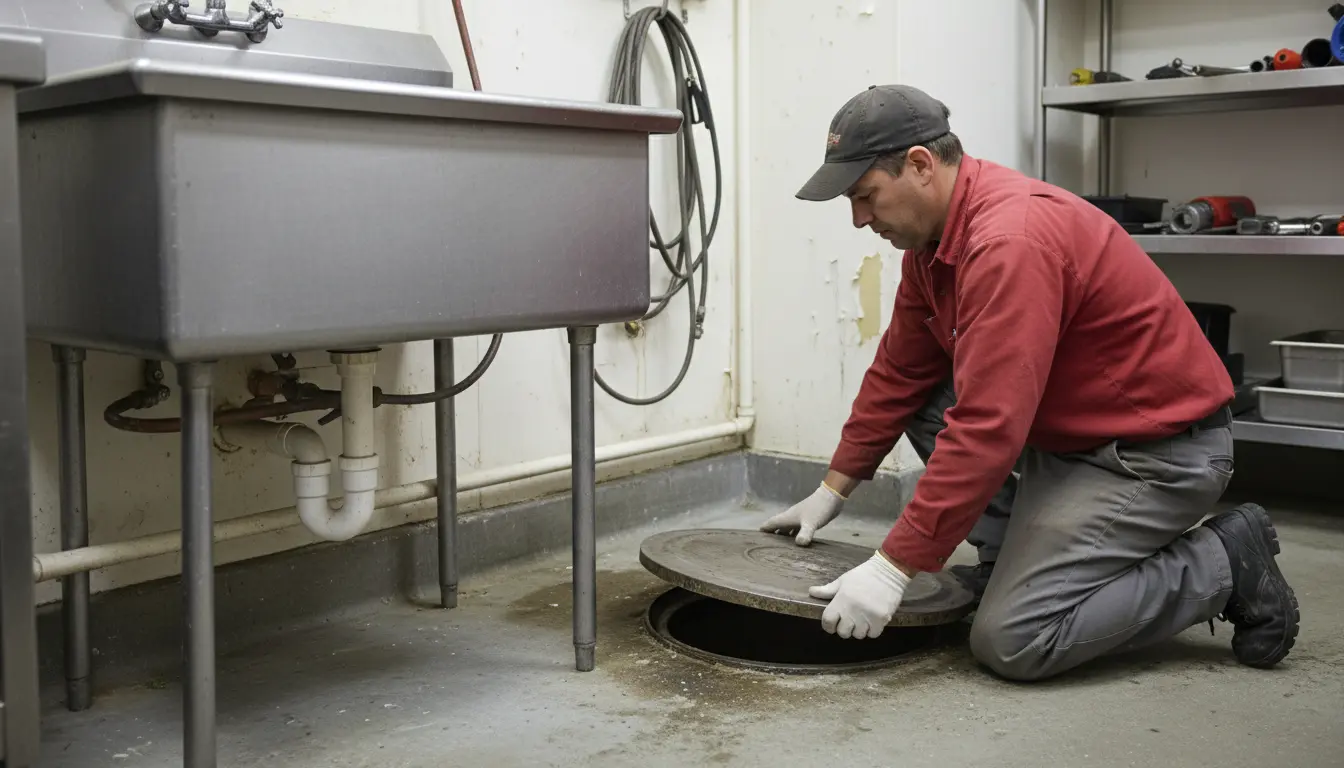
Find the Best Grease Trap Cleaning Companies for Your Business
No obligation • Fast responses • Nationwide coverage

Why you can trust Restaurant Waste Disposal
Restaurant Waste Disposal is a leading U.S. resource for comparing restaurant composting, food-waste recycling, grease trap cleaning, and used cooking oil collection services. Our editorial team researches providers, checks credentials, and organizes unbiased information so operators can make informed decisions. Companies cannot pay to change ratings or placement.
Search providers near you
Top Grease Trap Cleaning Companies in Elizabeth, New Jersey Ranked
For any restaurant, deli, bakery, or food service facility in Elizabeth, New Jersey, maintaining a clean and compliant grease trap or interceptor is not just a matter of kitchen hygiene-it's a strict legal requirement. The city's sewer system, like those across New Jersey, is protected by state and local codes designed to prevent costly and disruptive blockages caused by fats, oils, and grease (FOG). Proper grease interceptor maintenance is essential for avoiding significant fines, preserving your operating permits, and contributing to the community's infrastructure. This guide outlines the critical regulations, best practices, and service expectations for FOG management specific to food service establishments in Elizabeth.
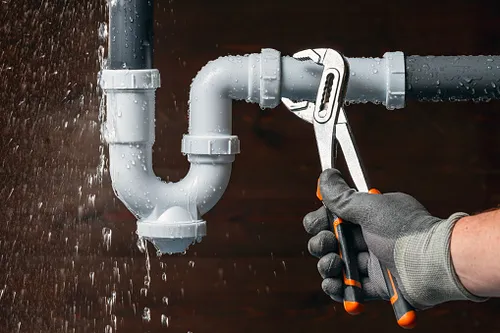
PowerFlo Sewer Service
2277 Victory Blvd, Staten Island, NY 10314
PowerFlo Sewer Service is a sewer and drain cleaning company serving New York, NY. They provide a range of services including grease trap cleaning, water jet cleaning, camera inspection, vacuum pumping, and flood control for residential, commercial, and condominium customers. The company emphasizes respect and care for customers' properties and employs experienced technicians to handle both simple and complex drainage problems. PowerFlo Sewer Service is known for leaving no mess behind and maintaining clear communication throughout the service process.
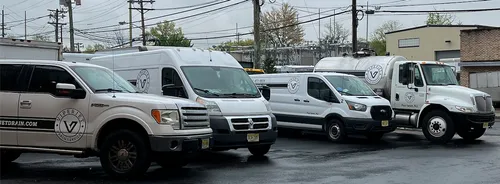
Viper Jet Drain Services
5-02 Banta Pl, Fair Lawn, NJ 07410
Viper Jet Drain Services provides drain, septic, and grease trap cleaning services in New York, NY, and New Jersey. They serve residential, commercial, and municipal clients with solutions ranging from household drain cleaning to large-scale sewer and stormwater management. Their licensed and insured technicians use advanced equipment such as hydro jetting and camera inspections to deliver reliable results. The family-owned company emphasizes expertise and customer care, offering emergency services and professional maintenance for grease traps and septic systems.
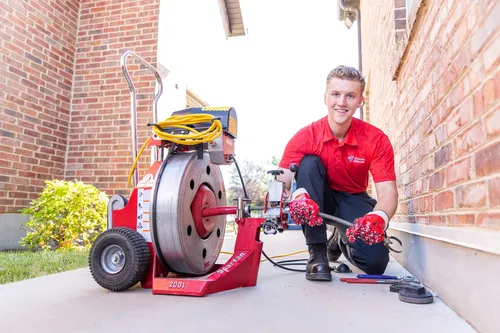
Zoom Drain
152 Stevens Ave, Jersey City, NJ 07305
Zoom Drain is a drain and sewer cleaning company serving New York, NY, and the surrounding North Jersey area. They provide services for residential and commercial properties, including grease trap maintenance and sewer cleaning. The company uses advanced equipment such as PowerSnake, Zoom Jetting®, and video inspection to address clogs, root invasions, and other drain issues efficiently. Zoom Drain also offers specialized solutions like Zoom Drain Bio™ to dissolve common drain blockages. Their team is known for knowledgeable technicians and tailored maintenance plans to meet diverse customer needs.
Arrow Sewer and Drain
165 Union Ave, Middlesex, NJ 08846
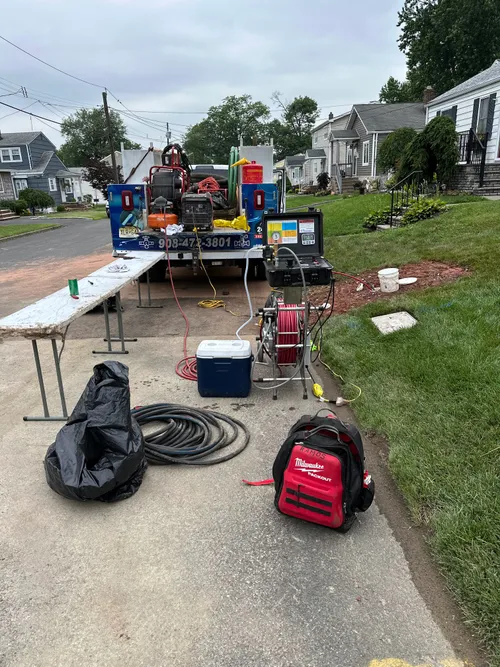
Arrow Sewer and Drain is a plumbing and sewer service provider based in Middlesex, New Jersey, serving residential and commercial clients throughout Edison and the broader New Jersey area. They offer a wide range of services including grease trap cleaning, trenchless sewer repair, hydro jet drain cleaning, hydro excavation, septic tank installation and replacement, and emergency plumbing. Their use of advanced equipment such as sewer scopes, cured-in-place pipe (CIPP) technology, and hydro excavation allows for efficient, non-invasive repairs that minimize disruption to properties. With over 15 years of experience, Arrow Sewer and Drain provides 24/7 emergency plumbing services to address urgent issues at any time.
Roto-Rooter Plumbing & Water Cleanup
23 Emmons St Ste 202, Long Branch, NJ 07740
Roto-Rooter Plumbing & Water Cleanup provides comprehensive plumbing services for homes and businesses in Brick, NJ. Their offerings include commercial plumbing, emergency plumbing available 24/7, drain cleaning, grease trap pumping and cleaning, sewer line services, water heater repair and installation, and water softener and filtration system services. The company uses advanced capabilities such as hydro-jetting and video camera sewer inspections to address plumbing issues efficiently. Serving the Long Branch metro area and surrounding communities, Roto-Rooter is fully licensed and insured to handle a wide range of plumbing needs.
Understanding New Jersey and Elizabeth FOG Regulations
Compliance starts with understanding the rules. New Jersey state code, specifically N.J. Admin. Code 7:9A-8.1, mandates that all food service facilities must use properly sized grease interceptors. These devices are required on any line that discharges grease-laden wastewater. Local Elizabeth ordinances will build upon these state rules, so it's crucial to confirm specifics with the Elizabeth Health or Sewer Department.
Key regulatory pillars include:
- Mandatory Installation: Grease interceptors are not optional. They must be sized according to standards like the Plumbing & Drainage Institute (PDI) G101.
- Proper Setup: Installation requires separate lines for grease discharge, flow control devices, and must be designed for easy access by maintenance crews and inspectors.
- Owner Responsibility: The facility owner bears all costs for installation, maintenance, and repairs to keep the interceptor in "continuous, efficient operation" 1 2.
- Specific Prohibitions: Using garbage grinders on lines that feed into a required grease interceptor is typically forbidden, as they can overwhelm the system with solids 3.
The 25% / 90-Day Rule: Your Cleaning Schedule
One of the most important compliance rules is the cleaning frequency. New Jersey regulations generally require that grease interceptors be cleaned when the combined FOG and solids accumulation reaches 25% of the unit's capacity or at least every 90 days, whichever comes first 4 5. This is a non-negotiable standard for most establishments.
- High-Volume Kitchens: Restaurants with heavy frying or high meal output may find their traps fill much faster. In these cases, monthly or even more frequent grease trap pumping service may be necessary to stay compliant and functional.
- Documentation is Key: Simply cleaning the trap isn't enough. You must maintain a detailed maintenance log. This log should record every service date, the volume of waste removed, any repairs made, and staff training on proper grease handling. This log is often the first thing an inspector will request 6.
Annual Inspections and the Consequences of Non-Compliance
Routine cleaning must be paired with formal inspections. An annual inspection conducted by a licensed plumber is often a requirement to verify the system's integrity and operation. Furthermore, municipal inspectors can conduct unannounced checks to examine flow rates, accessibility, and overall compliance with local codes.
Failing to adhere to these regulations carries serious penalties for Elizabeth businesses:
- Financial Fines: Violations can result in direct fines, which can escalate. For example, a first offense might incur a $250 penalty, with subsequent violations costing $500 or more 7 8.
- Remediation Costs: If a grease clog causes a sewer backup or requires municipal cleanup, your business will be billed for the entire cost of the remediation.
- Operational Risk: In severe cases, the city can suspend your sewer discharge permit, effectively shutting down your kitchen operations until compliance is restored.
Find the perfect grease trap cleaning companies for your needs
Get personalized recommendations and expert advice
What to Expect from Professional Grease Trap Cleaning Services
Hiring a licensed, reputable service provider is the safest path to compliance. A professional service will do more than just pump out the grease; they will ensure the entire system is functioning correctly.
A standard commercial grease trap cleaning service in the Elizabeth area typically includes:
- Complete Evacuation: Pumping out all liquid and solid contents, including FOG, food solids, and wastewater.
- High-Pressure Jetting: Using pressurized water to scour the interior walls, baffles, and inlet/outlet pipes to remove clinging grease and debris.
- System Inspection: Checking for cracks, leaks, damaged baffles, and verifying that the flow control device is operating properly.
- Waste Disposal: Transporting all collected waste to an approved facility for rendering or disposal, providing you with documentation (a "manifest") for your records.
- Detailed Service Report: Furnishing a report that notes the service date, trap condition, and volume removed, which you can add to your maintenance log.
Cost Factors for Grease Interceptor Maintenance
The cost for professional grease interceptor maintenance in Elizabeth varies based on several factors. For routine, scheduled pumping of a standard-sized trap, businesses can generally expect costs to range from $200 to $500 per service 9. The final price depends on:
- Interceptor Size and Type: Larger in-ground grease interceptators cost more to service than smaller under-sink grease traps.
- Accessibility: Easily accessible traps are less expensive to service than those in confined spaces.
- Level of Accumulation: A trap cleaned regularly on schedule will be less costly than one that is severely clogged and requires extra labor.
- Emergency Premiums: Needing an emergency clean-out due to a blockage or impending inspection can significantly increase the cost, with emergency calls potentially ranging from $800 to $1,200 10 11. Proactive, scheduled maintenance is always the most cost-effective approach.
Best Practices for Kitchen Staff
Extending the time between required pumpings starts in the kitchen. Educating your staff on proper FOG handling can dramatically reduce the load on your interceptor.
- Scrape, Don't Rinse: All dishes, pots, and pans should be thoroughly scraped into the trash before rinsing.
- Use Collection Containers: Designate sealed containers for collecting cooled frying oil, meat drippings, and other liquid fats. These should be collected by a used cooking oil service, not poured down the drain.
- Dry Wipe Greasy Surfaces: Use paper towels to wipe down greasy griddles, pans, and utensils before washing.
- Post Clear Signs: Place "No Grease" signs above sinks and drains as a constant reminder to all employees.
Frequently asked questions
Sources
Footnotes
-
N.J. Admin. Code § 7:9A-8.1 - Grease removal and high strength ... - https://www.law.cornell.edu/regulations/new-jersey/N-J-A-C-7-9A-8-1 ↩
-
Grease Trap Regulations and Maintenance - A Rooter Pros - https://njsewerdrain.com/grease-trap-and-grease-interceptor-regulations-in-nj/ ↩
-
Grease Traps, Interceptors and Oil Separators - eCode360 - https://ecode360.com/13731865 ↩
-
New Jersey FOG & Used Oil Rules: Permits & 90-Day Limit - https://greaseconnections.com/resources/compliance/nj/ ↩
-
HYDROMECHANICAL GREASE INTERCEPTOR (HGI ... - https://www.spokanecounty.gov/DocumentCenter/View/51138/Hydromechanical-Grease-Interceptor-HGI-Maintenance---English?bidId= ↩
-
Grease Trap Regulations and Compliance: What You Need to Know - https://www.texwaywastewater.com/grease-trap-regulations-and-compliance/ ↩
-
New Jersey FOG Regulations - D&W Alternative Energy - https://dandwalternativeenergy.com/blog/new-jersey-fog-regulations/ ↩
-
Grease Trap Sizing in NYC & NJ: What Many Kitchens Get Wrong - https://filtakleenco.com/grease-trap-sizing/ ↩
-
Commercial Grease Trap Cleaning in New Jersey and New York - https://www.davidzuidema.com/septic-services/commercial-grease-trap-cleaning/ ↩
-
Ultimate Grease Trap Pumping Cost Guide: Essential Money-Saving ... - https://www.texwaywastewater.com/grease-trap-pumping-cost/ ↩
-
How Much Does a Proper Grease Trap Cleaning Cost? - https://hulseyenvironmental.com/how-much-does-a-proper-grease-trap-cleaning-partner-cost/ ↩