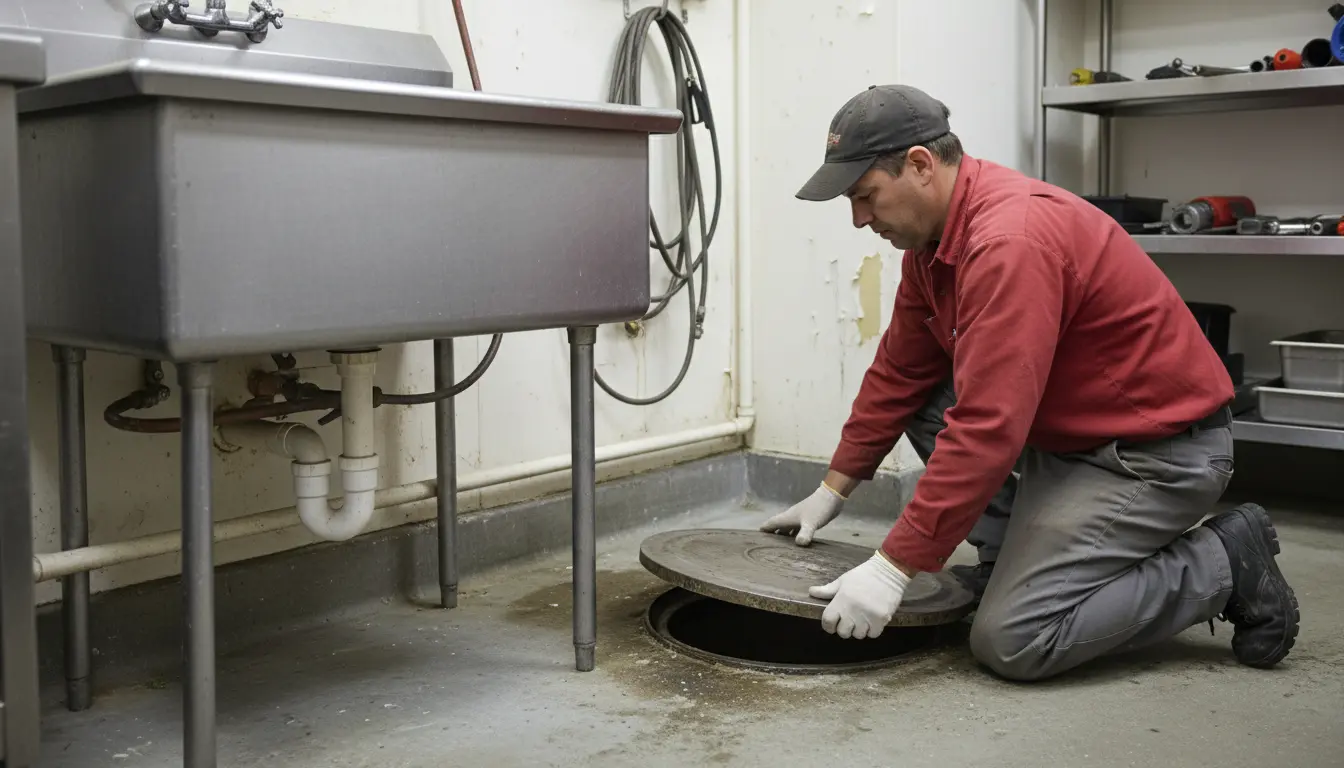
Find the Best Grease Trap Cleaning Companies for Your Business
No obligation • Fast responses • Nationwide coverage

Why you can trust Restaurant Waste Disposal
Restaurant Waste Disposal is a leading U.S. resource for comparing restaurant composting, food-waste recycling, grease trap cleaning, and used cooking oil collection services. Our editorial team researches providers, checks credentials, and organizes unbiased information so operators can make informed decisions. Companies cannot pay to change ratings or placement.
Search providers near you
Top Grease Trap Cleaning Companies in Clifton, New Jersey Ranked
For any restaurant, deli, or food service establishment in Clifton, managing fats, oils, and grease (FOG) is a critical operational and legal responsibility. Proper grease trap and interceptor maintenance is not just about avoiding unpleasant odors or slow drains; it's a mandatory requirement under New Jersey state law and local sewer codes. Failure to comply can lead to severe blockages in your plumbing, costly emergency repairs, and significant fines from municipal inspectors. This guide outlines the essential regulations, best practices, and cost considerations for keeping your Clifton business compliant and running smoothly through effective grease management.
New Jersey regulations, specifically N.J. Admin. Code § 7:9A-8.1, mandate that all food service establishments install, operate, and maintain approved grease interceptors at their own expense 1 2. The primary rule is straightforward: FOG must never be poured down sinks, drains, or toilets. These materials must be captured by your grease control device before wastewater leaves your property 3. The law also sets a clear maintenance standard: traps must be pumped out by a licensed professional when the combined FOG and solids reach 25% of the unit's capacity. For a busy Clifton restaurant, this often translates to a pumping schedule of every one to three months, though frequency depends entirely on your volume of cooking 4.
PowerFlo Sewer Service
2277 Victory Blvd, Staten Island, NY 10314
PowerFlo Sewer Service is a sewer and drain cleaning company serving New York, NY. They provide a range of services including grease trap cleaning, water jet cleaning, camera inspection, vacuum pumping, and flood control for residential, commercial, and condominium customers. The company emphasizes respect and care for customers' properties and employs experienced technicians to handle both simple and complex drainage problems. PowerFlo Sewer Service is known for leaving no mess behind and maintaining clear communication throughout the service process.
Viper Jet Drain Services
5-02 Banta Pl, Fair Lawn, NJ 07410
Viper Jet Drain Services provides drain, septic, and grease trap cleaning services in New York, NY, and New Jersey. They serve residential, commercial, and municipal clients with solutions ranging from household drain cleaning to large-scale sewer and stormwater management. Their licensed and insured technicians use advanced equipment such as hydro jetting and camera inspections to deliver reliable results. The family-owned company emphasizes expertise and customer care, offering emergency services and professional maintenance for grease traps and septic systems.
Loeffels Waste Oil Services
43 Layton Ln, Sparta, NJ 07871
Loeffels Waste Oil Services is a family-owned company based near New York, NY, specializing in used cooking oil collection and grease trap cleaning. They serve commercial clients with reliable waste oil removal and grease trap maintenance, including emergency pump-out services. With over ninety years of experience, Loeffels Waste Oil Services emphasizes safety and efficiency in their operations.
EarthCare, A Wind River Company
Woodbridge, NJ
EarthCare, A Wind River Company, provides septic and grease trap cleaning services in Woodbridge, NJ, and the surrounding North Jersey and Hudson Valley areas. They serve residential, commercial, and municipal clients with a wide range of services including pumping, cleaning, waste hauling, disposal, and environmental compliance. With a history dating back to 1946, EarthCare operates one of the industry's largest fleets and offers 24/7 emergency availability. Their services include detailed inspections and real-time reporting to help clients maintain compliance with local and state regulations.
Zoom Drain
152 Stevens Ave, Jersey City, NJ 07305
Zoom Drain is a drain and sewer cleaning company serving New York, NY, and the surrounding North Jersey area. They provide services for residential and commercial properties, including grease trap maintenance and sewer cleaning. The company uses advanced equipment such as PowerSnake, Zoom Jetting®, and video inspection to address clogs, root invasions, and other drain issues efficiently. Zoom Drain also offers specialized solutions like Zoom Drain Bio™ to dissolve common drain blockages. Their team is known for knowledgeable technicians and tailored maintenance plans to meet diverse customer needs.
Understanding Your Compliance Obligations
Staying compliant involves more than just scheduling occasional pump-outs. Clifton facilities are subject to inspections, and maintaining detailed records is a key part of the process.
- Weekly Inspections: Employees must perform weekly visual checks of the grease interceptor. This isn't a casual glance; it requires a signed log documenting the date, time, what was observed, and any actions taken. These logs are your first line of defense and proof of due diligence.
- Professional Inspections & Pumping: In addition to weekly checks, you will need regular inspections and servicing by a licensed professional. Some municipalities or plumbing codes require an annual inspection by a qualified plumber. Pumping must always be done by a licensed service that can properly dispose of the collected FOG waste.
- Penalties for Non-Compliance: The consequences for neglecting grease interceptor maintenance are serious. Violations can result in fines-for example, $250 for a first offense and $500 or more for subsequent offenses 5. If your negligence causes a sewer blockage, you can be held responsible for the full cost of clearing the public line. In extreme cases, persistent non-compliance can lead to mandatory system retrofits or even the suspension of your operating permits 6.
The Real Cost of Grease Trap Maintenance
Understanding the costs involved helps in budgeting and underscores the value of preventative care. Prices vary based on the size of your interceptor, its location, and how well it has been maintained.
- Preventative/Scheduled Cleaning: This is the most cost-effective approach. For a small under-sink grease trap, a routine cleaning might cost between $75 and $150. For a standard-sized exterior grease interceptor serving a typical restaurant, a basic preventative pumping service in Clifton typically ranges from $175 to $400 7.
- Emergency or Neglected Service: Costs escalate quickly if maintenance is deferred. A grease interceptor that is overly full or causing backups requires an emergency call, which carries premium rates. Furthermore, a severely neglected unit may have solidified grease and solids that require more labor-intensive removal. In these cases, costs can jump to $800, $1,200, or even higher 8 9. The price of emergency service, plus potential fines, far exceeds the cost of regular, scheduled maintenance.
Find the perfect grease trap cleaning companies for your needs
Get personalized recommendations and expert advice
Best Practices for Clifton Restaurant Owners
Adopting a proactive grease management program protects your investment and keeps you on the right side of the law.
- Partner with a Licensed Professional: Always use a licensed and insured grease trap cleaning service. They have the expertise to pump the unit completely, handle the hazardous waste legally, and provide you with documentation (a "manifest") proving proper disposal, which is crucial for your records 10.
- Ensure Proper Sizing from the Start: One of the most common mistakes kitchens make is installing an undersized interceptor 11. A unit that is too small will fill up too quickly, requiring impossibly frequent service and still risking overflows. Consult with a professional during planning or renovation to ensure your system is correctly sized for your kitchen's output.
- Maintain Impeccable Records: Your weekly inspection logs and all service receipts from your pumping company should be kept in an organized file. These documents are your evidence of compliance during a municipal inspection and can help avoid disputes or fines.
- Train Your Staff Thoroughly: Compliance starts in the kitchen. Every employee should be trained never to pour grease down the drain and to scrape food scraps into compost or trash bins before washing. Their cooperation is essential for reducing the load on your interceptor and extending time between service calls.
By integrating these practices into your daily operations, you transform grease trap maintenance from a reactive chore into a streamlined part of your business management. It ensures the longevity of your plumbing, avoids disruptive and expensive emergencies, and demonstrates your commitment to being a responsible business within the Clifton community.
Frequently asked questions
Sources
Footnotes
-
New Jersey FOG & Used Oil Rules: Permits & 90-Day Limit - https://greaseconnections.com/resources/compliance/nj/ ↩
-
N.J. Admin. Code § 7:9A-8.1 - Grease removal and high strength ... - https://www.law.cornell.edu/regulations/new-jersey/N-J-A-C-7-9A-8-1 ↩
-
Installation and Maintenance of Grease Traps - eCode360 - https://ecode360.com/34939379 ↩
-
Commercial Grease Trap Cleaning in New Jersey and New York - https://www.davidzuidema.com/septic-services/commercial-grease-trap-cleaning/ ↩
-
New Jersey FOG Regulations - D&W Alternative Energy - https://dandwalternativeenergy.com/blog/new-jersey-fog-regulations/ ↩
-
Grease Trap Regulations and Maintenance - A Rooter Pros - https://njsewerdrain.com/grease-trap-and-grease-interceptor-regulations-in-nj/ ↩
-
Ultimate Grease Trap Pumping Cost Guide: Essential Money-Saving ... - https://www.texwaywastewater.com/grease-trap-pumping-cost/ ↩
-
The Cost To Clean A Grease Trap For Restaurants - https://thegreasecompany.com/blog/greasetrapcleaningcost/ ↩
-
How Much Does It Cost To Clean A Grease Trap? - https://www.greasecollection.com/blog/how-much-does-it-cost-to-clean-a-grease-trap/ ↩
-
Grease Trap Cleaning in Clifton NJ | Grease Interceptor ... - https://greasetrapcleaningclifton.com/ ↩
-
Grease Trap Sizing in NYC & NJ: What Many Kitchens Get Wrong - https://filtakleenco.com/grease-trap-sizing/ ↩